Address:
Shenzhen Bao'an District Xinqiao Subdistrict Huangpu Community Huangpu East Ring Road No. 504 Shenzhen Yuan Industrial City Building C
Work Hours:
Monday to Friday: 9AM - 21PM
Weekend: 9AM - 21PM

Address:
Shenzhen Bao'an District Xinqiao Subdistrict Huangpu Community Huangpu East Ring Road No. 504 Shenzhen Yuan Industrial City Building C
Work Hours:
Monday to Friday: 9AM - 21PM
Weekend: 9AM - 21PM

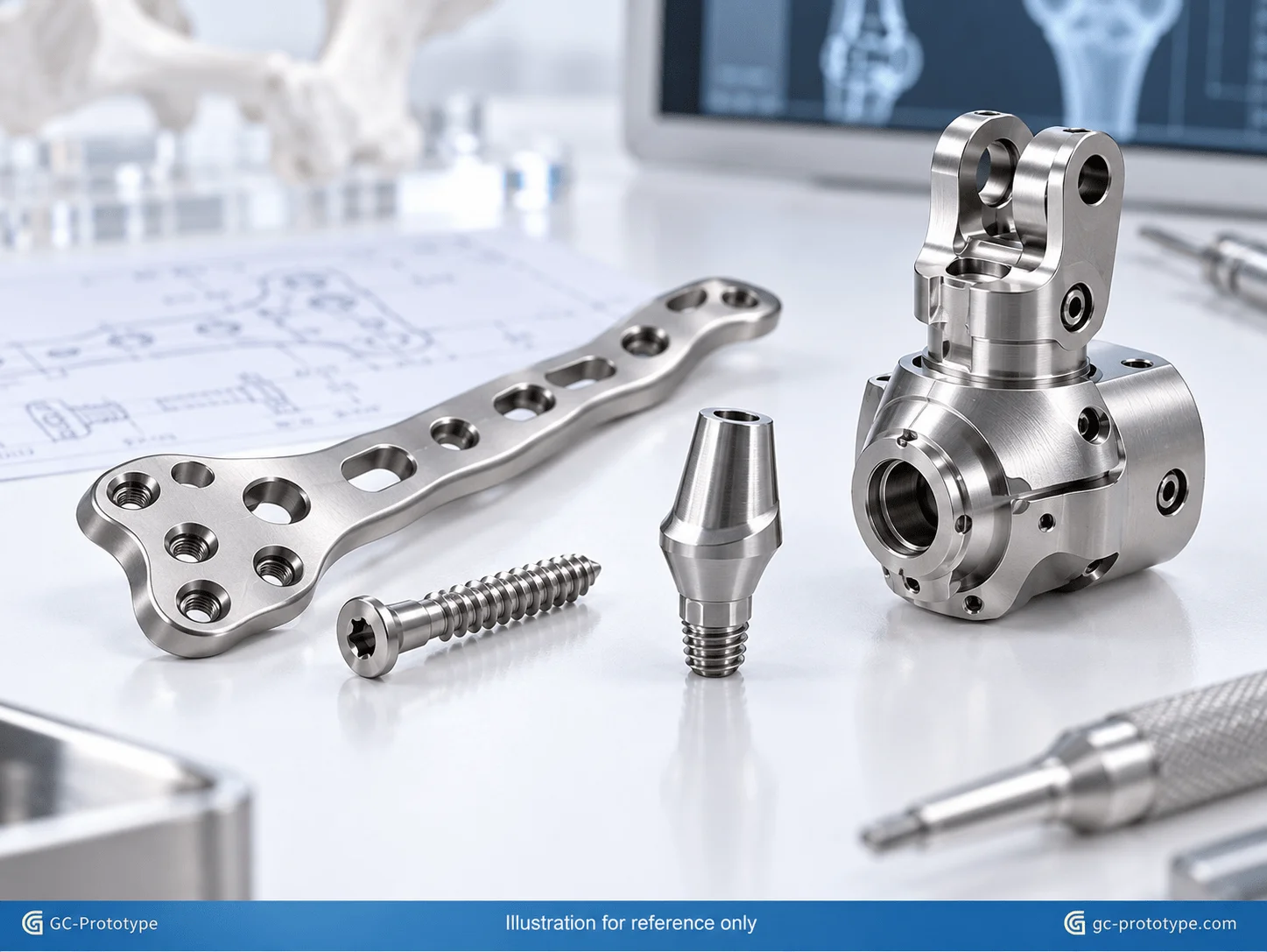
Medical grade titanium CNC machining plays a critical role in modern medical-device NPI, where a few microns of dimensional error can affect implant fit, instrument motion, sealing, or assembly reliability. For engineering teams evaluating cnc machining titanium for orthopedic implants or titanium grade 5 cnc machining tolerances, the challenge is not simply cutting a strong metal—it is controlling heat, springback, tool wear, surface integrity, traceability, and inspection while maintaining the geometry required for functional medical validation.
Titanium alloys are widely used in demanding medical applications because they combine corrosion resistance, high strength-to-weight ratio, low density, and proven use in many implantable and surgical products. At the same time, titanium is one of the more challenging metals to machine efficiently. Low thermal conductivity concentrates heat near the cutting edge, while elastic recovery and work-hardening behavior can affect dimensional stability during finishing.
For Medical R&D Engineers, Biomedical Engineers, Senior Mechanical Engineers, Quality Managers, NPI teams, and Procurement Managers, a successful machining strategy must connect design intent with manufacturing reality.
This guide examines titanium grade selection, orthopedic applications, Swiss turning, micrometer-level tolerance control, surface integrity, cost optimization, DFM, and the complete product-development path from CAD → prototype samples → functional validation → low-volume pilot production → production support.
Medical hardware frequently operates in demanding mechanical, biological, and sterilization environments.
Depending on the application, components may need to withstand:
Repeated cyclic loading
Saline or bodily-fluid exposure
Autoclave or validated sterilization processes
High clamping forces
Tight sliding fits
Very small assembly clearances
Long-term corrosion exposure
Titanium is attractive because it offers a combination of properties that is difficult to achieve with many conventional metals.
Typical advantages include:
High strength-to-weight ratio
Excellent corrosion resistance
Low density compared with stainless steel
Established use in medical and orthopedic applications
Good fatigue performance when material, geometry, and surface integrity are appropriately controlled
However, the term “medical grade titanium” should not be treated as a generic material specification.
An engineering drawing should identify:
Exact alloy
Material standard
Condition
Required certification
Traceability requirements
For regulated medical programs, material documentation is part of the engineering system—not an optional purchasing detail.
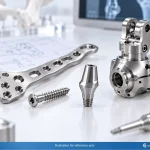
Cnc machining titanium for orthopedic implants requires careful material selection because different titanium grades have different chemistry, mechanical properties, and intended applications.
Two alloys commonly discussed in medical manufacturing are:
Ti-6Al-4V Grade 5
Ti-6Al-4V ELI Grade 23
Grade 23 is an extra-low-interstitial version of Ti-6Al-4V. Its controlled interstitial content can provide improved ductility and fracture-toughness characteristics compared with standard Grade 5 in suitable applications.
This makes Grade 23 attractive for certain implant-related products where fatigue and toughness are important.
Potential applications include:
Orthopedic fixation components
Spinal hardware
Implant support structures
Surgical instrument interfaces
Bone fixation systems
Grade 5 remains widely used for demanding non-implant and implant-related components where the specific material specification allows it.
Material selection should always be driven by the device design, applicable standards, and regulatory requirements—not by alloy popularity alone.
| Engineering Factor | Ti-6Al-4V Grade 5 | Ti-6Al-4V ELI Grade 23 |
|---|---|---|
| Strength | Very high | Very high |
| Interstitial Content | Standard controlled level | Lower interstitial content |
| Ductility/Toughness | Excellent | Often improved |
| Machinability | Challenging | Challenging |
| Medical Use | Broad high-performance applications | Commonly considered for implant-critical applications |
| Cost | High | Often higher |
| Traceability Requirement | Important | Especially important |
The correct alloy should be specified by engineering and regulatory requirements before quotation.
Orthopedic components can experience repeated cyclic loading rather than a single static force.
Examples include:
Hip-related implant structures
Spinal fixation hardware
Bone screws
Instrument interfaces
Fatigue performance can therefore be influenced by more than bulk material strength.
Machining-related factors such as:
Surface scratches
Tool marks
Burrs
Sharp transitions
Residual stress
Thermal damage
may influence performance if they occur in highly stressed regions.
A precision CNC strategy should protect surface integrity by using stable cutting conditions, appropriate tools, controlled finishing, and inspection.
It is incorrect to assume that CNC machining automatically “preserves” fatigue strength. The actual result depends on tool condition, surface finish, geometry, material condition, and any subsequent finishing process.
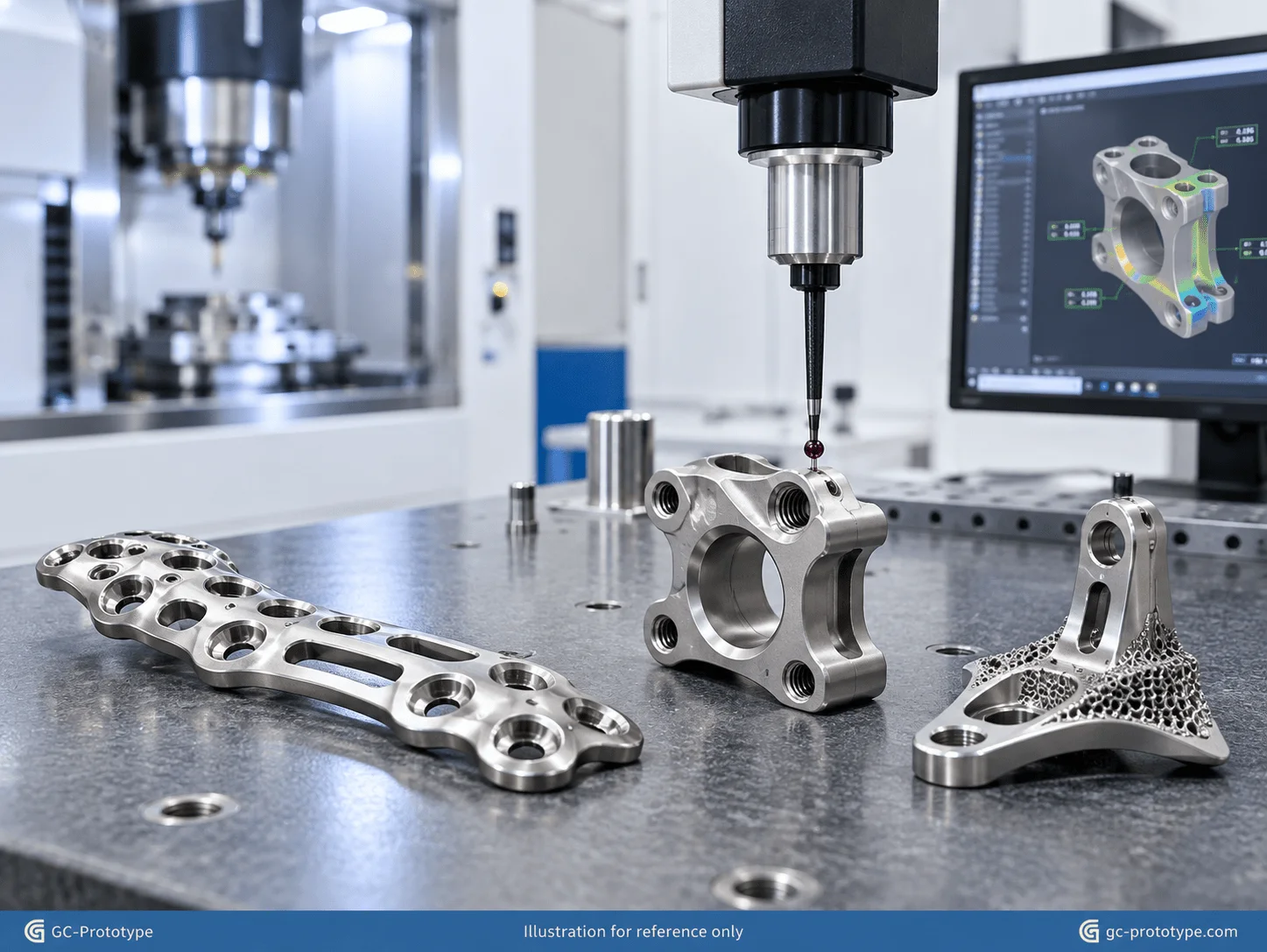
Titanium presents a unique combination of manufacturing challenges.
Compared with aluminum, titanium conducts heat poorly. Much of the heat generated during cutting remains near:
The cutting edge
The chip-tool interface
The workpiece surface
This can accelerate tool wear.
Titanium also tends to exhibit elastic recovery, which means a thin wall or flexible feature can deflect during cutting and then spring back after the cutting force is removed.
Common machining challenges include:
Cutting-edge temperature
Tool adhesion
Rapid tool wear
Chatter
Thin-wall movement
Springback
Burr formation
For medical parts with tight dimensional requirements, these effects must be controlled throughout roughing, semi-finishing, and final finishing.
Swiss machining titanium medical screws is particularly effective when engineers need miniature parts with long length-to-diameter ratios, complex threads, small holes, and multiple features that should remain aligned.
Typical components include:
Bone screws
Dental screws
Dental abutment components
Precision pins
Instrument shafts
Miniature threaded interfaces
A Swiss-type CNC lathe supports the workpiece close to the cutting zone using a guide-bushing-based architecture.
This minimizes unsupported length and can reduce deflection during machining.
On a conventional lathe, a slender titanium component can deflect under tool pressure.
Potential problems include:
Diameter variation
Taper
Chatter
Surface marks
Thread inconsistency
Swiss machining reduces the unsupported distance between the guide bushing and the cutting tool.
Modern Swiss machines can also combine multiple operations, including:
OD turning
Thread cutting
Cross drilling
End drilling
Slot machining
Milling
in one coordinated process.
This reduces secondary handling and helps maintain relationships between critical features.
For a miniature bone screw, a single setup might produce:
Main diameter
Micro thread
Torx-style drive feature
Central hole
where machine configuration and tooling allow.
Every time a small titanium part is removed and repositioned, additional variation may be introduced.
Potential errors include:
Datum shift
Concentricity change
Runout
Angular misalignment
Completing more features within one controlled setup improves geometric consistency and can reduce inspection complexity.
This is valuable for miniature medical components where feature relationships may be more important than any single dimension.
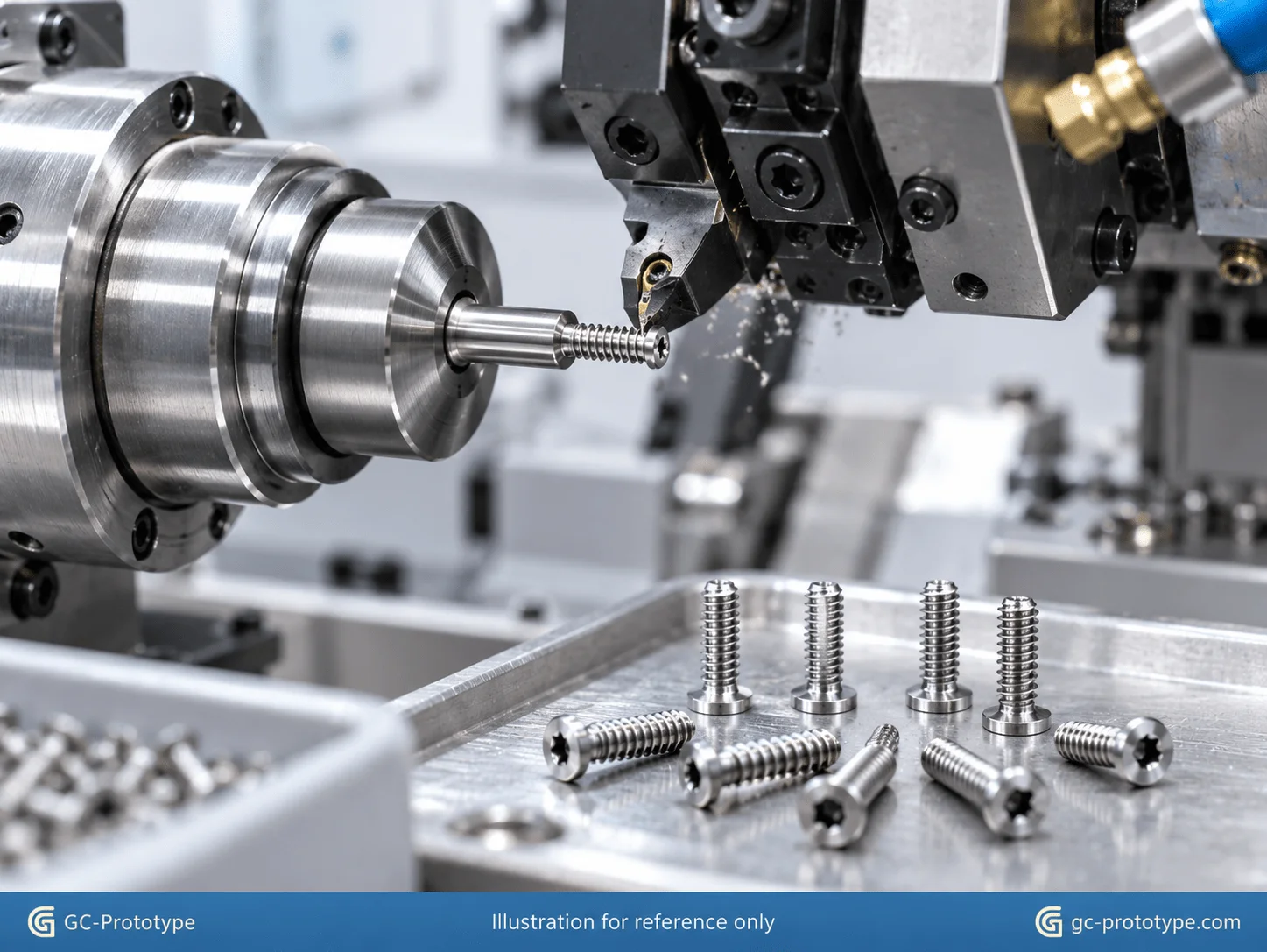
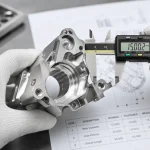
Achieving demanding titanium grade 5 cnc machining tolerances requires engineers and machinists to manage thermal effects, cutting force, springback, tool wear, and measurement conditions as one complete process.
The outline identifies approximately ±0.005 mm as a target for selected critical medical features.
That level of tolerance can be achievable on certain geometries under controlled conditions, but it should not be interpreted as a universal capability for every titanium feature.
Performance depends on:
Feature size
Part geometry
Wall thickness
Machine stability
Tool wear
Fixture rigidity
Cutting strategy
Inspection method
Even small temperature changes can influence micrometer-level dimensions.
For precision medical parts, manufacturers may control:
Machine warm-up
Shop temperature
Coolant temperature
Inspection-room conditions
Time between machining and measurement
A part that is significantly warmer than the inspection environment can produce a misleading dimensional result.
Final inspection should therefore occur after the component has reached an appropriate stabilized condition.
Titanium machining often benefits from effective coolant delivery.
High-pressure coolant can help:
Remove heat
Evacuate chips
Reduce recutting
Extend tool life
For medical components, cutting-fluid strategy must also fit the downstream cleaning and process-validation requirements.
The manufacturing goal is not simply “use coolant” or “avoid coolant.” It is to use a documented, controlled process compatible with the part’s quality and cleanliness requirements.
Sharp, appropriate cutting tools help minimize:
Excessive cutting force
Local heat buildup
Thin-wall deflection
Maintaining stable tool engagement can also reduce sudden force variation.
Adaptive and constant-engagement toolpaths may be useful for complex titanium components because they reduce abrupt changes in cutter load.
This improves:
Tool life
Dimensional consistency
Surface finish
Medical devices increasingly incorporate thin structures to reduce size and weight.
However, thin titanium walls can deflect during machining.
A feature may move away from the cutter and spring back after the tool passes.
DFM strategies may include:
Leaving support material during roughing
Using staged finishing
Optimizing cutting direction
Reducing finishing force
Applying more realistic wall thickness
The correct strategy depends on geometry.
The outline references ISO 2768-f together with approximately ±0.005 mm precision. These should not be treated as the same requirement.
ISO 2768 provides general tolerance classes for dimensions where individual tolerances are not otherwise specified.
A critical medical feature requiring ±0.005 mm should normally be explicitly dimensioned and toleranced on the engineering drawing.
A practical hierarchy is:
Critical Functional Features
Examples:
Precision implant interface
Bearing surface
Valve diameter
Alignment bore
These should receive explicit requirements.
General Geometry
Examples:
Clearance surfaces
Exterior nonfunctional profiles
These may use suitable general tolerances where appropriate.
This prevents over-tolerancing and makes the drawing more meaningful.
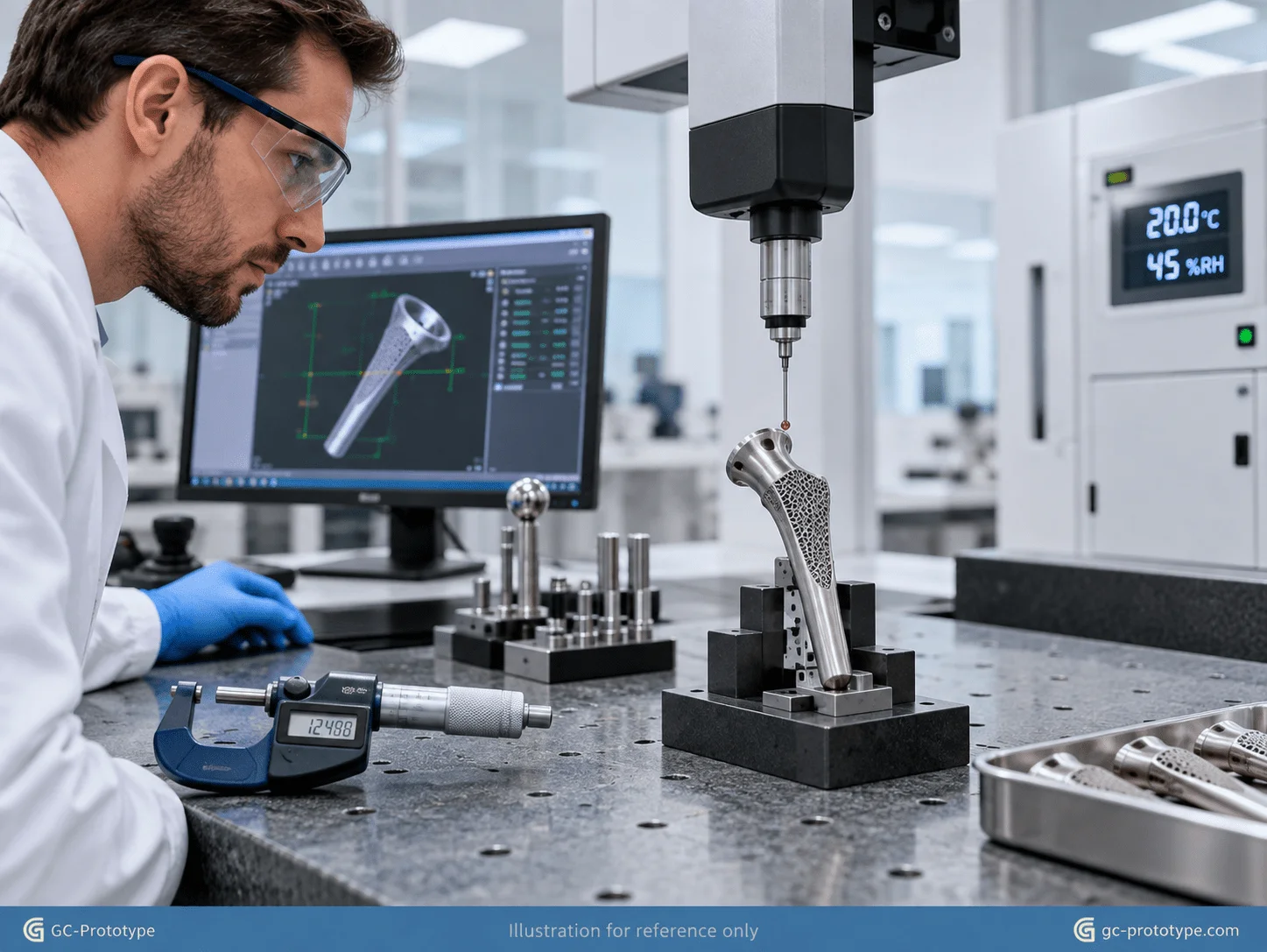
Machining accuracy alone is not enough for many medical components.
The finished surface may also need to meet requirements for:
Roughness
Burr control
Cleanability
Corrosion resistance
Downstream sterilization
A high-quality medical machining workflow may include:
Precision deburring
Controlled bead blasting
Mechanical polishing
Chemical cleaning
Application-specific passivation or surface treatment
The exact process depends on the material and intended device.
Small burrs can create problems in:
Threads
Fluid passages
Surgical interfaces
Implant edges
Deburring must remove sharp residual material without damaging:
Critical geometry
Fine threads
Surface finish
Datum surfaces
For very small features, manual deburring alone may not be sufficient or repeatable.
Process selection may require:
Controlled mechanical deburring
Micro tools
Specialized finishing
Bead blasting can create a more uniform appearance and remove certain machining marks.
However, the process changes surface texture.
It should be specified only when consistent with:
Device function
Surface requirements
Cleaning process
Regulatory documentation
Critical sealing or precision mating surfaces should generally be protected unless the engineering specification specifically requires treatment.
The outline references nitric/citric acid passivation. These treatments are commonly associated with stainless-steel passivation practices; titanium finishing and cleaning requirements should be selected according to the titanium alloy, device specification, and validated process rather than automatically applying a stainless-steel passivation recipe.
For titanium, post-machining processing may instead involve controlled:
Cleaning
Pickling or chemical treatment where specified
Surface conditioning
Electropolishing or other finishing processes
depending on the device.
The key principle is documented contamination control and validated cleaning—not a generic chemical treatment.
The outline identifies Ra approximately 0.4–0.8 µm for selected precision medical surfaces.
That range may be appropriate for certain interfaces, but surface requirements should be selected based on function.
Examples include:
Sliding fit
Seal interface
Implant surface
Fluid contact surface
Cosmetic surface
Not every feature benefits from a smoother finish.
Very low roughness requirements can add significant machining and polishing cost.
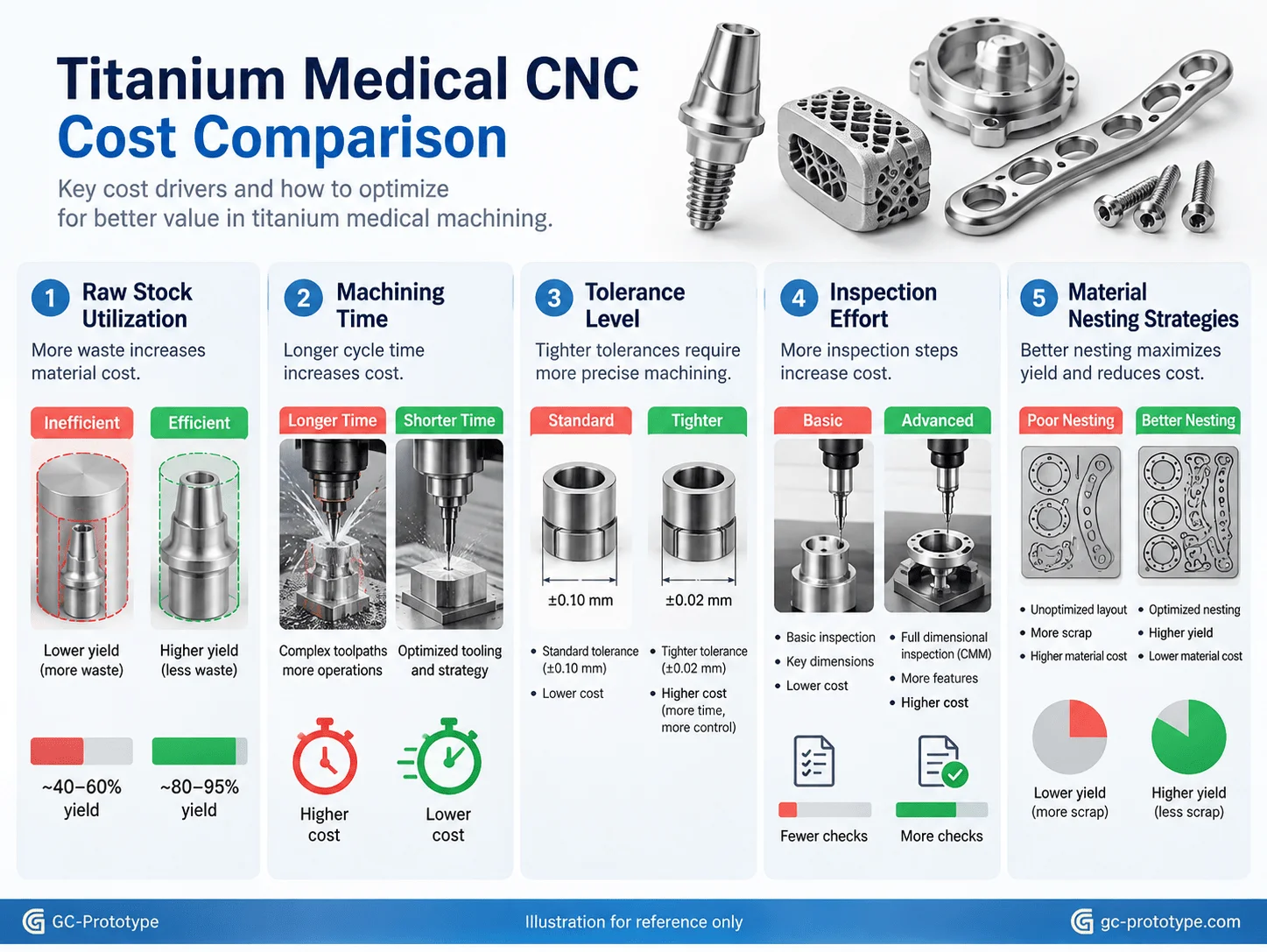
The cost of titanium cnc machining for medical devices is driven by much more than raw material price.
Titanium is expensive, but machining time can be equally important because cutting speeds are typically lower than those used for aluminum.
Major cost drivers include:
Raw titanium stock
Material certification
CNC machine time
Tool consumption
Number of setups
Tight tolerances
Inspection
Surface finishing
Documentation
| Cost Driver | Cost Impact | DFM Opportunity |
|---|---|---|
| Oversized raw stock | High material waste | Design near standard stock dimensions |
| Deep pockets | Long cycle time | Reduce unnecessary depth |
| Very thin walls | Slow finishing, scrap risk | Use practical wall thickness |
| ±0.005 mm everywhere | High inspection burden | Tighten only critical features |
| Complex multi-setup geometry | Higher labor and alignment time | Reduce setups |
| Premium finish everywhere | High finishing cost | Define functional surface zones |
Medical titanium stock can represent a significant percentage of the part cost.
If a component is designed only slightly larger than a common bar or plate size, the supplier may have to purchase a substantially larger stock size.
This increases:
Material consumption
Roughing time
Scrap
During DFM, engineers should evaluate whether a small geometry change can improve stock utilization without affecting function.
For plates and arrays of smaller components, nesting can also improve material yield.
One of the fastest ways to increase medical machining cost is applying extreme tolerances to noncritical geometry.
Compare:
±0.05 mm
±0.01 mm
±0.005 mm
As tolerances become tighter, manufacturing may require:
Additional finishing operations
Lower cutting loads
Temperature stabilization
Higher inspection frequency
More scrap risk
The cost increase is usually nonlinear.
The outline suggests that DFM may save more than 25% in some projects through better material utilization and tolerance optimization.This should be treated as a project-specific opportunity rather than a guaranteed saving.
GD&T allows engineers to define function without demanding unnecessary coordinate precision everywhere.
Useful controls may include:
Flatness
Position
Profile
Perpendicularity
Runout
Concentric relationships where appropriate
For example, an orthopedic instrument may require a tight relationship between:
Shaft axis
Cutting interface
Bearing surface
while the outer grip contour may tolerate much larger variation.
This allows procurement to spend money where it improves device performance.
Both CNC machining and metal additive manufacturing can support medical-device development.
Neither process is universally superior.
CNC machining is particularly strong when the component requires:
Dense wrought or bar-stock material
Tight dimensions
Precision sealing surfaces
Threads
Smooth machined interfaces
Metal additive manufacturing is valuable when the component requires:
Porous structures
Complex internal geometry
Lattice features
Shapes impossible to machine conventionally
| Evaluation Factor | CNC Titanium | Metal Additive Manufacturing |
|---|---|---|
| Tight machined interfaces | Excellent | Often requires post-machining |
| Internal lattice structures | Limited | Excellent |
| Material utilization | More subtractive waste | More efficient for complex shapes |
| Surface finish | Strong | Often needs finishing |
| Threads | Excellent | Frequently post-machined |
| Prototype geometry flexibility | Good | Excellent |
For orthopedic development, hybrid manufacturing can also be valuable.
A component may be additively manufactured for its complex structure and then CNC machined on critical interfaces.
The correct process depends on what the prototype needs to prove.
A Medical R&D team is developing an orthopedic implant component requiring:
Grade 23 titanium
Precision mounting interfaces
Repeated mechanical testing
CNC machining provides accurate test parts for dimensional and mechanical validation.
A spinal-device team requires a lightweight titanium plate with:
Complex contour
Precision screw holes
Controlled surface finish
Multi-axis CNC machining produces the functional geometry before design freeze.
A miniature screw requires:
Fine thread
Small drive geometry
Tight runout
Long, slender geometry
Swiss CNC turning minimizes secondary handling and supports precise feature relationships.
A dental component may require:
Precision taper
Fine thread
Excellent surface integrity
Swiss machining and precision inspection provide a suitable prototype route.
A surgical robotics system may use titanium for:
Actuator interfaces
Precision shafts
Lightweight instrument components
CNC machining allows the device team to test true material properties and assembly behavior.
Successful medical products usually move through several controlled development stages.
Engineering teams define:
Material grade
Geometry
Tolerances
GD&T
Surface requirements
Inspection strategy
DFM identifies expensive or unstable geometry early.
Initial parts validate:
Fit
Function
Ergonomics
Mechanical interfaces
More representative parts may support:
Fatigue tests
Assembly cycling
Sterilization evaluation
Sealing verification
Mechanical testing
Pilot quantities help evaluate:
Repeatability
Inspection
Documentation
Assembly workflow
Once the design is stable, machining strategy can be optimized for:
Throughput
Material utilization
Quality control
Supply-chain consistency
GC Prototype supports the complete development pathway from CAD → prototype samples → functional validation → low-volume pilot production → production support.
Both are Ti-6Al-4V alloys. Grade 23 is the ELI version with lower controlled interstitial content and is frequently selected for demanding implant applications where its material characteristics and documentation suit the design.
Grade 5 titanium has extensive medical use, but suitability depends on the exact device, material specification, processing, surface condition, and regulatory requirements. “Biocompatible” should not be assumed from alloy name alone.
Selected features can potentially reach this level under appropriate conditions, but capability depends on geometry, machine stability, tool condition, thermal control, workholding, and inspection.
Titanium generally requires slower cutting conditions, stronger process control, more expensive tooling, and careful heat management. Raw material is also more expensive.
Swiss-type machining supports long, small-diameter parts close to the cutting zone, reducing deflection and enabling multiple precision operations in one coordinated setup.
Yes, when the machine, tooling, geometry, and quality system are appropriate. Threads, drive features, diameters, and small holes can often be combined in one machining sequence.
There is no universal value. The appropriate Ra depends on whether the surface is sliding, sealing, implant-contacting, cosmetic, or part of another functional interface.
Improve stock utilization, avoid unnecessary deep pockets, use realistic wall thicknesses, reduce setups, apply tight tolerances selectively, and review the CAD design before machining.
It depends on geometry and function. CNC machining is excellent for precise dense-stock components and critical interfaces, while metal additive manufacturing is advantageous for porous structures, lattices, and complex internal geometry.
Provide:
3D CAD/STEP model
2D drawing
Exact titanium grade
Quantity
Critical tolerances/GD&T
Surface finish
Traceability requirements
Inspection/documentation requirements
Cleaning or post-processing requirements
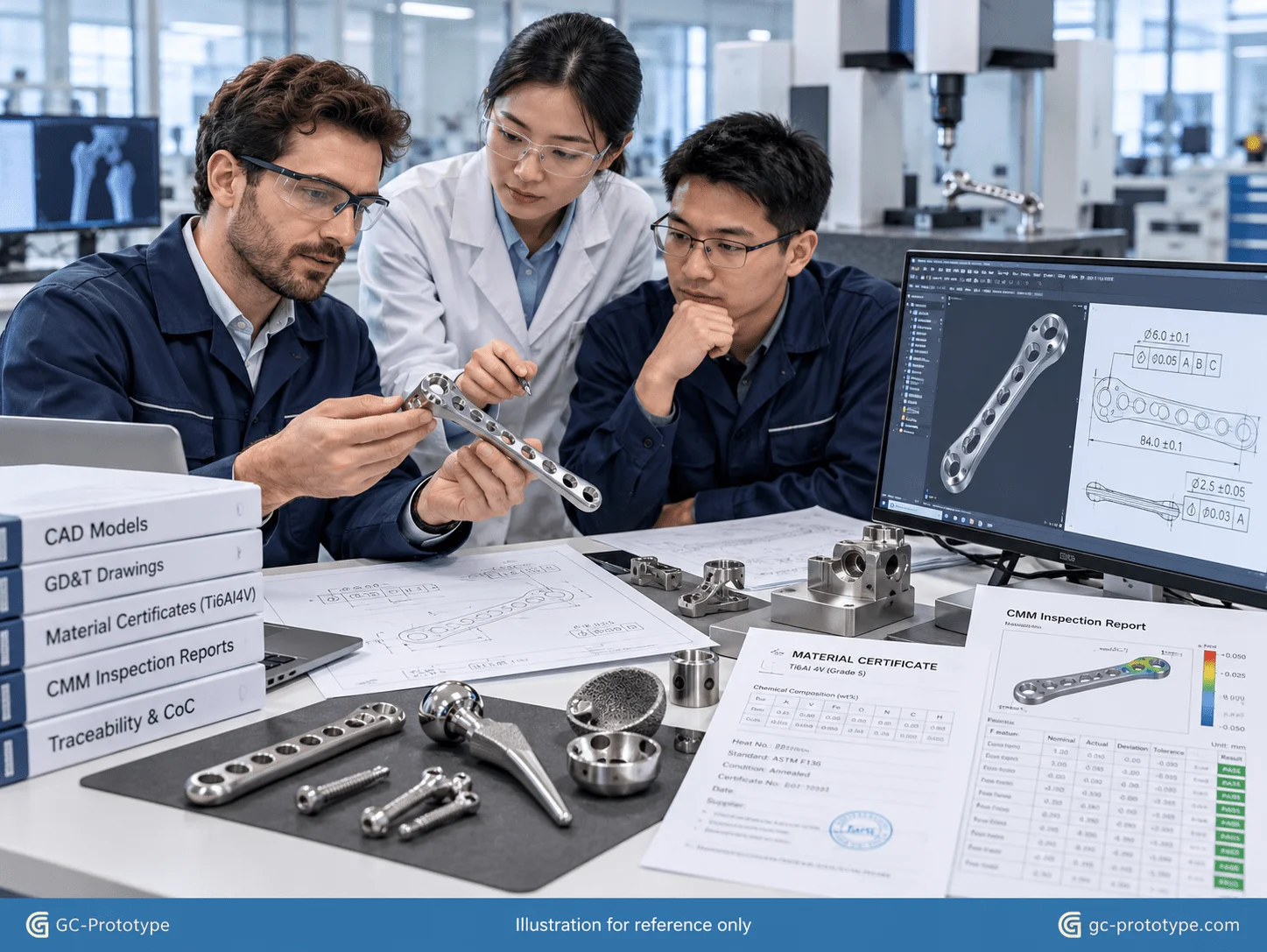
Medical titanium machining is not simply a matter of putting Ti-6Al-4V on a CNC machine.
Reliable results require control of:
Material grade
Cutting temperature
Tool engagement
Springback
Workholding
Surface integrity
Inspection
Traceability
For implant and orthopedic development, cnc machining titanium for orthopedic implants can provide dense, precision-controlled components for demanding mechanical validation. For miniature fasteners, swiss machining titanium medical screws offers an efficient path to complex threads, long slender geometry, and multiple features in a controlled setup. For tight critical interfaces, properly engineered titanium grade 5 cnc machining tolerances help ensure mechanical consistency without unnecessarily over-tolerancing the complete component.
Procurement teams should evaluate the cost of titanium cnc machining for medical devices through total engineering value rather than raw material price alone. Better stock utilization, practical GD&T, selective tight tolerances, optimized tool access, and fewer setups can substantially improve both cost and lead time.
The strongest medical-device manufacturing programs connect design, machining, quality, and sourcing from the beginning.
GC Prototype supports that complete path from CAD → prototype samples → functional validation → low-volume pilot production → production support, helping medical-device teams move from engineering concepts toward manufacturing readiness.
Engineering life-critical titanium medical components demands reliable material control, surface integrity, and micrometer-level precision without exhausting your NPI budget. Whether you are a Senior Mechanical Engineer developing complex orthopedic components or a Sourcing Manager evaluating Swiss machining for titanium medical screws, GC Prototype provides precision CNC engineering and manufacturing support.