Address:
Shenzhen Bao'an District Xinqiao Subdistrict Huangpu Community Huangpu East Ring Road No. 504 Shenzhen Yuan Industrial City Building C
Work Hours:
Monday to Friday: 9AM - 21PM
Weekend: 9AM - 21PM

Address:
Shenzhen Bao'an District Xinqiao Subdistrict Huangpu Community Huangpu East Ring Road No. 504 Shenzhen Yuan Industrial City Building C
Work Hours:
Monday to Friday: 9AM - 21PM
Weekend: 9AM - 21PM

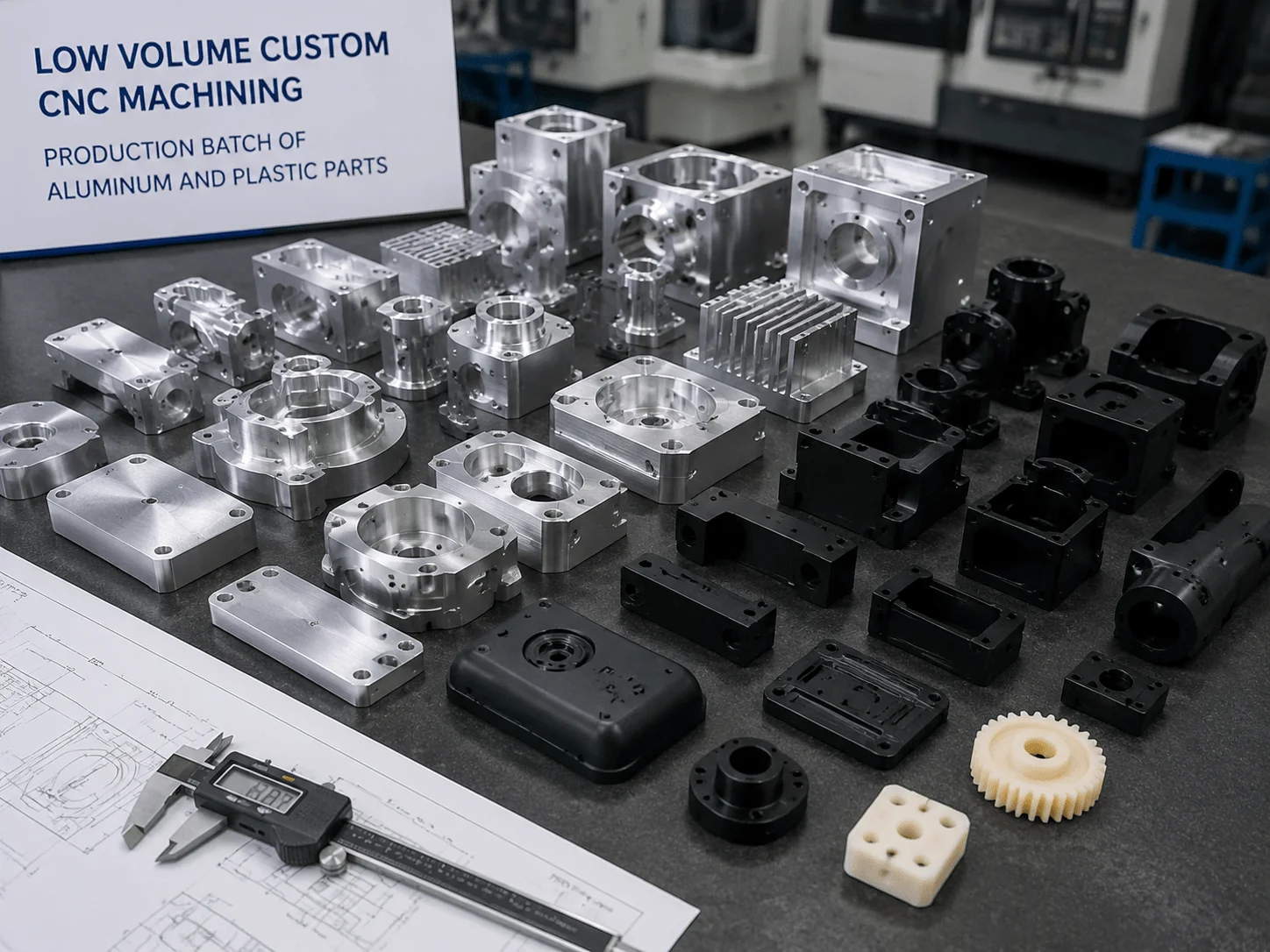
A reliable CNC machining guide should help engineers make faster, lower-risk decisions about tolerances, materials, costs, and production strategy. For B2B buyers, CNC machining is not only a way to make prototypes; it is a practical manufacturing solution for functional testing, design validation, and low-volume production. Whether you are comparing cnc milling vs cnc turning difference, evaluating 5 axis cnc machining vs 3 axis, or choosing between aluminum alloys and engineering plastics, the right decision can reduce lead time, improve part quality, and prevent unnecessary cost.
For mechanical engineers, product development teams, procurement managers, and startup founders, CNC machining offers a strong balance of precision, material flexibility, and speed. It is widely used across medical devices, automotive and transportation, aerospace and defense, consumer electronics, smart hardware, automation, and industrial machinery.
This guide explains the core CNC machining processes, material selection, tolerance planning, design-for-manufacturability tips, cost drivers, low-volume production advantages, and how to prepare CAD files for accurate CNC quotations.
Understanding Core CNC Machining Processes
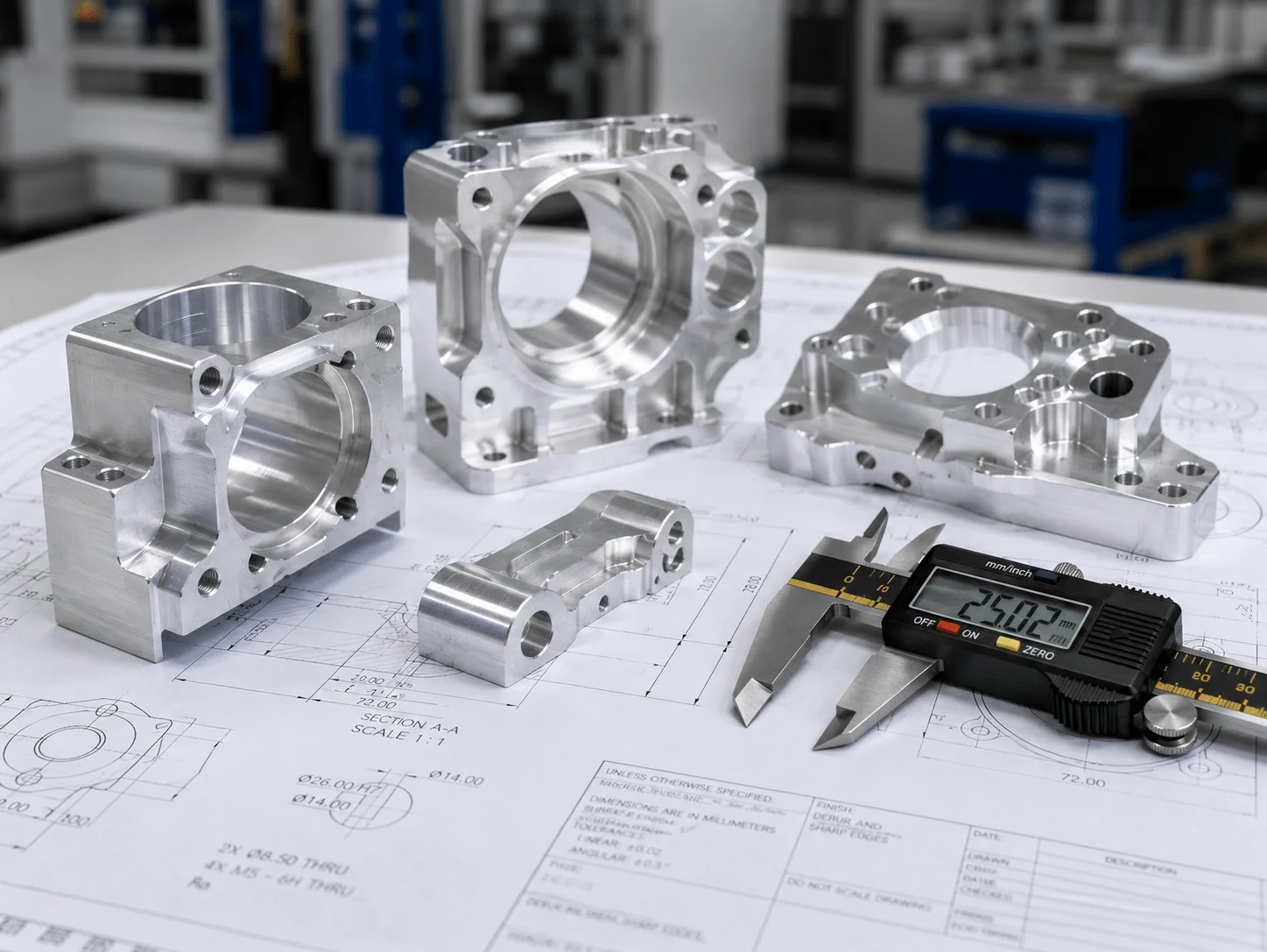
CNC machining is a subtractive manufacturing process. Instead of building material layer by layer, CNC machines remove material from a solid block, bar, or plate until the final geometry is achieved. This makes CNC machining especially valuable when parts require real material strength, tight tolerances, good surface finish, and functional reliability.
The most common CNC processes include milling, turning, drilling, tapping, boring, reaming, surface finishing, and multi-axis machining. For many projects, the supplier may use several processes together. A housing may be milled from aluminum, drilled for mounting holes, tapped for screws, bead blasted, and anodized. A shaft may be turned on a lathe and then milled for flats or keyways.
The key to cost-effective CNC machining is not simply choosing CNC. It is choosing the right CNC process for the geometry.
What is the cnc milling vs cnc turning difference?
The cnc milling vs cnc turning difference is one of the first questions engineers ask when designing machined parts. CNC milling uses rotating cutting tools to remove material from a fixed workpiece. CNC turning rotates the workpiece while a stationary cutting tool removes material from the outside or inside diameter.
CNC milling is ideal for flat surfaces, pockets, slots, complex contours, mounting holes, and multi-face features. It is commonly used for enclosures, brackets, plates, manifolds, heat sinks, fixtures, and complex prototype housings.
CNC turning is ideal for round and cylindrical parts. If your part looks like a shaft, pin, sleeve, bushing, roller, nozzle, threaded insert, or round connector, turning is usually faster and more economical than milling. Because the workpiece rotates, the machine can efficiently create precise diameters, grooves, threads, tapers, and smooth circular surfaces.
For example, if a procurement manager sends a cylindrical stainless steel sleeve for quotation, a turning process will usually reduce cycle time and cost. If the same part is designed with unnecessary square features or difficult side pockets, it may require milling or mill-turn machining, which increases cost.
| Factor | CNC Milling | CNC Turning |
| Workpiece Movement | Usually fixed | Rotates |
| Cutting Tool | Rotates | Usually fixed or moves linearly |
| Best Geometry | Flat, complex, prismatic parts | Round, cylindrical, shaft-like parts |
| Common Parts | Housings, brackets, plates, fixtures | Shafts, pins, bushings, sleeves |
| Cost Advantage | Best for complex shapes | Best for round parts |
| Surface Finish | Good on flat and contoured surfaces | Excellent on circular surfaces |
For B2B buyers, the cost lesson is simple: if the part is cylindrical, design it for turning whenever possible. If the part requires flat faces, pockets, and complex contours, milling is usually the better choice.
5 axis cnc machining vs 3 axis: Which Do You Need?
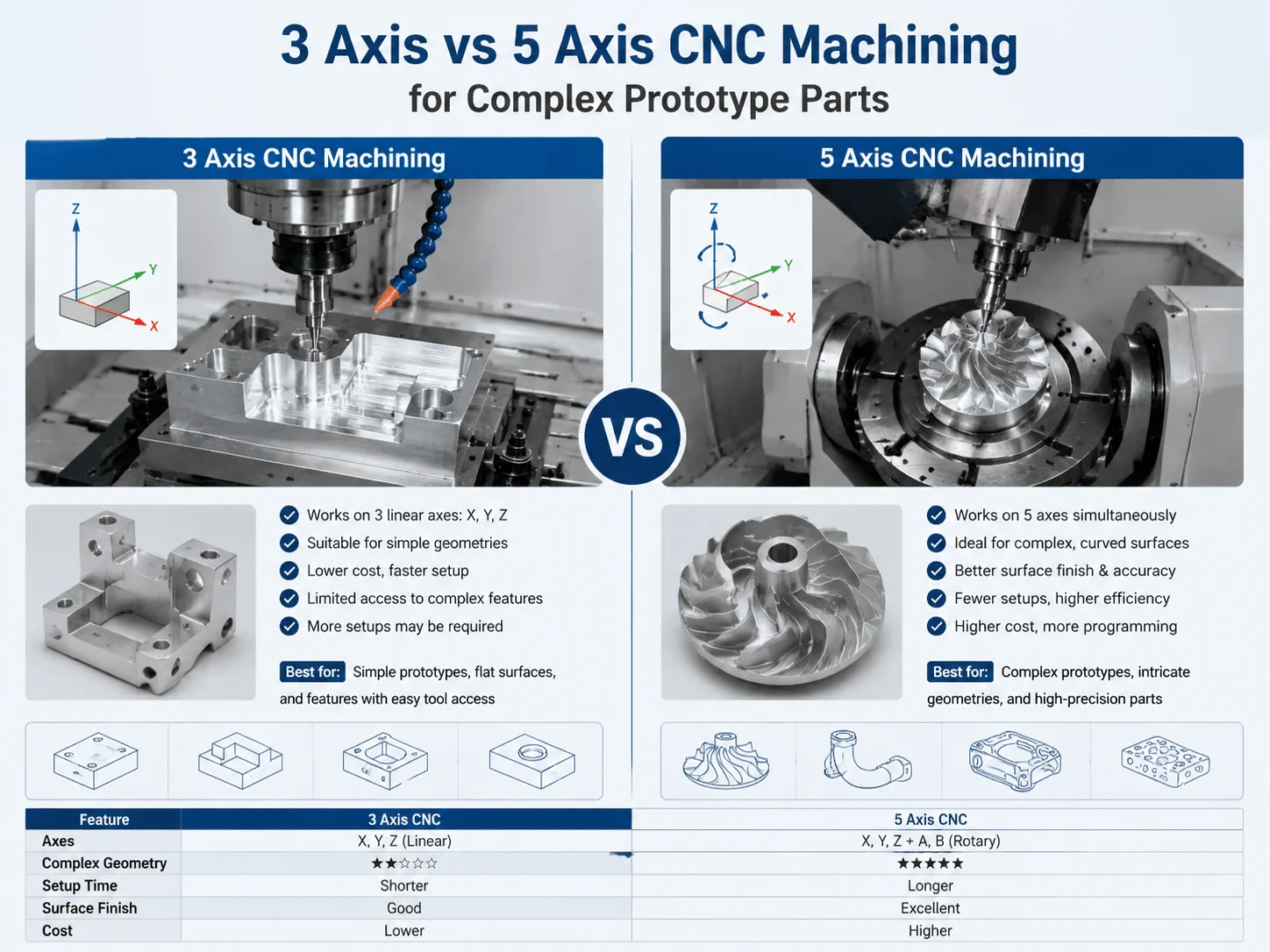
The comparison of 5 axis cnc machining vs 3 axis is important when parts become more complex. A 3-axis CNC machine moves the cutting tool along X, Y, and Z directions. It is suitable for simple parts with flat surfaces, holes, pockets, and basic contours. Many prototype housings, brackets, plates, and fixtures can be produced efficiently with 3-axis machining.
A 5-axis CNC machine adds two rotational axes. This allows the cutting tool to approach the part from multiple angles without repeated manual setups. It is valuable for complex geometries, deep cavities, angled holes, curved surfaces, impellers, aerospace structures, medical components, and high-precision parts where multiple setups could introduce alignment errors.
5-axis machining is usually more expensive per machine hour, but it can reduce total cost for complex parts by minimizing fixtures, reducing setup time, improving accuracy, and allowing shorter cutting tools. Shorter tools are more rigid, which improves surface finish and dimensional control.
| Factor | 3-Axis CNC Machining | 5-Axis CNC Machining |
| Best For | Simple parts, flat faces, basic pockets | Complex geometries, angled features, freeform surfaces |
| Machine Cost | Lower | Higher |
| Setup Requirement | More setups for multiple faces | Fewer setups |
| Accuracy Risk | Setup changes may add error | Better alignment from fewer setups |
| Lead Time | Fast for simple parts | Faster for complex multi-face parts |
| Typical Use | Plates, brackets, simple housings | Aerospace parts, medical parts, complex prototypes |
Engineers should not choose 5-axis machining only because it sounds advanced. The best choice depends on geometry. If a part can be easily produced on a 3-axis machine, 3-axis machining is usually more cost-effective. If the part has complex curves, undercuts, angled surfaces, or features on many sides, 5-axis machining may deliver better quality and lower total project risk.
Material Selection for Your Prototypes
Material selection affects strength, weight, cost, machinability, corrosion resistance, surface finish, thermal performance, and application suitability. A good CNC supplier should not only quote the drawing but also help identify whether the selected material is practical for the project.
In rapid prototyping, the material should match the purpose of the part. A display model may only need good appearance. A functional prototype may require final production material. A medical device part may require biocompatibility considerations. An aerospace bracket may require high strength-to-weight ratio. A consumer electronics housing may need good surface finish and anodizing quality.
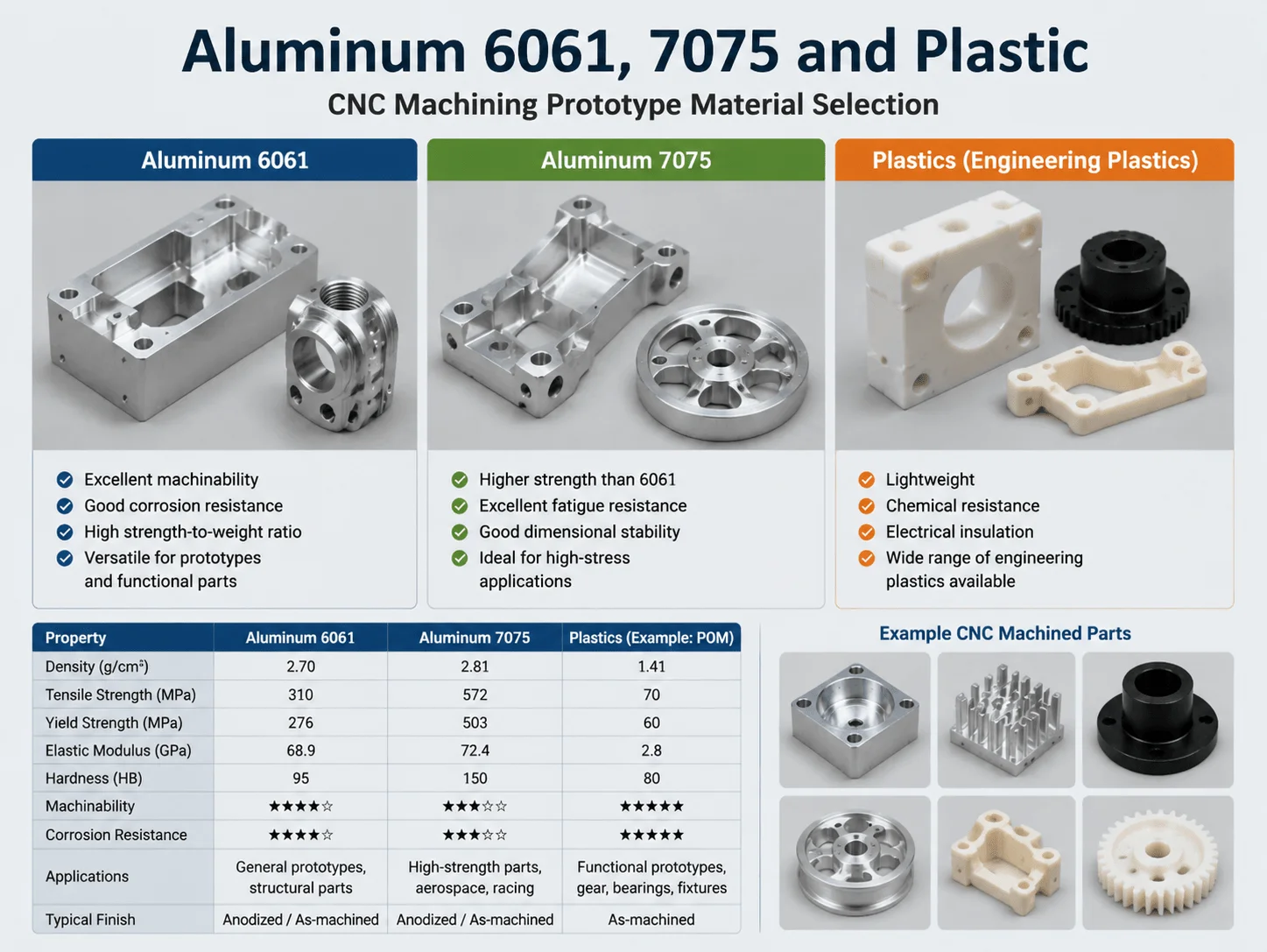
aluminum 6061 vs 7075 cnc machining
The comparison of aluminum 6061 vs 7075 cnc machining is one of the most common material decisions for engineers. Both alloys are widely used, but they serve different purposes.
Aluminum 6061 is the most popular general-purpose CNC machining aluminum. It offers good strength, excellent machinability, good corrosion resistance, easy anodizing, and relatively low cost. It is suitable for prototypes, housings, brackets, fixtures, automation parts, electronic enclosures, and many general engineering components.
Aluminum 7075 is much stronger than 6061 and is often used in aerospace, defense, high-performance robotics, motorsport, and structural applications. It has excellent strength-to-weight ratio but is more expensive and less corrosion-resistant than 6061. It can also be more challenging to machine and finish depending on geometry and requirements.
| Property | Aluminum 6061 | Aluminum 7075 |
| Strength | Good | Very high |
| Machinability | Excellent | Good |
| Cost | Lower | Higher |
| Corrosion Resistance | Better | Lower than 6061 |
| Anodizing | Good | Good, but color may vary |
| Best Use | General prototypes, housings, brackets | Aerospace, high-strength parts, structural components |
| Typical Buyer Priority | Cost-effective and versatile | Maximum strength and stiffness |
Choose 6061 when you need a reliable, affordable, easy-to-machine aluminum for most prototypes. Choose 7075 when the part must handle high load, high stress, or demanding structural requirements.
A common mistake is specifying 7075 when 6061 is enough. This increases material cost without improving product performance in a meaningful way. The smarter approach is to define the functional requirement first, then select the material.
The best plastics for cnc machining prototypes
The best plastics for cnc machining prototypes include POM, PEEK, ABS, PC, PMMA, Nylon, PTFE, and HDPE. Plastic CNC machining is often chosen when engineers need lightweight parts, electrical insulation, chemical resistance, low friction, transparency, or lower weight than metal.
POM, also known as Delrin, is a popular choice for precision plastic parts. It offers excellent dimensional stability, low friction, good wear resistance, and good machinability. It is commonly used for gears, bushings, rollers, sliding components, and mechanical prototypes.
PEEK is a high-performance engineering plastic used for demanding applications. It offers high temperature resistance, chemical resistance, excellent mechanical strength, and strong dimensional stability. It is often used in medical, aerospace, automotive, and high-end industrial applications.
ABS is cost-effective and easy to machine. It is useful for prototype housings, appearance models, and general plastic components. PC, or polycarbonate, offers higher impact resistance and transparency, making it useful for protective covers, lenses, and durable housings.
| Plastic Material | Key Benefits | Typical Applications |
| POM / Delrin | Low friction, stable, wear resistant | Gears, bushings, rollers, precision parts |
| PEEK | High strength, heat resistant, chemical resistant | Medical, aerospace, industrial components |
| ABS | Affordable, easy to machine | Housings, covers, general prototypes |
| PC | Impact resistant, transparent options | Covers, lenses, protective housings |
| PMMA / Acrylic | Clear, polished appearance | Display windows, optical prototypes |
| Nylon | Tough, wear resistant | Mechanical parts, rollers, guides |
| PTFE | Very low friction, chemical resistant | Seals, sliding parts, chemical applications |
Plastic should be used instead of metal when weight reduction, insulation, corrosion resistance, or cost matters more than maximum strength. However, engineers should consider wall thickness, clamping force, heat during machining, and potential deformation. Thin plastic walls can vibrate or warp more easily than metal parts.
Design for Manufacturability
Design for manufacturability, often called DFM, is one of the best ways to reduce CNC machining cost. Many expensive machining problems begin at the CAD design stage. Sharp internal corners, deep narrow pockets, unnecessary tight tolerances, thin walls, tiny holes, and complex surface finishes can all increase cost and lead time.
A good CNC part is not only designed for function. It is designed for efficient machining, stable workholding, practical inspection, and reliable finishing.
A custom cnc machining tolerances guide
A custom cnc machining tolerances guide helps engineers understand when precision is necessary and when it is simply expensive. Tolerances control how much variation is allowed in a part dimension. Tighter tolerances require more careful machining, slower cutting, additional inspection, and sometimes special equipment.
For many CNC prototypes, a general tolerance such as ±0.1 mm may be sufficient. For precision assemblies, ±0.05 mm may be required. For critical features such as bearing fits, sealing surfaces, or optical alignment, tighter tolerances such as ±0.01 mm may be needed.
| Tolerance Level | Typical Tolerance | Cost Impact | Suitable Applications |
| Standard | ±0.1 mm | Lower | General prototypes, housings, non-critical features |
| Medium Precision | ±0.05 mm | Moderate | Assembly parts, brackets, covers |
| High Precision | ±0.02 mm | Higher | Mechanical interfaces, accurate fits |
| Ultra Precision | ±0.01 mm or tighter | Highest | Aerospace, optical, medical, scientific components |
The most common mistake is applying tight tolerances to every dimension. This makes the part more expensive without improving performance. Instead, engineers should apply tight tolerances only to critical features and leave non-critical dimensions with standard tolerances.
For example, a mounting hole pattern may need precise location, but the outside cosmetic edge of the same bracket may not. A bearing bore may need tight diameter control, but a clearance pocket may not. Good tolerance planning tells the manufacturer what truly matters.
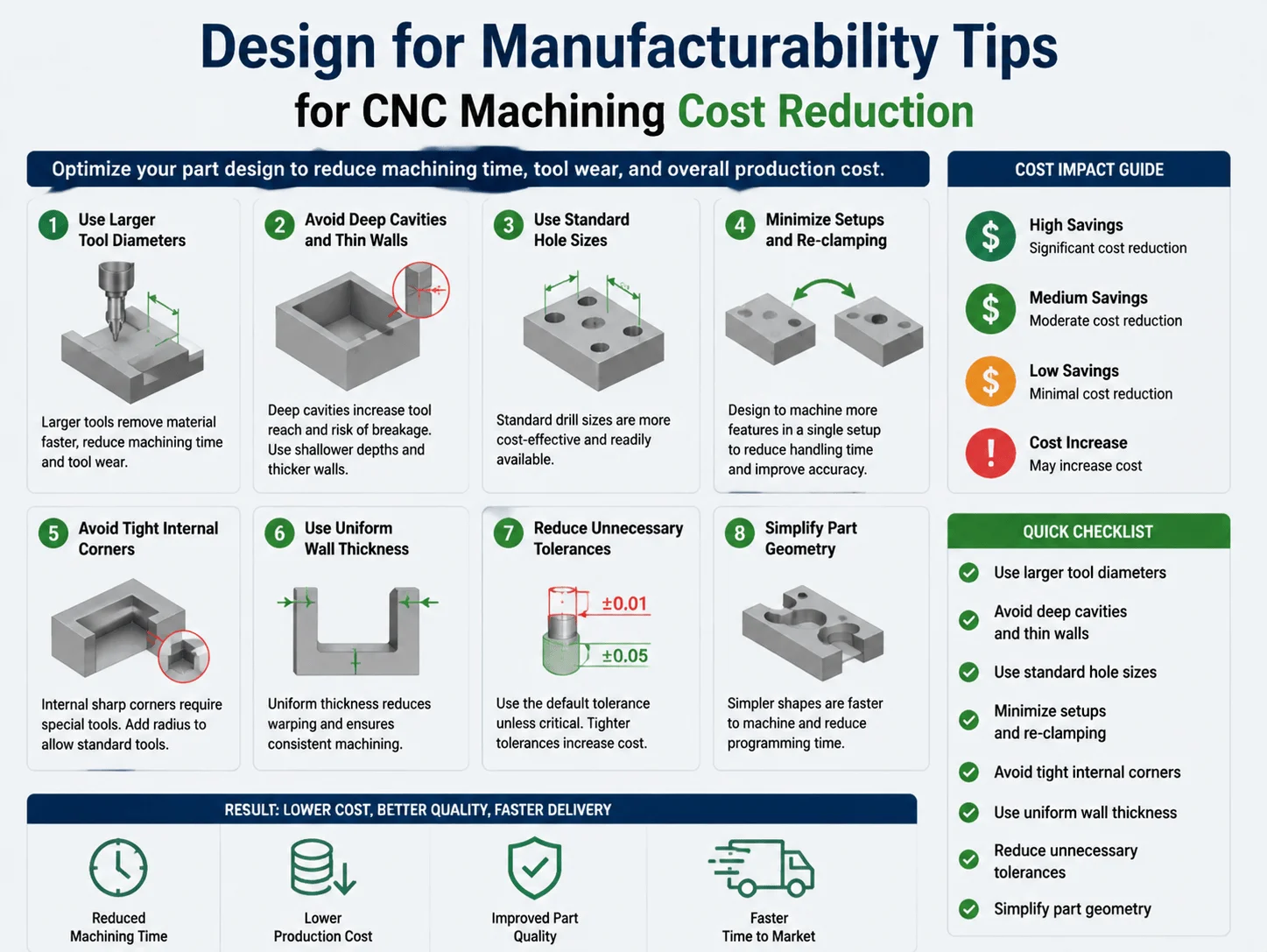
5 design tips to reduce cnc machining costs
These 5 design tips to reduce cnc machining costs can help engineering teams lower project cost without sacrificing function.
1. Avoid sharp internal corners
CNC cutting tools are round, so they naturally leave a radius in internal corners. If a design requires perfectly sharp internal corners, it may need EDM or extra processing. Adding internal radii allows the tool to cut more efficiently. Larger radii are usually cheaper because they allow larger and stronger tools.
2. Limit deep pockets and cavities
Deep pockets require long cutting tools. Long tools are less rigid and more likely to vibrate, which slows machining and reduces surface quality. A good rule is to avoid very deep narrow cavities whenever possible. If a deep pocket is necessary, increase corner radii and allow enough tool clearance.
3. Avoid unnecessarily thin walls
Thin walls are difficult to machine because they can vibrate, bend, or deform under cutting pressure. For metal parts, a wall thickness above 0.8 mm is often a safer starting point, though the exact requirement depends on part size and material. For plastics, thicker walls may be needed because plastics are softer and more flexible.
4. Use standard hole sizes and thread sizes
Standard drill sizes, tap sizes, and thread specifications reduce machining time and tool changes. Non-standard holes may require custom tools or additional operations. If possible, use common metric or imperial thread sizes.
5. Simplify cosmetic surfaces
Fine polishing, bead blasting, anodizing, painting, and special textures all add cost. Use cosmetic finishes only where they are necessary. Hidden internal surfaces usually do not need the same finish as visible exterior faces.
Good DFM is not about making the design weaker. It is about removing avoidable manufacturing difficulty. In many projects, small CAD adjustments can reduce machining time, improve quality, and shorten lead time.
CNC Machining Cost Analysis
CNC machining cost is influenced by several factors. Understanding these factors helps buyers compare quotations more accurately and helps engineers design more cost-effective parts.
The main cost drivers include material, machine time, setup time, part complexity, tolerance, surface finish, quantity, inspection requirements, and delivery urgency.
Material Cost
Expensive materials such as titanium, PEEK, and 7075 aluminum increase part cost. Large stock size also increases waste if the final part removes a lot of material.
Machine Time
Machine time is one of the biggest cost factors. Complex surfaces, deep pockets, small tools, tight tolerances, and slow finishing passes increase machining time.
Setup Cost
Every CNC project requires programming, workholding, tool setup, and first-piece inspection. For one-off parts, setup cost is spread over only one unit. For larger quantities, setup cost is distributed across more parts, reducing unit price.
Tolerance and Inspection Cost
Tighter tolerances often require slower machining and more inspection. If CMM inspection or detailed quality reports are required, cost may increase.
Surface Finish Cost
As-machined finish is usually the most economical. Bead blasting, anodizing, polishing, passivation, plating, painting, or laser marking add value but also add cost.
| Cost Driver | Low-Cost Choice | Higher-Cost Choice |
| Material | 6061 aluminum, ABS, POM | Titanium, PEEK, 7075 aluminum |
| Geometry | Simple shapes, open pockets | Deep cavities, complex contours |
| Tolerance | Standard tolerances | Ultra-tight tolerances |
| Finish | As-machined | Polished, anodized, plated |
| Quantity | Batch production | One-off urgent part |
| Inspection | Standard check | Full dimensional report |
To reduce cost, engineers should simplify geometry, choose materials wisely, define only necessary tight tolerances, and communicate the actual function of the part.
From Prototyping to Low-Volume Production
CNC machining is often associated with prototypes, but it is also a strong solution for low-volume production. When quantities are not high enough to justify injection molds, die casting tools, or stamping dies, CNC machining can produce real end-use parts quickly and reliably.
The low volume custom cnc machining advantages
The low volume custom cnc machining advantages become clear when production quantities are around 100–500 pieces. At this stage, CNC machining can be more cost-effective than opening expensive molds, especially if the design may still change.
Injection molding and die casting are excellent for mass production, but tooling costs can be high. Tooling also locks the design. If a product is still evolving, mold changes can be expensive and slow.
CNC machining offers several advantages for low-volume production:
No expensive mold tooling
Faster production start
Easy design modification
Real material performance
Good dimensional accuracy
Suitable for multiple design versions
Lower risk before full production
Practical for bridge production
For example, a robotics company may need 300 aluminum actuator housings before finalizing the next generation design. CNC machining allows them to produce functional parts without investing in die casting tooling too early. A medical device company may need 200 PEEK components for validation builds. CNC machining allows production from real material without waiting for mold development.
CNC Machining vs Tooling Cost Break-Even
| Quantity | CNC Machining | Injection Molding / Die Casting |
| 1–50 pcs | Usually better | Tooling too expensive |
| 100–500 pcs | Often competitive | Depends on tool cost and material |
| 500–1,000 pcs | Project-dependent | Tooling may become attractive |
| 1,000+ pcs | Unit cost may be higher | Usually better for mass production |
The break-even point depends on part size, complexity, material, and tooling cost. For simple plastic parts, injection molding may become economical sooner. For complex metal parts or frequently changing designs, CNC machining may remain practical for longer.
Application Scenarios Across Industries
CNC machining is widely used because it supports many industries and product stages.
Medical Devices
Medical device companies use CNC machining for surgical instruments, diagnostic housings, implant trial components, PEEK prototypes, stainless steel parts, and precision fixtures. Tight tolerances and material traceability are often important.
Automotive and Transportation
Automotive teams use CNC machining for engine components, brackets, housings, connectors, battery system parts, thermal management components, and test fixtures. CNC prototypes help validate fit, strength, and heat performance before tooling.
Aerospace and Defense
Aerospace and defense projects often require aluminum 7075, titanium, stainless steel, and complex 5-axis machining. These applications prioritize strength-to-weight ratio, precision, and quality documentation.
Consumer Electronics and Smart Hardware
Consumer electronics companies use CNC machining for aluminum housings, camera frames, wearable device components, thermal parts, buttons, connectors, and functional prototypes. Surface finish is often a major requirement.
Automation and Industrial Machinery
Automation companies use CNC machining for robotic arms, grippers, linear motion parts, machine components, sensor mounts, and production fixtures. Low-volume CNC production is especially useful for custom industrial equipment.
Ready for Manufacturing?
A good CNC quote depends on clear technical information. If the supplier receives incomplete files, the quote may be delayed or inaccurate. Preparing the right files helps reduce back-and-forth communication and prevents misunderstandings.
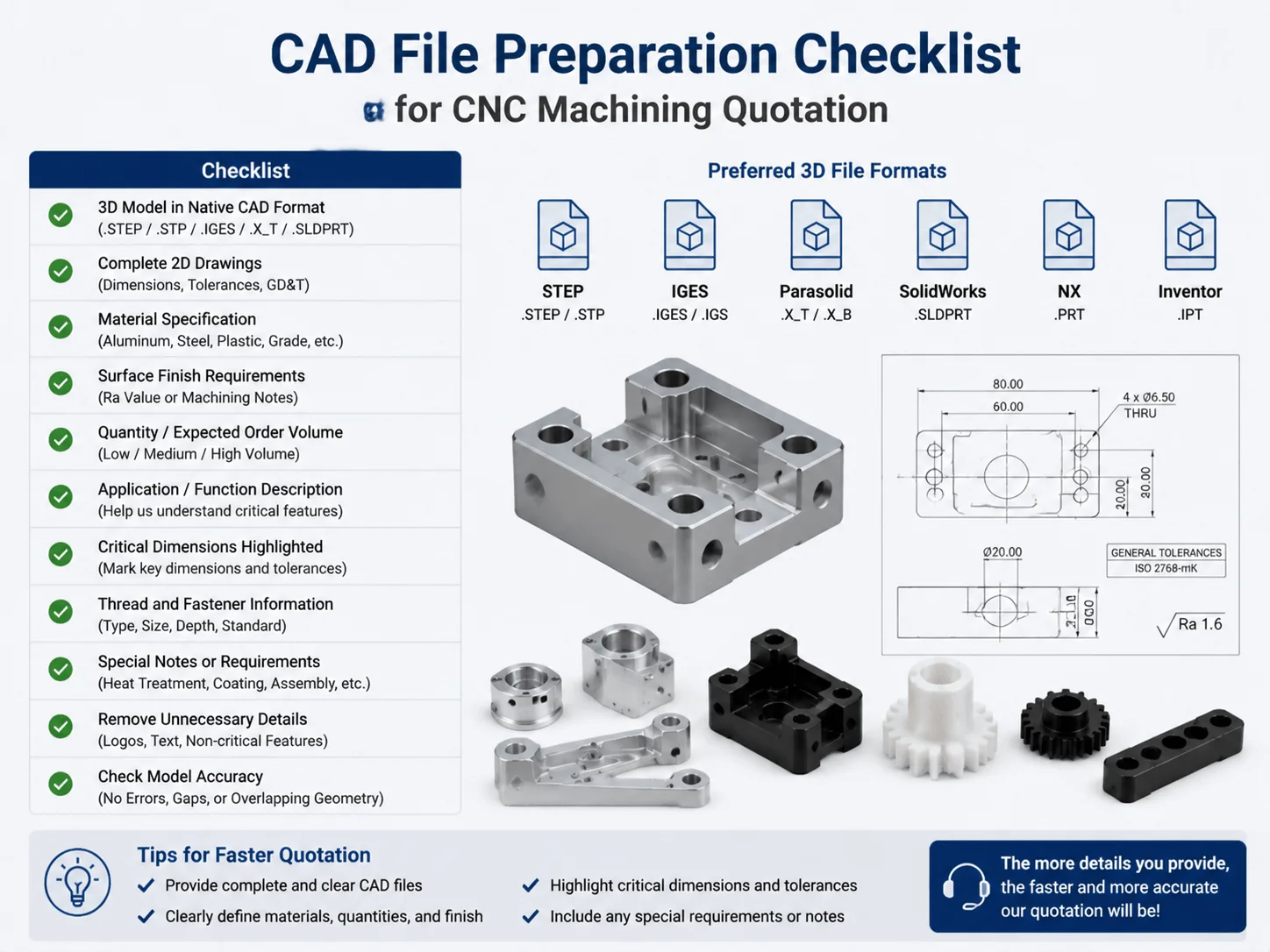
how to prepare cad files for cnc quote
Understanding how to prepare cad files for cnc quote can help you get faster, more accurate pricing. A complete RFQ package should include a 3D CAD file, 2D drawing, material requirements, quantity, surface finish, tolerance notes, and any special inspection requirements.
Recommended 3D File Formats
The best formats for CNC quotation are STEP and IGES. STEP is usually preferred because it preserves solid geometry and is widely supported by engineering software.
Acceptable file formats may include:
STEP
IGES
X_T
SLDPRT
STL for reference only
Native CAD files when available
STL files are commonly used for 3D printing but are not ideal for CNC machining because they contain mesh geometry rather than clean solid surfaces.
Why 2D Drawings Still Matter
A 3D model shows geometry, but a 2D drawing communicates engineering intent. The drawing should include:
Critical dimensions
Tolerances
Thread specifications
Surface finish requirements
Material grade
Heat treatment
Anodizing or coating requirements
Inspection notes
Assembly requirements
If a hole is threaded, the drawing should specify thread size, depth, and standard. If a surface is cosmetic, the drawing should state the finish. If a tolerance is critical, the drawing should clearly identify it.
Information Needed for an Accurate Quote
| RFQ Item | Why It Matters |
| 3D CAD file | Allows geometry review and programming |
| 2D drawing | Defines tolerances and special requirements |
| Material | Controls strength, cost, and machinability |
| Quantity | Affects setup cost and unit price |
| Surface finish | Impacts appearance, function, and cost |
| Tolerances | Determines machining and inspection effort |
| Lead time | Rush orders may increase cost |
| Application | Helps supplier recommend process improvements |
The more complete your RFQ package is, the more accurate your quote will be.
Frequently Asked Questions
What is the difference between CNC milling and CNC turning?
The cnc milling vs cnc turning difference is based on how material is removed. Milling uses rotating tools on a fixed workpiece, while turning rotates the workpiece against a cutting tool. Milling is best for complex shapes and flat surfaces; turning is best for cylindrical parts.
Should I choose 3-axis or 5-axis CNC machining?
The choice between 5 axis cnc machining vs 3 axis depends on geometry. Use 3-axis machining for simple parts with flat features. Use 5-axis machining for complex shapes, angled surfaces, and parts that require fewer setups.
Which is better for CNC machining, aluminum 6061 or 7075?
For aluminum 6061 vs 7075 cnc machining, 6061 is better for general prototypes because it is affordable, corrosion-resistant, and easy to machine. 7075 is better for high-strength aerospace or structural applications but costs more.
What are the best plastics for CNC machining prototypes?
The best plastics for cnc machining prototypes include POM, PEEK, ABS, PC, Nylon, PMMA, and PTFE. POM is good for precision mechanical parts, PEEK for high-performance applications, ABS for economical housings, and PC for impact-resistant or transparent parts.
What tolerances should I use for CNC machined parts?
A custom cnc machining tolerances guide usually recommends standard tolerances for non-critical features and tighter tolerances only for critical interfaces. Avoid applying ±0.01 mm everywhere unless it is truly required.
How can I reduce CNC machining costs?
Follow design tips to reduce cnc machining costs such as adding internal radii, avoiding deep pockets, increasing thin wall thickness, using standard holes, simplifying geometry, and limiting cosmetic finishes to necessary surfaces.
Is CNC machining good for low-volume production?
Yes. The low volume custom cnc machining advantages include no mold cost, fast turnaround, flexible design changes, real material performance, and lower risk for 100–500 piece production runs.
What files do I need for a CNC machining quote?
If you want to know how to prepare cad files for cnc quote, provide a STEP or IGES 3D file plus a 2D PDF drawing with material, tolerances, thread notes, surface finish, quantity, and inspection requirements.
Is CNC machining better than 3D printing?
CNC machining is better for functional prototypes that require strength, accuracy, and real material performance. 3D printing is better for fast concept models and complex shapes that do not require production-like strength.
Can CNC machining be used for end-use parts?
Yes. CNC machining is commonly used for end-use low-volume parts, especially when tooling is too expensive or the design may still change.
CNC machining is one of the most versatile manufacturing methods for prototypes and low-volume production. It supports a wide range of metals and plastics, delivers excellent precision, and allows engineers to test parts using real production-grade materials.
The best results come from matching process, material, tolerance, and design strategy to the actual project goal. Milling is ideal for complex prismatic parts, while turning is more efficient for cylindrical components. 3-axis machining is cost-effective for simple parts, while 5-axis machining is valuable for complex geometries. Aluminum 6061 is a strong general-purpose option, while 7075 is better for high-strength applications. Engineering plastics such as POM, PEEK, ABS, and PC offer lightweight alternatives for specific needs.
By applying proper DFM principles, avoiding unnecessary tolerances, and preparing complete CAD files, engineering teams can reduce cost, shorten lead time, and improve prototype quality.
Ready to Start Your CNC Machining Project?
GC-Prototype provides professional custom CNC machining services for engineers, product developers, procurement teams, startups, and global B2B companies.
Whether you need CNC milling, CNC turning, 3-axis machining, 5-axis machining, aluminum prototypes, plastic prototypes, precision tolerances, or low-volume custom CNC production, our engineering team can help you choose the right solution.