Address:
Shenzhen Bao'an District Xinqiao Subdistrict Huangpu Community Huangpu East Ring Road No. 504 Shenzhen Yuan Industrial City Building C
Work Hours:
Monday to Friday: 9AM - 21PM
Weekend: 9AM - 21PM

Address:
Shenzhen Bao'an District Xinqiao Subdistrict Huangpu Community Huangpu East Ring Road No. 504 Shenzhen Yuan Industrial City Building C
Work Hours:
Monday to Friday: 9AM - 21PM
Weekend: 9AM - 21PM

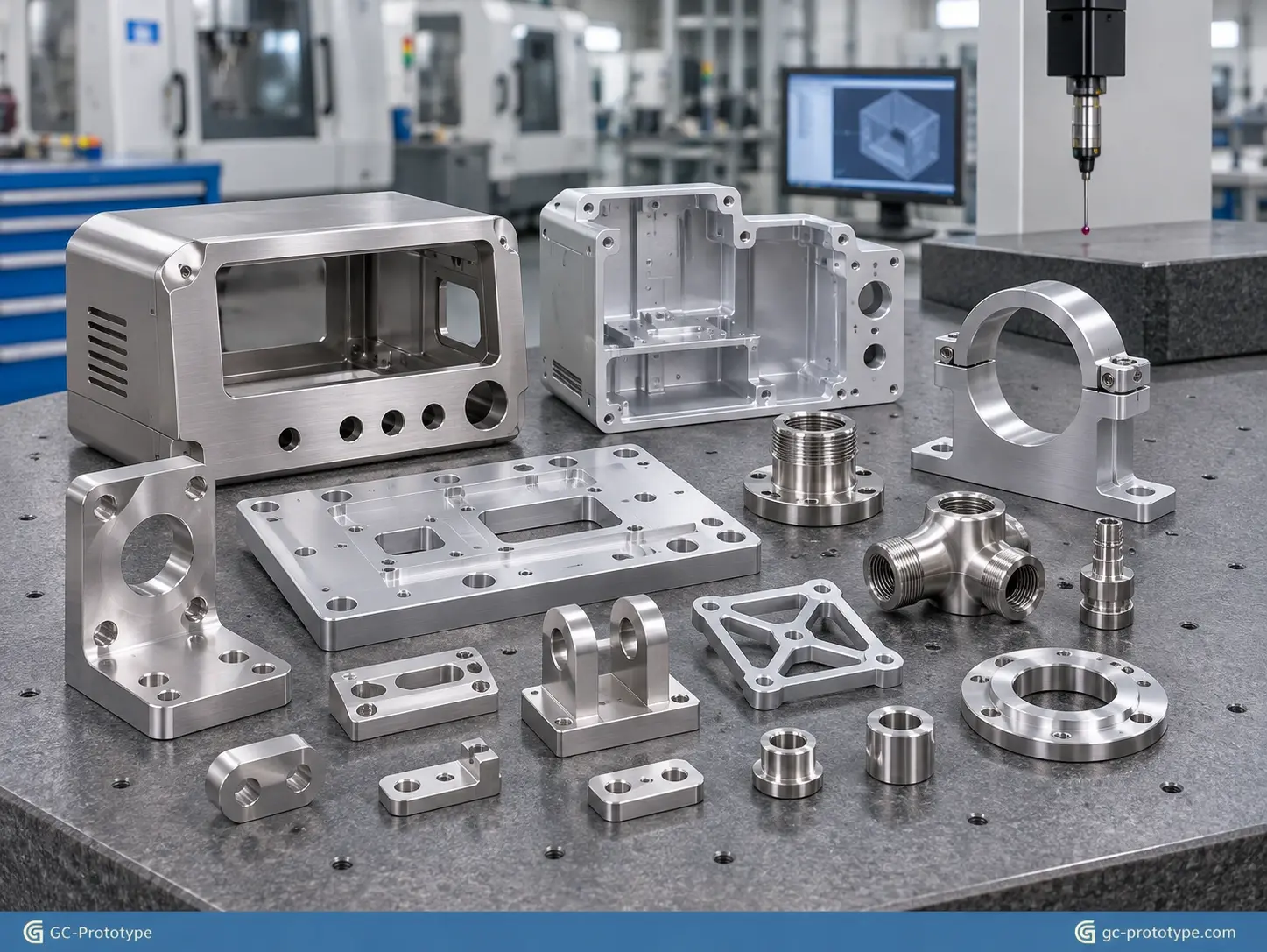
Medical precision manufacturing plays an important role in producing reliable components for medical equipment, diagnostic systems, surgical instruments, and specialized mechanical assemblies. For medical OEM engineering and procurement teams, choosing a precision machining manufacturer involves more than comparing machining prices. Buyers need to understand material specifications, dimensional inspection, manufacturing consistency, documentation, and the supplier’s ability to support different stages of product development.
From stainless steel instrument components and aluminum equipment housings to PEEK mechanical parts and precision mounting brackets, every component must be manufactured according to its functional requirements.
This guide focuses on non-implantable medical equipment components and explains how medical precision manufacturing works, which materials and processes are commonly considered, how to evaluate precision machined components manufacturers, and what information buyers should prepare before requesting a quotation.
Medical precision manufacturing refers to producing mechanical components for medical equipment and related systems according to defined engineering, dimensional, material, and quality requirements.
Unlike general-purpose mechanical components, medical equipment parts may need to meet specific requirements for corrosion resistance, cleaning, surface condition, dimensional consistency, and documentation.
The exact requirements depend on the component’s intended function and the medical device manufacturer’s quality and regulatory obligations.
Medical equipment frequently uses customized mechanical structures to support internal assemblies and maintain accurate positioning.
Typical examples include:
Aluminum equipment housings.
Stainless steel mounting brackets.
Precision instrument enclosures.
Internal structural frames.
Motor and sensor mounting plates.
Custom mechanical connectors.
These components may contain threaded holes, precision mounting surfaces, alignment features, and complex internal pockets.
Their manufacturing quality directly affects assembly accuracy and equipment reliability.
Medical instruments and equipment can contain small mechanical parts that require consistent dimensions and controlled surface conditions.
Examples include:
Precision shafts and pins.
Bushings and spacers.
Instrument guides.
Threaded connectors.
Mechanical adjustment components.
Small valve and fluid-system components.
For these parts, manufacturers must consider dimensional relationships, surface finish, burr control, and the inspection method required for each critical feature.
Diagnostic and laboratory systems often require customized mechanical components that support sensors, fluid handling, optical assemblies, and automated movement.
Typical parts include equipment covers, sample-handling components, precision supports, and fluid-system fittings.
Material compatibility, chemical exposure, cleaning requirements, and dimensional stability should be reviewed before selecting the manufacturing process.
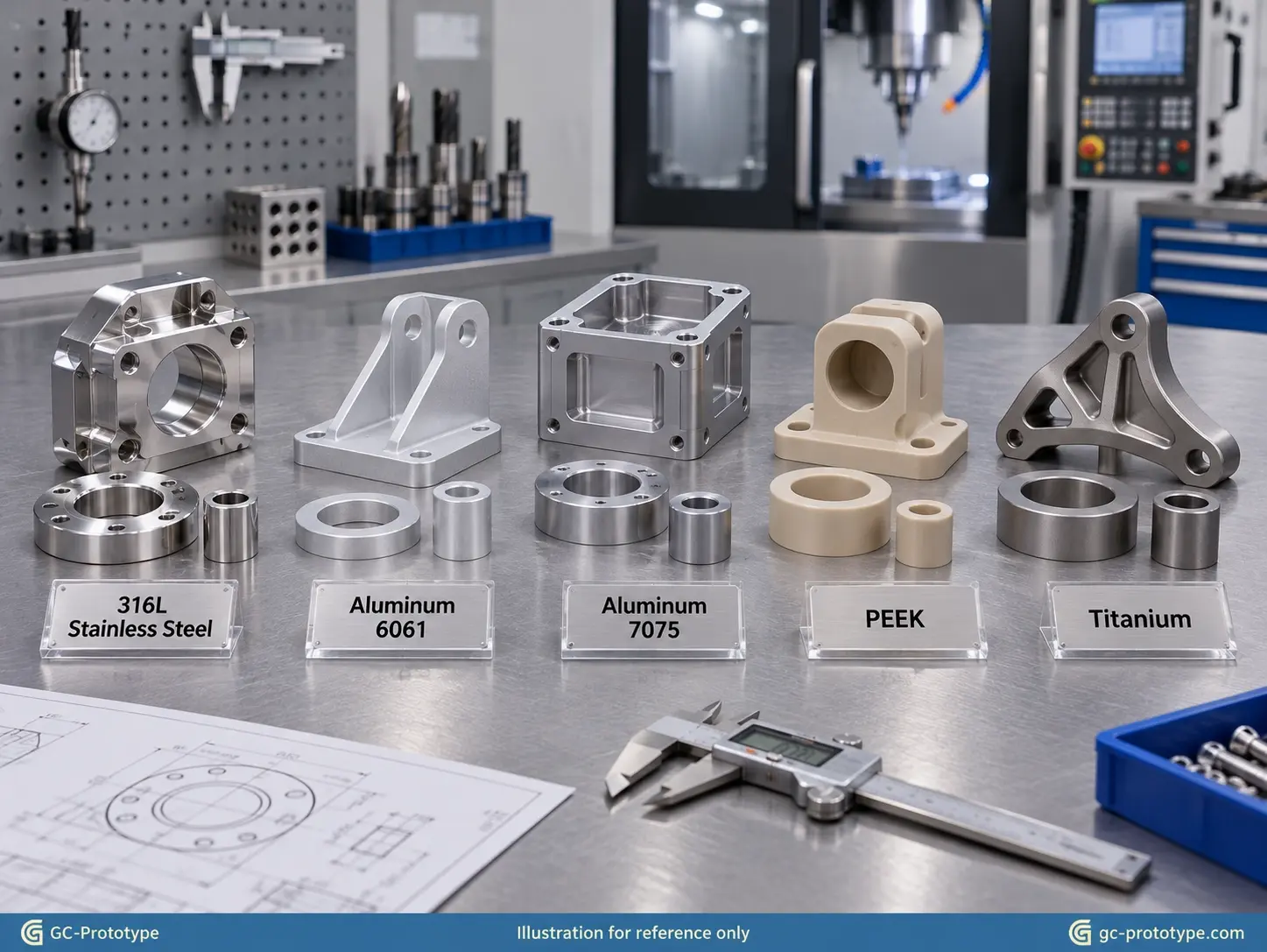
Material selection is an important part of medical component development.
The correct material depends on mechanical loading, operating temperature, corrosion exposure, cleaning procedures, weight requirements, and the component’s intended function.
A material described as medical grade should not be selected by name alone. Buyers should specify the exact grade, applicable standard, material condition, and required documentation.
316L stainless steel is commonly considered for components requiring corrosion resistance, mechanical strength, and a durable surface.
Potential applications include:
Medical instrument components.
Precision fittings.
Fluid-handling hardware.
Mechanical connectors.
Equipment mounting components.
The exact material specification and surface requirements should be confirmed according to the intended application.
Aluminum alloys are widely used for medical equipment housings, mounting plates, and lightweight structural components.
Two commonly considered grades are:
Aluminum 6061: Offers good machinability, corrosion resistance, and versatility. It is suitable for many equipment housings, brackets, and structural prototypes.
Aluminum 7075: Provides higher mechanical strength and can be considered for selected structural applications where strength-to-weight performance is important. Corrosion protection and operating conditions require additional consideration.
PEEK is a high-performance engineering plastic that offers mechanical strength, chemical resistance, and temperature capability.
It may be considered for selected medical equipment components, insulating parts, guides, and specialized mechanical applications.
Other engineering plastics may also be suitable depending on the required properties.
Material selection should consider the exact grade, fillers, cleaning exposure, operating temperature, and intended use. Not every industrial-grade polymer is suitable for every medical application.
Titanium alloys may be appropriate when a component requires a high strength-to-weight ratio and corrosion resistance.
However, titanium is not automatically the best option for every medical component. Material cost and machining complexity can be substantial.
For more detailed material and machining considerations, see our medical grade titanium CNC machining guide.
| Material | Main Properties | Potential Applications | Cost Level |
| 316L Stainless Steel | Corrosion resistance and strength | Instrument parts, fittings | Medium–High |
| Aluminum 6061 | Lightweight and machinable | Housings, brackets | Low–Medium |
| Aluminum 7075 | High mechanical strength | Structural components | Medium |
| PEEK | Chemical resistance and temperature capability | Insulators, guides, mechanisms | High |
| Titanium Alloy | High strength-to-weight ratio | Specialized mechanical components | High |
Quality control should be considered before production begins, not added after the parts have been manufactured.
For medical equipment components, buyers may require dimensional inspection, material documentation, first article verification, and controlled drawing revisions.
The exact requirements should be agreed between the customer and supplier before the purchase order is released.
Different inspection instruments serve different measurement requirements.
Common methods include:
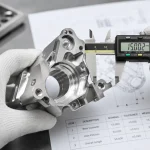
Digital calipers and micrometers.
Bore gauges.
Height gauges.
Optical measurement systems.
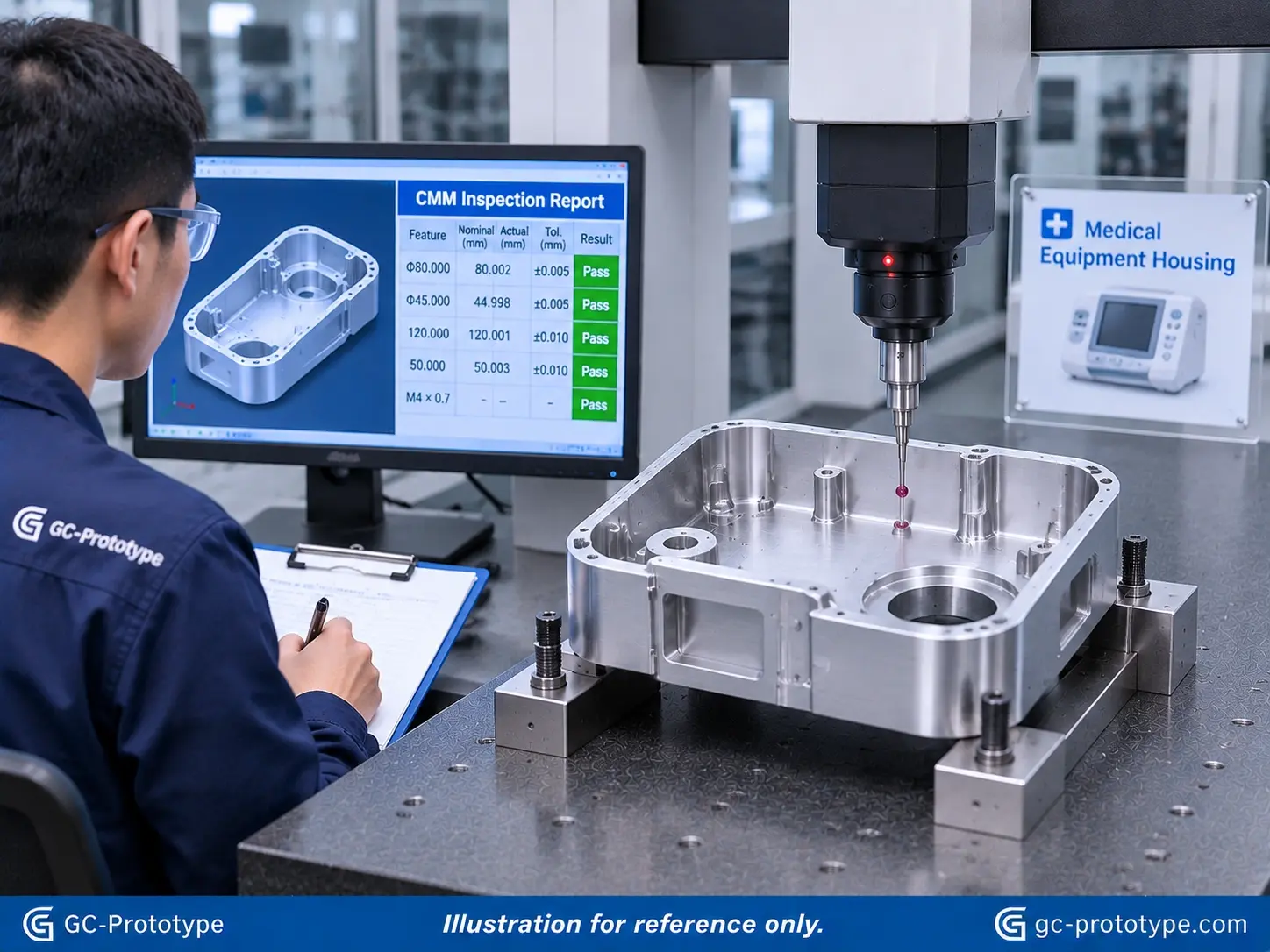
Coordinate measuring machines (CMM).
Dedicated inspection fixtures.
CMM measurement is particularly useful for evaluating the dimensional relationships between multiple features.
For example, a precision mounting housing may require verification of hole positions, mounting-face relationships, bore dimensions, and geometric tolerances.
The inspection method should match the feature being measured.
First Article Inspection verifies that an initial manufactured component meets the approved engineering drawing and agreed specifications.
An FAI may include:
Critical dimensional measurements.
Material identification.
Surface condition verification.
Drawing revision confirmation.
Inspection results and supporting records.
Buyers should specify whether they require a full dimensional report, selected key-characteristic measurements, or another agreed reporting format.
Material traceability can be important for medical manufacturing programs.
Depending on customer requirements, buyers may request:
Material test certificates.
Material grade verification.
Heat or lot numbers.
Supplier material documentation.
Links between material records and finished components.
The required level of traceability should be defined during quotation rather than assumed.
Manufacturing parts against outdated drawings can create dimensional and assembly problems.
The supplier and customer should maintain consistent revision information across:
3D CAD models.
2D engineering drawings.
Purchase orders.
Inspection reports.
Manufacturing instructions.
A clear revision process helps prevent outdated specifications from being used during repeat production.
Burrs, sharp edges, machining marks, and surface roughness may affect component assembly, handling, cleaning, and mechanical performance.
Buyers should identify which surfaces require special attention.
For example, a sealing interface may require a defined surface finish, while a hidden clearance pocket may only need a standard machined finish.
GC-Prototype provides precision CNC machining and in-house inspection capabilities. For project-specific medical quality documentation and inspection deliverables, customers should confirm the available records and requirements during quotation.
For more detailed tolerance considerations, see our CNC machining tolerances for medical devices guide.
Selecting the right precision machining manufacturer is an important decision for medical OEM engineering and procurement teams.
A supplier should be evaluated according to its actual manufacturing capabilities, inspection methods, material sourcing, engineering support, and ability to maintain consistent requirements across repeat orders.
Start by reviewing whether the manufacturer can produce the required component geometry.
Relevant processes may include:
3-axis CNC milling.
4-axis CNC machining.
5-axis CNC machining.
CNC turning.
Swiss-type turning.
EDM.
Sheet metal fabrication.
The supplier should explain why the proposed manufacturing process is appropriate for the component rather than simply listing available machines.
Ask how critical dimensions will be measured.
Important questions include:
Is CMM inspection available?
Which measurement instruments are used?
Can critical dimensions be reported?
How are inspection results recorded?
Can the supplier follow customer-specific inspection requirements?
If calibration records or specific inspection procedures are required, include them in the quality agreement.
Confirm the exact material grade, condition, and sourcing requirements.
For projects requiring material traceability, clarify which certificates and lot records can be provided.
Do not assume all suppliers offer the same level of material documentation.
A qualified manufacturing partner should identify potential manufacturing problems before production.
Typical DFM considerations include:
Difficult cutting-tool access.
Excessively thin walls.
Deep internal pockets.
Unnecessary tight tolerances.
Complex workholding requirements.
Difficult surface finishing.
Useful engineering feedback should be specific to the customer’s drawings and functional requirements.
Medical equipment projects often require several manufacturing stages.
A supplier may need to support initial engineering samples, functional validation parts, and subsequent low-volume production.
Ask whether the manufacturer can maintain drawing revisions, inspection expectations, and communication throughout these stages.
| Evaluation Criteria | What Buyers Should Check |
| Machining Capability | Milling, turning, multi-axis capabilities |
| Inspection | CMM and dimensional measurement methods |
| Material Control | Material grade and supporting documents |
| Traceability | Lot information and record management |
| Engineering Support | DFM feedback and manufacturability review |
| Production Flexibility | Prototype and low-volume batch support |
| Communication | Quotation clarity and revision management |
The best supplier is not necessarily the one offering the lowest unit price. It is the one whose manufacturing and quality capabilities match the project’s actual requirements.
Different medical equipment components require different manufacturing processes.
The selection should consider component geometry, material, tolerances, surface requirements, production quantity, and overall project cost.
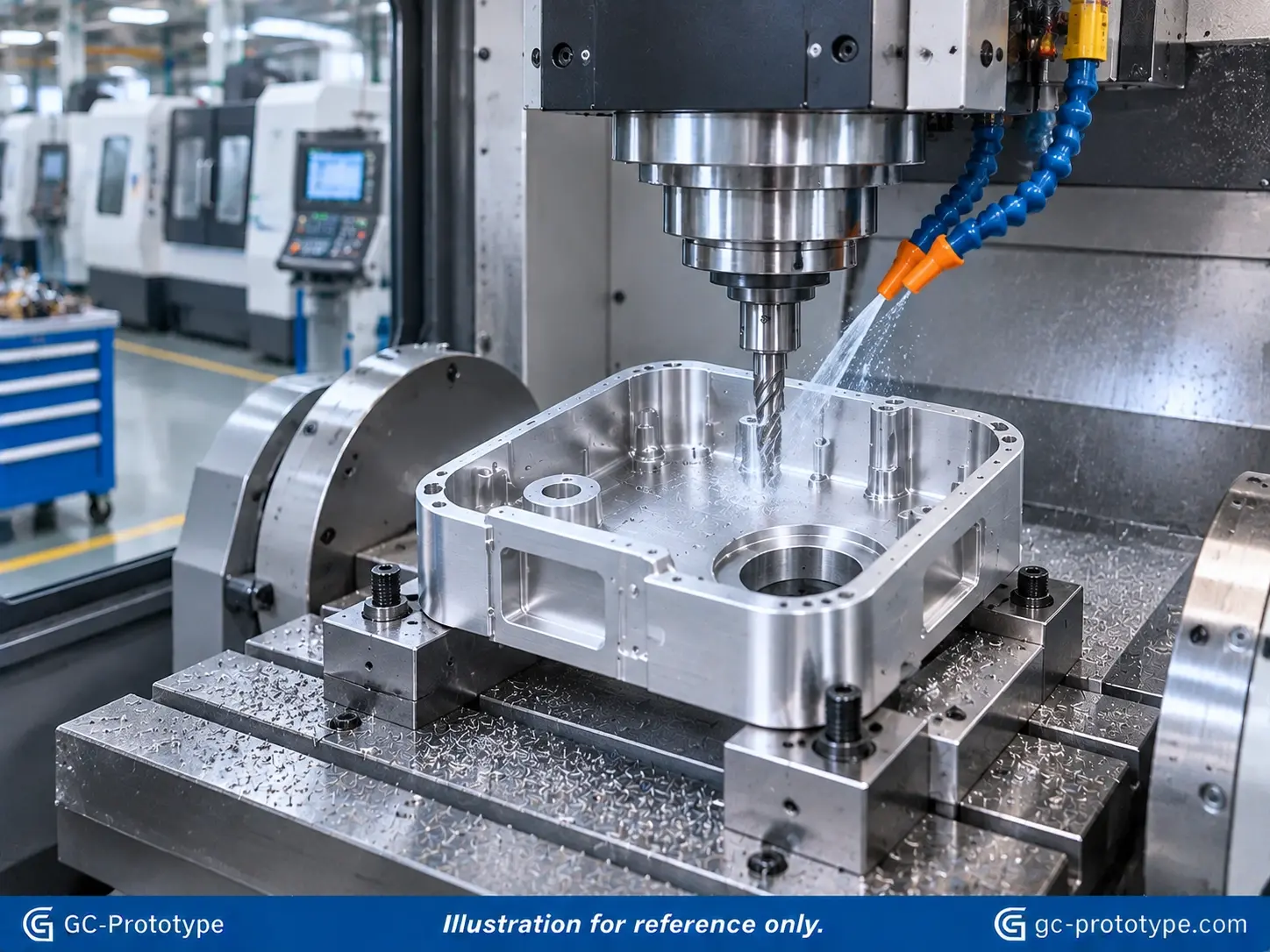
CNC milling is suitable for many equipment housings, mounting plates, brackets, and structural components.
Typical features include:
Precision mounting holes.
Internal pockets.
Threaded holes.
Flat mounting surfaces.
Complex external profiles.
3-axis, indexed multi-axis, or simultaneous 5-axis machining may be considered depending on the geometry and tool-access requirements.
CNC turning is suitable for shafts, bushings, pins, threaded fittings, and other rotational components.
The most important considerations may include diameter accuracy, concentricity, runout, thread quality, and surface finish.
Swiss-type turning may be suitable for small-diameter and elongated components with several precision features.
Potential applications include miniature shafts, pins, instrument components, and small mechanical connectors.
However, Swiss machining is not necessary for every small medical part. Its suitability depends on geometry, material, bar size, quantity, and machine configuration.
Sheet metal processes can produce equipment panels, covers, frames, and protective enclosures.
Common operations include:
Laser cutting.
CNC bending.
Welding.
Assembly.
Surface finishing.
Buyers should define material thickness, bend requirements, hole positions, joining requirements, and coating specifications.
EDM may be considered for selected electrically conductive materials and features that are difficult to produce using conventional cutting tools.
Secondary processes may include deburring, polishing, coating, and appropriate cleaning operations.
The required finishing method should be selected according to material compatibility, component function, and customer specifications.
| Component Type | Possible Process | Main Consideration |
| Equipment Housing | CNC Milling | Pocket geometry and mounting interfaces |
| Precision Shaft | CNC Turning | Diameter and concentricity |
| Miniature Pin | Swiss Turning | Slender-part stability |
| Equipment Enclosure | Sheet Metal Fabrication | Bending and assembly |
| Complex Internal Feature | CNC + EDM | Tool accessibility and geometry |
The cost of precision medical components depends on more than the raw material price.
Geometry, machining time, setup requirements, tolerance levels, surface finishing, inspection, documentation, and production quantity can all influence the final quotation.
Specialty materials, non-standard stock sizes, and documentation requirements can increase purchasing costs and lead times.
Confirm the exact material grade and acceptable alternatives before material sourcing begins.
Tight tolerances may require additional finishing passes, more controlled workholding, frequent measurements, and detailed inspection reporting.
A practical approach is to apply tight tolerances to functional interfaces while using realistic general tolerances for non-critical geometry.
Deep pockets, thin walls, difficult tool access, and multiple machining orientations can increase manufacturing time.
DFM review may identify ways to simplify geometry without changing the component’s intended function.
Polishing, coating, passivation, marking, and cleaning can add extra manufacturing steps.
Define which surfaces require special treatment and which finishing requirements are essential to performance.
| Cost Factor | Potential Cost Impact | Optimization Strategy |
| Specialty Material | Higher material price | Confirm exact grade and stock size |
| Tight Tolerances | More machining and inspection | Identify critical dimensions |
| Complex Geometry | Longer machining time | Review tool access and DFM |
| Multiple Setups | More alignment and handling | Consolidate operations where practical |
| Surface Finishing | Additional processing | Specify finish by functional area |
| Inspection Documents | Additional measurement and reporting | Agree on reporting scope early |
| Production Quantity | Setup costs distributed across parts | Plan prototype and repeat batches |
There is no reliable universal price or lead-time figure for medical components. A manufacturer needs the CAD model, engineering drawing, material, quantity, finish, and inspection requirements to prepare a meaningful quotation.
Medical equipment development often involves multiple manufacturing stages.
A manufacturing partner should understand the project’s current development stage and maintain consistency between engineering requirements and production specifications.
The process begins with a review of the 3D CAD model and 2D engineering drawings.
The engineering team evaluates:
Material selection.
Critical dimensions.
GD&T requirements.
Tool accessibility.
Wall thickness.
Surface finish.
Inspection requirements.
The purpose is to identify potential manufacturing difficulties before production begins.
Prototype parts allow engineering teams to evaluate fit, assembly, ergonomics, and mechanical interfaces.
Using production-intent materials can also provide more representative functional feedback.
If design changes are necessary, the drawing and CAD revision should be updated before the next manufacturing run.
The customer evaluates whether the manufactured parts meet the intended mechanical and product requirements.
Depending on the device, validation may involve assembly checks, mechanical testing, cleaning evaluation, or other application-specific tests.
Testing and regulatory validation remain the responsibility of the relevant medical-device development and quality teams.
After prototype validation, the project may move into a limited production batch.
Pilot production can help evaluate:
Manufacturing repeatability.
Inspection methods.
Assembly consistency.
Material utilization.
Supplier communication.
Repeat-order requirements.
As product requirements become more stable, manufacturing processes can be reviewed for cycle time, workholding, inspection frequency, and production economics.
GC-Prototype supports projects through the following development pathway:
CAD → Prototype Samples → Functional Validation → Low-Volume Pilot Production → Mass Production Support
For more details about the prototype stage, see our CNC machining for medical device prototyping guide.
A complete Request for Quotation (RFQ) helps manufacturers understand the component’s geometry, functional requirements, material specifications, and production expectations.
Providing complete technical information can reduce clarification cycles and improve quotation accuracy.
Provide a STEP model and a dimensioned PDF engineering drawing with a clear revision number.
The drawing should identify critical dimensions, datums, threads, and geometric tolerances.
Specify the exact material grade, condition, and applicable standard.
Include any required surface roughness, coating, passivation, or cleaning specifications.
If material certificates are required, identify the document type.
Provide the prototype quantity, expected repeat demand, target delivery date, and shipping destination.
If the project may progress into low-volume production, include an estimated future batch quantity.
Identify which dimensions require measurement reports, whether FAI is needed, and what material or lot traceability is expected.
These requirements should be agreed before manufacturing begins.
| RFQ Information | Recommended Details |
| 3D CAD | STEP or another agreed solid model |
| 2D Drawing | PDF with revision and units |
| Material | Exact grade and condition |
| Critical Features | Dimensions, datums, and GD&T |
| Surface Finish | Roughness and treatment requirements |
| Quantity | Prototype and expected batch quantity |
| Inspection | FAI, CMM, or dimensional report as required |
| Traceability | Material certificates and lot records as agreed |
| Delivery | Target date and shipping destination |
A clear RFQ gives the supplier a better understanding of the technical requirements and helps buyers compare quotations more accurately.
Medical precision manufacturing involves producing mechanical components for medical equipment and related systems according to defined engineering, dimensional, material, and quality requirements. The term itself does not establish that a component is implantable or that a supplier holds a particular medical certification.
Commonly considered materials include 316L stainless steel, aluminum alloys, PEEK, and selected titanium alloys. The correct choice depends on mechanical loads, corrosion exposure, cleaning procedures, temperature, intended use, and documentation requirements.
Depending on the component, manufacturers may use CMMs, micrometers, bore gauges, optical measurement systems, height gauges, and dedicated inspection fixtures. The measurement method should be appropriate for the feature and agreed before production.
Material traceability connects supplied material information with the components manufactured from it. Where required, material certificates and lot records support purchasing controls, quality documentation, and investigations.
Evaluate the supplier’s machining capabilities, inspection equipment, material sourcing, traceability practices, DFM support, revision control, and experience with similar component geometries. Request evidence relevant to your actual project requirements.
Yes. CNC machining can produce functional metal and engineering-plastic components without dedicated production molds. This makes it suitable for engineering samples, design validation builds, and selected low-volume production projects.
Medical equipment projects require manufacturing partners who understand that a component involves more than its external geometry.
Material selection, critical dimensions, inspection methods, surface requirements, documentation, and drawing revision control all contribute to a successful manufacturing project.
GC-Prototype provides custom CNC machining and prototype manufacturing support for metal and engineering-plastic components.
Our CNC machining capabilities include 3-axis, 4-axis, and 5-axis machining, supported by in-house inspection equipment. The specific inspection reports, material records, and quality documentation available for each medical project should be confirmed during the quotation stage.
Whether you need medical equipment housings, precision brackets, instrument mechanisms, diagnostic equipment parts, or customized mechanical components, our engineering team can review your manufacturing requirements.
To request a quotation, provide:
3D CAD model and 2D engineering drawing.
Required material grade.
Critical dimensions and GD&T.
Surface finish specifications.
Prototype or production quantity.
Inspection and documentation requirements.
Target delivery schedule.