Address:
Shenzhen Bao'an District Xinqiao Subdistrict Huangpu Community Huangpu East Ring Road No. 504 Shenzhen Yuan Industrial City Building C
Work Hours:
Monday to Friday: 9AM - 21PM
Weekend: 9AM - 21PM

Address:
Shenzhen Bao'an District Xinqiao Subdistrict Huangpu Community Huangpu East Ring Road No. 504 Shenzhen Yuan Industrial City Building C
Work Hours:
Monday to Friday: 9AM - 21PM
Weekend: 9AM - 21PM

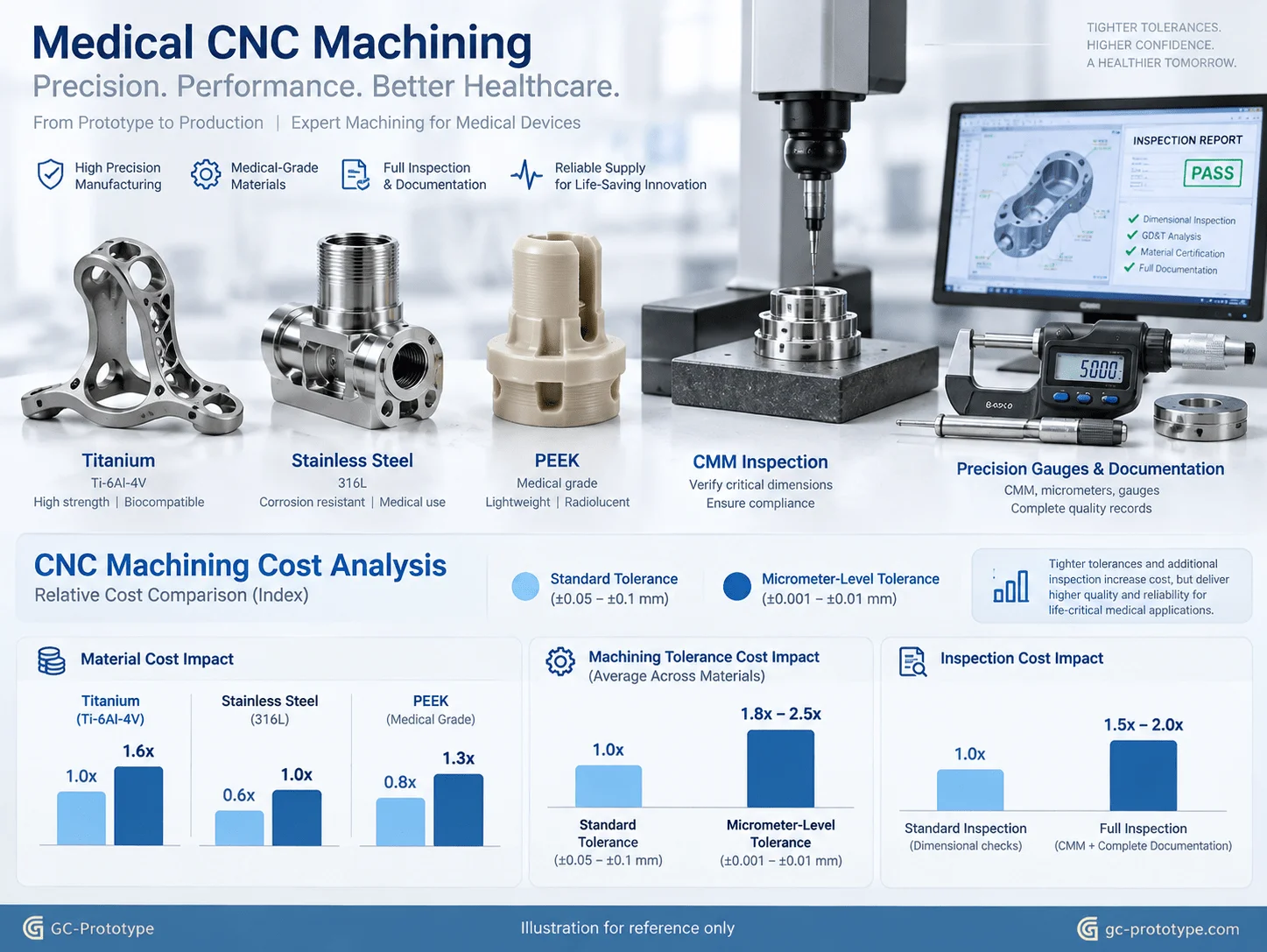
CNC machining for medical device prototyping demands more than simply producing a part that matches a CAD model. For teams evaluating medical grade titanium cnc machining or swiss machining for medical components, a few microns of dimensional error can affect fluid sealing, guide alignment, valve motion, surgical instrument performance, or assembly reliability. During medical-device NPI, precision machining must therefore balance tight functional tolerances, biocompatible materials, inspection strategy, traceability, manufacturability, and prototype cost.
For Medical R&D Engineers, Biomedical Engineers, Senior Mechanical Engineers, Quality Managers, and Sourcing Managers, the challenge is deciding where micrometer-level precision is truly necessary—and where over-tolerancing only increases cost and lead time.
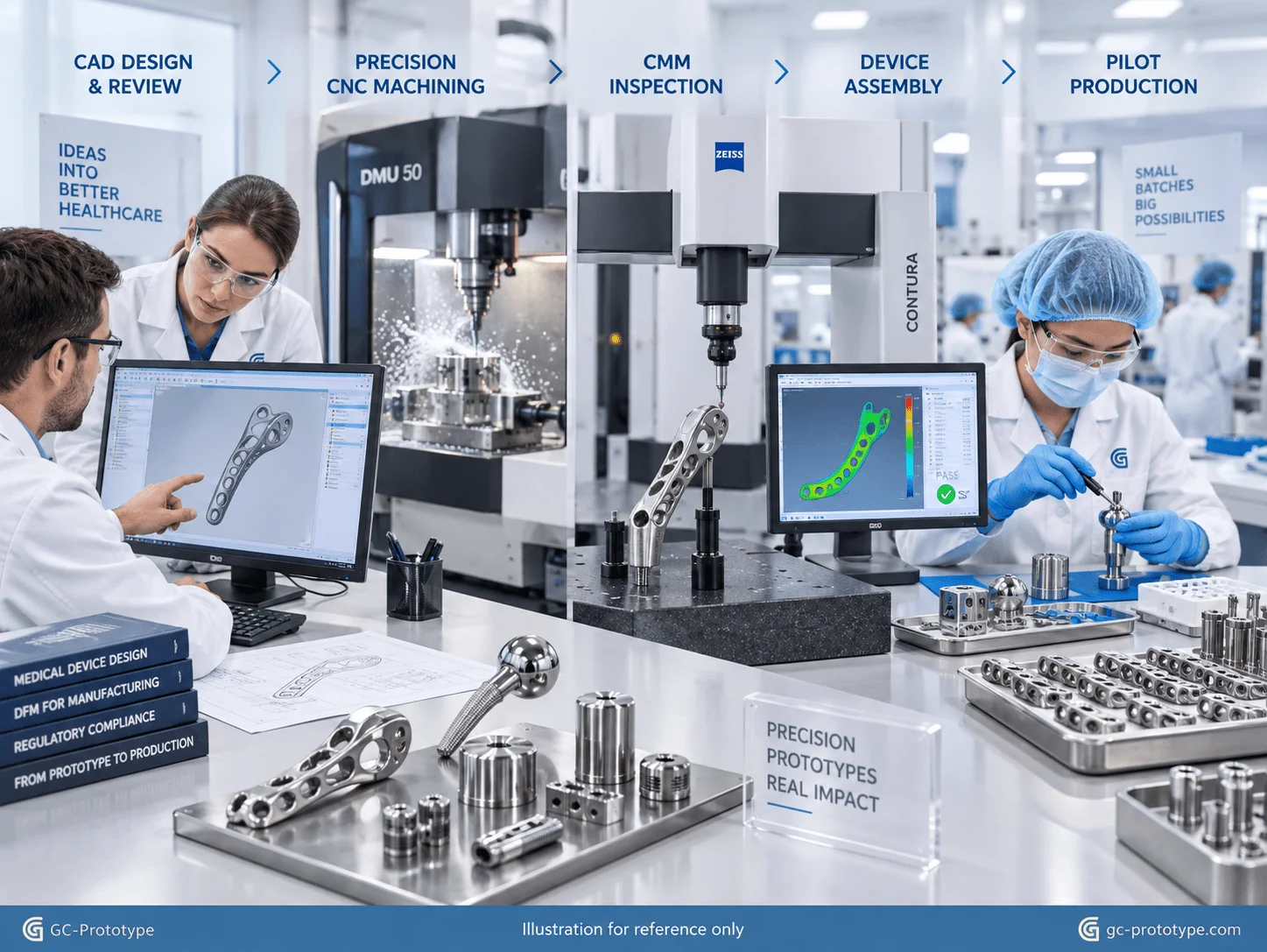
This guide explains material selection, titanium and stainless-steel machining, Swiss CNC turning, GD&T, ISO 13485 quality-system considerations, prototype process selection, tolerance-driven cost, and practical DFM strategies. It also reflects a complete development pathway from CAD → prototype samples → functional validation → low-volume pilot production → production support.
Medical components frequently interact with fluids, biological environments, precision mechanisms, optical systems, or sterile barriers. Unlike a cosmetic prototype, a functional medical prototype may fail even when the dimensional error is visually impossible to detect.
Potential consequences of poor dimensional control include:
Fluid leakage
Seal compression failure
Valve sticking
Surgical instrument jamming
Misaligned cutting or gripping interfaces
Inconsistent bearing preload
Poor assembly repeatability
Unstable sensor positioning
This does not mean every dimension should receive the tightest possible tolerance.
That approach can be equally problematic.
Extremely tight tolerances increase:
Machine setup time
Finishing operations
Inspection requirements
Scrap risk
Cost
Delivery time
The most effective medical-device DFM strategy separates dimensions into functional groups.
A typical drawing may identify:
Critical-to-function dimensions: sealing diameters, guide rails, bearing seats, valve interfaces, locating bores.
Assembly dimensions: screw patterns, enclosure fits, connector positions.
General geometry: exterior profiles, non-contact surfaces, clearance areas.
Only features that directly affect performance should receive demanding tolerances.
This functional approach improves both reliability and procurement efficiency.
Medical NPI often involves several physical iterations.
An engineering team may manufacture:
1–3 proof-of-concept parts
5–10 functional assemblies
10–20 validation units
Pilot quantities after design stabilization
Each stage answers different questions.
Early prototypes may focus on basic assembly. Later versions may need representative surface finish, sterilization resistance, sealing behavior, and material properties.
CNC machining is particularly valuable because engineering changes can be introduced without dedicated molds. A revised CAD model and drawing can move directly into another machining cycle.
That flexibility helps medical startups and established OEMs identify problems before expensive production tooling or regulatory verification is locked in.
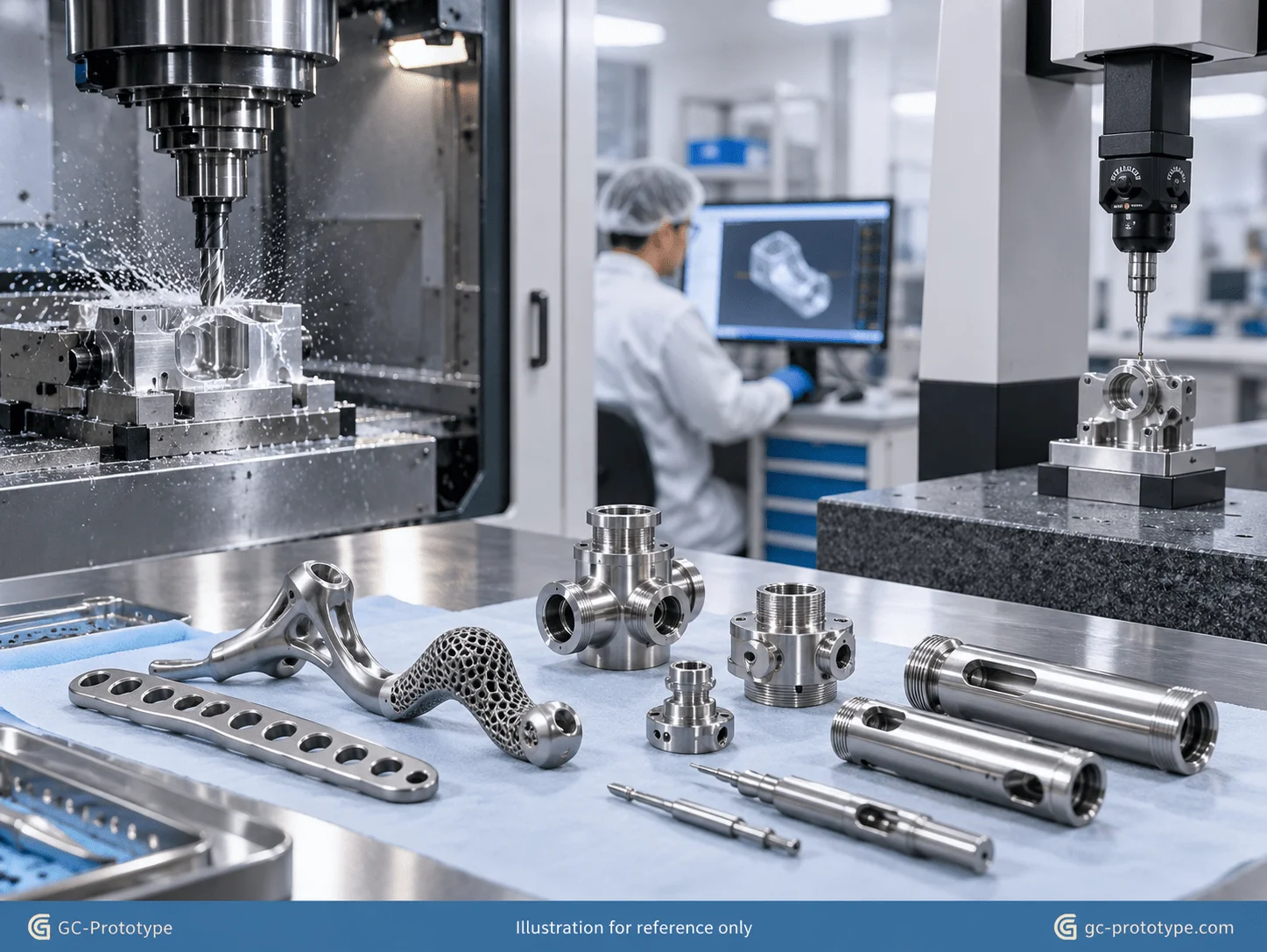
Medical grade titanium cnc machining is widely considered for orthopedic, surgical, dental, and robotic medical applications because selected titanium grades combine high strength-to-weight ratio, corrosion resistance, and documented biocompatibility for appropriate intended uses.
Common medical titanium materials include:
Ti-6Al-4V Grade 5
Ti-6Al-4V ELI Grade 23
Commercially pure titanium grades for selected applications
Grade selection should follow the device specification and applicable material standard. “Medical grade” should never be treated as a substitute for exact material identification, mill certification, traceability, and regulatory review.
Potential applications include:
Orthopedic instrument components
Surgical graspers
Bone fixation components
Robotic surgery interfaces
Minimally invasive instrument shafts
Precision medical fixtures
Titanium has relatively low thermal conductivity compared with aluminum and many steels.
During cutting, heat tends to remain concentrated near the cutting edge rather than being rapidly conducted into the workpiece.
This can lead to:
Tool wear
Localized thermal expansion
Burr formation
Dimensional instability
Surface damage if parameters are poorly controlled
Titanium also has elastic recovery characteristics that require careful toolpath planning during precision finishing.
For demanding features, machining strategy may include:
Sharp, appropriate cutting tools
Controlled tool engagement
Stable workholding
Consistent coolant or validated dry-machining strategy where appropriate
Thermal stabilization before final inspection
A blanket “no coolant” rule should not be applied to medical machining. Process fluids, cleaning validation, contamination controls, and material compatibility should instead be defined according to the specific manufacturing and regulatory requirements.
316LVM stainless steel is another material used in demanding medical applications.
Compared with titanium, it offers:
High corrosion resistance
Good mechanical strength
Familiar machining behavior
Excellent surface finishing potential
However, it is significantly denser.
| Engineering Factor | Ti-6Al-4V / ELI | 316LVM Stainless Steel |
|---|---|---|
| Density | Lower | Higher |
| Strength-to-Weight | Excellent | Good |
| Corrosion Resistance | Excellent | Excellent |
| Machining Difficulty | High | Moderate/High |
| Weight-Sensitive Devices | Strong advantage | Less favorable |
| Precision Surgical Parts | Excellent | Excellent |
| Material Cost | Higher | Generally lower |
The correct material depends on:
Load
Weight
corrosion environment
sterilization method
device classification
regulatory documentation
downstream surface treatment
The phrase iso 13485 cnc machining precision standards is often used when buyers search for medical machining suppliers, but technically ISO 13485 is a quality-management-system standard for medical devices—not a table of machining tolerances.
That distinction matters.
ISO 13485 focuses on controlled processes such as:
Document control
Risk-based quality management
Supplier control
Nonconformance handling
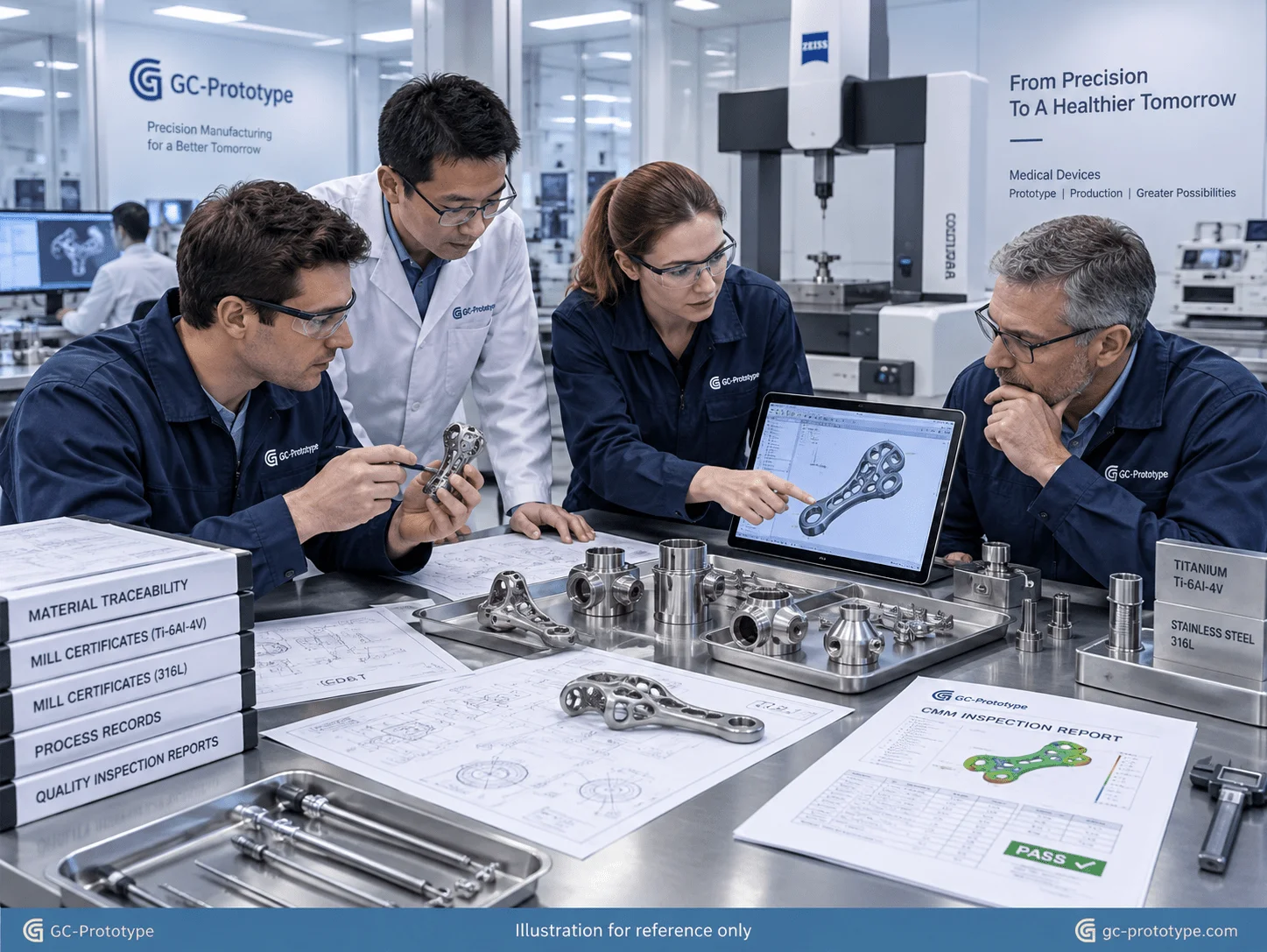
Traceability
Corrective and preventive actions
Validation of relevant processes
Actual dimensional tolerances come from engineering drawings, GD&T, device requirements, process capability, and applicable product standards.
Similarly, ISO 2768 may provide general tolerances where explicitly invoked, but critical medical features should normally be toleranced directly rather than relying only on a general tolerance class.
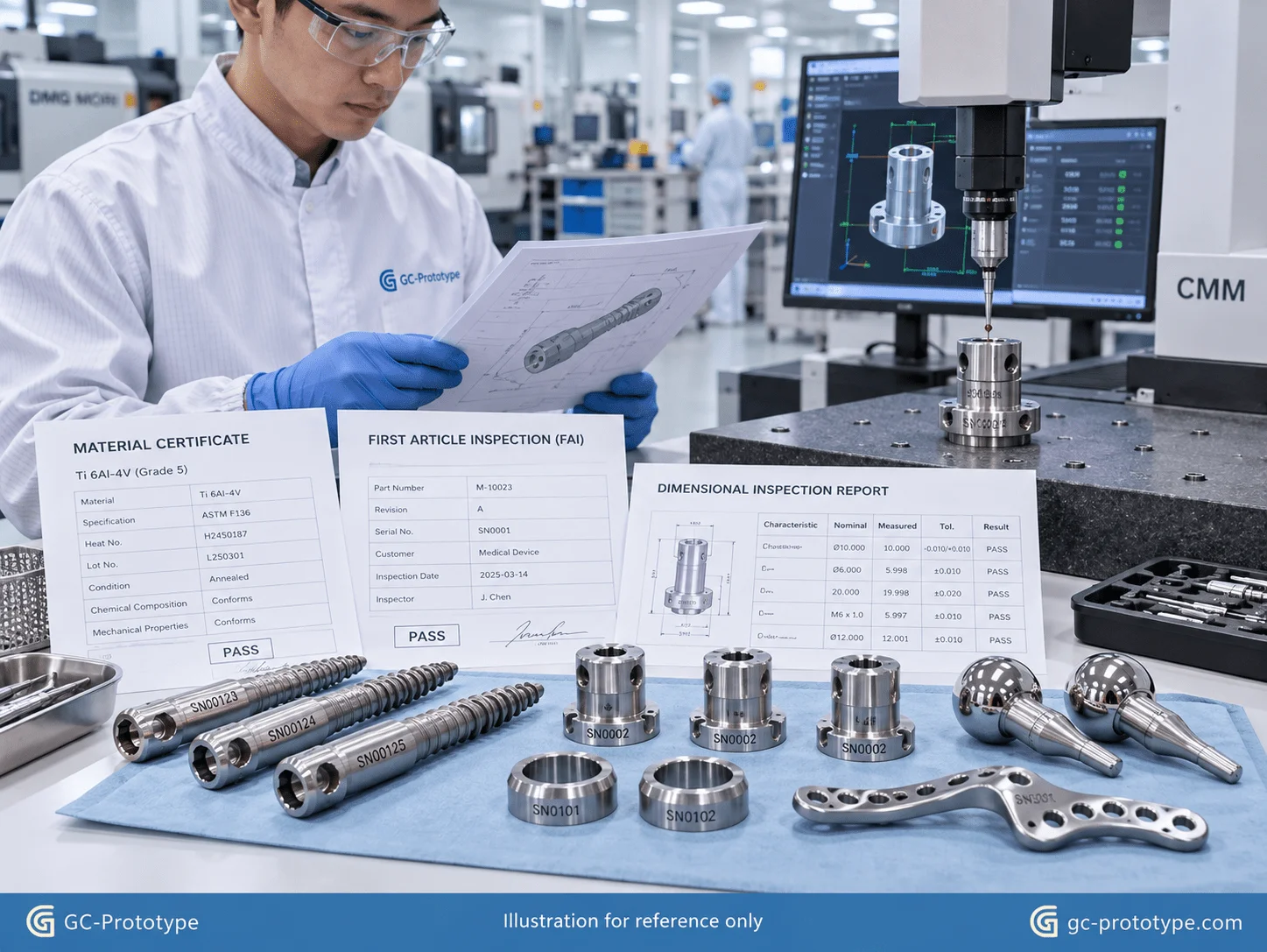
First Article Inspection (FAI) helps confirm that the manufacturing process can produce the intended geometry before additional units are made.
An FAI package may include:
Critical dimensions
Hole positions
Surface finish
Thread verification
Material information
Drawing-revision identification
For a prototype program, FAI can be especially valuable before producing a larger validation batch.
Coordinate Measuring Machines can verify:
Hole position
Datum relationships
Flatness
Perpendicularity
Profile
Complex 3D geometry
CMM inspection is particularly useful for parts containing multiple functional interfaces that cannot be adequately verified with hand tools alone.
Traceability may include:
Material grade
Heat or lot identification
Supplier certification
Manufacturing batch
Drawing revision
These records can support the medical-device manufacturer’s quality and regulatory documentation. They do not, by themselves, make a finished device FDA-cleared or CE-marked; regulatory status applies to the complete device and its applicable conformity pathway.
Swiss machining for medical components is especially valuable for small, slender, high-length-to-diameter parts that are difficult to machine accurately on a conventional lathe.
Typical applications include:
Bone screws
Endoscope components
Valve spools
Cannula-related components
Fluid needles
Miniature shafts
Surgical instrument pins
In a Swiss-type machine, the material is supported close to the cutting zone by a guide bushing. This minimizes workpiece deflection while tools machine the component.
That architecture is particularly useful for long, narrow parts.
Traditional turning leaves more unsupported stock between the chuck and cutting tool.
On a very slender workpiece, cutting forces may create:
Deflection
Taper
Chatter
Surface-finish variation
Swiss turning minimizes unsupported length at the cutting point.
Modern Swiss machines can also combine:
OD turning
Grooving
Threading
Drilling
Cross drilling
Milling
in one controlled operation.
This reduces secondary setups and the geometric variation they can introduce.
The outline references tolerances around ±0.003 mm for selected miniature medical features.
Such tolerances are possible only under appropriate conditions and should not be treated as a universal Swiss-machining capability.
Achievability depends on:
Feature size
Material
Tool condition
Machine capability
Thermal control
Workholding
inspection method
production stability
Before specifying ±0.003 mm, an engineer should ask:
Does the function genuinely need it?
If a fluid valve interface does, the tolerance may be justified.
If an external cosmetic diameter does not, widening the tolerance can significantly reduce machining and inspection burden.
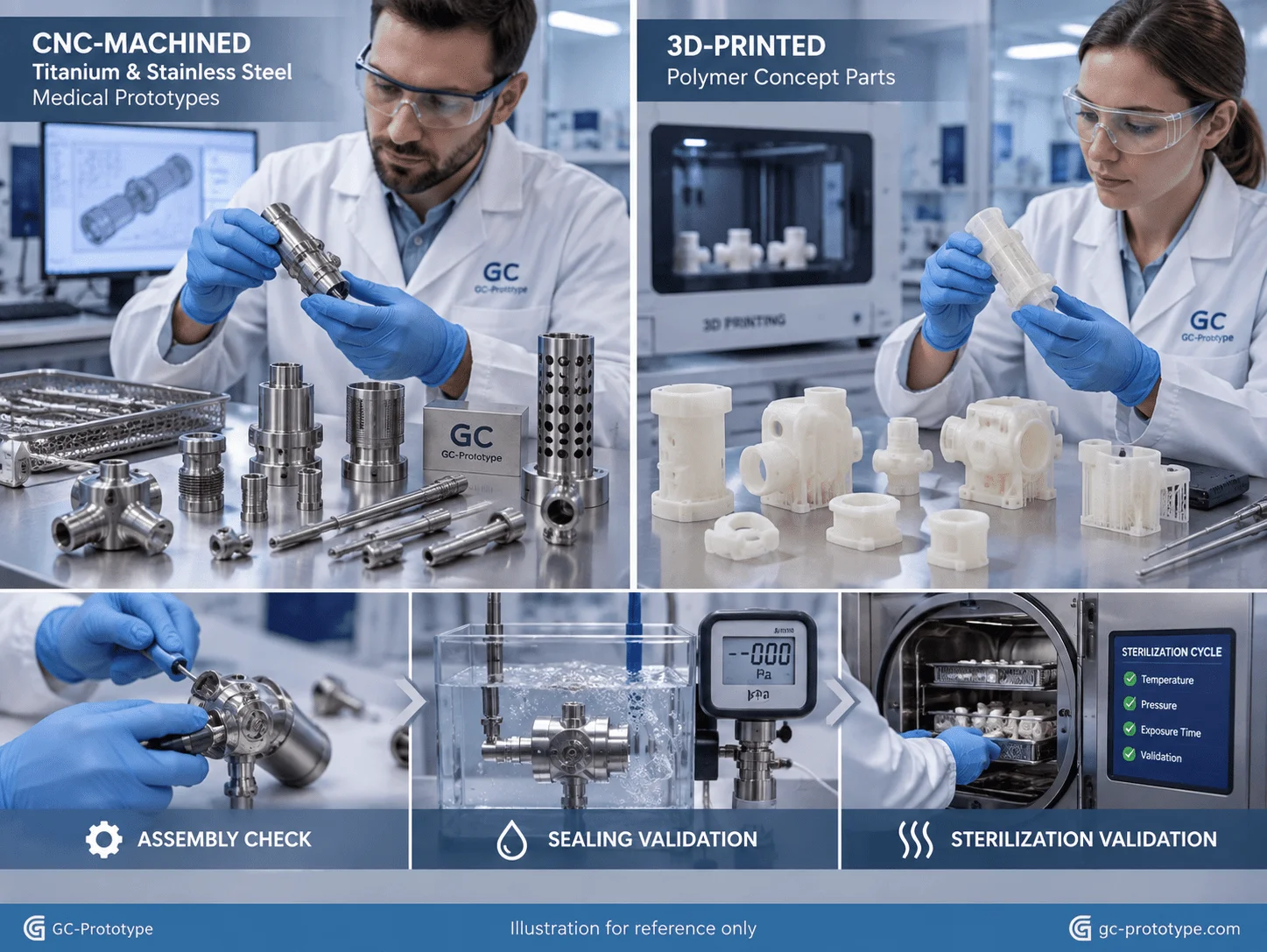
CNC machining for medical device prototyping provides medical teams with functional components made from actual engineering metals and plastics without waiting for production tooling.
For quantities such as 1–20 prototype sets, CNC machining is often selected when teams need to validate:
Precision assembly
Sealing
Sterilization
Thread strength
Surface finish
Bearing fits
Mechanical load
3D printing remains extremely valuable for:
Concept models
Ergonomic evaluation
Complex internal geometry
Fast packaging studies
The correct process depends on what the prototype must prove.
| Validation Requirement | CNC Machining | 3D Printing |
|---|---|---|
| Early Form/Fit | Excellent | Excellent |
| Tight Mechanical Fits | Excellent | Process-dependent |
| Real Metal Properties | Excellent | Only with suitable metal AM |
| Thread Strength | Excellent | Process-dependent |
| Sealing Surfaces | Excellent | Often requires finishing |
| Complex Internal Geometry | Limited by tool access | Excellent |
| Rapid Visual Iteration | Good | Excellent |
| Sterilization Validation | Material-dependent but representative | Material/process-dependent |
If a device component must withstand repeated steam sterilization, the prototype should use a material representative of the intended design.
CNC-machined:
Titanium
Stainless steel
PEEK
may provide more useful sterilization data than a low-temperature visual prototype material.
Engineers should still validate:
Material grade
surface finish
dimensional change
cleaning method
sterilization cycle
under the actual intended process.
A medical device containing fluid or gas pathways may require:
Precision grooves
Flat sealing surfaces
Controlled bore diameters
Threaded ports
CNC machining is well suited to these features.
A prototype machined from dense stock can provide highly representative sealing behavior before later manufacturing decisions are made.
One of the most expensive mistakes in medical device development is over-tolerancing.
Engineers understandably want maximum precision, but every reduction in tolerance creates additional manufacturing challenges.
For example, the cost difference between:
±0.05 mm
±0.01 mm
±0.005 mm
can be significant because tighter tolerances may require:
Additional finishing passes
Lower machining speeds
More stable temperature control
Higher inspection frequency
Specialized gauges
More scrap risk
The relationship is not a universal mathematical curve, but cost generally rises nonlinearly as tolerance approaches the process capability limit.
The outline suggests that DFM optimization may reduce machining cost by more than 30% in some situations. That should be understood as a project-dependent opportunity rather than a guaranteed saving.
GD&T allows engineers to communicate what matters functionally.
Instead of holding an entire housing to a tight coordinate tolerance, an engineer may control:
Flatness of the sealing face
Position of locating holes
Perpendicularity of a guide
Runout of a rotating interface
This can reduce unnecessary precision on unrelated surfaces.
Example
A medical pump housing may require:
Critical:
Seal-gland diameter
Valve bore
Piston guide
Datum surface
Noncritical:
Exterior wall profile
Label recess
Clearance openings
If all features receive the same tight tolerance, procurement pays for accuracy that does not improve clinical or mechanical performance.
Reduce Deep Features
Deep pockets and deep small-diameter holes increase machining difficulty.
Potential issues include:
Tool deflection
Chip evacuation
Longer tools
Reduced surface quality
Longer cycle time
DFM alternatives include:
Reducing unnecessary depth
Increasing tool access
Splitting a housing into components
Increasing internal radii
Medical devices frequently contain many miniature fasteners.
Using standard:
Thread sizes
Reamers
Drills
Counterbores
can reduce tool changes and sourcing complexity.
Custom threads should be reserved for genuine functional needs.
A dimension cannot be effectively controlled if it is extremely difficult to measure.
Critical features should be designed so inspectors can access them using:
CMM probes
Pin gauges
Bore gauges
Optical equipment
Surface roughness instruments
Inspection strategy should therefore be considered during design—not after machining is complete.
Medical prototype cost is driven by more than material.
Typical contributors include:
Raw stock
CNC programming
Setup
Machining time
Tight tolerances
Surface finish
Cleaning
Inspection
Documentation
| Requirement | Relative Manufacturing Difficulty | Typical Use |
|---|---|---|
| ±0.10 mm | Low | Noncritical geometry |
| ±0.05 mm | Moderate | General assembly |
| ±0.01 mm | High | Precision interfaces |
| ±0.005 mm | Very High | Selected critical features |
| ±0.003 mm | Specialized | Certain miniature functional features |
These categories are illustrative rather than universal. Actual capability depends on geometry, process, material, and measurement system.
| Material | Relative Cost | Typical Medical Prototype Use |
|---|---|---|
| Aluminum | Low | Fixtures, housings |
| 316L Stainless | Medium | Instruments, fluid components |
| Titanium | High | Lightweight/high-value medical parts |
| PEEK | High | Insulating, sterilizable polymer parts |
For procurement teams, total cost should include the engineering value of the prototype.
A higher-cost CNC part that provides representative sealing, material, and tolerance data may reduce total project expense by identifying problems before clinical or verification testing.
A surgical grasper prototype may require:
Precision pivot holes
Thin jaws
Controlled surface finish
Accurate alignment
Titanium or stainless steel allows engineers to test real mechanical stiffness and repeated actuation.
A miniature valve spool requires:
Tight diameter control
Long slender geometry
Fine surface finish
Swiss CNC turning can manufacture the outer diameter, grooves, and internal features with minimal secondary handling.
A new orthopedic instrument may require:
Ti-6Al-4V components
High mechanical strength
Precise interfaces
Repeated sterilization testing
CNC machining provides functional hardware for engineering verification before production decisions.
A diagnostic device may contain:
Small fluid channels
Threaded ports
Seal interfaces
Precision machining allows leak and flow testing with representative materials.
A surgical robot joint may combine:
Titanium shafts
Stainless hardware
PEEK insulators
Precision bearing seats
CNC machining and turning can provide a complete set of functional prototype parts for integration testing.
A medical device rarely moves directly from CAD to final production.
The development path typically includes multiple validation stages.
Engineering teams define:
Materials
Critical tolerances
GD&T
Sterilization environment
Inspection requirements
A DFM review identifies unnecessary cost before machining starts.
Initial units validate:
Fit
Function
Ergonomics
Mechanical interfaces
More representative prototypes support:
Sealing tests
Load tests
Sterilization
Mechanical cycling
Assembly verification
Pilot quantities help evaluate:
Process consistency
Quality documentation
Inspection plans
Assembly workflow
After the design is stable, the manufacturing process can be optimized for repeatability and volume.
Depending on the component, production may remain CNC machined or transition to another manufacturing route.
GC Prototype supports customers across the full product-development pathway:
CAD → prototype samples → functional validation → low-volume pilot production → production support.
There is no universal medical tolerance. General geometry may use relatively broad tolerances, while critical sealing, bearing, valve, or alignment features may require ±0.01 mm, ±0.005 mm, or tighter depending on function and process capability.
No. ISO 13485 is a medical-device quality-management-system standard. Machining tolerances come from drawings, GD&T, process capability, and applicable component requirements.
It depends on the application. Titanium offers low weight and excellent corrosion resistance, while appropriate stainless steels provide strength, corrosion resistance, and good manufacturability.
Swiss turning is particularly useful for long, slender, miniature parts such as screws, pins, shafts, valve spools, and needle-like components.
Selected features may achieve this level under appropriate conditions, but capability depends on material, feature size, tooling, temperature, machine stability, and inspection.
CNC machining is often preferred when the prototype requires tight mechanical fits, representative metal properties, sealing surfaces, strong threads, or dimensional stability.
Yes. It is excellent for early geometry, ergonomic evaluation, anatomical models, packaging studies, and complex internal features.
Apply tight tolerances selectively, use GD&T, simplify deep features, standardize holes and threads, choose appropriate materials, and review manufacturability before releasing the drawing.
Yes, especially for regulated medical programs. Traceability can connect the finished component to its material lot, supplier documentation, drawing revision, and manufacturing record.
Provide:
3D CAD/STEP models
2D drawings
Material specification
Quantity
Critical tolerances and GD&T
Surface-finish requirements
Cleaning or sterilization requirements
Inspection/documentation expectations
Medical-device machining is not about specifying the smallest possible tolerance everywhere. It is about identifying exactly which dimensions affect clinical function, sealing, motion, alignment, sterilization durability, and assembly reliability—and controlling those features with the appropriate process and inspection strategy.
Medical grade titanium cnc machining provides high-value solutions where strength, corrosion resistance, and low weight matter. Swiss machining for medical components enables highly stable production of miniature, slender features. A properly defined quality system supports traceability and controlled manufacturing, while intelligent GD&T prevents over-tolerancing from consuming unnecessary NPI budget.
For development teams, cnc machining for medical device prototyping also provides one of the most direct ways to test real materials and precision interfaces before committing to later production processes.
The best results come from combining engineering, manufacturing, quality, and procurement decisions early.
GC Prototype supports medical-device customers throughout the development journey—from CAD and prototype samples to functional validation, low-volume pilot production, and production support.
Achieving micrometer-level precision for your medical hardware shouldn’t stall your validation timeline or consume unnecessary NPI budget. Whether you are a Senior Mechanical Engineer finalizing tight-tolerance surgical instruments or a Sourcing Manager evaluating Swiss machining for miniature medical components, GC Prototype provides precision CNC engineering support for demanding medical-device development.