Address:
Shenzhen Bao'an District Xinqiao Subdistrict Huangpu Community Huangpu East Ring Road No. 504 Shenzhen Yuan Industrial City Building C
Work Hours:
Monday to Friday: 9AM - 21PM
Weekend: 9AM - 21PM

Address:
Shenzhen Bao'an District Xinqiao Subdistrict Huangpu Community Huangpu East Ring Road No. 504 Shenzhen Yuan Industrial City Building C
Work Hours:
Monday to Friday: 9AM - 21PM
Weekend: 9AM - 21PM

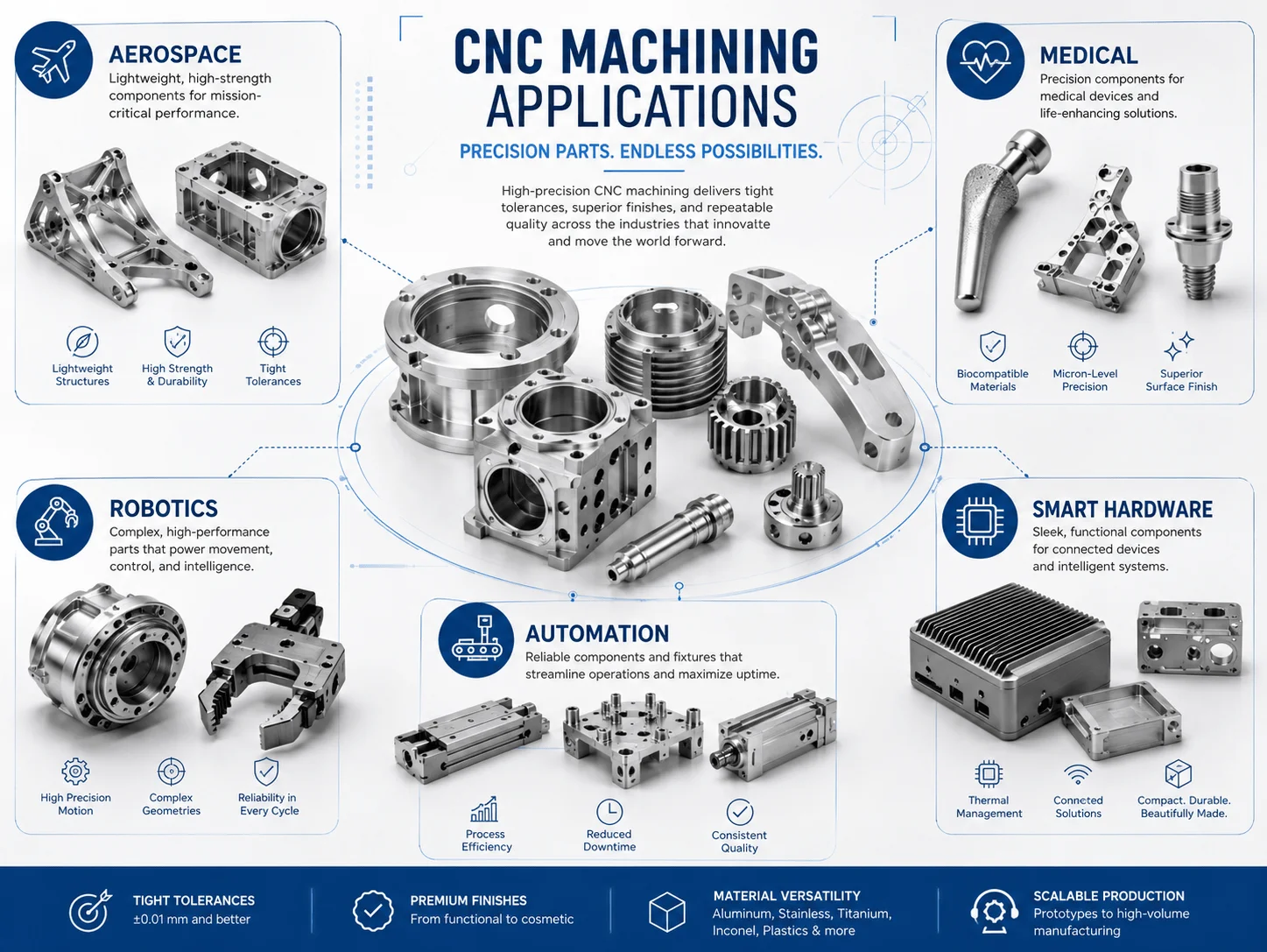
CNC machining is a foundation of modern precision manufacturing because it converts digital designs into accurate metal and plastic components without dedicated production tooling. For aerospace, medical, robotics, automation, and smart-hardware teams, it offers a practical route from a single engineering prototype to a repeatable low-volume production run. This guide explains multi-axis process selection, material choices, tolerance planning, design-for-manufacturability principles, cost control, and sourcing preparation for Senior Mechanical Engineers, Product Developers, NPI Managers, and Procurement Professionals.
Unlike molding or casting, CNC machining removes material from solid stock with computer-controlled cutting tools. It can produce functional parts in production-grade alloys and engineering plastics, support tight feature control, and respond quickly to design revisions. Its flexibility is particularly valuable during new product introduction, when geometry may still change and investing in hard tooling would create unnecessary financial risk.
Cross-Industry Applications & Material Selection
Material selection determines machinability, mechanical performance, surface finish, inspection strategy, and total cost. A practical choice must account for the operating environment, load direction, temperature, corrosion exposure, weight, compliance requirements, and production quantity.
The strongest or most expensive material is not automatically the best option. A material that exceeds the application requirements may increase tool wear, extend machining time, complicate finishing, and raise procurement costs without delivering a meaningful performance advantage.
Elevating Flight: aerospace aluminum cnc machining services
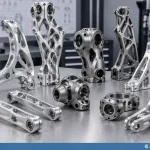
Professional aerospace aluminum cnc machining services help engineering teams produce lightweight brackets, wing-interface components, avionics housings, structural links, sensor mounts, UAV parts, and test hardware from high-strength aluminum alloys.
Aluminum 7075-T6 is frequently considered when strength-to-weight performance is critical, while 6061-T6 remains a versatile option for housings, fixtures, structural prototypes, and less heavily loaded components.
Aerospace parts often combine thin walls, deep pockets, complex contours, and tightly related datums. Toolpath strategy matters because excessive cutting force can distort thin sections after the part is released from its fixture. Manufacturers may use staged roughing, balanced material removal, soft jaws, vacuum fixtures, stress-relief cycles, or dedicated workholding to preserve geometry.
Documentation can be as important as the machining operation. Depending on the program, customers may require:
Material certificates
First-article inspection reports
Full dimensional reports
Lot traceability
Surface-treatment certification
Process records
Packaging and handling controls
These requirements should be included during quotation rather than added after manufacturing begins.
For prototype aerospace work, engineers should distinguish between dimensions that affect assembly or load transfer and dimensions that are merely descriptive. Applying extremely tight tolerances to every feature increases machining and inspection time without necessarily improving performance.
| Aerospace Requirement | Practical Machining Response |
| Low component weight | Thin-wall design, pocketing, optimized geometry |
| High mechanical strength | 7075-T6, stainless steel, or titanium where justified |
| Dimensional stability | Balanced roughing and controlled workholding |
| Complex curved surfaces | Indexed or simultaneous five-axis machining |
| Traceability | Material and inspection documentation defined in the RFQ |
| Corrosion protection | Anodizing, conversion coating, plating, or painting |
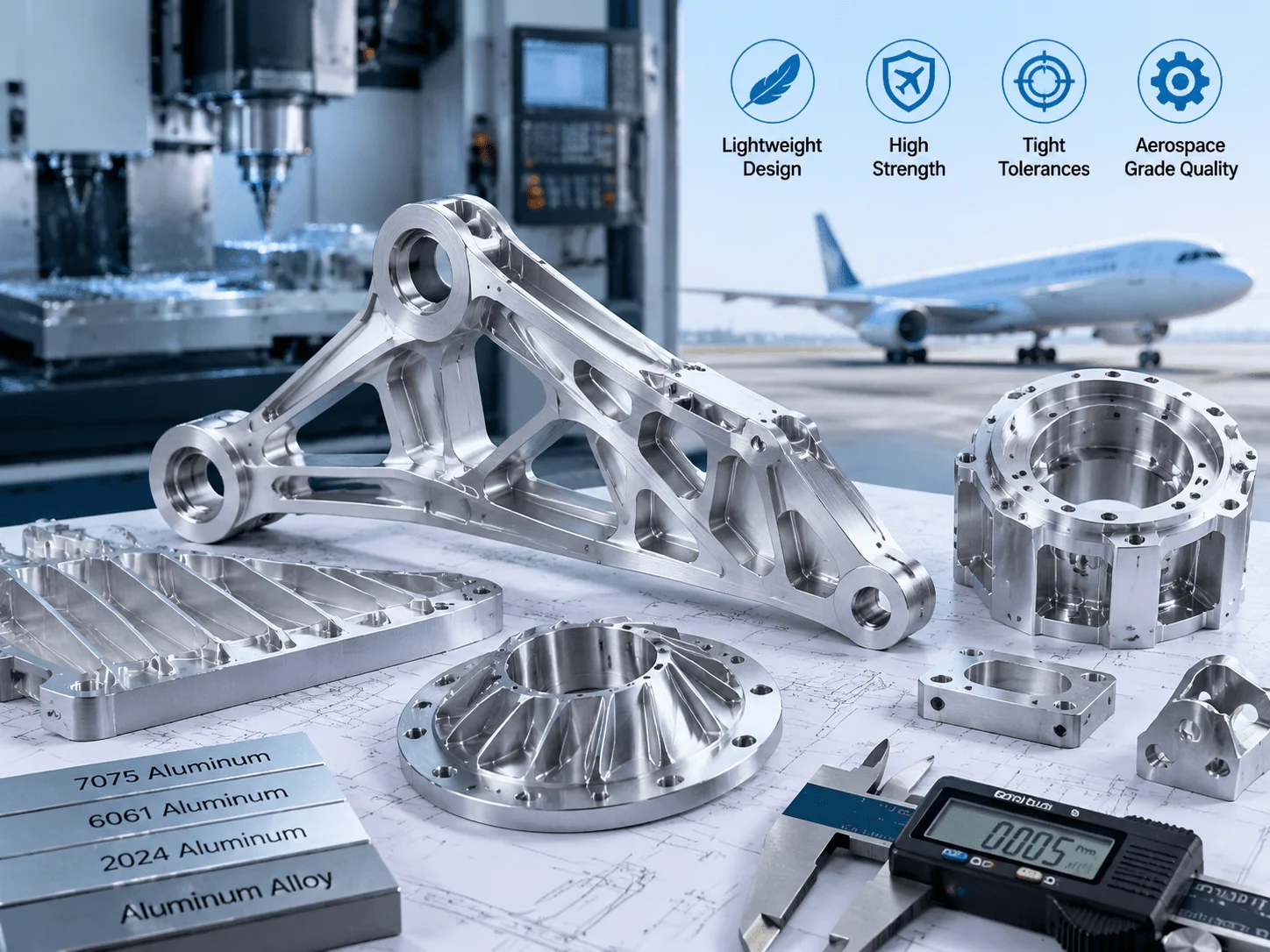
Medical Diagnostics: Tight cnc machining tolerances for medical components
Tight cnc machining tolerances for medical components support reliable assembly, controlled motion, sealing, fluid handling, and alignment in surgical tools, diagnostic equipment, endoscope components, laboratory instruments, and medical-device mechanisms.
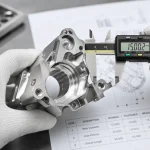
Features approaching ±0.005 mm may be achievable on selected geometries using capable machinery, stable environments, appropriate workholding, and controlled inspection. However, this value should not be treated as a universal tolerance for every dimension.
The achievable result depends on:
Feature size and geometry
Material stability
Tool access
Cutting temperature
Workholding rigidity
Machine capability
Measurement method
Surface-finish requirements
A short precision bore in stainless steel presents a different manufacturing challenge from a thin polymer wall or a long flexible shaft. Engineers should therefore identify critical-to-function features and assign realistic general tolerances to non-critical areas.
Common medical machining materials include stainless steel, titanium, aluminum, PEEK, POM, and selected medical-grade polymers. Material choice should reflect corrosion resistance, cleaning, sterilization, wear, dimensional stability, and supporting documentation.
Inspection planning is essential. A drawing may require CMM measurement for geometric relationships, optical inspection for miniature features, profilometry for surface finish, or dedicated gauges for repeated production checks.
The measurement method should be agreed before machining because some internal, recessed, or microscopic features are difficult to inspect after the part is completed.
Next-Gen Automation: custom precision cnc machining for robotics
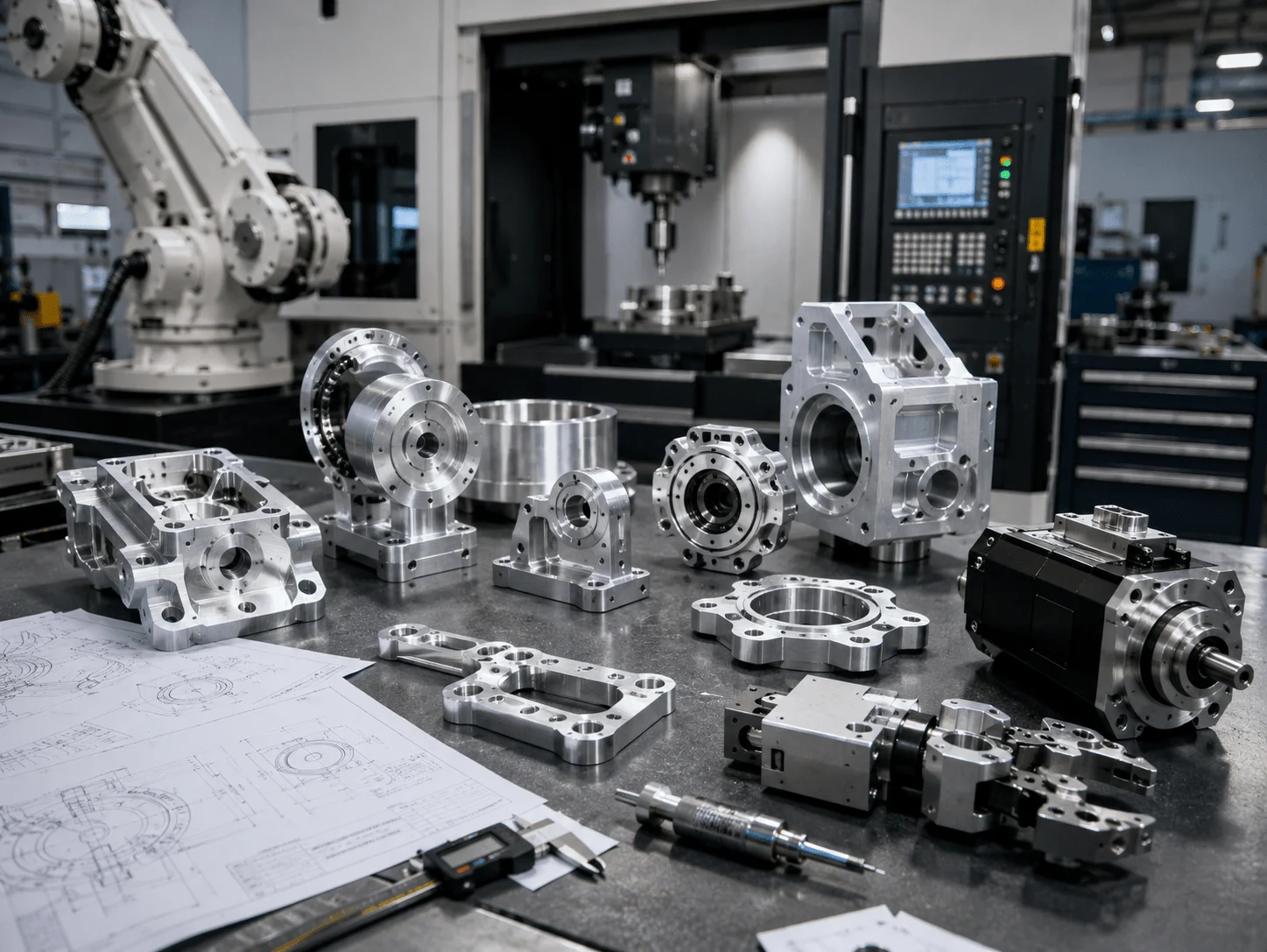
Custom precision cnc machining for robotics is used for joint housings, actuator mounts, transmission components, end-effectors, sensor brackets, motor interfaces, bearing seats, shafts, and structural frames.
Robotic systems depend on alignment, concentricity, flatness, and repeatable assembly because small dimensional errors can accumulate across multiple axes. A bearing bore that is slightly misaligned may increase friction and reduce service life. A motor mounting face that is not perpendicular to the shaft axis can create vibration, noise, and premature wear.
CNC machining allows these relationships to be controlled from shared datums and, where possible, within one setup.
Five-axis machining is useful for compact robotic components containing angled bores, curved surfaces, cable passages, and mounting features on several faces. However, a simpler three-axis process may be more economical for plates, blocks, brackets, and housings that require only a limited number of setups.
For low-volume automation equipment, machining also allows product teams to customize interfaces without investing in molds. This is useful when each machine configuration requires a slightly different bracket, sensor mount, gripper, or end-of-arm tool.
Prototyping Diversity: The best plastics for cnc machining prototypes
The best plastics for cnc machining prototypes provide stable dimensions, useful mechanical behavior, and clean cutting characteristics for functional validation. Common options include POM, PEEK, polycarbonate, ABS, nylon, acrylic, PTFE, and UHMW.
POM, often known by the trade name Delrin, machines cleanly and offers low friction, good dimensional stability, and wear resistance. It is widely used for gears, bushings, rollers, fixtures, and internal mechanisms.
PEEK offers high-temperature capability, chemical resistance, and strong mechanical performance, making it relevant to medical, aerospace, semiconductor, and demanding industrial applications. Its raw-material cost is high, so designs should minimize unnecessary stock removal.
Polycarbonate is useful for impact-resistant housings and transparent or translucent components, although machining parameters must control heat and residual stress. ABS is economical for appearance models and housings, while nylon is suitable for wear components but may absorb moisture and change dimensions.
| Plastic | Key Advantage | Common Prototype Use | Main Design Concern |
| POM | Low friction and stable machining | Bushings, gears, mechanisms | Limited high-temperature performance |
| PEEK | Heat and chemical resistance | Medical and aerospace parts | High material cost |
| Polycarbonate | Impact resistance and transparency | Guards and housings | Stress cracking and heat buildup |
| ABS | Economical and easy to finish | Consumer product enclosures | Moderate strength and heat resistance |
| Nylon | Toughness and wear resistance | Mechanical components | Moisture absorption |
| Acrylic | Optical clarity | Windows and display parts | Brittle edges and cracking risk |
| PTFE | Chemical resistance and low friction | Seals and fluid components | Softness and dimensional movement |
Advanced Manufacturing & Mechanical Design
Resolving Complexity: 5 axis cnc machining vs 3 axis Selection
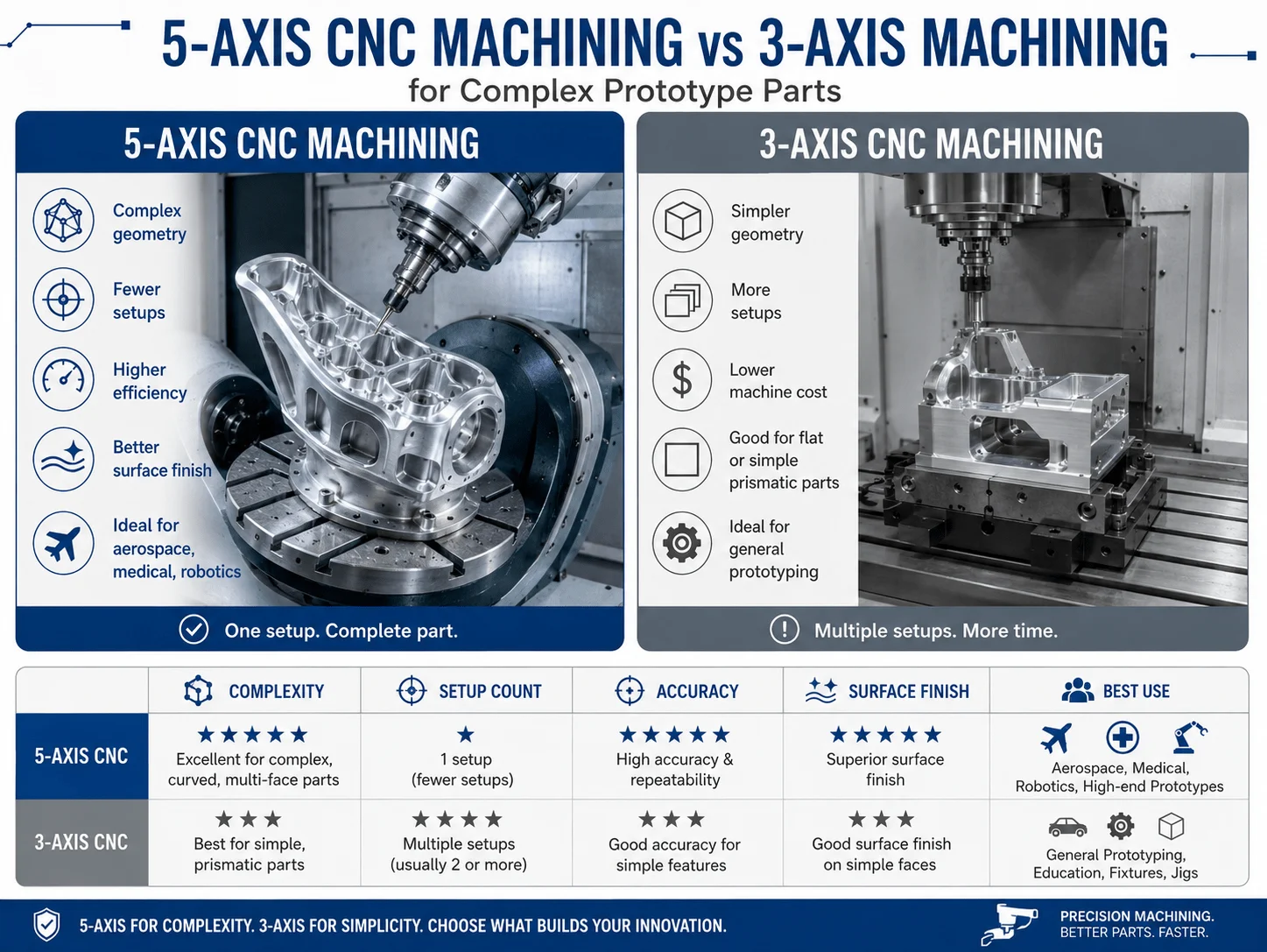
The 5 axis cnc machining vs 3 axis decision should be based on geometry, datum relationships, setup reduction, tool access, and total manufacturing cost—not on the assumption that more axes automatically produce a better component.
A three-axis machine moves along the X, Y, and Z directions. It is efficient for plates, brackets, pockets, holes, and many prismatic components. Complex parts can still be manufactured through multiple setups, fixtures, and indexed orientations.
A five-axis machine adds rotational movement, allowing the cutting tool to approach the workpiece from multiple directions. This is valuable for aerospace impellers, robotic joints, medical components, contoured housings, turbine-related parts, and components with features on several angled faces.
Reducing setups can improve accuracy because fewer datum transfers are required. Five-axis positioning can also keep shorter tools closer to the spindle, improving rigidity and reducing vibration when machining deep or angled surfaces.
However, five-axis programming, simulation, setup, and machine time may cost more. A part that requires only top-side pockets and several perpendicular holes does not necessarily benefit from simultaneous five-axis machining.
| Factor | Three-Axis Machining | Five-Axis Machining |
| Best geometry | Prismatic and accessible parts | Complex contours and multi-face features |
| Setup count | May require several setups | Often requires fewer setups |
| Programming | Simpler | More advanced |
| Tool access | Limited by orientation | Greater access from multiple directions |
| Tool length | Longer tools may be required | Shorter, more rigid tools often possible |
| Datum-transfer risk | Higher with repeated setups | Lower when features share one setup |
| Typical cost | Lower for simple components | Economical when complexity justifies it |
A useful process review asks whether the part can be simplified for three-axis manufacturing without losing function. When that is not practical, five-axis machining may reduce fixtures, manual handling, and accumulated positioning error enough to lower total manufacturing cost.
DFM Strategies: 5 design tips to reduce cnc machining costs
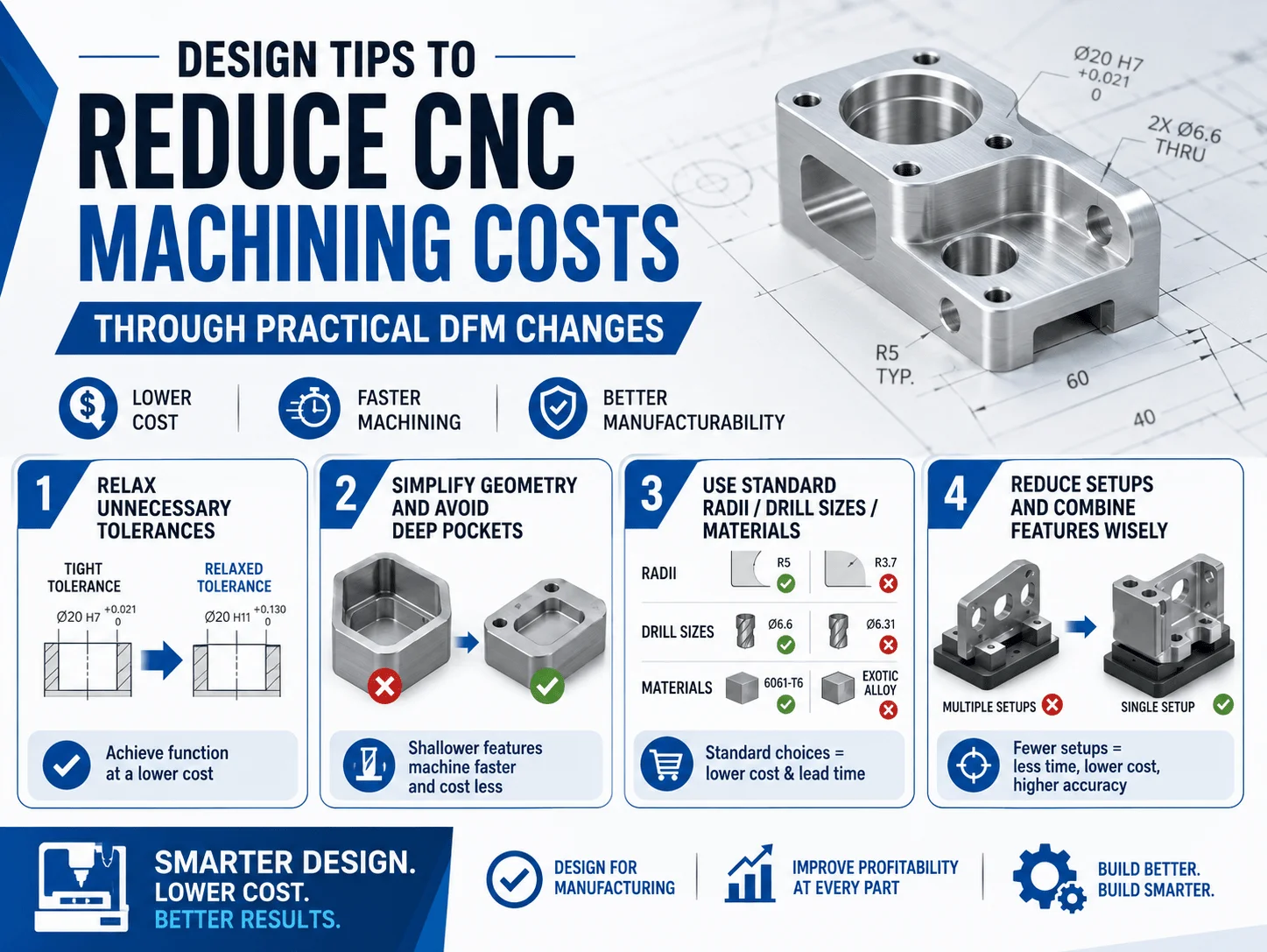
These 5 design tips to reduce cnc machining costs address common geometry decisions that increase machine time, tool wear, setup complexity, and inspection effort.
1. Avoid deep, narrow cavities
Deep pockets require long cutting tools, reduced feed rates, multiple step-down passes, and careful chip evacuation. Long tools are less rigid and more likely to vibrate.
Increase the internal width, reduce the depth, or divide the design into assembled components where the product function allows.
2. Use realistic internal corner radii
Rotating cutters cannot create a perfectly sharp internal corner. A very small radius requires a small tool, which is less rigid and removes material slowly.
Larger internal radii allow stronger cutters, higher feed rates, and more efficient material removal. A corner radius should be selected in relation to the cavity depth and available tool diameter.
3. Limit tight tolerances to functional features
Tight tolerances increase finishing passes, tool monitoring, inspection time, and rejection risk. Apply them to bearing fits, sealing surfaces, alignment features, and other critical interfaces rather than every dimension.
Non-functional surfaces should use practical general tolerances.
4. Standardize threads and hole sizes
Standard taps, drills, reamers, and thread gauges reduce tooling complexity. Deep threads, custom thread forms, and blind threaded holes without sufficient relief increase manufacturing risk.
Where practical, select standard metric or UNC/UNF threads and provide enough tool clearance.
5. Design for fewer setups
Features that can be machined from a common direction are generally more economical. Each additional orientation requires handling, alignment, workholding, and verification.
Multi-axis machining may consolidate setups, but the geometry should still be reviewed for unnecessary side features and difficult tool access.
Surface finish should follow the same logic. A fine finish may be necessary on a seal or sliding face, but not inside a hidden clearance pocket. Drawings should clearly separate critical and non-critical surfaces.
CNC Machining Cost Analysis
CNC machining cost is driven by material, stock size, programming, setup, cutting time, tool wear, finishing, inspection, and quantity.
Unit price generally decreases as programming and setup expenses are spread across more parts. However, the reduction is not unlimited because every component still consumes raw material, machine capacity, cutting tools, and inspection time.
| Cost Driver | Why It Matters | Cost-Control Approach |
| Material and stock size | Premium alloys and oversized stock increase waste | Select a practical material and near-net stock |
| Setup count | Every orientation requires alignment and handling | Consolidate features where possible |
| Cycle time | Deep pockets and small tools slow production | Simplify geometry and enlarge internal radii |
| Tolerances | Tight limits require finishing and inspection | Tighten only critical dimensions |
| Surface finish | Fine surfaces require additional passes | Specify finish by functional surface |
| Tool wear | Hard or abrasive materials consume cutters | Avoid over-specified materials |
| Quantity | Setup costs are distributed across the batch | Group stable quantities where practical |
| Secondary finishing | Coating, polishing, and marking add labor | Finish only the required surfaces |
For a prototype quantity of one to five, setup and programming may represent a large portion of the quotation. At 50–500 units, optimized fixtures, repeatable toolpaths, material purchasing, and batch inspection can reduce unit cost substantially.
As a simplified example, a complex component may have a high first-part cost because the supplier must program toolpaths, design workholding, prepare tools, and inspect the first article. Once the setup is approved, repeat parts use the same manufacturing plan.
Cost comparisons should therefore separate:
Non-recurring engineering
Setup and programming
Raw material
Recurring machining cost
Surface finishing
Inspection
Packaging and shipping
Sourcing Strategy & NPI Logistics
Agile Supply Chain: The low volume custom cnc machining advantages
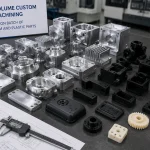
The low volume custom cnc machining advantages are especially strong during NPI, bridge production, market validation, and customized equipment manufacturing.
For approximately 50–500 components, CNC machining avoids the upfront investment and design lock-in associated with injection molds, pressure die-casting dies, or dedicated forming tools.
The design can be revised between batches with limited disruption. Teams can order 50 parts for testing, update a mounting feature, and release the next batch without rebuilding expensive tooling.
CNC machining also uses real engineering materials. A machined aluminum housing, stainless steel medical component, or PEEK mechanism provides more relevant functional data than many visual prototype processes.
For procurement teams, the financial advantage is reduced capital exposure. The unit price may be higher than mature mass production, but the project avoids tooling investment before demand and design stability are confirmed.
Low-volume machining is valuable for:
Medical-device validation builds
Aerospace and defense development parts
Robotics pilot production
Industrial automation equipment
Consumer electronics engineering samples
Automotive test fixtures and components
Replacement and legacy parts
Customized scientific equipment
The same supplier may support one prototype, a 50-piece engineering batch, and a 500-piece launch run. This continuity reduces revision errors and allows inspection data from early batches to improve later production.
CNC Machining Versus Tooling-Based Production
| Factor | Low-Volume CNC Machining | Tooling-Based Production |
| Upfront tooling | Minimal | Often substantial |
| Design changes | Relatively easy | May require tool modification |
| Production materials | Real stock metals and plastics | Production molding or casting materials |
| Unit price | Higher at large volumes | Lower after tooling is amortized |
| Lead time | Short for prototypes and small batches | Longer initial development |
| Best use | NPI, pilot runs, customized products | Stable high-volume designs |
Streamlining the Workflow: how to prepare cad files for cnc quote
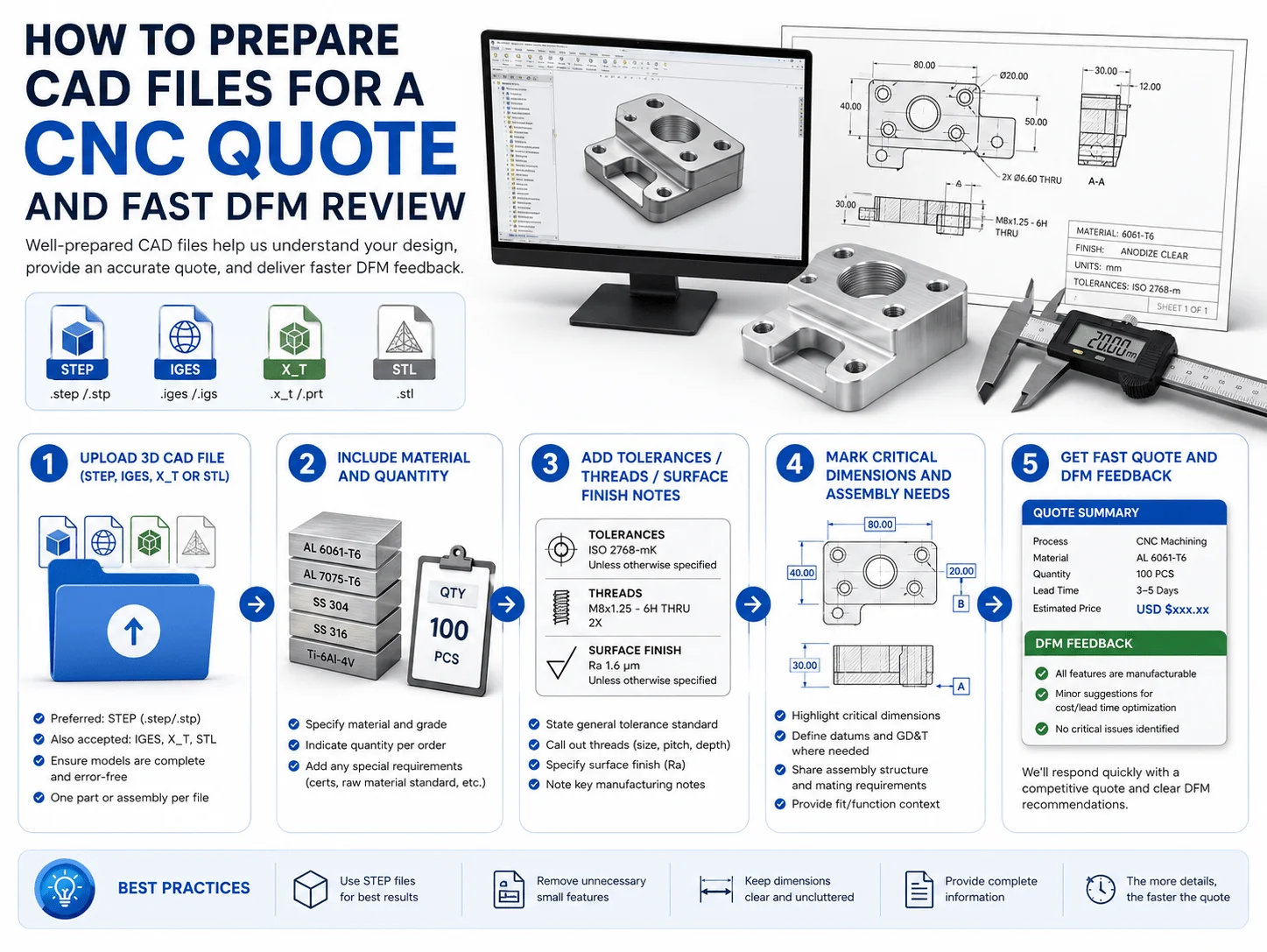
Understanding how to prepare cad files for cnc quote helps suppliers complete DFM reviews and pricing quickly. A 3D model shows geometry, but it may not communicate tolerances, threads, finishes, inspection requirements, or application-critical features.
A complete quotation package should include:
A STEP file or another reliable solid-model format
A dimensioned 2D PDF drawing
Material grade and material condition
Required quantity and expected repeat demand
General and critical tolerances
Thread specifications
Surface-finish requirements
Heat treatment or coating
Insert and assembly requirements
Inspection documentation
Cosmetic surface classifications
Target delivery date
Avoid sending only an STL file when precision machining is required. Mesh files can be difficult to measure and may contain faceted geometry. STEP files preserve solid surfaces and are generally more suitable for manufacturing review.
The 2D drawing should identify datum structure, fitted features, geometric tolerances, thread class, and dimensions that must be inspected. Avoid duplicating dimensions unnecessarily because conflicting values create quotation delays.
The RFQ should also explain the part’s function when possible. A supplier can provide better DFM feedback when it knows whether a bore holds a bearing, a surface forms a seal, or a pocket provides only non-critical clearance.
CNC Machining Application Scenarios
Aerospace Structural Bracket
An aerospace engineering team requires a 7075-T6 bracket with complex pockets and mounting faces positioned at several angles.
Five-axis machining reduces setup changes and helps preserve feature relationships. Critical bores receive detailed inspection, while non-functional pocket dimensions use practical tolerances.
Medical Endoscope Component
A medical-device company needs a corrosion-resistant miniature component with precision bores and a controlled surface finish.
The supplier confirms the achievable tolerance, measurement method, material documentation, and cleaning requirements before production begins.
Robotic Joint Housing
A robotics manufacturer develops a compact aluminum housing containing bearing seats, motor interfaces, and cable passages.
Multi-axis machining completes most features from one workholding position, improving alignment and reducing accumulated setup error.
Consumer Electronics Prototype
A hardware team machines polycarbonate and ABS housings to validate connector positions, internal clearances, button geometry, and appearance before rapid tooling.
Only visible surfaces receive extensive polishing and cosmetic finishing.
Industrial Automation Pilot Run
A machine builder requires 200 customized aluminum and POM components for a new automation system.
CNC machining avoids dedicated tooling and allows several equipment variants to be produced from related CAD models.
Scientific Instrument Assembly
A laboratory-equipment company requires stainless steel fluid components, aluminum frames, and engineering-plastic insulators.
Machining allows different materials and tolerances to be combined without committing to multiple production tools.
Frequently Asked Questions
What is CNC machining best used for?
CNC machining is best suited to accurate functional components manufactured from production-grade metals and engineering plastics. It supports prototypes, low-volume production, precision fixtures, replacement parts, and complex components that do not justify dedicated tooling.
When should I use five-axis machining?
Use five-axis machining when a component contains complex surfaces, angled features, or geometry on several faces that would otherwise require multiple setups. Three-axis machining remains more economical for many simple prismatic parts.
Can CNC machining achieve ±0.005 mm?
Selected features may reach ±0.005 mm under suitable conditions, but capability depends on material, geometry, feature size, equipment, temperature, workholding, and inspection. Confirm the requirement with the supplier during DFM review.
Which aluminum is better for CNC prototypes: 6061 or 7075?
Aluminum 6061 is versatile, corrosion resistant, and generally economical. Aluminum 7075 provides substantially higher strength but costs more and may require greater consideration for corrosion protection. Selection should follow the component’s loading and environment.
Which plastic machines most accurately?
POM is widely valued for clean machining and dimensional stability. PEEK is suitable for demanding environments, while polycarbonate, ABS, nylon, and acrylic serve different mechanical and cosmetic requirements.
How can machining costs be reduced?
Use larger internal radii, avoid deep narrow pockets, standardize holes and threads, limit tight tolerances, reduce setups, and specify fine surface finishes only where functionally necessary.
Is CNC machining economical for 50–500 parts?
Yes. Low-volume CNC machining can be highly effective when the design may change, multiple versions are required, or production tooling cannot yet be justified.
What information is required for an accurate quotation?
Provide a solid 3D CAD model, dimensioned 2D drawing, material, quantity, tolerances, threads, finish, inspection requirements, and delivery target.
Should every dimension have a tight tolerance?
No. Apply tight limits only to critical functional relationships. General dimensions should use realistic tolerances appropriate for the machining process and product requirements.
Can one supplier support prototypes and low-volume production?
A capable supplier should support DFM review, prototypes, optimized fixtures, batch production, surface finishing, inspection, and revision control. Production capacity and quality processes should be confirmed before repeat orders are released.
CNC machining supports product development from one-off prototypes to reliable low-volume production. Its value comes from material flexibility, dimensional control, rapid design changes, and the ability to manufacture complex parts without dedicated production tooling.
Successful projects combine realistic tolerances, appropriate materials, efficient multi-axis process selection, and disciplined DFM. Engineers should simplify deep features, use practical internal radii, identify critical datums, and avoid over-specifying hidden or non-functional surfaces.
Sourcing teams should evaluate total manufacturing capability, engineering communication, inspection systems, finishing options, revision control, and repeatability rather than focusing exclusively on unit price.
Accelerate Your CNC Machining Project with GC-Prototype
Bringing a boundary-pushing hardware product to life requires balancing strict design requirements with predictable manufacturing costs. Whether you are a Senior Mechanical Engineer optimizing a five-axis robotic joint or a Procurement Manager looking to shorten lead times for medical components, GC-Prototype has the multi-axis capabilities and engineering expertise your project requires.
Our services include three-axis and five-axis CNC milling, CNC turning, metal and plastic machining, DFM review, surface finishing, precision inspection, rapid prototyping, and low-volume production.