Address:
Shenzhen Bao'an District Xinqiao Subdistrict Huangpu Community Huangpu East Ring Road No. 504 Shenzhen Yuan Industrial City Building C
Work Hours:
Monday to Friday: 9AM - 21PM
Weekend: 9AM - 21PM

Address:
Shenzhen Bao'an District Xinqiao Subdistrict Huangpu Community Huangpu East Ring Road No. 504 Shenzhen Yuan Industrial City Building C
Work Hours:
Monday to Friday: 9AM - 21PM
Weekend: 9AM - 21PM

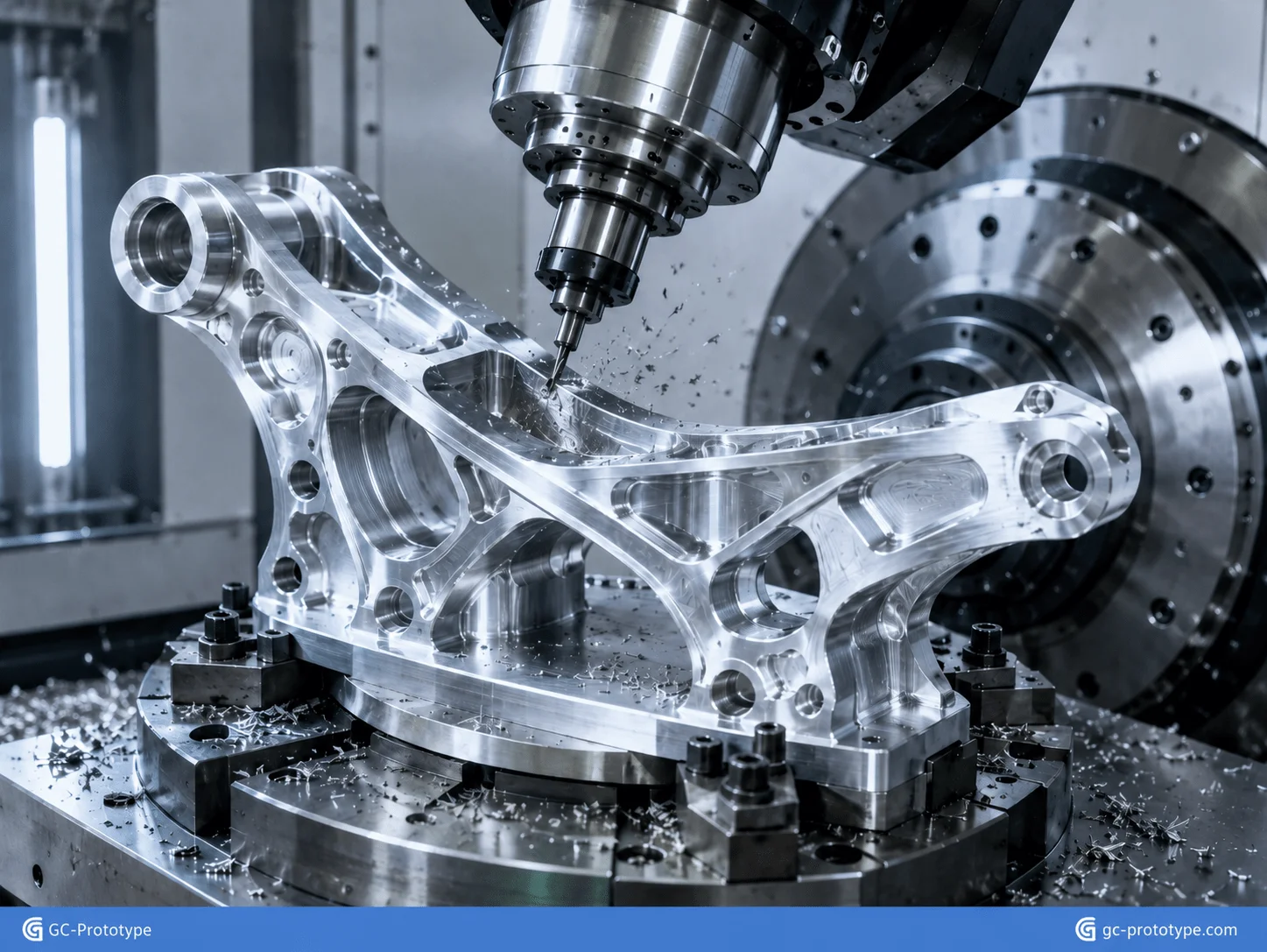
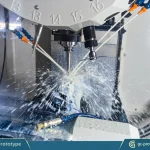
CNC Machining is one of the most reliable manufacturing technologies for turning engineering designs into functional, production-grade prototypes and low-volume parts. During New Product Introduction (NPI), 3D printing may not provide the required strength, dimensional stability, or tight tolerances, while injection molding and casting can involve expensive tooling and long lead times. CNC machining bridges this gap by producing parts directly from engineering-grade metals and plastics without dedicated tooling.
For Senior Mechanical Engineers, Product Designers, R&D Engineers, and Sourcing Managers, the key challenge is not simply finding a CNC supplier. It is balancing material selection, tolerances, surface finish, machining complexity, lead time, and cost. This guide covers medical and aerospace applications, process economics, surface-quality control, DFM strategies, and procurement planning for prototype and low-volume production.
Why CNC Machining Is Critical for NPI and Low-Volume Manufacturing
Unlike molding or casting, CNC machining removes material directly from a solid block or bar using computer-controlled cutting tools. The process can manufacture complex components from aluminum, stainless steel, titanium, engineering plastics, copper alloys, and many other materials.
This tooling-free approach offers several advantages during product development:
Fast transition from CAD to physical parts
Real engineering materials
Tight dimensional control
Excellent repeatability
No dedicated mold investment
Easy design revisions
Low-volume scalability
Wide surface-finishing options
A design change during NPI may require nothing more than an updated CAD model and revised CNC program. In comparison, changing an injection mold or die-casting tool after manufacture can be expensive and time-consuming.
This flexibility is particularly valuable for projects where engineers expect multiple iterations before the design is frozen.
| Manufacturing Process | Tooling Cost | Material Performance | Tolerance Capability | Best Quantity Range |
|---|---|---|---|---|
| 3D Printing | Very low | Process-dependent | Moderate to high | 1–10 |
| CNC Machining | Very low | Production-grade | Excellent | 1–1,000 |
| Vacuum Casting | Low | Production-like polyurethane | Moderate | 10–100 |
| Injection Molding | High | Production-grade | High | Hundreds to mass production |
| Die Casting | High | Production metal | High | Medium to high volume |
CNC machining is therefore especially attractive when customers need functional prototypes that must survive real mechanical testing rather than simply demonstrate appearance.
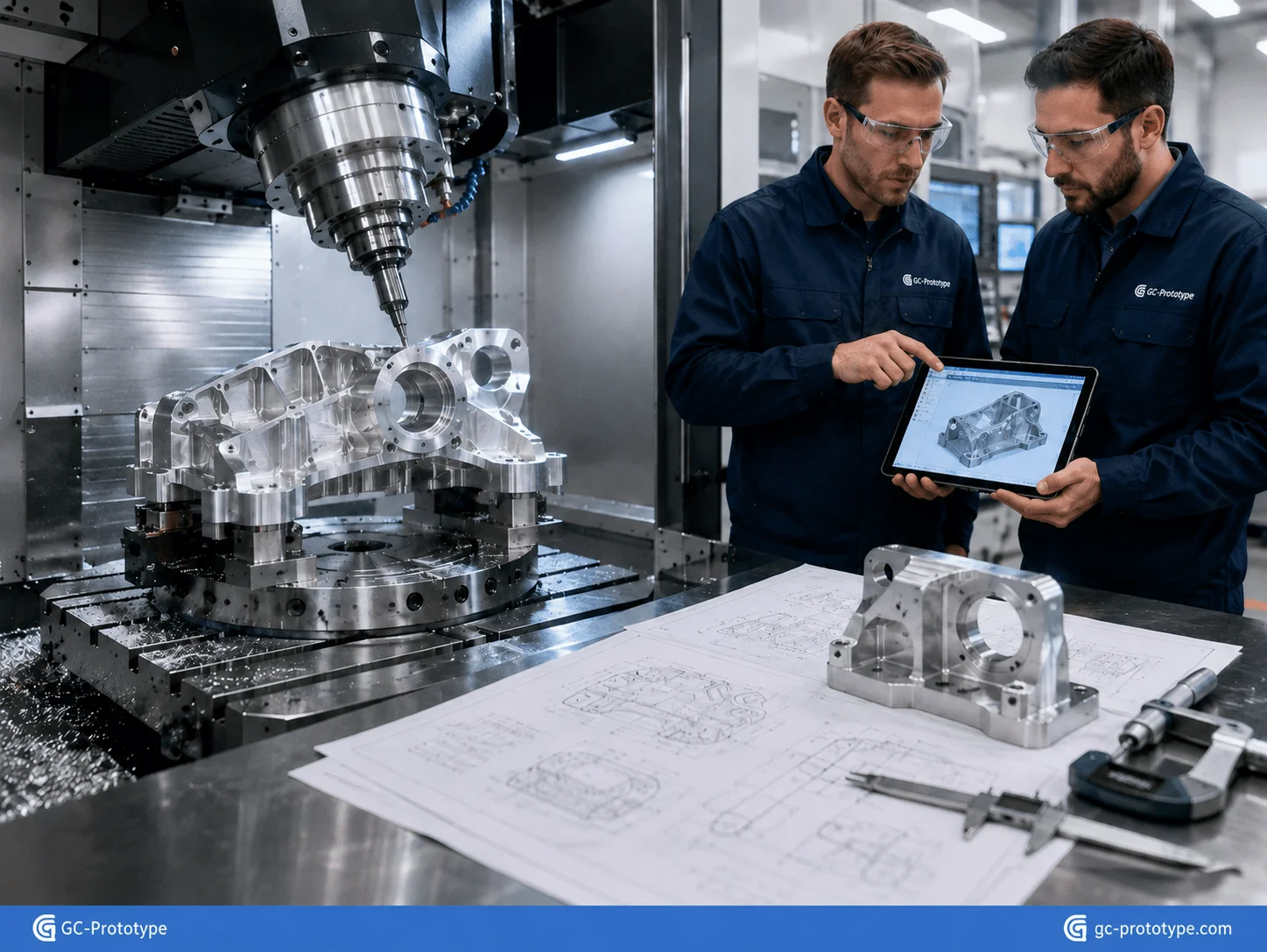
Industry Applications & Material Compliance
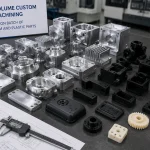
CNC machining supports industries where dimensional accuracy and material performance are critical. Typical applications include medical devices, aerospace hardware, automotive components, robotics, industrial automation, consumer electronics, and scientific equipment.
The manufacturing process is only one part of the engineering decision. Material, tolerance, surface finish, inspection, and traceability must also match the end application.
Medical Innovation: Meeting Strict cnc machining tolerances for medical devices
Meeting strict cnc machining tolerances for medical devices requires careful coordination between design engineering, manufacturing, quality inspection, and material selection.
Medical equipment often contains precision mechanical components such as:
Surgical robotic joints
Diagnostic equipment housings
Instrument fixtures
Implant manufacturing tooling
Precision brackets
Medical pump components
Laboratory instrument parts
Surgical instrument components
Materials such as 316L stainless steel and Ti6Al4V titanium are frequently selected for demanding medical engineering applications because of their corrosion resistance, mechanical performance, and established use in medical manufacturing.
However, material selection alone does not establish device suitability. Engineers must evaluate the exact grade, intended use, cleaning requirements, sterilization environment, surface condition, manufacturing documentation, and applicable device-level requirements.
Tolerance planning is equally important.
A medical robotic joint may contain a bearing bore, motor alignment surface, and locating datums that require substantially tighter tolerances than an external protective cover. Applying the same tight tolerance to every dimension increases machining and inspection cost without providing additional functional value.
A better drawing strategy separates:
Critical-to-function dimensions
General dimensions
Geometric tolerances
Surface roughness
Mating features
Machined datums
Cosmetic surfaces
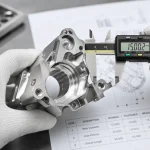
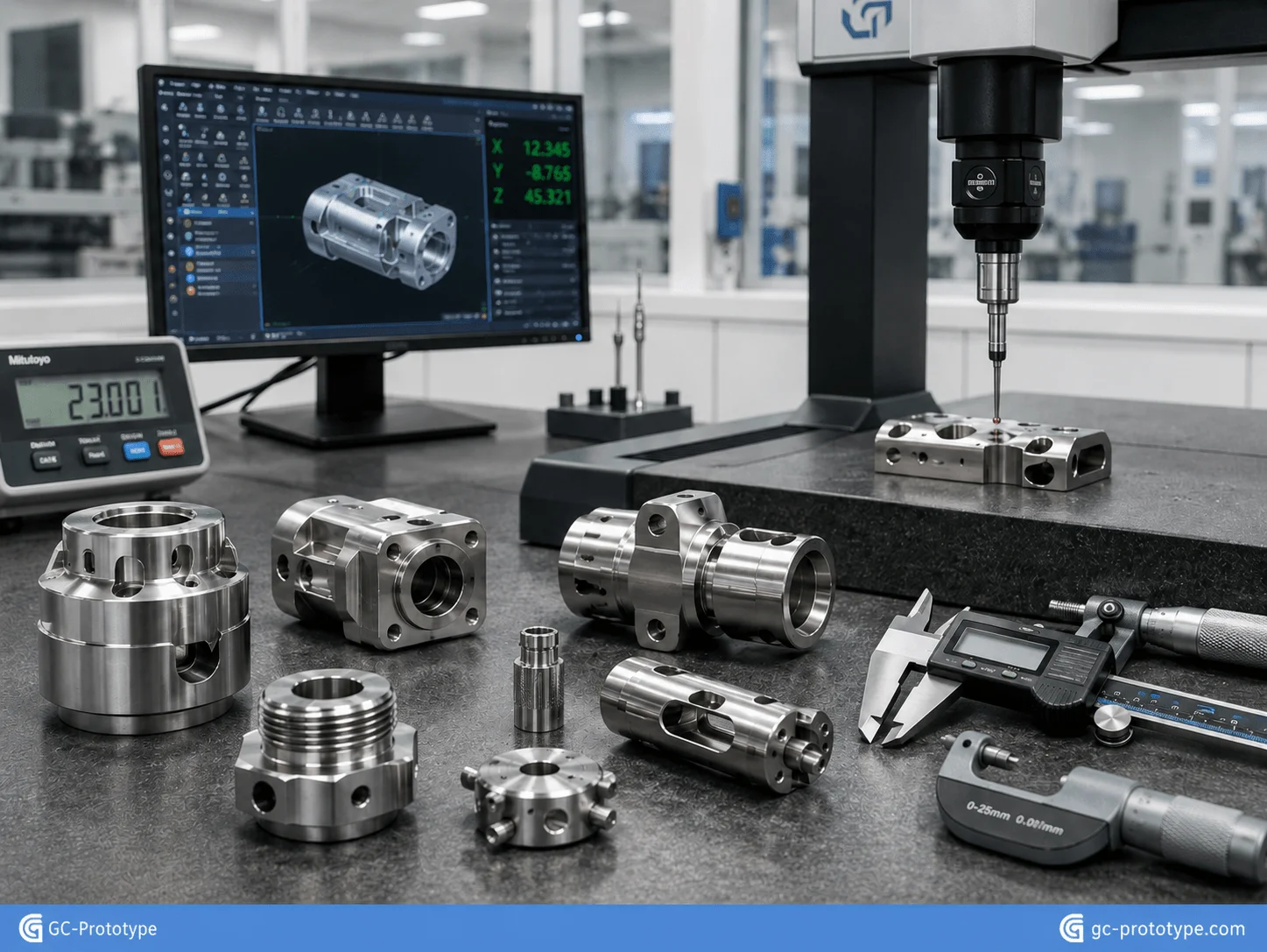
Precision CNC machining can also support traceability through controlled material certification, process records, inspection reports, and CMM measurement where project requirements demand them.
For medical R&D teams, this provides an important advantage over early-stage prototyping methods: engineers can validate a design using material and geometry that closely represent the intended functional component.
Aerospace Rigor: Harnessing 5 axis cnc machining for aerospace components
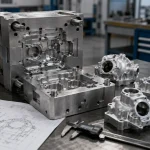
Using 5 axis cnc machining for aerospace components enables manufacturers to produce complex structural parts with fewer setups and improved geometric relationships between critical features.
Traditional three-axis machining moves a cutting tool along the X, Y, and Z axes. Five-axis systems add rotational movement, allowing the cutting tool to approach the workpiece from multiple directions without repeatedly removing and repositioning the part.
This is especially valuable for:
Lightweight aerospace brackets
Valve bodies
Actuator components
Impellers
Structural aircraft components
UAV hardware
Satellite parts
Complex prototype housings
Reducing the number of setups provides two major benefits.
First, it shortens production time. A complex component that might require several fixtures on a three-axis machine may be machined in one or two operations using five-axis equipment.
Second, fewer setups reduce cumulative positioning error. Every time a workpiece is removed, rotated, and re-clamped, another opportunity for alignment variation is introduced.
Five-axis machining also gives shorter cutting tools better access to angled surfaces and deep geometry. Shorter tools are generally more rigid, which can help improve surface quality and dimensional consistency.
Common aerospace materials include:
| Material | Key Advantages | Typical Application |
|---|---|---|
| Aluminum 7075 | High strength-to-weight ratio | Structural brackets |
| Aluminum 6061 | Machinability and corrosion resistance | Housings and fixtures |
| Ti6Al4V | High strength and low density | High-performance structural parts |
| Stainless Steel | Strength and corrosion resistance | Valves and mechanisms |
| Engineering Plastics | Lightweight and insulating | Fixtures and specialized components |
Design Engineers should still avoid assuming that five-axis machining automatically makes every complex geometry inexpensive. Deep pockets, thin walls, extremely small internal radii, excessive material removal, and difficult tool access can significantly increase cycle time.
Process Trade-Offs & Surface Quality
Cost Breakdown: cnc machining vs 3d printing cost comparison
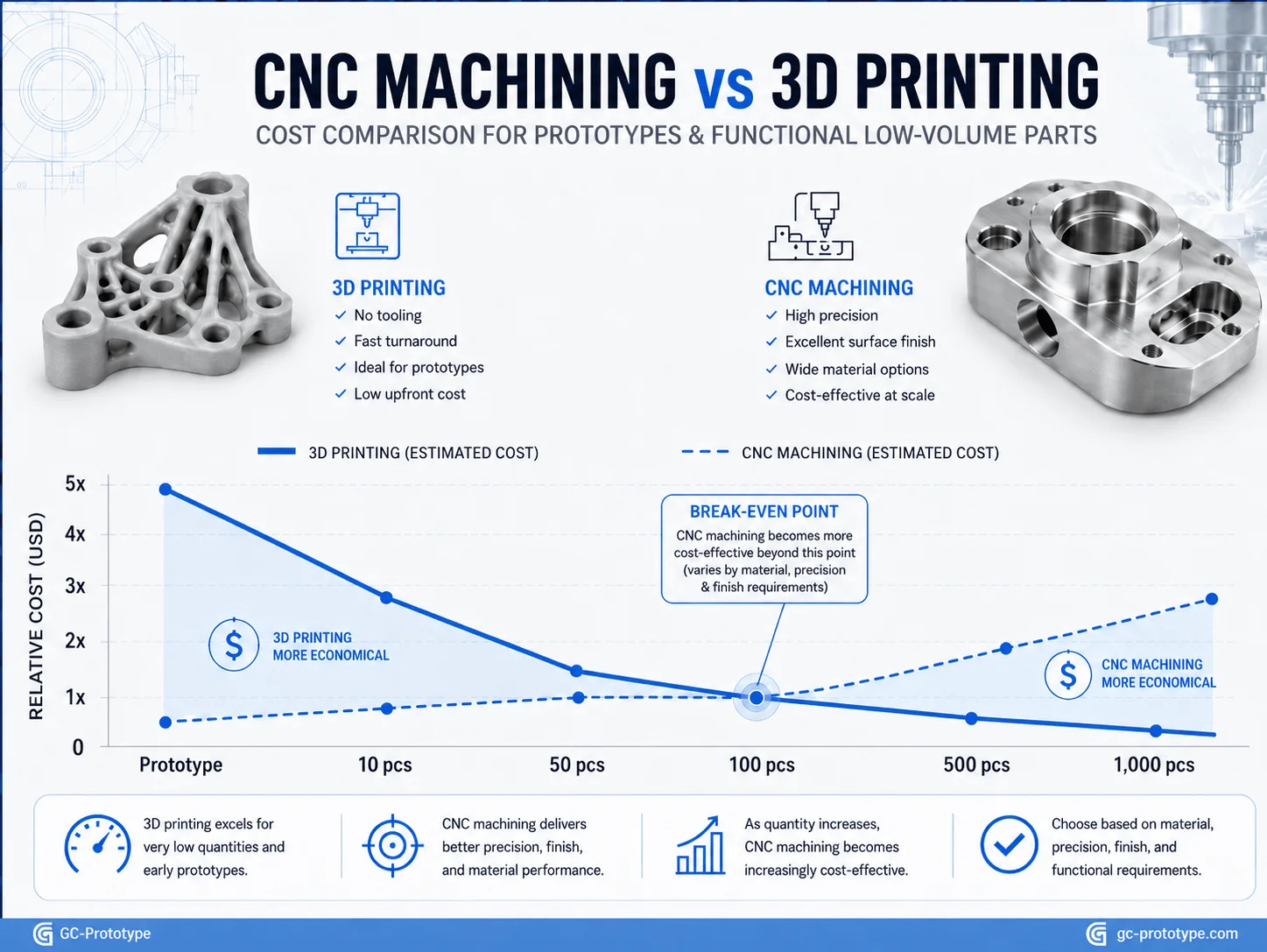
A realistic cnc machining vs 3d printing cost comparison must consider more than the price of one prototype.
For one to three geometrically complex parts, additive manufacturing can be extremely competitive. It requires little setup, handles internal geometries well, and can manufacture shapes that would require multiple CNC operations.
CNC machining becomes increasingly attractive when the component requires real billet material, tight dimensional control, predictable mechanical performance, threaded features, precision bores, or high-quality machined surfaces.
| Cost Factor | CNC Machining | 3D Printing |
|---|---|---|
| Dedicated Tooling | None | None |
| Setup Cost | Moderate | Low |
| Complex Internal Geometry | Limited | Excellent |
| Tight Precision Features | Excellent | Process-dependent |
| Production Metal Properties | Excellent | Depends on printing process |
| Machined Threads | Excellent | Often requires secondary work |
| Surface Finish | Excellent | Often requires post-processing |
| 1–3 Complex Parts | Competitive | Often highly competitive |
| 10–1,000 Functional Parts | Often attractive | Depends heavily on process |
For a Founder or Product Development Engineer, the correct economic decision depends on geometry and quantity.
Consider an aluminum electronics housing. If only one conceptual model is needed, a polymer 3D print may provide the lowest-cost solution. If ten housings are needed for thermal, structural, thread, and assembly testing, CNC-machined aluminum may offer far more useful engineering information.
At quantities of 50 or 100 parts, CNC cost can also decrease because programming, fixture preparation, and setup costs are distributed across more pieces.
However, the relationship is not universal. A highly complex topology-optimized structure with internal channels may remain better suited to additive manufacturing even at higher quantities.
Total manufacturing cost should include:
Material
Programming
Setup
Machine time
Tool wear
Inspection
Finishing
Assembly
Scrap risk
How CNC Machining Costs Are Calculated
Machine time is normally one of the largest cost drivers.
A part requiring twenty minutes of machine time will generally cost much less than a similar-sized component requiring three hours, even if both use the same aluminum alloy.
Major cost drivers include:
Number of setups
Material removal volume
Tool accessibility
Required tolerances
Surface-finish specification
Part size
Material machinability
Inspection requirements
A practical DFM review can therefore reduce cost substantially before manufacturing begins.
Surface Finish and Industrial Appearance
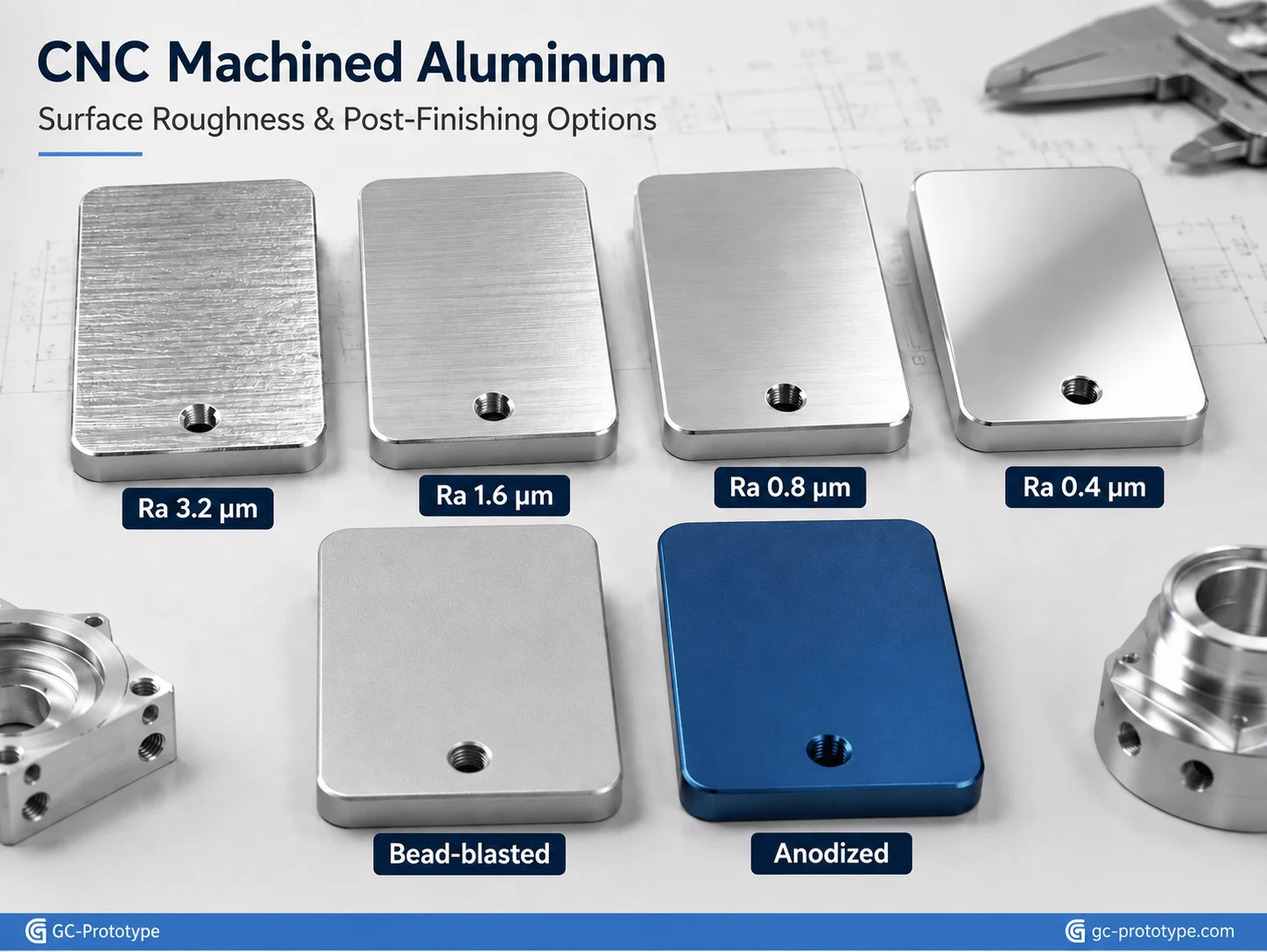
Aesthetic Excellence: Controlling cnc machining surface finish ra values
Controlling cnc machining surface finish ra values helps engineers balance function, appearance, manufacturing time, and cost.
Ra represents average surface roughness. Lower Ra values generally correspond to smoother surfaces, although functional surface performance cannot always be judged by Ra alone.
For many CNC-machined components, surface requirements may range approximately from Ra 0.4 to 3.2 µm depending on the process and intended function.
| Approximate Ra Requirement | General Character | Typical Application |
|---|---|---|
| Ra 3.2 µm | Standard machined finish | General industrial parts |
| Ra 1.6 µm | Improved machining finish | Housings and mating surfaces |
| Ra 0.8 µm | Fine finish | Precision interfaces |
| Ra 0.4 µm | Very fine machining | Selected high-precision features |
These values should be treated as application-dependent specifications rather than universal guarantees.
A common cost mistake is specifying Ra 0.4 µm across an entire component when only one bearing or sealing surface needs it.
Lower roughness often requires slower feeds, finishing passes, specialized tools, careful setup, or secondary processing.
For visible consumer-electronics and industrial-automation parts, manufacturers often combine machining with secondary finishing.
Common options include:
Bead blasting
Anodizing
Polishing
Brushing
Painting
Powder coating
Electropolishing for suitable metals
Bead-blasted anodized aluminum is particularly popular for premium hardware because the blasting produces a uniform matte texture while anodizing provides color and surface protection.
Appearance-critical drawings should identify Class-A surfaces, acceptable machining marks, anodizing color, gloss, and areas that must be masked.
Surface finish should therefore be selected based on both engineering function and visual requirements rather than simply choosing the lowest possible Ra.
Essential CNC Machining DFM Guidelines
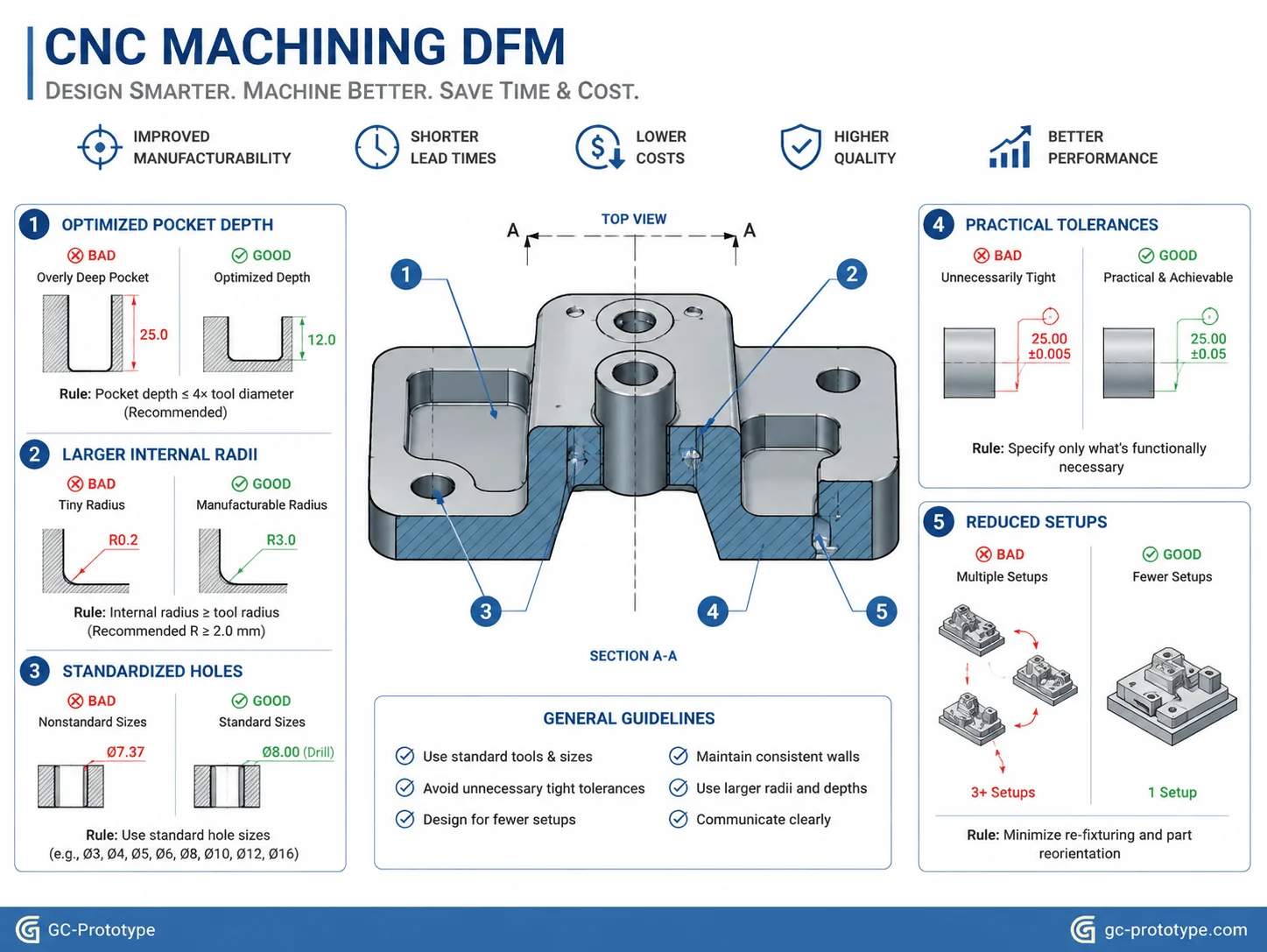
Design for Manufacturing is one of the most effective ways to reduce CNC prototype cost without changing the required function.
Avoid Extremely Deep Pockets
Deep cavities require long cutting tools. Long tools are less rigid and may vibrate or deflect, forcing the machinist to reduce cutting speed.
Where possible, reduce unnecessary depth or increase pocket width.
Use Practical Internal Corner Radii
Rotating milling cutters naturally create radiused internal corners.
If a designer specifies an extremely small radius inside a deep pocket, the manufacturer may need a very small end mill. That increases machining time and tool-breakage risk.
Larger internal radii usually allow larger, more efficient cutters.
Apply Tight Tolerances Only Where Necessary
Tolerance directly influences cost.
Tight dimensions may require:
Finishing passes
Slower machining
More precise fixturing
Temperature control
Additional inspection
CMM programming
A general housing dimension rarely needs the same tolerance as a bearing interface.
Standardize Hole Sizes and Threads
Standard drill and thread sizes reduce special tooling requirements. Custom threads or unusually deep tapped holes can increase manufacturing risk.
Threads should also be located where tools can access them easily.
Reduce the Number of Setups
Every setup adds programming, fixture preparation, alignment, and inspection.
Designing components that can be machined from fewer orientations can significantly reduce cost.
Consider Part Geometry Before Choosing Material
Hard materials and difficult alloys can increase tool wear and cutting time.
If the application does not require titanium, substituting a suitable aluminum alloy may dramatically reduce machining cost.
| DFM Issue | Cost Impact | Recommended Strategy |
|---|---|---|
| Very deep pocket | Long machine time | Reduce depth if possible |
| Tiny internal radius | Small cutters required | Increase radius |
| Tight tolerance everywhere | More machining and inspection | Limit to critical features |
| Multiple orientations | Extra setups | Simplify access |
| Custom hole sizes | Special tooling | Use standards |
| Excess material removal | Longer cycle time | Optimize starting stock |
Procurement Strategy & Scaling
Financial Edge: Tooling-Free Flexibility for Low-Volume Runs
For Procurement Managers and Strategic Buyers, one of the strongest advantages of CNC machining is that production can begin without dedicated molds.
This reduces capital risk during uncertain product launches.
Suppose an automation-equipment manufacturer requires 30 prototype assemblies. Customer testing then identifies a design change. With CNC machining, the company can revise the CAD file and machine the next batch without abandoning an expensive production mold.
This provides valuable supply-chain flexibility for:
Pilot production
Bridge manufacturing
Replacement parts
Customized equipment
Multiple product variants
Engineering-change orders
Demand uncertainty
Low-volume CNC production can also reduce inventory exposure.
Instead of purchasing 2,000 parts simply to reduce unit price, buyers can order smaller batches closer to actual demand. This improves cash flow and reduces the risk of obsolete inventory after an engineering revision.
When CNC Machining Stops Being the Lowest-Cost Process
CNC machining has no dedicated tooling, but every part consumes machine time.
At sufficiently high volumes, molding, casting, forging, or another production process may become more economical.
The transition depends on:
Annual volume
Material
Geometry
Tooling investment
CNC cycle time
Product lifetime
Design stability
A practical manufacturing roadmap may look like:
3D Printing → CNC Machining → Low-Volume CNC Production → Casting or Injection Molding
Not every product follows this sequence, but it illustrates how manufacturing investment can increase as design and demand become more predictable.
Application Scenarios for CNC Machining
Medical Device Development
A medical equipment manufacturer needs 20 precision aluminum and stainless-steel components for a robotic diagnostic system. CNC machining provides production-grade materials and controlled dimensions without requiring tooling.
Aerospace Structural Prototype
An aerospace R&D team needs lightweight 7075 aluminum brackets for load testing. Five-axis machining produces complex surfaces while minimizing re-clamping errors.
Robotics Joint Components
A robotics manufacturer uses CNC machining for actuator housings, bearing interfaces, and structural joints during pilot production. Critical bores are machined precisely while noncritical surfaces receive economical general tolerances.
Consumer Electronics Housing
A hardware company requires 50 aluminum housings for market testing. CNC machining combined with bead blasting and anodizing provides a premium production-like appearance before die-casting tooling is justified.
Industrial Automation
An automation company manufactures customized fixture plates, machine brackets, sensor mounts, and replacement components in relatively small quantities. Tooling-free CNC production supports frequent model changes without large inventory commitments.
Selecting a CNC Machining Supplier
An experienced CNC supplier should provide more than machine capacity.
Important capabilities include:
3-axis CNC milling
5-axis CNC machining
CNC turning
Precision grinding
Engineering material sourcing
CMM inspection
Surface finishing
Anodizing and bead blasting
DFM support
Low-volume production management
A complete RFQ should include:
3D CAD file
2D drawing
Material
Quantity
Critical tolerances
Surface roughness
Surface treatment
Thread requirements
Inspection requirements
Delivery expectations
Suppliers should be able to identify unnecessary tolerances, difficult tool-access areas, expensive small radii, and opportunities to reduce setup count before machining begins.
This engineering collaboration can create far greater savings than negotiating only the machine-hour rate.
Frequently Asked Questions
What Is CNC Machining Best Used For?
CNC machining is ideal for functional prototypes, precision metal and plastic components, low-volume production, tooling, fixtures, and products requiring real engineering materials.
Is CNC Machining More Accurate Than 3D Printing?
CNC machining generally offers excellent dimensional control for precision features. Actual capability depends on geometry, machine condition, setup, material, and inspection requirements.
When Is CNC Machining Cheaper Than 3D Printing?
There is no universal break-even quantity. CNC often becomes attractive when components require production-grade material properties, tight tolerances, precision threads, superior surfaces, or repeated low-volume production.
What Materials Can Be CNC Machined?
Common materials include aluminum, stainless steel, carbon steel, brass, copper, titanium, ABS, POM, PEEK, nylon, PC, and many other engineering materials.
Why Is Five-Axis CNC Machining More Expensive?
Five-axis machines and programming are more sophisticated, but they can reduce setups and efficiently manufacture complex geometry. For suitable components, the total production cost may actually be lower than using multiple three-axis setups.
What Ra Surface Finish Should I Specify?
The correct Ra depends on function. General machined surfaces may tolerate a relatively rougher finish, while sealing, bearing, sliding, or cosmetic surfaces may require finer specifications.
Can CNC Parts Be Anodized?
Yes. Aluminum CNC parts are frequently bead blasted, brushed, polished, or anodized after machining to improve appearance and surface protection.
How Can I Reduce CNC Machining Cost?
Increase internal radii, avoid unnecessary deep pockets, specify tight tolerances only on functional features, reduce setups, use standard hole sizes, and select materials based on actual engineering requirements.
Is CNC Machining Suitable for 1,000 Parts?
It can be, especially for high-value precision parts or products with unstable demand. However, casting, molding, or another production process should also be evaluated when quantity increases.
What Files Do I Need for a CNC Quote?
Provide a 3D CAD model along with a 2D drawing containing material, tolerances, surface finish, threads, inspection requirements, and quantity.
CNC machining remains one of the most valuable manufacturing technologies for moving products from early prototypes into low-volume production. It combines production-grade materials, excellent dimensional accuracy, tooling-free flexibility, broad surface-finishing options, and fast response to engineering changes.
For medical devices, aerospace systems, robotics, consumer electronics, and industrial automation, the most economical strategy is not simply to demand the tightest tolerance or smoothest finish. Engineers should apply precision where function requires it and use practical manufacturing specifications everywhere else.
A strong DFM process, appropriate materials, optimized setups, realistic Ra requirements, and well-defined inspection criteria can significantly reduce machining cost while protecting product performance.
Scaling from a high-precision functional prototype to low-volume production shouldn’t deplete your engineering budget. Whether you are a Senior Mechanical Engineer designing tight-tolerance aerospace parts or a Sourcing Manager evaluating CNC machining vs 3D printing costs, GC Prototype delivers.