Address:
Shenzhen Bao'an District Xinqiao Subdistrict Huangpu Community Huangpu East Ring Road No. 504 Shenzhen Yuan Industrial City Building C
Work Hours:
Monday to Friday: 9AM - 21PM
Weekend: 9AM - 21PM

Address:
Shenzhen Bao'an District Xinqiao Subdistrict Huangpu Community Huangpu East Ring Road No. 504 Shenzhen Yuan Industrial City Building C
Work Hours:
Monday to Friday: 9AM - 21PM
Weekend: 9AM - 21PM

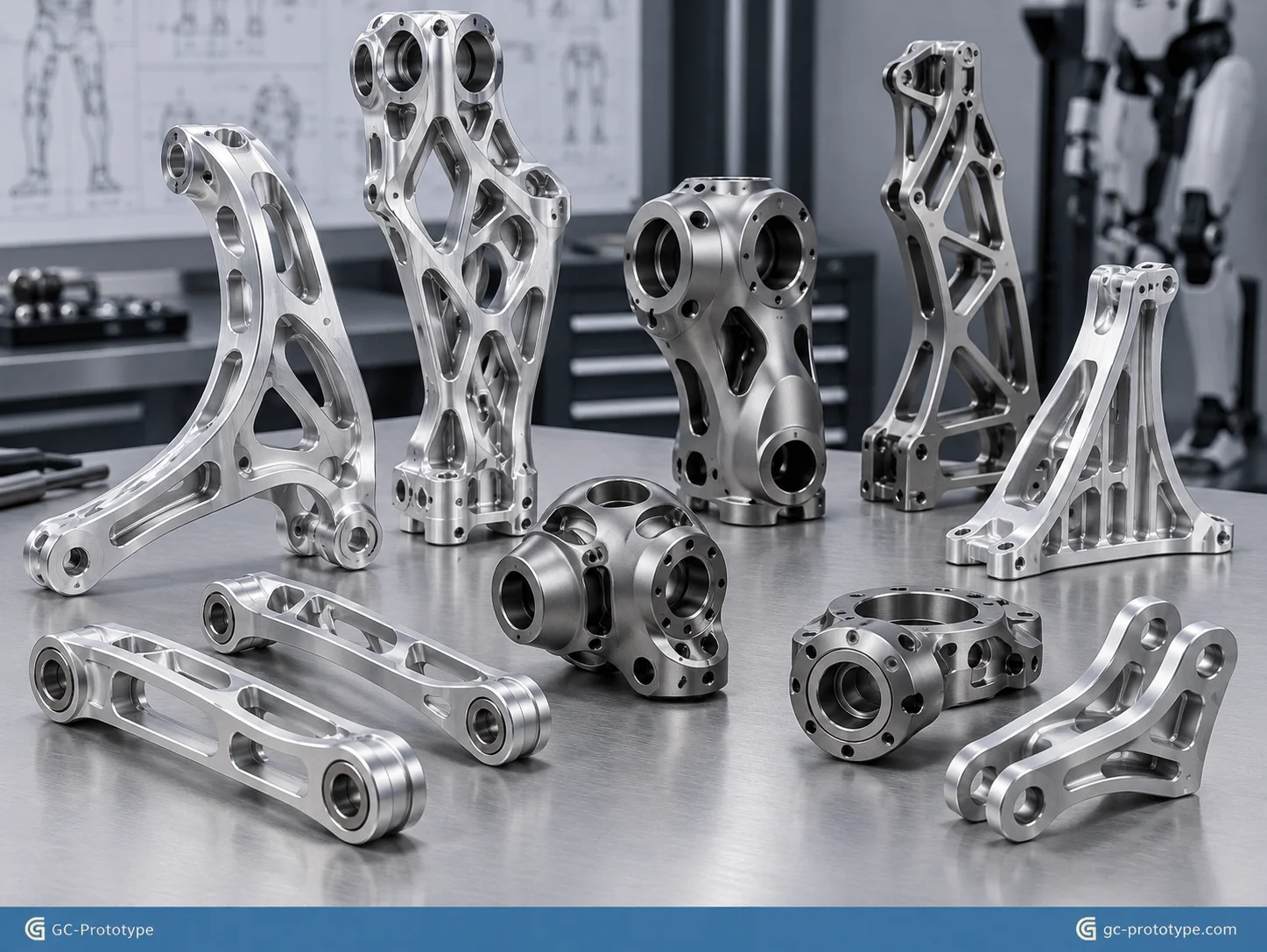
5 axis cnc machining for humanoid robot joints has become a critical manufacturing technology for next-generation humanoid robotics development, especially during rapid NPI and functional prototype validation stages. As humanoid robots move toward human-like walking, balancing, manipulation, and dynamic interaction, their mechanical structures require lightweight bionic designs, complex multi-angle features, and extremely accurate joint interfaces. Traditional 3-axis or 4-axis machining methods often require multiple setups, creating accumulated positioning errors, while metal 3D printing may struggle to achieve the density, fatigue resistance, and dynamic balance required for high-load robotic testing.
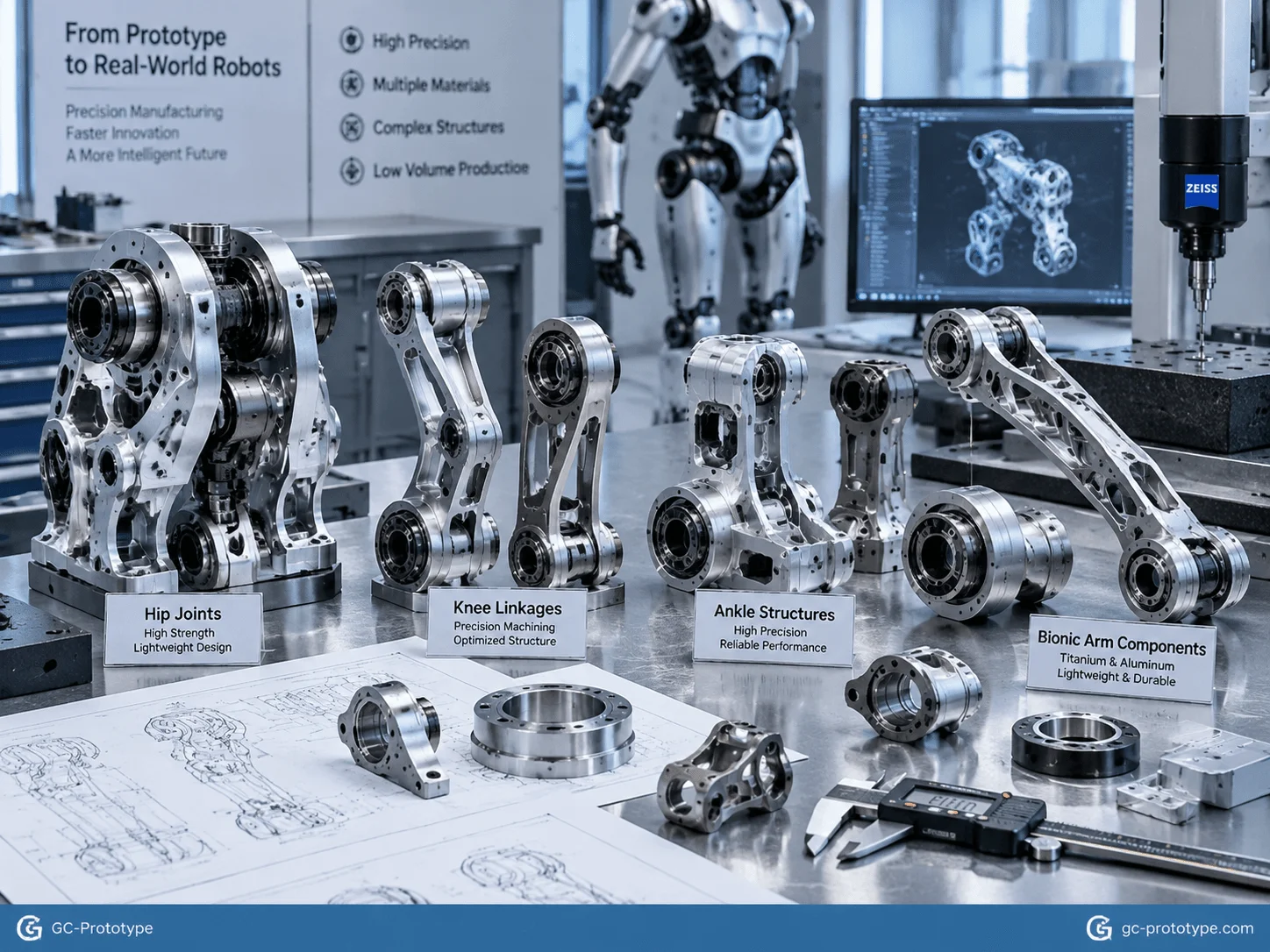
For Robotics Engineers, Senior Mechanical Engineers, NPI Engineers, Hardware Engineers, and Sourcing Managers, five-axis CNC machining provides a reliable pathway from CAD design to functional metal prototypes. It enables the production of complex humanoid robot components such as hip joints, knee linkages, ankle structures, pelvis frames, and lightweight actuator housings with excellent dimensional control and mechanical performance.
Unlike traditional manufacturing approaches, modern five-axis CNC prototyping supports the complete product development process from CAD design, prototype samples, engineering validation, small-batch production, and future mass-production preparation.
This article explores how five-axis CNC machining supports humanoid robot development, including lightweight bionic structure machining for robotics, advanced alloy selection, precision joint manufacturing, CNC versus 3D printing comparisons, DFM optimization, and prototype cost strategies.
Why Five-Axis CNC Machining Is Essential for Humanoid Robot Development
Humanoid robots represent one of the most challenging fields in mechanical engineering because their structures must replicate many characteristics of the human body.
Unlike conventional industrial robots that usually operate in predictable environments, humanoid robots require:
Dynamic balance
High-speed movement
Human-like joint motion
Lightweight structures
High torque output
Precise force control
Long-cycle durability
Mechanical components such as:
Hip joints
Knee joints
Ankle mechanisms
Shoulder assemblies
Robotic fingers
Spinal structures
must combine complex geometry with exceptional mechanical performance.
During the early development stage, engineers often face several challenges:
How to reduce moving weight without sacrificing stiffness?
How to machine complex organic shapes?
How to maintain joint alignment accuracy?
How to validate real-world dynamic performance?
How to reduce prototype iteration time?
Five-axis CNC machining provides an effective solution because it allows manufacturers to produce highly complex metal components directly from CAD models.
Unlike conventional machining, five-axis CNC machines can simultaneously control:
X-axis movement
Y-axis movement
Z-axis movement
Rotary axis A
Rotary axis B
This allows the cutting tool to approach the workpiece from multiple directions while maintaining accurate positioning.
For humanoid robot structures, this capability is especially valuable because many components contain:
Curved surfaces
Deep cavities
Variable wall thickness
Angled mounting interfaces
Internal weight-reduction structures
From CAD Design to Functional Humanoid Robot Prototype
The development process usually follows several stages:
Stage 1: Concept Design
Mechanical engineers create:
3D CAD models
Motion simulations
Structural analysis
Topology optimization studies
At this stage, the goal is identifying the ideal mechanical architecture.
Stage 2: CNC Prototype Manufacturing
Once the design is ready for physical testing, five-axis CNC machining converts digital models into functional metal parts.
Typical prototype components include:
Titanium joint brackets
Aluminum robotic limbs
Lightweight actuator housings
Bionic support structures
Stage 3: Functional Validation
Engineers evaluate:
Joint movement
Load capacity
Structural deformation
Thermal behavior
Dynamic balance
Testing results are then used to improve the next design iteration.
Stage 4: Pilot Production Preparation
After validation, companies can optimize designs for:
Small-batch manufacturing
Production processes
Cost reduction
Supply chain planning
GC Prototype supports the complete development process from CAD design, prototype samples, engineering validation, and production transition.
Lightweight Materials & Bionic Geometry for Humanoid Robots
Biomimetic Structural Rigidity: Leveraging lightweight bionic structure machining for robotics
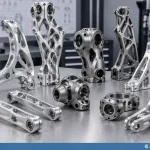
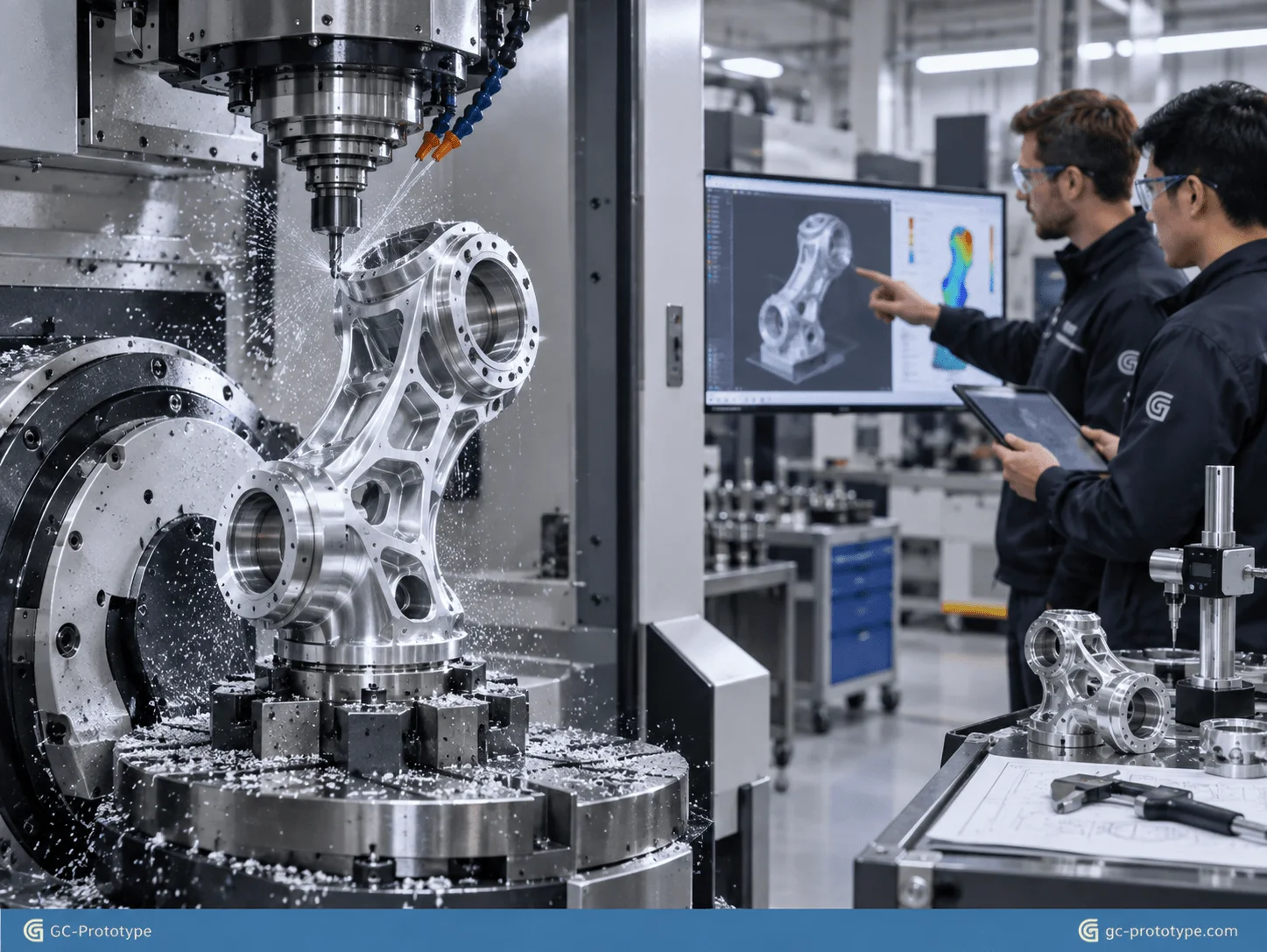
Lightweight bionic structure machining for robotics enables engineers to create humanoid robot components inspired by biological structures, where material is strategically distributed to maximize stiffness while minimizing unnecessary weight.
Human bones provide an excellent engineering example.
A human femur is not a solid block of material. Instead, it uses:
Internal structures
Variable density
Optimized load paths
High strength-to-weight efficiency
Modern humanoid robot designs follow similar principles.
Engineers increasingly apply:
Topology optimization
Generative design
Lightweight lattice concepts
Organic curved structures
to components such as:
Pelvis frames
Leg linkages
Knee brackets
Ankle supports
Shoulder structures
Topology Optimization for Robotic Skeleton Components
Topology optimization uses simulation algorithms to remove unnecessary material while maintaining structural performance.
The process typically involves:
1.Defining load conditions
2.Setting material constraints
3.Running optimization software
4.Removing low-stress regions
5.Creating manufacturable geometry
The resulting design often includes:
Organic curves
Hollow structures
Rib reinforcement
Variable cross sections
However, producing these shapes requires advanced manufacturing capability.
Traditional machining methods may struggle with:
Complex angles
Deep internal pockets
Undercuts
Smooth organic surfaces
Five-axis CNC machining provides the flexibility needed to manufacture these advanced geometries.
Machining Complex Bionic Surfaces with Five-Axis Movement
Humanoid robot components often contain free-form surfaces similar to biological structures.
Examples include:
Curved leg bones
Rounded joint housings
Organic support frames
Five-axis machining allows continuous tool orientation adjustment.
This provides advantages including:
Better surface finish
Reduced tool interference
Fewer setups
More accurate complex geometry
For example, a robotic knee linkage may require:
A curved external profile
Internal weight-reduction cavities
Angled mounting holes
Precision bearing interfaces
A three-axis machine may require multiple repositioning steps.
Each additional setup introduces potential:
Alignment errors
Datum shift
Increased inspection requirements
Five-axis machining reduces these risks by maintaining the part in a controlled reference position.
High-Performance Alloys for Humanoid Robot Structures
Comparing titanium and aluminum machining for humanoid robots
Selecting the right material is critical for humanoid robot performance.
Titanium and aluminum machining for humanoid robots provides engineers with two major lightweight material options.
Both materials offer excellent strength-to-weight ratios, but they serve different engineering requirements.
Titanium vs Aluminum for Humanoid Robot Components
| Property | 7075-T6 Aluminum | Ti6Al4V Grade 5 Titanium |
|---|---|---|
| Density | Low | Medium |
| Strength | High | Very High |
| Weight Efficiency | Excellent | Excellent |
| Corrosion Resistance | Good | Excellent |
| Machinability | Excellent | More Challenging |
| Material Cost | Lower | Higher |
| Thermal Conductivity | Higher | Lower |
| Typical Application | Structural prototypes | High-performance joints |
7075-T6 Aluminum for Lightweight Robotic Structures
7075-T6 aluminum is widely used in aerospace and high-performance engineering applications.
Advantages include:
High strength
Low weight
Excellent CNC machinability
Lower prototype cost
Typical humanoid robot applications include:
Arm links
Leg structures
Actuator housings
Support brackets
For many prototype projects, 7075-T6 provides an excellent balance between performance and manufacturing efficiency.
Ti6Al4V Titanium for Extreme Performance Applications
Ti6Al4V Grade 5 titanium provides exceptional mechanical performance.
Advantages include:
Very high strength-to-weight ratio
Excellent corrosion resistance
High fatigue resistance
It is suitable for applications requiring:
Maximum durability
High dynamic loading
Aerospace-level performance
Potential humanoid robot applications include:
High-load joint components
Lightweight structural brackets
Critical actuator connections
However, titanium machining requires specialized knowledge.
Challenges include:
Lower thermal conductivity
Heat concentration during cutting
Tool wear management
More careful machining parameters
Five-axis CNC machining of titanium requires optimized:
Tool paths
Cutting speeds
Coolant strategies
Material removal planning
Controlling Titanium Machining Challenges
When machining titanium robotic components, engineers must manage:
Heat Generation
Titanium transfers heat poorly, causing heat concentration near the cutting edge.
Solutions include:
Proper coolant delivery
Optimized cutting parameters
Stable tool engagement
Work Hardening
Incorrect machining conditions may create hardened surfaces.
Solutions include:
Maintaining consistent cutting depth
Avoiding repeated tool contact
Optimizing feed rates
Tool Life
Titanium machining requires:
Appropriate cutting tools
Stable machining conditions
Proper toolpath planning
Five-axis CNC capability helps maintain consistent tool engagement, improving machining reliability.
Multi-Axis Precision & Process Trade-Offs for Humanoid Robot Manufacturing
Single-Setup Accuracy: 5 axis cnc machining for humanoid robot joints
5 axis cnc machining for humanoid robot joints provides a significant advantage when manufacturing complex humanoid robot components that require multiple precision surfaces, different machining angles, and strict geometric relationships.
Humanoid robot joints are among the most challenging mechanical assemblies because they combine:
Multiple rotational axes
Compact actuator packaging
High torque transmission
Precision bearing support
Lightweight structural requirements
Typical humanoid robot joints include:
Hip joints
Knee joints
Shoulder joints
Ankle joints
Wrist mechanisms
Each joint may integrate:
Torque motors
Harmonic reducers
Planetary gearboxes
Encoders
Bearings
Structural housings
The mechanical interfaces between these components must maintain extremely accurate alignment.
The challenge is not only machining individual dimensions.
The challenge is maintaining the relationship between multiple features in a three-dimensional space.
Why Single-Setup Five-Axis Machining Improves Joint Accuracy
Traditional three-axis machining often requires multiple operations:
1.Machine one side
2.Remove the component
3.Reposition the part
4.Align a new datum
5.Continue machining
Although each operation may achieve acceptable accuracy individually, multiple setups introduce accumulated errors.
Potential problems include:
Datum shifting
Positioning variation
Angular alignment errors
Increased inspection requirements
For humanoid robot joints, these small errors can affect:
Motion smoothness
Gear alignment
Bearing loading
Robot positioning accuracy
Five-axis machining reduces these risks by allowing more features to be completed within a single fixture setup.
Precision Control for Hip, Knee, and Shoulder Joints
Humanoid robot joints require different mechanical interfaces depending on their function.
Hip Joint
Hip joints experience:
High torque
Large dynamic loads
Multi-directional movement
Critical features include:
Bearing seats
Reducer mounting surfaces
Motor alignment interfaces
Knee Joint
Knee mechanisms require:
High bending resistance
Compact structure
Accurate rotational alignment
Important machining features include:
Curved linkages
Precision shafts
Lightweight structural sections
Shoulder Joint
Shoulder assemblies require:
Multiple degrees of freedom
Compact actuator integration
High repeatability
Five-axis machining allows engineers to manufacture complex housings with:
Angled mounting surfaces
Internal channels
Organic external geometry
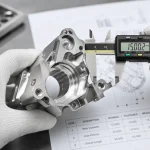
Maintaining ±0.005–±0.008 mm Critical Tolerance Control
For high-performance humanoid robots, some critical interfaces may require extremely tight dimensional control.
The design objective is not applying maximum precision everywhere.
Instead, engineers should identify functional features requiring tighter control.
Examples:
| Feature | Precision Requirement |
|---|---|
| Bearing mounting seat | Critical |
| Harmonic reducer interface | Critical |
| Motor locating surface | High |
| Encoder reference point | High |
| Cable routing hole | General |
| External cosmetic surface | General |
Critical tolerances may be controlled within approximately:
±0.005 mm
±0.008 mm
depending on:
Component size
Material
Machine capability
Assembly requirements
A proper tolerance strategy reduces unnecessary machining costs while maintaining robotic performance.
Dynamic Testing Reliability: 5 axis cnc prototyping vs 3d printing for robots
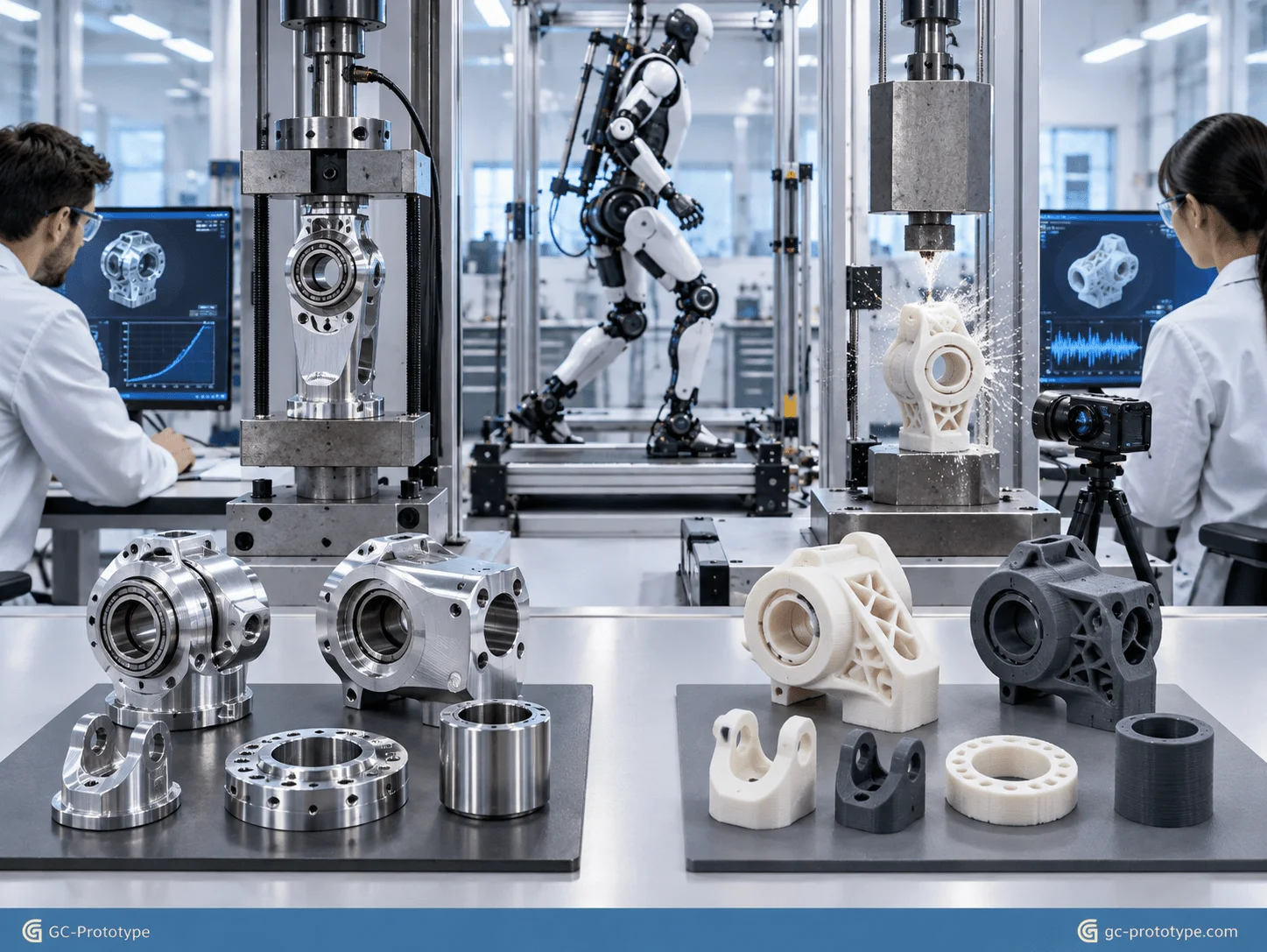
The comparison between 5 axis cnc prototyping vs 3d printing for robots becomes especially important during humanoid robot validation.
Both technologies have important roles, but they solve different engineering problems.
3D printing is highly effective for:
Concept verification
Ergonomic testing
Packaging validation
Early design iterations
However, when humanoid robots enter dynamic testing stages, material performance becomes critical.
Testing scenarios include:
Walking balance experiments
Jumping impact tests
Fall recovery testing
High-speed movement
High-torque transient loads
During these tests, mechanical components experience:
Repeated stress cycles
Impact forces
Vibration
Fatigue loading
CNC Machining vs 3D Printing for Humanoid Robot Prototypes
| Performance Factor | Five-Axis CNC Machining | 3D Printing |
|---|---|---|
| Material Density | Excellent | Process dependent |
| Metal Strength | Excellent | Limited unless metal AM |
| Fatigue Resistance | High | Lower for many polymers |
| Thread Strength | Excellent | Limited |
| Precision Interfaces | Excellent | Requires post-processing |
| Complex Internal Geometry | Moderate | Excellent |
| Prototype Speed | Fast | Very Fast |
| Functional Load Testing | Excellent | Application dependent |
Why CNC Metal Prototypes Perform Better During Dynamic Testing
Humanoid robots create highly dynamic mechanical conditions.
Examples:
Walking Tests
During walking experiments:
Leg joints repeatedly accelerate and decelerate
Structural components experience cyclic loads
Small deformation affects balance algorithms
Metal CNC components provide more realistic stiffness compared with printed plastic parts.
Jumping and Impact Testing
Impact events create short-duration high loads.
Examples:
Landing after a jump
Recovering from imbalance
Sudden direction changes
CNC-machined aluminum or titanium parts provide:
Higher impact resistance
Better fatigue performance
More reliable fastening
High-Torque Joint Testing
Humanoid robot joints often generate large torque outputs.
Printed components may experience:
Layer separation
Permanent deformation
Thread failure
Machined metal prototypes provide:
Stronger threaded connections
Better load transfer
More realistic validation results
When 3D Printing Is Still Valuable
Although CNC machining provides superior mechanical performance, 3D printing remains valuable during early development.
Examples include:
Checking body proportions
Testing sensor placement
Verifying cable routing
Evaluating user interaction
A common engineering workflow is:
Phase 1
3D printing:
Fast concept models
Design verification
Phase 2
CNC machining:
Functional metal prototypes
Dynamic testing
Phase 3
Production optimization:
Manufacturing process selection
This combination allows companies to balance development speed and engineering reliability.
DFM Best Practices & Fast Turnaround Sourcing for Humanoid Robotics
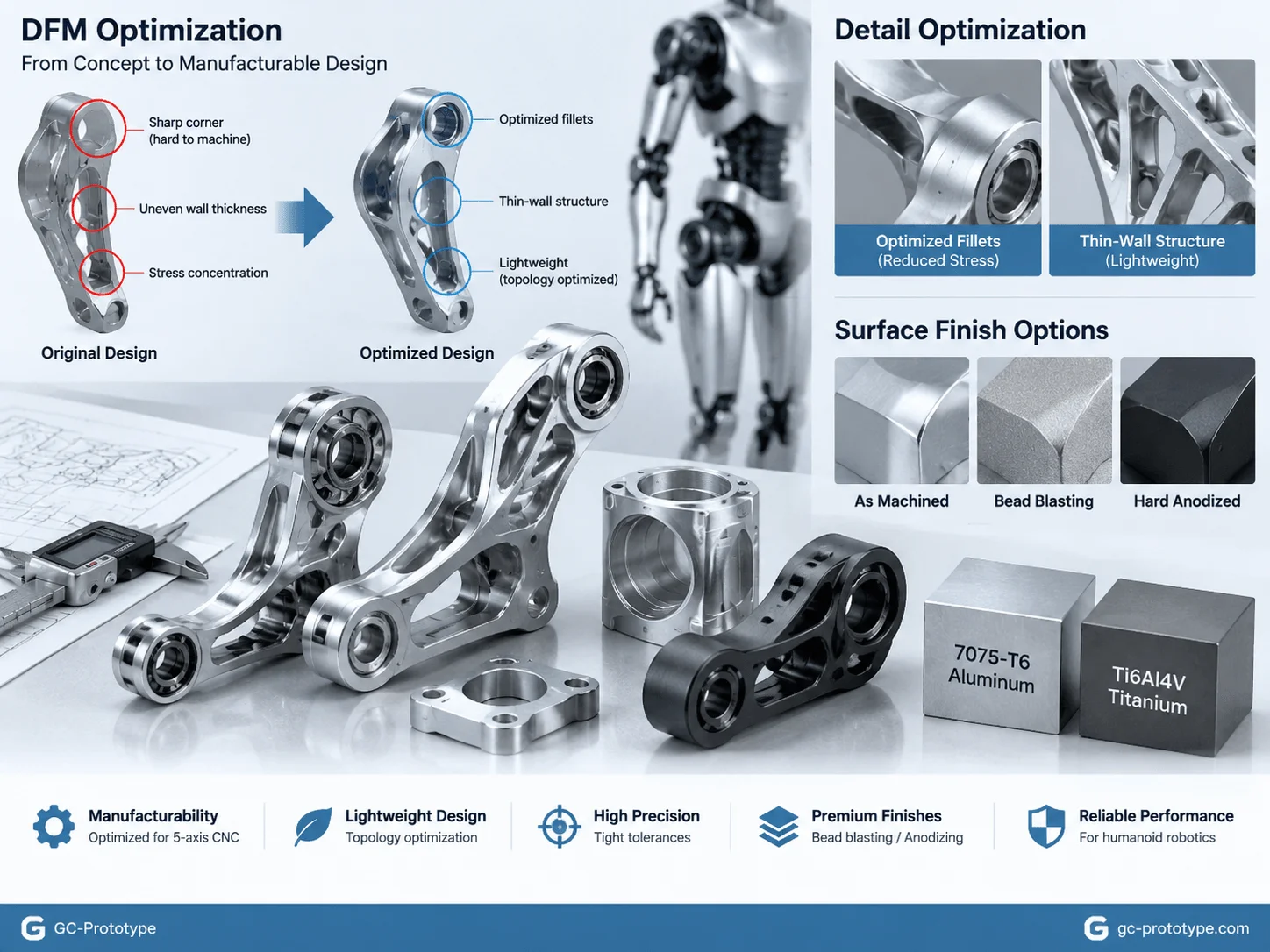
Engineering DFM Checklist: Reducing 5-Axis Cycle Time and Prototyping Overhead
For complex humanoid robot components, Design for Manufacturing (DFM) plays a major role in controlling prototype cost and delivery time.
A highly optimized design can reduce:
CNC machining cycle time
Tool changes
Programming difficulty
Inspection complexity
while maintaining structural performance.
Optimize Fillets and Internal Corners
Humanoid robot components often contain:
Deep pockets
Curved structures
Thin ribs
Organic surfaces
Small internal corners require smaller tools.
This creates:
Longer machining time
Increased vibration risk
Lower cutting efficiency
Increasing internal corner radii where possible allows the use of larger cutting tools.
Benefits include:
Faster material removal
Better tool stability
Lower machining cost
For topology-optimized robotic structures, practical fillet design is especially important.
Managing Thin-Wall Bionic Structures
Bionic robot structures often use thin-wall designs to reduce weight.
However, excessive thin sections can create:
Cutting vibration
Machining deformation
Dimensional instability
Engineers should maintain sufficient thickness around:
Joint mounting areas
Bearing interfaces
Load transfer paths
The best lightweight structure is not the thinnest structure.
It is the structure that achieves:
High stiffness
Low weight
Reliable manufacturing
Surface Finishing for Humanoid Robot Components
Surface treatment improves both performance and appearance.
Common finishing options include:
Micro Bead Blasting
Advantages:
Uniform appearance
Reduced machining marks
Improved surface texture
Applications:
Exterior robot skeleton components
Visible structural parts
Hard Anodizing Type III
Advantages:
Higher surface hardness
Improved wear resistance
Better corrosion protection
Applications:
Aluminum robotic joints
Sliding interfaces
Lightweight structural components
Hard anodizing is especially useful for humanoid robot prototypes that require repeated assembly and handling.
However, engineers should consider:
Coating thickness
Dimensional changes
Critical fit requirements
before final machining.
Reducing Prototype Lead Time Through Better Sourcing
Fast development cycles are critical in humanoid robotics.
A capable CNC supplier should provide:
Engineering DFM feedback
Material recommendations
Machining optimization
Inspection support
Flexible prototype quantities
A strong prototype partner helps engineers avoid:
Unnecessary machining complexity
Excessive tolerances
Manufacturing delays
Cost Analysis & Manufacturing Strategy for Humanoid Robot Prototypes
For humanoid robot development companies, controlling prototype cost is not simply about selecting the cheapest manufacturing process.
The real objective is balancing:
Engineering validation speed
Mechanical reliability
Prototype quantity
Material performance
Future production readiness
During early NPI stages, humanoid robot companies usually require multiple design iterations before the mechanical architecture becomes stable.
A typical development cycle may include:
Initial structural prototype
Functional movement prototype
Dynamic testing prototype
Customer demonstration prototype
Pilot production preparation
Each stage has different manufacturing requirements.
Understanding Prototype Cost Factors for Five-Axis CNC Machining
The cost of five-axis CNC machining for humanoid robot components depends on several technical factors.
Major cost drivers include:
| Cost Factor | Impact on Prototype Cost |
|---|---|
| Part Complexity | Higher complexity increases programming and machining time |
| Material Selection | Titanium costs more than aluminum |
| Number of Setups | More setups increase labor and alignment time |
| Tight Tolerances | Precision inspection increases cost |
| Surface Treatment | Finishing adds processing steps |
| Quantity | Larger prototype batches reduce average cost |
Material Cost Comparison: Aluminum vs Titanium
Material selection significantly influences prototype cost.
| Material | Cost Level | Best Application |
|---|---|---|
| 6061-T6 Aluminum | Low | General humanoid prototypes |
| 7075-T6 Aluminum | Medium | Lightweight high-strength structures |
| Ti6Al4V Titanium | High | Extreme performance applications |
For most humanoid robot prototypes, aluminum alloys provide an excellent balance between:
Weight reduction
Strength
Machining efficiency
Cost control
Titanium is typically selected only when the performance benefits justify the additional manufacturing investment.
Five-Axis CNC Machining vs Metal 3D Printing Cost Consideration
When developing advanced humanoid robots, companies often compare five-axis CNC machining with metal additive manufacturing.
Both processes can produce complex metal parts, but they have different advantages.
| Factor | Five-Axis CNC Machining | Metal 3D Printing |
|---|---|---|
| Material Density | Excellent | Good |
| Surface Finish | Excellent | Requires finishing |
| Dimensional Accuracy | Excellent | Moderate |
| Mechanical Consistency | Excellent | Process dependent |
| Production Readiness | Strong | Developing |
| Complex Internal Channels | Limited | Excellent |
| Prototype Repeatability | Excellent | Variable |
Why CNC Machining Remains Important for Functional Humanoid Testing
Humanoid robots require components that survive:
Walking cycles
Balance correction
Impact events
High-speed movement
Repeated torque loads
Five-axis CNC machining provides:
Dense metal structures
Reliable mechanical properties
Strong threaded connections
Stable dimensional performance
This is especially important for:
Leg joints
Hip mechanisms
Ankle structures
Load-bearing frames
A prototype that accurately represents final mechanical behavior provides more valuable engineering feedback.
Application Scenarios of Five-Axis CNC Humanoid Robot Components
Humanoid Robot Hip Joint Prototype
The hip joint is one of the most demanding mechanical systems in a humanoid robot.
It requires:
High torque transmission
Multi-axis movement
Compact packaging
High stiffness
Five-axis CNC machining allows engineers to manufacture:
Lightweight actuator housings
Curved support structures
Precision bearing interfaces
Harmonic drive mounting components
Testing focuses on:
Torque capacity
Structural deformation
Thermal performance
Motion accuracy
Humanoid Robot Knee Linkage Development
The knee joint experiences repeated bending loads during walking.
A lightweight CNC-machined knee structure can help engineers evaluate:
Walking stability
Dynamic balance
Joint stiffness
Fatigue behavior
Bionic designs often include:
Curved surfaces
Hollow structures
Variable cross sections
Five-axis machining enables these complex geometries while maintaining accurate mechanical interfaces.
Bionic Robotic Leg Structure
The human leg provides inspiration for lightweight robotic structures.
Engineers use topology optimization to create:
Reduced mass
Improved stiffness
Efficient load paths
Five-axis CNC machining enables production of:
Organic curved components
Internal reinforcement structures
Complex transition surfaces
These prototypes are especially useful for:
Walking experiments
Balance algorithms
Dynamic motion testing
Humanoid Robot Shoulder and Arm Structures
Upper-body humanoid systems require:
High flexibility
Lightweight components
Accurate actuator integration
Applications include:
Shoulder brackets
Arm linkages
Elbow mechanisms
Wrist structures
Five-axis machining supports:
Complex angled interfaces
Lightweight aluminum structures
Precision actuator mounting
Prototype Sourcing Strategy for Humanoid Robot Development
Selecting the right manufacturing partner can significantly influence development speed.
For humanoid robotics companies, the ideal supplier should provide more than machining capability.
They should support:
Engineering communication
DFM optimization
Material selection
Prototype iteration
Quality inspection
Recommended Information for CNC Prototype RFQ
To receive an accurate quotation, engineering teams should provide:
CAD Files
Recommended formats:
STEP
IGES
SolidWorks
Native CAD files
Engineering Drawings
Include:
Critical dimensions
GD&T requirements
Surface finish
Material specifications
Prototype Quantity
Specify:
Number of prototypes
Expected future requirements
Example:
1–5 functional prototypes
10–50 validation units
50–500 pilot production parts
Testing Requirements
Include:
Load requirements
Environmental conditions
Assembly expectations
This information allows suppliers to recommend:
Suitable materials
Appropriate machining methods
Cost-saving DFM improvements
From CAD Design to Production: Complete Humanoid Robot Manufacturing Support
Humanoid robot companies rarely move directly from CAD design to mass production.
The development journey usually includes:
Stage 1: CAD Development
Engineering teams create:
Mechanical concepts
Structural simulations
Digital prototypes
Stage 2: CNC Prototype Manufacturing
Five-axis CNC machining produces:
Functional metal components
Precision joint parts
Lightweight structural prototypes
Stage 3: Engineering Validation
Teams evaluate:
Dynamic movement
Load performance
Thermal behavior
Assembly reliability
Stage 4: Pilot Production
After design approval:
Manufacturing processes are optimized
Supply chains are prepared
Production methods are evaluated
GC Prototype supports customers throughout this development process, from CAD design and prototype manufacturing to production preparation.
Frequently Asked Questions About Five-Axis CNC Humanoid Robot Machining
Why is five-axis CNC machining important for humanoid robots?
Five-axis CNC machining enables manufacturers to produce complex robotic structures with fewer setups, better accuracy, and improved surface quality.
It is especially valuable for:
Joint housings
Bionic structures
Lightweight linkages
Complex actuator components
What humanoid robot parts are suitable for five-axis CNC machining?
Common applications include:
Hip joints
Knee linkages
Shoulder structures
Ankle components
Actuator housings
Lightweight robotic frames
Is aluminum or titanium better for humanoid robots?
Both materials have advantages.
Aluminum provides:
Lower cost
Excellent machinability
Lightweight performance
Titanium provides:
Higher strength
Better fatigue resistance
Extreme performance capability
The best choice depends on the robot application.
What is the advantage of CNC machining compared with 3D printing?
CNC machining provides:
Higher material density
Better fatigue resistance
Stronger threads
More predictable mechanical properties
3D printing remains valuable for early concept validation.
Can five-axis CNC machining achieve robotic joint precision requirements?
Yes.
Critical features such as:
Bearing seats
Reducer interfaces
Motor mounting surfaces
can achieve very tight dimensional control when properly designed and inspected.
How can humanoid robot prototype costs be reduced?
Cost reduction methods include:
Choosing suitable materials
Optimizing topology designs
Increasing internal fillets
Avoiding unnecessary tight tolerances
Reducing machining setups
Planning surface treatments early
Does GC Prototype support mass production?
Yes.
GC Prototype provides a complete development pathway:
CAD design → prototype samples → engineering validation → pilot production → production transition.
The company supports customers from early concepts to manufacturing readiness.
Accelerating Humanoid Robot Innovation Through Five-Axis CNC Machining
The development of humanoid robots requires manufacturing technologies capable of producing complex, lightweight, and highly accurate mechanical structures.
Five-axis CNC machining provides a powerful solution for engineers developing next-generation robotic systems.
By combining:
Advanced multi-axis machining
Lightweight aluminum and titanium materials
Precision joint manufacturing
DFM optimization
Prototype-to-production support
companies can accelerate development while reducing engineering risks.
Whether developing robotic legs, hip joints, actuator housings, or bionic structural components, five-axis CNC machining provides the mechanical reliability required for high-dynamic humanoid robot testing.
GC Prototype helps robotics companies transform complex CAD concepts into functional engineering prototypes and production-ready designs.
Validating the high-dynamic gait and tight joint tolerances of your next-generation humanoid robot demands uncompromising 5-axis machining precision. Whether you are a Robotics Engineer finalizing complex bionic leg linkages or a Sourcing Manager evaluating 5-axis CNC prototyping vs 3D printing, GC Prototype provides world-class multi-axis machining capabilities.