Address:
Shenzhen Bao'an District Xinqiao Subdistrict Huangpu Community Huangpu East Ring Road No. 504 Shenzhen Yuan Industrial City Building C
Work Hours:
Monday to Friday: 9AM - 21PM
Weekend: 9AM - 21PM

Address:
Shenzhen Bao'an District Xinqiao Subdistrict Huangpu Community Huangpu East Ring Road No. 504 Shenzhen Yuan Industrial City Building C
Work Hours:
Monday to Friday: 9AM - 21PM
Weekend: 9AM - 21PM

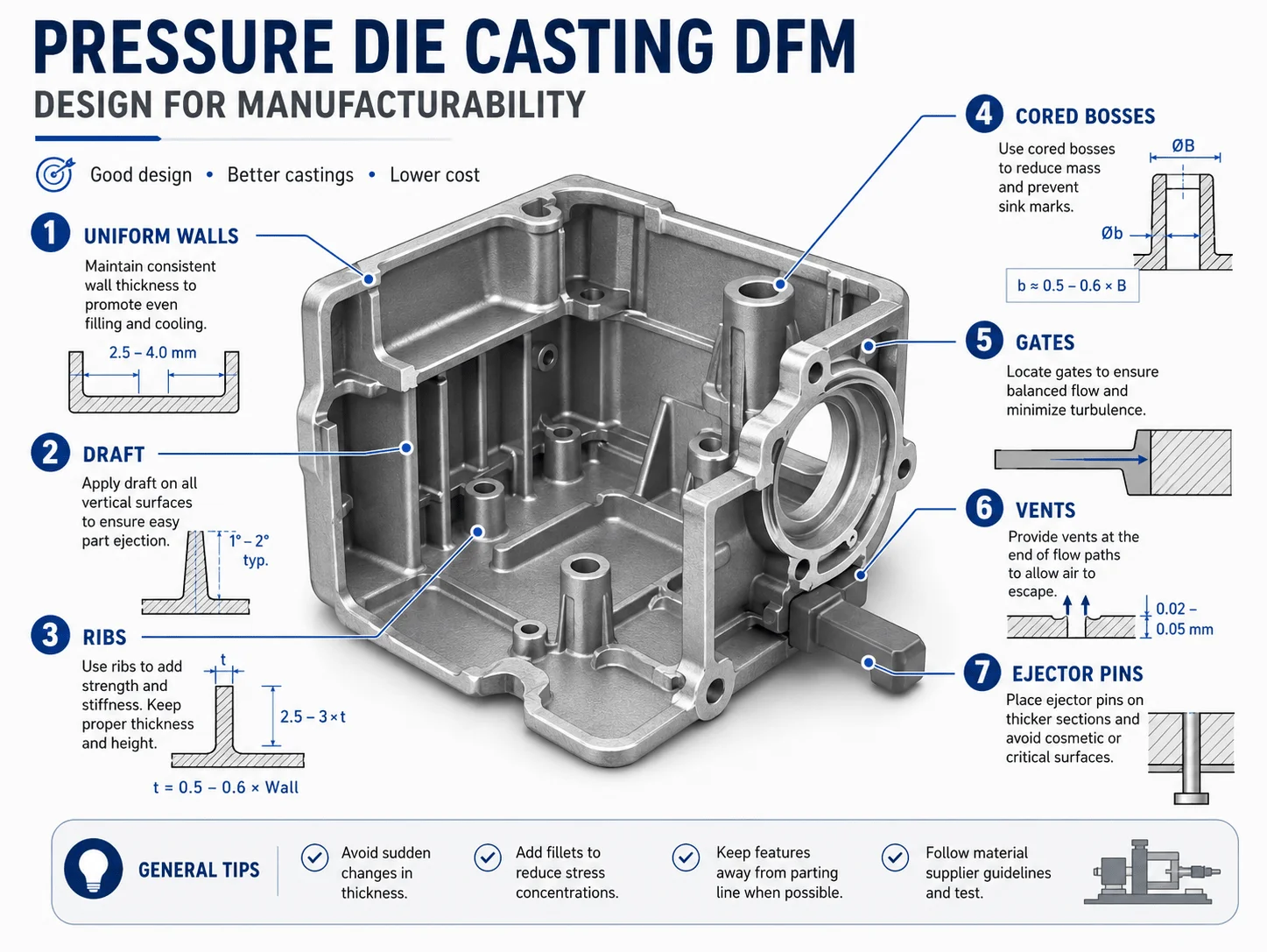
Pressure die casting is a high-productivity manufacturing process for converting stable metal designs into repeatable production parts at quantities where CNC machining, additive manufacturing, or prototype casting becomes too expensive. Once a hardware program moves beyond NPI and approaches annual volumes of 1,000 units or more, a properly engineered die can produce thin-walled housings, brackets, heat-management components, and structural parts with short cycle times and limited secondary machining.
For Senior Mechanical Engineers, Manufacturing Engineers, Quality Managers, and Procurement Professionals, the commercial advantage depends on decisions made before tooling begins. Alloy selection, wall thickness, draft, rib layout, machining allowances, porosity requirements, tolerance strategy, and expected lifetime volume all influence tooling ROI and total cost of ownership. This guide explains how to evaluate materials, applications, ISO 8062 tolerancing, casting-versus-sand-casting economics, DFM, quality control, and sourcing for medical equipment, robotics, automotive systems, consumer electronics, and industrial machinery.
How Pressure Die Casting Works
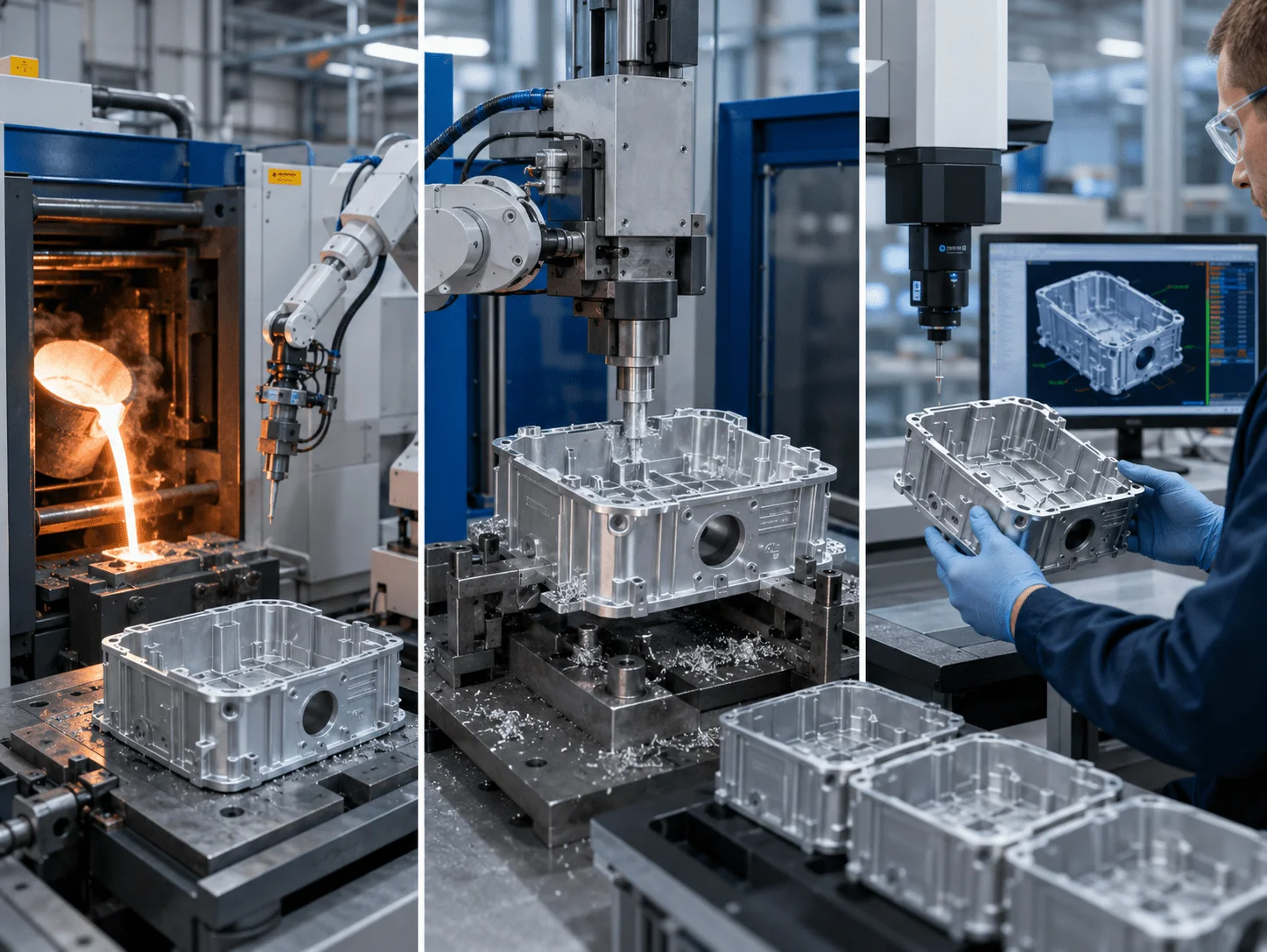
Pressure die casting injects molten nonferrous metal into a hardened steel die at high speed and pressure. The alloy fills the cavity, solidifies, and is ejected as a near-net-shape component. Runners, gates, overflows, and flash are removed before machining, finishing, leak testing, or assembly.
The steel die is the largest upfront investment, but it can support large repeat quantities. The process is especially effective for parts combining thin walls, bosses, ribs, heat-dissipation features, mounting points, and complex external geometry.
| Manufacturing Route | Upfront Tooling | Unit Cost at Scale | Best Fit |
| CNC machining | Low | High | Prototypes and low volume |
| Sand casting | Low to moderate | Moderate | Large, low-volume parts |
| Pressure die casting | High | Low | Repeat production |
| Investment casting | Moderate to high | Moderate to high | Specialized shapes and alloys |
Common Pressure Die-Casting Alloys
Aluminum, zinc, and magnesium are the principal alloy families. Aluminum balances weight, stiffness, corrosion resistance, and thermal conductivity. Zinc fills fine details and supports thin walls and excellent surface finish. Magnesium provides very low density but needs specialized process control.
A380 is widely used for aluminum housings and general engineering parts, while ADC12 is common in electronics, automotive, and industrial supply chains. The drawing should define exact chemistry, mechanical requirements, heat treatment, and documentation rather than assuming alloy equivalence from a trade name.
| Alloy Family | Main Advantages | Typical Applications | Key Procurement Consideration |
| Aluminum | Balanced weight, rigidity, corrosion resistance, and heat transfer | Housings, brackets, heat sinks, automotive and robotic structures | Confirm alloy chemistry, coating, machining, and leak requirements |
| Zinc | Excellent filling, fine detail, thin walls, and smooth surfaces | Small mechanisms, connectors, decorative hardware, precision covers | Higher density but often reduced finishing and machining |
| Magnesium | Lowest density and useful stiffness-to-weight performance | Portable electronics, mobility systems, lightweight structural covers | Requires specialized melting, corrosion protection, and supplier experience |
Surface treatment should be selected with the alloy and application rather than added as a cosmetic afterthought. Powder coating can provide durable color, conversion coatings can support corrosion protection and paint adhesion, and plating may suit selected zinc components. Sealing areas, grounding points, threads, and machined fits may require masking or post-finish verification.
Industry Applications & Material Selection
Medical and Precision Hardware: Incorporating pressure die casting design guidelines for medical devices
Applying pressure die casting design guidelines for medical devices starts with identifying the component’s real regulatory and functional role. Die casting is commonly appropriate for imaging-equipment housings, diagnostic-machine frames, pump bodies, robotic-surgery supports, monitor brackets, motor housings, internal chassis, and non-implant structural hardware. It is not automatically suitable for every patient-contact, sterile, or implantable application.
Medical equipment designers often need a combination of low weight, stiffness, corrosion resistance, cleanable surfaces, EMI shielding, thermal management, and repeatable assembly. Aluminum alloys such as A380 or ADC12 can support these goals when the part is designed with uniform walls, accessible finishing surfaces, controlled porosity, and appropriate secondary operations.
The design team should define:
Whether the component has direct or indirect patient contact
Cleaning chemicals and disinfectants
Operating temperature and heat flow
Required coating or conversion treatment
Grounding and EMI requirements
Sealing, leak, or pressure requirements
Critical datums and machined interfaces
Material traceability and inspection documentation
Cosmetic zones and acceptable casting marks
Cleanability is influenced by geometry as much as material. Deep unsealed crevices, sharp recesses, and inaccessible joints can trap contaminants. External medical-equipment surfaces benefit from smooth transitions, rounded edges, controlled parting lines, and finishes that tolerate the intended cleaning process.
Porosity must be addressed early where the part contains sealed fluid passages, vacuum cavities, threaded ports, or pressure boundaries. Conventional high-pressure die casting may require process optimization, local machining strategy, impregnation, or a different casting route for demanding leak-tight applications. Critical sealing faces should include adequate machining stock and should not be positioned where gates, overflows, or known porosity risks are concentrated.
Medical projects also require careful claims management. A cast alloy or coating should not be described as “medical grade” without a defined specification and evidence relevant to the intended use. The supplier’s role is to manufacture to the approved drawing and quality plan; final regulatory suitability remains part of the device manufacturer’s verification process.
Robotics and Automation: Sourcing high precision aluminum die casting for robotics
Sourcing high precision aluminum die casting for robotics can reduce the cost of motor housings, joint covers, actuator bodies, gearbox cases, sensor brackets, controller enclosures, and structural interfaces once demand reaches repeat-production levels.
Robotic systems often need thin walls for low mass, ribs for stiffness, integral heat sinks for electronics, and accurate bearing or motor interfaces. Die casting can consolidate several fabricated or machined components into one near-net-shape body, reducing fasteners, assembly time, and tolerance stack-up.
The greatest precision should be reserved for functional interfaces. Bearing seats, dowel holes, sealing grooves, shaft alignments, and motor pilot diameters are commonly CNC machined after casting. Non-critical walls, ribs, covers, and cable-routing features can remain as cast.
Thermal management is another advantage. Aluminum housings can combine structural support with fins, bosses, and broad heat-spreading surfaces. However, extremely thin fins, abrupt wall changes, and isolated heavy bosses can create filling or solidification problems. A simulation-led DFM review should balance thermal performance with metal flow, die temperature, ejection strength, and tool life.
Process Trade-Offs & Quality Standards
Financial Breakdown: pressure die casting vs sand casting cost comparison
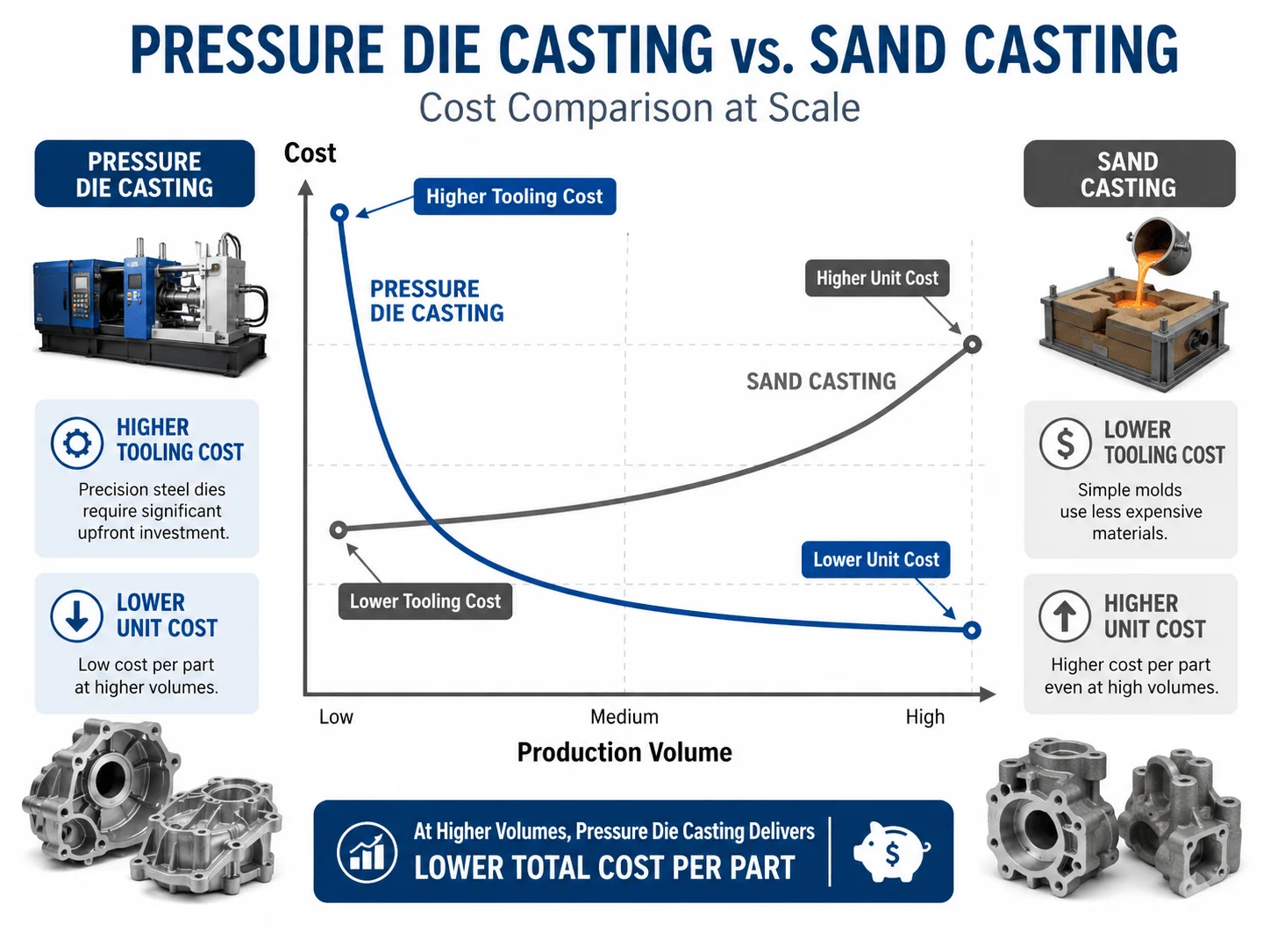
A realistic pressure die casting vs sand casting cost comparison must separate tooling investment from recurring production cost. Sand casting uses relatively inexpensive patterns and molds, making it attractive for large parts, low annual volume, frequent design changes, and geometries not suited to high-pressure die casting.
Pressure die casting requires a hardened steel tool, cooling circuits, slides or core pulls where needed, trim tooling, and process development. Initial investment is therefore much higher. Once the design is stable and volume increases, shorter cycles, repeatable near-net geometry, thinner walls, and reduced machining can lower the delivered cost per part.
| Cost Factor | Pressure Die Casting | Sand Casting |
| Tooling investment | High | Low to moderate |
| Cycle time | Short | Longer |
| Surface finish | Generally smoother | Generally rougher |
| Wall capability | Thin walls possible | Usually thicker walls |
| Repeatability | High | Moderate |
| Best economic volume | Medium to high | Prototype to low volume |
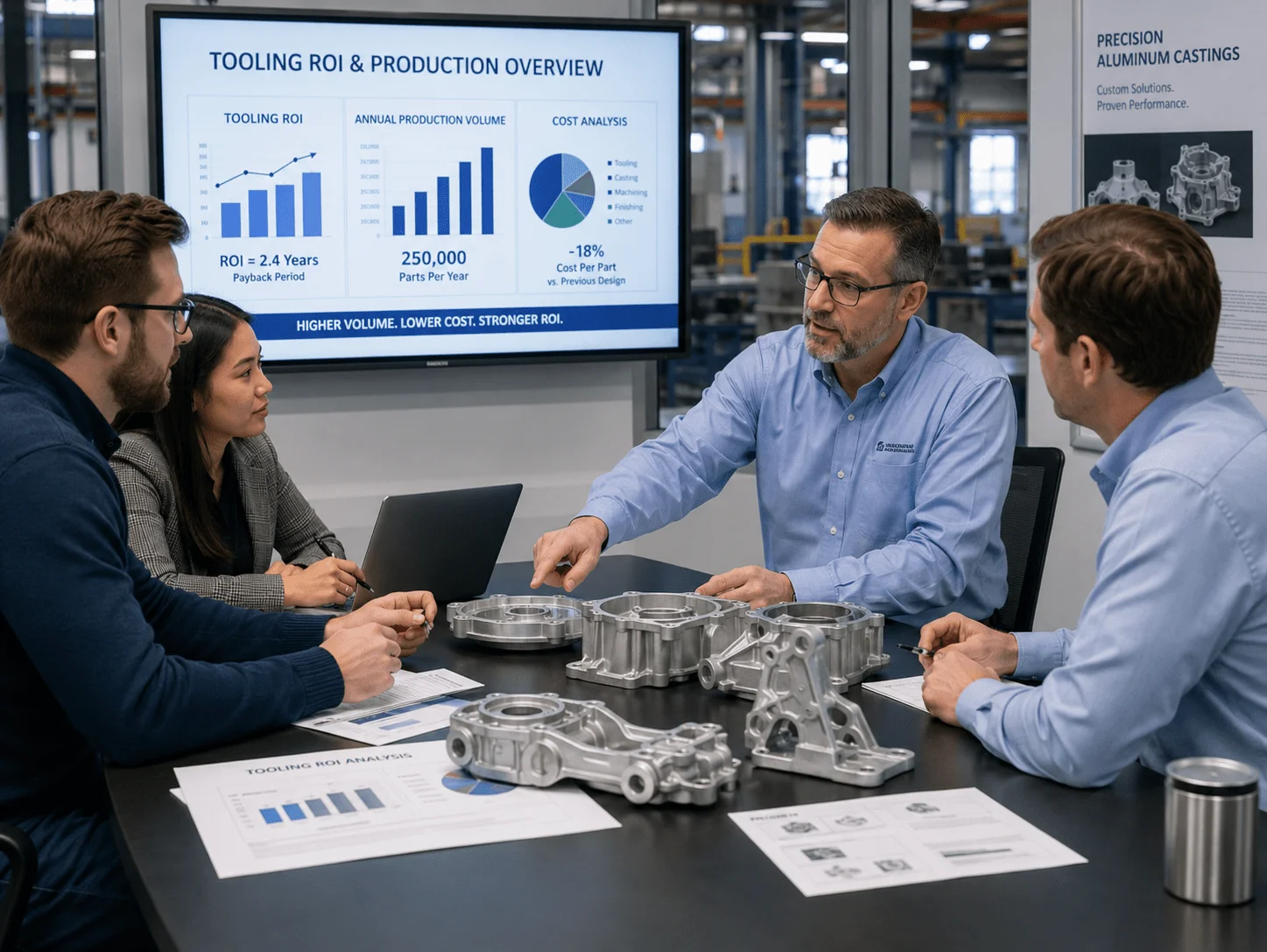
The break-even quantity depends on part mass, tool complexity, cavities per die, cycle time, alloy, machining content, scrap rate, finishing, annual demand, and program life. Procurement teams should compare total ownership cost, including tooling, sampling, casting, CNC machining, inspection, surface treatment, scrap, maintenance, packaging, and engineering-change risk.
For a design that is still changing, sand casting or CNC machining may protect cash and prevent premature tooling lock-in. For a validated enclosure expected to sell in the thousands, pressure die casting may offer the stronger long-term case.
Engineering Precision: Understanding pressure die casting tolerance standards ISO 8062
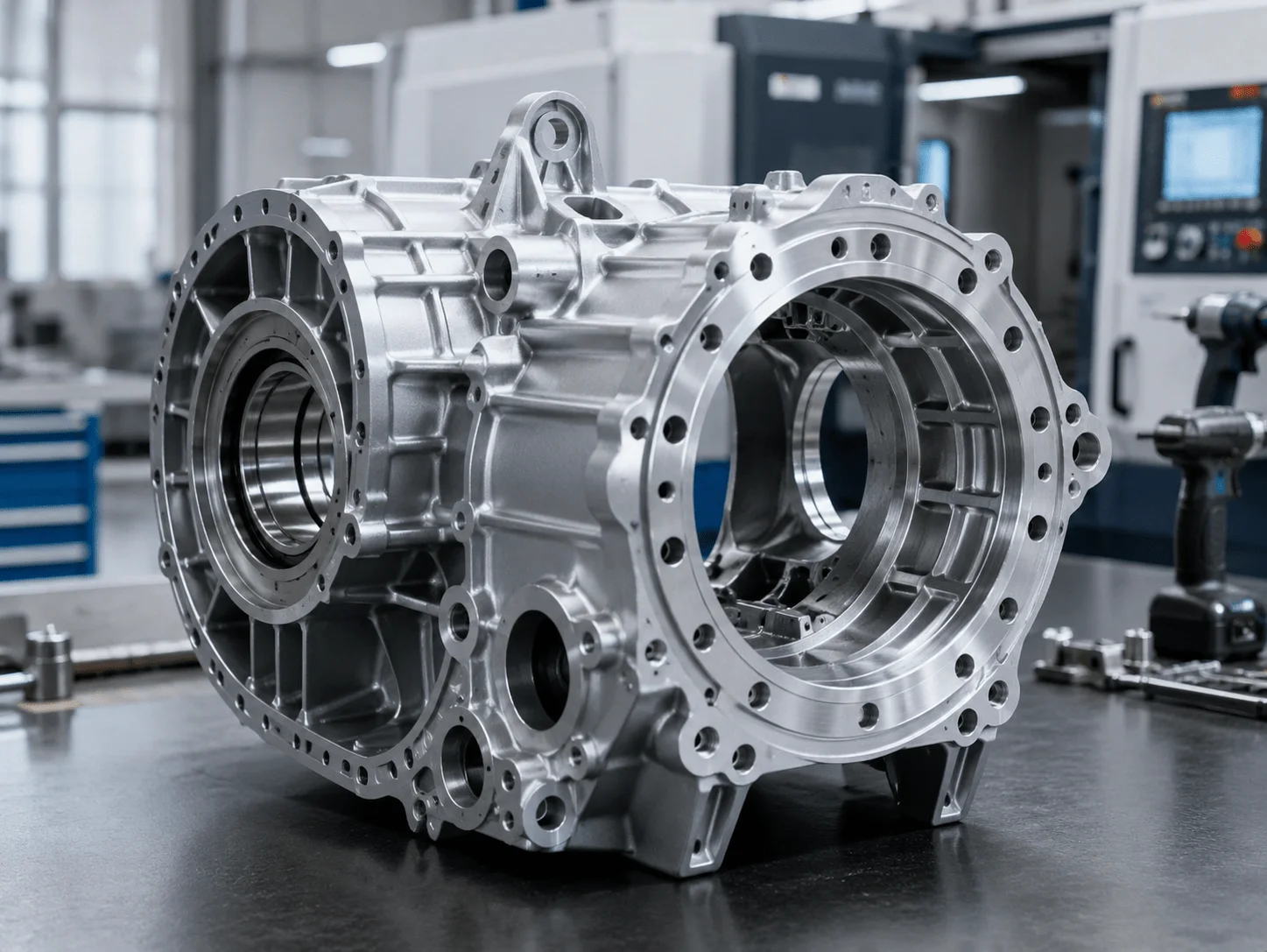
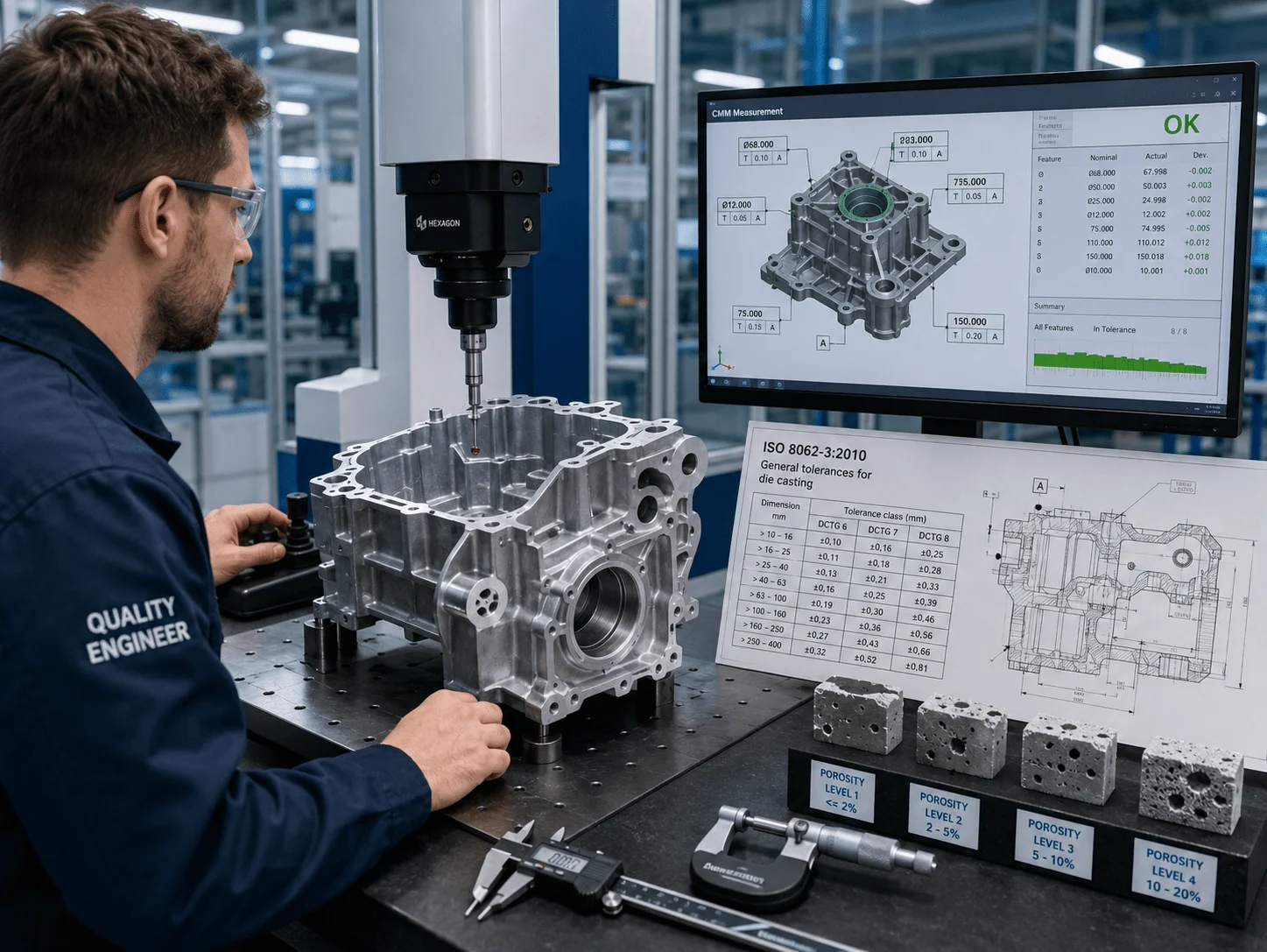
Understanding pressure die casting tolerance standards ISO 8062 helps engineers avoid assigning machining-level limits to as-cast geometry. ISO 8062-3:2023 addresses general dimensional and geometrical tolerances and machining allowance grades for castings using plus/minus tolerances on indicated dimensions. The selected grade must still reflect the process, alloy, geometry, size, tooling, and supplier capability.
ISO 8062 is a specification framework, not proof that every feature can be held to one class. NADCA’s product specification resources also distinguish standard and precision tolerances and cover alloy properties, GD&T, design guidance, and quality provisions.
Variation is influenced by die temperature, alloy shrinkage, projected area, parting-line relationships, slide movement, ejection, wall thickness, tool wear, trimming, and post-treatment. Features formed within one die half are generally easier to control than dimensions crossing the parting line or several slides.
The drawing should identify the general as-cast standard and grade, individually toleranced dimensions, machined features, datums, machining allowances, surface requirements, porosity or leak criteria, and inspection plan. GD&T should communicate function through position, flatness, profile, perpendicularity, or runout where these controls are more meaningful than tight plus/minus limits.
Capability must be confirmed during DFM and validated on production-intent samples. The latest applicable standard edition, customer requirements, and demonstrated supplier capability should govern the final drawing.
DFM Optimization & Manufacturing Strategy
Designing for Manufacturability: Wall Thickness, Draft Angles, and Ribs
Good DFM improves metal flow, reduces porosity and distortion, protects the die, and lowers recurring cost. Geometry should be reviewed as a connected filling and solidification system rather than as isolated features.
Maintain Consistent Wall Thickness
Uniform walls promote balanced filling and cooling. Abrupt changes from thin walls to heavy bosses create hot spots that may increase shrinkage, sink, and dimensional movement. Core out heavy areas, add ribs, and use gradual transitions.
Add Practical Draft Angles
Draft reduces friction, ejection force, galling, and distortion. Deep pockets, textured walls, and internal surfaces normally require more draft. Zero-draft requests should be limited to short critical features or replaced by machining.
Use Ribs Instead of Solid Mass
Ribs improve stiffness without the weight and cooling time of thick walls. Blend them with radii and avoid thick intersections that can create sink on cosmetic surfaces.
Round Corners and Transitions
Internal and external radii improve flow, reduce stress concentration, and extend tool life. Sharp corners can be difficult to fill and create stress in both the casting and die.
Plan Gates, Overflows, and Vents
Gate location controls entry and flow. Overflows collect colder metal and contaminants, while vents release air. The product design should provide room for these systems and keep trim marks or porosity risk away from critical cosmetic and machined areas.
Design Bosses, Ejection, and Slides Carefully
Bosses should be cored and connected with ribs. Ejector pins should support the hot casting without marking sealing or cosmetic surfaces. Side undercuts may require slides, which increase tooling cost, maintenance, and dimensional variation; machining or reorientation may be more economical.
| DFM Issue | Manufacturing Risk | Preferred Response |
| Thick isolated boss | Shrinkage and porosity | Core out and connect with ribs |
| No draft on deep wall | Ejection damage | Add practical draft |
| Sharp internal corner | Poor fill and tool stress | Add radius |
| Thin-to-thick transition | Hot spots and sink | Use gradual transition |
| Numerous undercuts | Expensive slide tooling | Reorient or machine |
Defect Prevention and Quality Assurance
Managing Porosity and Filling Defects
Porosity can result from trapped gas, shrinkage, lubricant, turbulent flow, or inadequate venting. Its importance depends on function: small internal pores may be acceptable in a cover but unacceptable in a sealing face or pressure body.
Controls may include vacuum-assisted casting, stable melt handling, optimized gate velocity, die-temperature control, overflows, local cooling, X-ray inspection, leak testing, or approved impregnation. Deep machining into heavy cast sections should be minimized because it can expose hidden pores.
Cold shuts and misruns are associated with incomplete filling or poorly fused metal fronts. Practical walls, smooth transitions, and suitable gate and vent design reduce risk. A production quality plan may combine visual standards, dimensional sampling, CMM inspection, material verification, X-ray or CT inspection, leak testing, coating checks, and first-article reporting according to application risk.
Cost Optimization and Procurement Strategy
Reducing Total Pressure Die-Casting Cost
The best time to reduce cost is before tool steel is cut. Major drivers include projected area, cavities, die complexity, slides, alloy weight, cycle time, scrap, trimming, machining, finishing, inspection, annual quantity, and program life.
| Cost Driver | Why It Raises Cost | Optimization Strategy |
| Large projected area | Larger machine and die | Reduce footprint where possible |
| Multiple slides | Tooling and maintenance | Eliminate side undercuts |
| Heavy sections | More metal and cooling | Core out and rib |
| Tight limits everywhere | Machining and inspection | Tighten critical features only |
| Premium cosmetics | Polishing and handling | Define Class-A surfaces |
| Low annual volume | Poor tooling amortization | Delay hard tooling |
Procurement teams should request prices at multiple volumes and separate one-time from recurring costs. Tool ownership, maintenance, life, storage, engineering changes, and end-of-program disposition should be documented.
The RFQ should include a solid 3D model, dimensioned drawing, alloy, annual forecast, program duration, machined features, finish, cosmetic zones, porosity and leak requirements, documentation, packaging, and delivery location. Compare fully delivered cost rather than a casting price that excludes fixtures, coating, testing, trim tooling, or quality reports.
Application Scenarios
Medical Imaging Equipment Housing
A medical-equipment manufacturer uses a rigid aluminum housing for EMI shielding, heat dissipation, and cleanable support. Connector and sealing interfaces are CNC machined.
Robotic Joint and Motor Enclosure
A robotics company consolidates a housing, heat sink, and bracket into one casting. Integral ribs improve stiffness, while machined bearing seats preserve alignment.
Automotive Electronic Control Unit
An ECU enclosure combines thermal management, gasket sealing, mounting points, leak testing, and repeatable high-volume output.
Consumer Electronics Chassis
A thin-wall frame provides structural rigidity and a metallic feel. Class-A surfaces are separated from hidden zones to control finishing cost.
Industrial Gearbox Housing
A gearbox case includes ribs, bearing pilots, channels, and mounting flanges, with machining limited to critical datums, bores, and seals.
Selecting a Pressure Die-Casting Supplier
A capable supplier should support alloy selection, flow simulation, die design, sampling, casting, trimming, CNC machining, finishing, inspection, and repeat production.
Evaluate DFM and simulation capability, tool maintenance, vacuum casting options, machining, leak testing, X-ray and CMM inspection, finishing, traceability, first-article documentation, and tooling-ownership terms. Ask how the supplier controls porosity, monitors process stability, manages wear, and responds to engineering changes before awarding production.
Frequently Asked Questions
What quantities are best for pressure die casting?
It is usually most attractive for repeat production in the thousands, but the threshold depends on tooling, complexity, annual demand, and program life.
Which aluminum alloy is best?
A380 and ADC12 are common choices. Selection should follow strength, corrosion, thermal, finishing, machining, and documentation requirements.
Is it suitable for medical equipment?
Yes, for many housings, frames, and non-implant parts. Patient contact, sterilization, cleanability, coatings, and regulatory requirements must be evaluated for the application.
Can die-cast parts be leak-tight?
Yes, but porosity risk must be managed through geometry, process controls, machining strategy, testing, and sometimes impregnation or specialized casting methods.
What tolerances can it achieve?
Capability depends on size, alloy, geometry, parting line, slides, tooling, and process control. Use ISO 8062 and demonstrated supplier capability rather than one universal tolerance.
How can tooling cost be reduced?
Simplify slides and undercuts, use practical draft, standardize inserts, reduce projected area, and freeze critical interfaces before tool manufacture.
Does every surface need CNC machining?
No. Machine only critical datums, fits, seals, bores, and precision interfaces. Leaving suitable surfaces as cast reduces cost.
What files are required for a quote?
Provide STEP files, dimensioned drawings, alloy, forecasts, tolerances, machining, finish, cosmetic zones, leak or porosity requirements, and inspection expectations.
Pressure die casting is one of the most effective manufacturing routes for complex nonferrous metal components moving from validated design into repeat production. Its value comes from near-net shaping, short cycle times, thin-wall capability, part consolidation, and reduced recurring machining.
The strongest projects combine realistic tolerance planning, uniform walls, practical draft, cored bosses, efficient ribs, controlled porosity, clear quality requirements, and a commercial model that amortizes tooling over credible demand.
Scaling your hardware project from prototype to mass production should be seamless and cost-effective. Whether you are a Senior Mechanical Engineer designing high-precision robotics enclosures or a Procurement Manager looking to optimize tooling ROI, GC Prototype is your trusted manufacturing partner.
Our capabilities include engineering DFM, mold-flow analysis, rapid tooling, aluminum die casting, CNC finishing, surface treatment, leak testing, dimensional inspection, and low-to-high-volume manufacturing support.