Address:
Shenzhen Bao'an District Xinqiao Subdistrict Huangpu Community Huangpu East Ring Road No. 504 Shenzhen Yuan Industrial City Building C
Work Hours:
Monday to Friday: 9AM - 21PM
Weekend: 9AM - 21PM

Address:
Shenzhen Bao'an District Xinqiao Subdistrict Huangpu Community Huangpu East Ring Road No. 504 Shenzhen Yuan Industrial City Building C
Work Hours:
Monday to Friday: 9AM - 21PM
Weekend: 9AM - 21PM

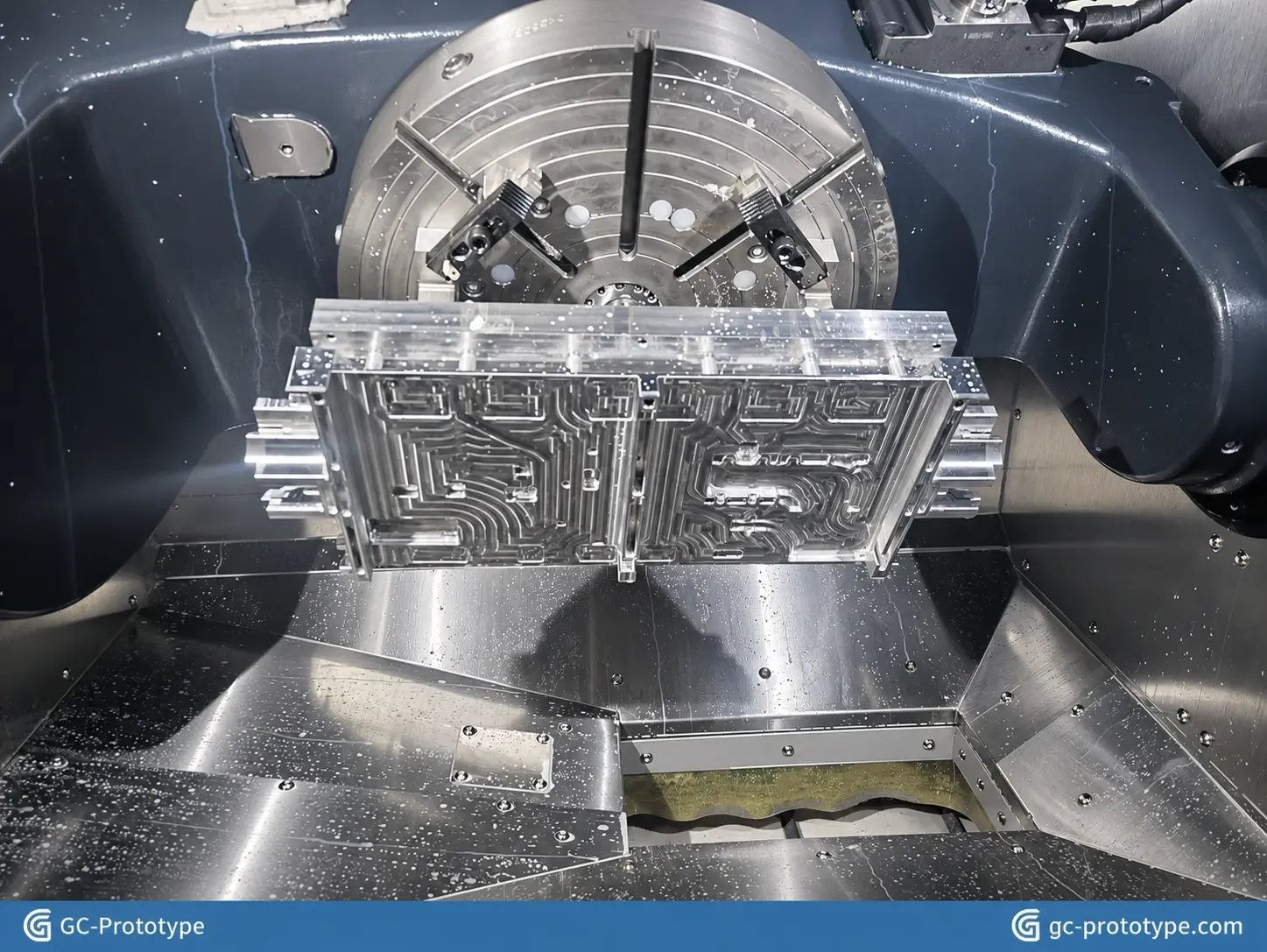
Choosing the right CNC turning supplier is an important decision for OEM manufacturers sourcing custom shafts, bushings, threaded connectors, and precision mechanical components. For engineering and procurement teams considering China CNC turning services, the challenge extends beyond finding a competitive unit price.
Reliable manufacturing requires suitable machining capabilities, accurate engineering documentation, material verification, sample approval, and consistent quality control. Comparing CNC turned parts suppliers on these criteria helps buyers identify a turned parts supplier capable of supporting prototype development and repeat production.
At GC-Prototype, we support international OEM customers through engineering review, CNC turning, Swiss turning, prototype manufacturing, and low-volume production.
This guide explains how to evaluate manufacturing capabilities, manage quality requirements, compare quotations, and reduce sourcing risks when purchasing custom CNC turned components from China.
A reliable CNC turning supplier should provide more than machining equipment. The manufacturing arrangement should connect engineering requirements, material sourcing, machining operations, quality verification, and delivery.
Build-to-print manufacturing involves producing custom components according to customer-approved CAD models, engineering drawings, and technical specifications.
Typical CNC turned components include:
Precision shafts and spindles.
Bushings and cylindrical sleeves.
Threaded connectors and adapters.
Precision pins and spacers.
Valve stems and mechanical fittings.
Sensor and actuator components.
Any proposed deviation from the approved drawing should be communicated and authorized before implementation.
OEM customers often require initial samples before committing to larger quantities.
A suitable supplier should support the transition from prototype approval to repeat manufacturing while maintaining the agreed material, drawing revision, and inspection requirements.
Buyers should establish whether the supplier will purchase the specified material or use customer-supplied stock.
Material grades, conditions, acceptable alternatives, and required certificates should be confirmed during quotation.
Clear responsibilities help prevent misunderstandings during production.
Not all CNC turning manufacturers serve the same market. Some specialize in prototype development, while others focus on miniature components, automated production, or large industrial parts.
Prototype-oriented suppliers are suitable for engineering samples, frequent design revisions, and initial functional testing.
Their main advantage is manufacturing flexibility rather than maximum production output.
Precision turning specialists focus on components requiring controlled diameters, geometric relationships, and surface conditions.
Swiss-type turning may be particularly suitable for small-diameter and slender components, depending on the geometry and equipment configuration.
High-volume manufacturers may use automated bar feeding, specialized tooling, and repeatable production arrangements to reduce unit costs.
These suppliers are generally more suitable for stable designs and predictable demand.
Large-diameter turning suppliers focus on components such as heavy industrial flanges, pump housings, large shafts, and rotating equipment parts.
Their equipment and material-handling requirements differ significantly from those used for small precision components.
| Supplier Type | Best-Fit Project | Important Buyer Consideration |
| Prototype Turning Shop | Initial samples and design changes | Engineering flexibility |
| Precision Turning Specialist | Precision mechanical components | Machining and inspection capabilities |
| Swiss Turning Supplier | Small and slender components | Bar capacity and workpiece support |
| High-Volume Manufacturer | Stable repeat demand | Production economics |
| Large-Diameter Turning Shop | Heavy industrial components | Machine and handling capacity |
The most suitable supplier is not necessarily the largest manufacturer. It is the company whose capabilities match the component and expected purchasing volume.
Before placing an order, OEM buyers should verify that the manufacturer’s equipment and production arrangements are suitable for the actual component.
General claims of high precision are not sufficient without supporting technical information.
Machine capacity directly influences the types of components a supplier can produce.
Buyers should confirm:
Maximum bar-stock diameter.
Maximum practical machining diameter.
Supported workpiece length.
Workholding limitations.
Available machining clearance.
These limits may vary between machines and depend on component geometry, material, and machining operations.
Conventional CNC turning is suitable for many shafts, bushings, spacers, and cylindrical connectors.
Swiss-type turning may be beneficial for selected small-diameter components requiring stable workpiece support.
Rather than choosing a process based on its name, ask the supplier to explain which manufacturing arrangement is appropriate for your drawing.
Some turned components also require cross-holes, milled flats, slots, or additional threaded features.
These operations may be completed using live tooling, mill-turn equipment, or separate machining setups.
Confirm which operations are included in the quotation and how dimensional relationships between features will be maintained.
Common turning materials include aluminum alloys, stainless steel, carbon steel, brass, copper, titanium, and engineering plastics.
However, the exact material grade and stock availability should be confirmed.
Buyers should also establish whether anodizing, plating, passivation, grinding, and other secondary operations can be arranged when required.
Relevant sample components, machine specifications, and inspection records provide more useful evidence than general marketing statements.
When comparing CNC turned parts suppliers, request manufacturing information related to components with similar dimensions, materials, and geometries.
| Capability | What OEM Buyers Should Verify |
| Maximum Diameter | Machine and bar-stock capacity |
| Maximum Length | Practical supported workpiece length |
| CNC Turning | Equipment suitable for the drawing |
| Swiss Turning | Small-diameter machining capability |
| Live Tooling | Cross-holes, slots, and milled features |
| Materials | Exact grades and stock availability |
| Secondary Processes | Finishing and inspection responsibilities |
| Quality Evidence | Relevant components and inspection records |
GC-Prototype provides custom CNC turning services for prototype development and suitable production projects. Specific machining capabilities should be evaluated against each customer’s engineering requirements.
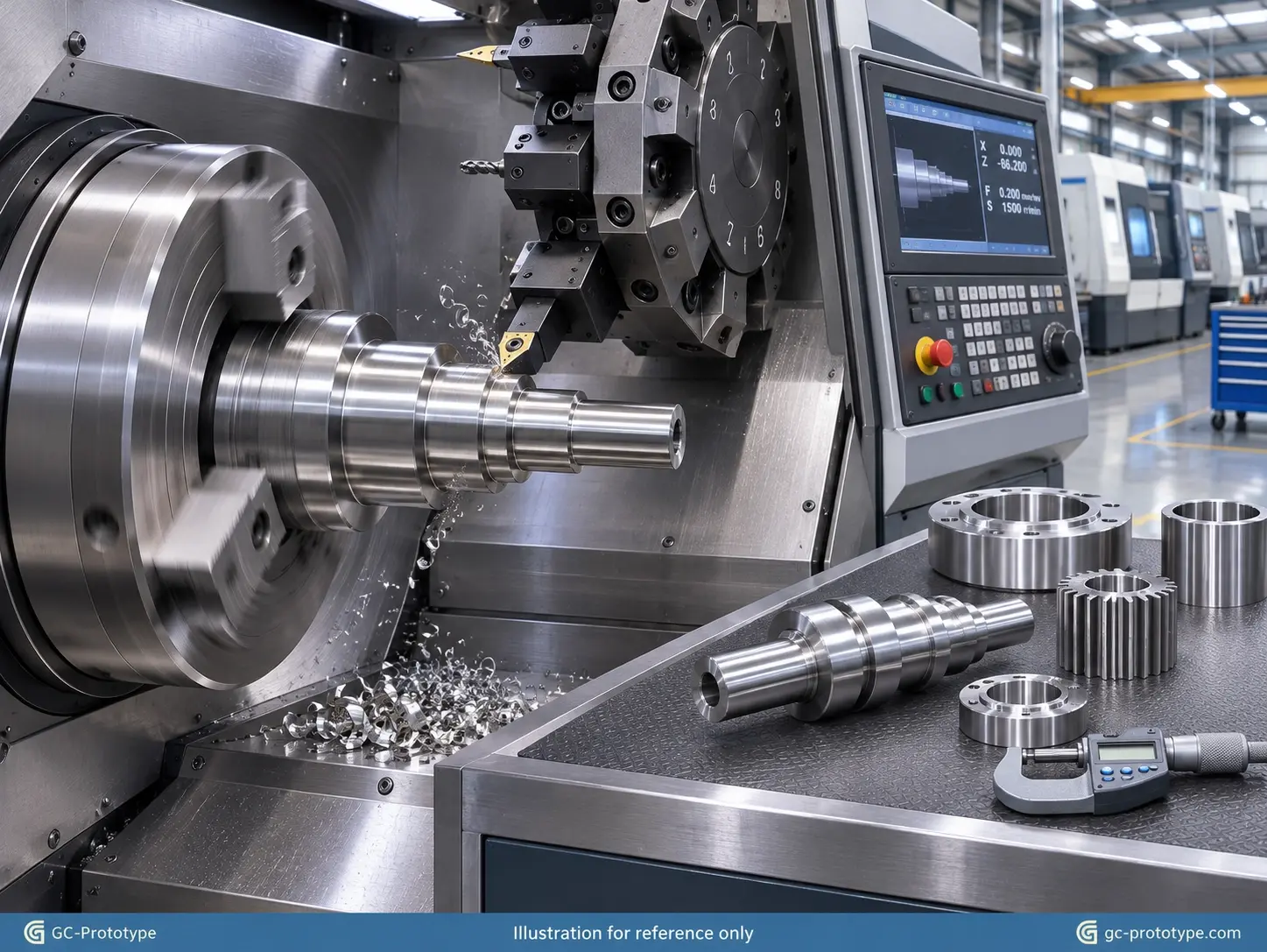
For European and North American manufacturers, sourcing CNC turned components from China can provide access to a broad manufacturing supply base and potentially competitive production costs.
However, successful overseas sourcing requires careful supplier evaluation.
China-based CNC turning suppliers may offer competitive quotations for suitable projects due to established manufacturing supply chains and available production resources.
Actual savings depend on material grade, component complexity, tolerances, quantity, inspection, and international logistics.
Effective technical communication is essential when working with an overseas supplier.
Buyers should confirm drawing revisions, material specifications, engineering changes, and approval procedures in writing.
Ambiguous technical requirements can create costly misunderstandings regardless of the supplier’s location.
China-based suppliers may be suitable for OEM projects involving initial samples, pilot production, and repeat small-batch orders.
For developing products, flexible manufacturing can help customers validate designs before increasing production quantities.
A local manufacturer may be more suitable when a project requires urgent delivery, frequent on-site engineering support, specific domestic sourcing requirements, or simplified logistics.
The decision should reflect overall project requirements rather than location alone.
| Consideration | China-Based Supplier | Local Supplier |
| Unit Cost | May be cost-competitive | Project-dependent |
| Engineering Review | Remote technical coordination | Local meetings may be easier |
| Prototype Orders | Depends on supplier flexibility | Depends on supplier capabilities |
| Shipping | International freight | Usually shorter domestic routes |
| Customs | Import requirements may apply | Depends on trade route |
| Total Procurement Cost | Includes logistics and import costs | Depends on local pricing |
For international buyers, the objective of China CNC turning procurement should be reliable manufacturing at a competitive total cost.
A low quotation has limited value if the finished components cannot meet assembly or functional requirements.
Before production begins, buyers and suppliers should establish clear inspection and acceptance criteria.
Confirm the exact material grade, condition, and applicable specification.
Where material traceability is required, buyers should identify the necessary certificates and batch documentation during quotation.
Material substitutions should not be made without appropriate customer approval.
First Article Inspection (FAI) can help verify whether an initial manufactured component meets the approved drawing.
Depending on project requirements, the inspection may cover critical dimensions, geometric tolerances, material documentation, and surface conditions.
An agreed sample approval process helps reduce the risk of repeating manufacturing errors across an entire batch.
For precision turned components, important characteristics may include:
External and internal diameters.
Shoulder positions.
Thread specifications.
Runout and geometric tolerances.
Surface roughness.
Bearing and sealing interfaces.
The inspection method should match each feature and tolerance requirement.
For more detailed measurement considerations, see our precision CNC turned parts inspection guide.
Repeat orders should follow the correct approved drawing revision.
Changes to material, manufacturing arrangements, or inspection requirements should be communicated and controlled according to the agreed project terms.
Buyers should establish how the supplier handles components that do not meet agreed requirements.
This may involve segregation, investigation, corrective action, replacement, or customer-approved disposition.
| Quality Item | Why It Matters | Buyer Should Request |
| Material Grade | Prevents incorrect material selection | Certificate if required |
| First Article | Verifies initial manufacturing results | Agreed sample inspection report |
| Critical Dimensions | Confirms assembly requirements | Dimensional measurements |
| Drawing Revision | Prevents outdated production | Approved revision record |
| Batch Inspection | Supports production consistency | Agreed inspection records |
| Nonconformance | Controls rejected components | Corrective-action procedure |
The exact inspection reports, material records, and quality documentation available for a project should be confirmed before placing the order.
When comparing suppliers, OEM buyers should ensure that quotations cover equivalent manufacturing requirements.
A lower unit price may exclude operations or services included in another supplier’s quotation.
Confirm that each quotation uses the same material grade, condition, drawing revision, and finished component requirements.
Different material specifications can create substantial differences in both cost and performance.
Programming, setup, specialized tooling, surface finishing, and inspection may be included in the unit price or charged separately.
Ask suppliers to clarify these items before comparing quotations.
Prototype costs may include initial programming, setup, and inspection.
Repeat-order pricing may differ because these activities can sometimes be reduced or distributed across larger quantities.
Buyers should request quotations based on realistic purchasing volumes.
The total cost of purchasing overseas components may include manufacturing, packaging, transportation, insurance, import duties, applicable taxes, and customs-related expenses.
For an accurate comparison, use the same delivery destination and equivalent commercial terms.
| Quotation Item | What Buyers Should Confirm |
| Material | Exact grade and condition |
| Machining | All required finished features |
| Setup and Tooling | Included or separately charged |
| Secondary Operations | Deburring, coating, grinding, etc. |
| Inspection | Report and sampling requirements |
| Quantity | Unit price at agreed volumes |
| Packaging | Protective packaging requirements |
| Freight | Shipping method and destination |
| Import Charges | Applicable duties and other costs |
| Incoterms | Agreed term and named place |
When evaluating a turned parts supplier, compare the complete purchasing cost rather than the factory unit price alone.
International CNC turning procurement involves coordination between manufacturing, quality inspection, packaging, transportation, and customer receiving requirements.
Buyers should agree on shipping terms, transportation responsibilities, delivery destinations, and required commercial documents.
The applicable import requirements depend on the product, destination, and shipment conditions.
Precision shafts, threaded connectors, and finished cylindrical surfaces may be damaged if components contact one another during transportation.
Suitable packaging may include protective sleeves, individual compartments, cushioning materials, and compatible corrosion protection.
Packaging requirements should reflect material characteristics and transportation conditions.
Agree on important project milestones, including material preparation, initial sample completion, inspection, production release, and shipment.
Early communication about manufacturing difficulties or schedule changes helps buyers manage their own production plans.
For repeat manufacturing, confirm the approved part number, drawing revision, material specification, inspection plan, and order quantity.
Maintaining consistent purchasing documentation helps reduce the risk of unexpected changes between batches.
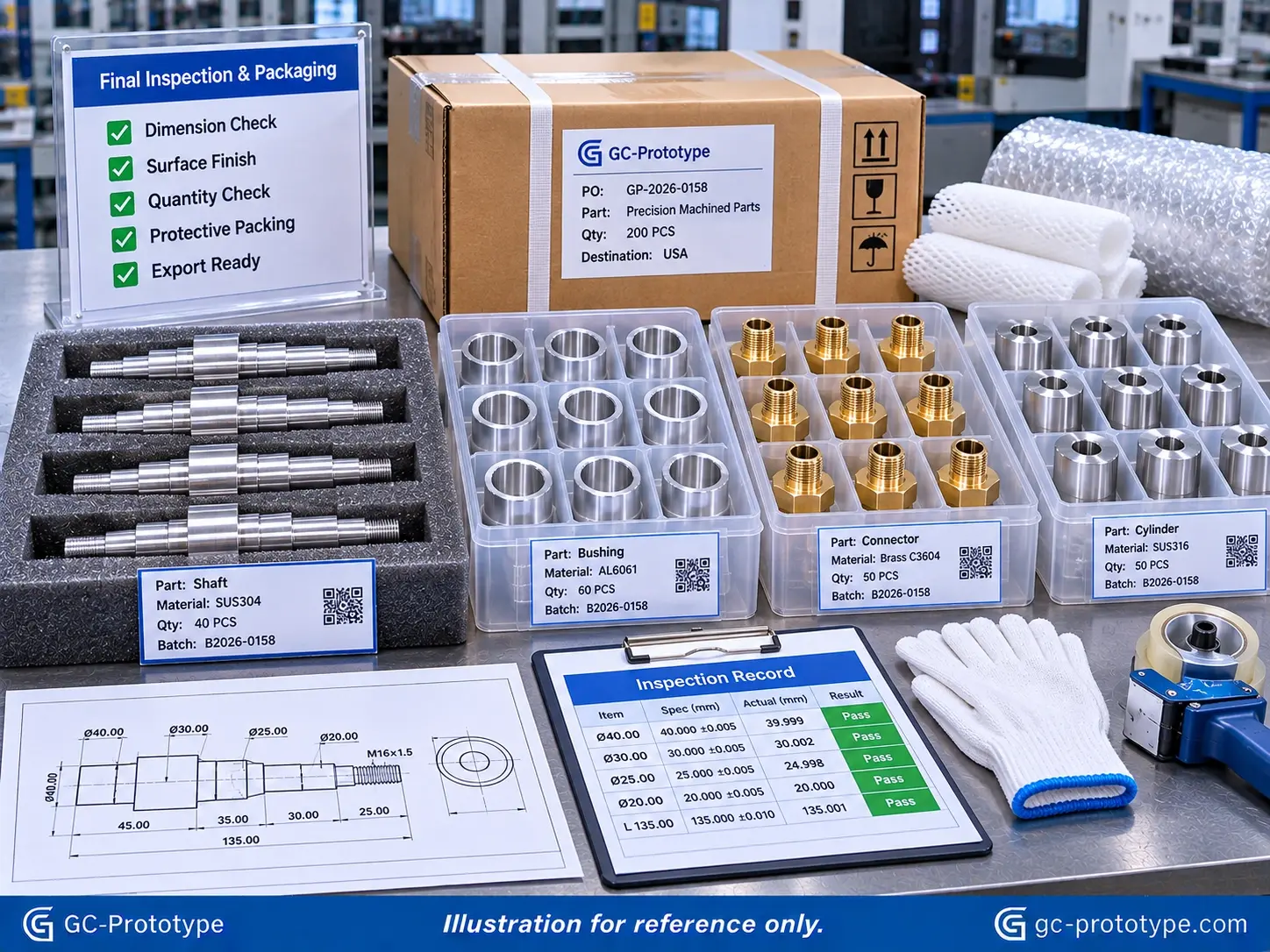
A structured manufacturing workflow helps OEM customers reduce development risks and prepare for repeat production.
The supplier reviews the CAD model, engineering drawing, material specification, machining feasibility, and critical dimensions.
Potential manufacturing concerns should be communicated before production.
Initial CNC turned components are manufactured for dimensional evaluation, assembly checks, and functional testing.
The required inspection results are reviewed, and the customer evaluates whether the samples meet the agreed functional and acceptance requirements.
Approved designs can progress to suitable pilot batches.
For projects requiring approximately 10–200 components, CNC turning may provide a practical manufacturing solution, depending on geometry and order conditions.
As purchasing demand increases, the machining arrangement, inspection frequency, and production economics can be reviewed.
GC-Prototype supports the following product development and manufacturing pathway:
CAD Review → Prototype Samples → Functional Validation → Low-Volume Pilot Production → Mass Production Support
This approach helps OEM customers coordinate manufacturing requirements as their projects develop.
A complete Request for Quotation (RFQ) allows the supplier to evaluate the actual component and prepare a more accurate manufacturing proposal.
Provide a 3D CAD model in STEP, STP, or IGES format together with a dimensioned PDF drawing identifying the approved revision.
Specify the exact material grade, critical dimensions, GD&T requirements, threads, surface roughness, and required finishing operations.
Identify the initial prototype quantity, expected production batch size, and estimated annual demand if available.
Clarify whether the requirement is a one-time order or part of a repeat purchasing program.
Communicate first article requirements, critical-feature inspection, material documentation, and batch acceptance criteria.
Provide the delivery destination, required schedule, packaging specifications, and preferred shipping terms.
| RFQ Information | Recommended Details |
| 3D CAD | STEP / STP / IGES |
| 2D Drawing | PDF with approved revision |
| Material | Exact grade and condition |
| Part Dimensions | Maximum diameter and length |
| Critical Features | Threads, bores, and geometric tolerances |
| Surface Finish | Required roughness and treatment |
| Quantity | Prototype and production demand |
| Annual Forecast | Estimated repeat purchasing volume |
| Inspection | Sample and batch requirements |
| Documentation | Material certificates and reports if required |
| Shipping | Destination and preferred Incoterms |
| Delivery | Required schedule |
Providing complete RFQ information helps suppliers assess manufacturing feasibility, calculate costs, and establish clear purchasing expectations before production begins.
Evaluate machining capabilities, supported part dimensions, material experience, relevant manufacturing examples, inspection methods, and communication procedures. Request evidence related to your actual component requirements rather than relying solely on advertised tolerances or low prices.
Potential benefits include competitive manufacturing costs, access to different machining processes, material sourcing options, and flexible production arrangements. Buyers should also consider engineering communication, inspection requirements, international freight, and import costs.
Conventional CNC turning suppliers manufacture a broad range of rotational components. Swiss turning specialists typically focus on suitable small-diameter and slender components requiring controlled workpiece support. The best process depends on the drawing, material, geometry, and production quantity.
Yes. Many suppliers support prototype development and small production batches. However, minimum order quantities, setup costs, material availability, and manufacturing capabilities vary. Buyers should confirm these requirements before ordering.
Depending on project requirements, buyers may request first article inspection reports, dimensional measurements, material certificates, surface finish records, and batch inspection documentation. The scope and reporting format should be agreed upon during quotation.
Provide a 3D CAD model, 2D engineering drawing, material specification, critical dimensions, thread requirements, surface finish, order quantity, inspection requirements, and delivery information. Complete technical documentation helps improve quotation accuracy.
Choosing a reliable CNC turning supplier requires more than finding a competitive machining price. Engineering support, material control, dimensional inspection, production flexibility, and clear communication all contribute to successful OEM procurement.
GC-Prototype is a China-based manufacturing partner supporting custom CNC turning, Swiss turning, prototype development, and low-volume production for international B2B customers.
Whether your project involves precision shafts, stainless steel bushings, brass threaded connectors, aluminum sleeves, miniature pins, or specialized mechanical components, our team can review your drawings and evaluate suitable manufacturing solutions.
Send us your 3D CAD files and engineering drawings, together with:
Required material grade.
Critical dimensions and tolerances.
Surface finish specifications.
Prototype or production quantity.
Estimated repeat purchasing demand.
Inspection and documentation requirements.
Delivery destination and target schedule.
Our engineering team can review your component geometry, manufacturing feasibility, and project requirements to prepare a customized machining quotation.