Address:
Shenzhen Bao'an District Xinqiao Subdistrict Huangpu Community Huangpu East Ring Road No. 504 Shenzhen Yuan Industrial City Building C
Work Hours:
Monday to Friday: 9AM - 21PM
Weekend: 9AM - 21PM

Address:
Shenzhen Bao'an District Xinqiao Subdistrict Huangpu Community Huangpu East Ring Road No. 504 Shenzhen Yuan Industrial City Building C
Work Hours:
Monday to Friday: 9AM - 21PM
Weekend: 9AM - 21PM

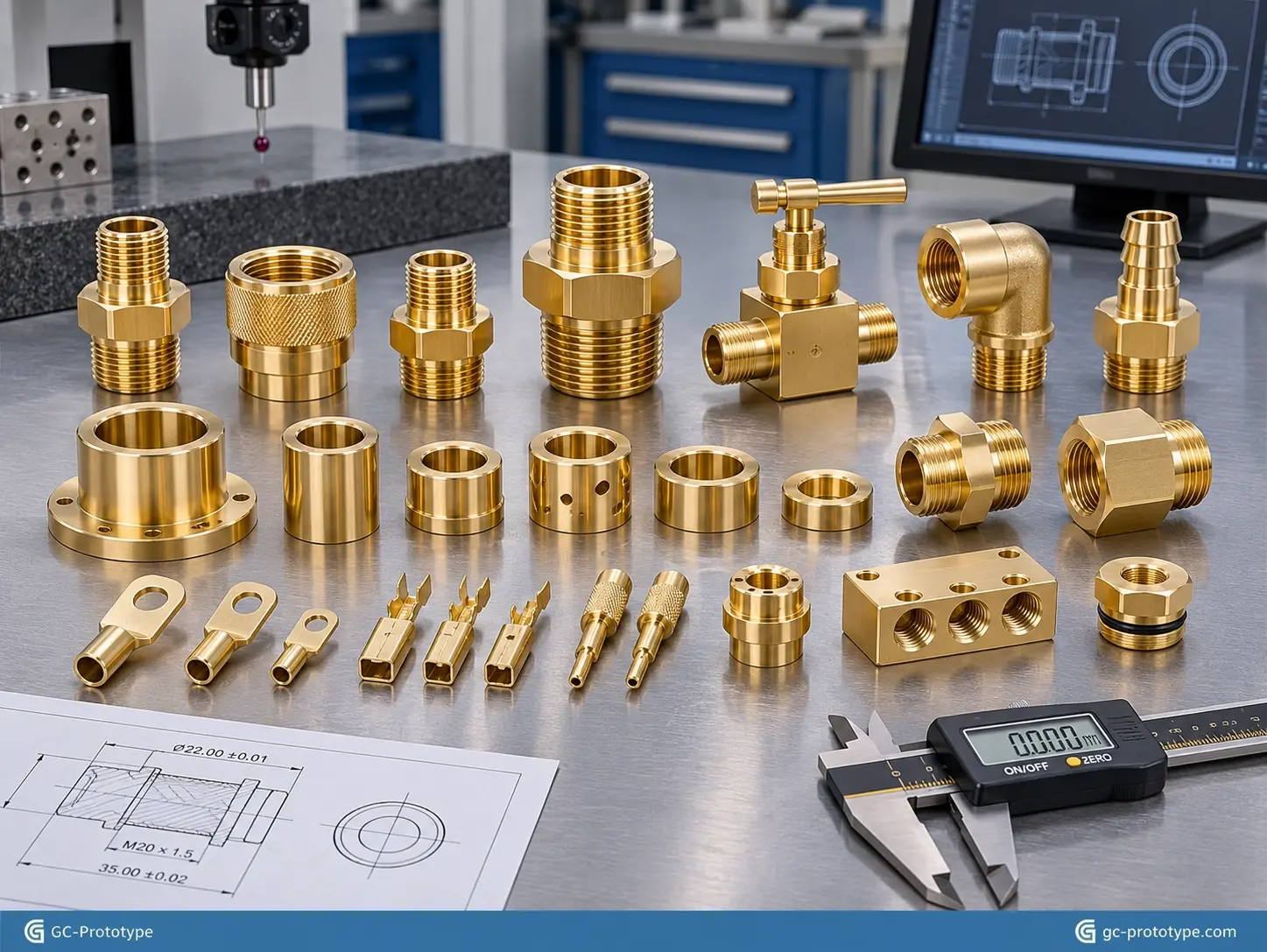
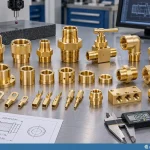
Custom brass machining provides OEM manufacturers with a reliable way to produce precision components for electrical, mechanical, fluid-handling, and industrial applications. From threaded connectors and valve fittings to precision bushings and electronic contacts, cnc machined brass parts require the right alloy, machining strategy, and dimensional controls to meet functional requirements. Choosing suitable brass cnc machining parts manufacturing processes can also help reduce machining costs and improve assembly consistency.
For engineering and procurement teams, selecting a brass machining supplier involves more than comparing unit prices. Material grades, component geometry, machining tolerances, surface finishing, and production quantities all influence the final result.
At GC-Prototype, we support custom CNC machining projects through engineering review, prototype development, functional validation, low-volume production, and ongoing manufacturing support. This guide explains how to select brass materials, choose suitable machining processes, control part quality, and prepare an effective RFQ for custom brass components.
Custom brass machining is a manufacturing process that removes material from brass stock to produce components according to customer CAD models and engineering drawings.
Brass is a copper-zinc alloy known for its machinability, corrosion resistance, electrical properties, and attractive appearance. Depending on its composition, it can be used for components requiring precise threads, internal passages, mounting features, and smooth contact surfaces.
CNC machining uses programmed cutting tools to manufacture brass components with controlled dimensions and repeatable geometries.
Common operations include:
Turning cylindrical components and threaded fittings.
Milling flat surfaces, slots, and pockets.
Drilling and boring precision holes.
Thread cutting and tapping.
Chamfering and deburring edges.
Finishing critical assembly surfaces.
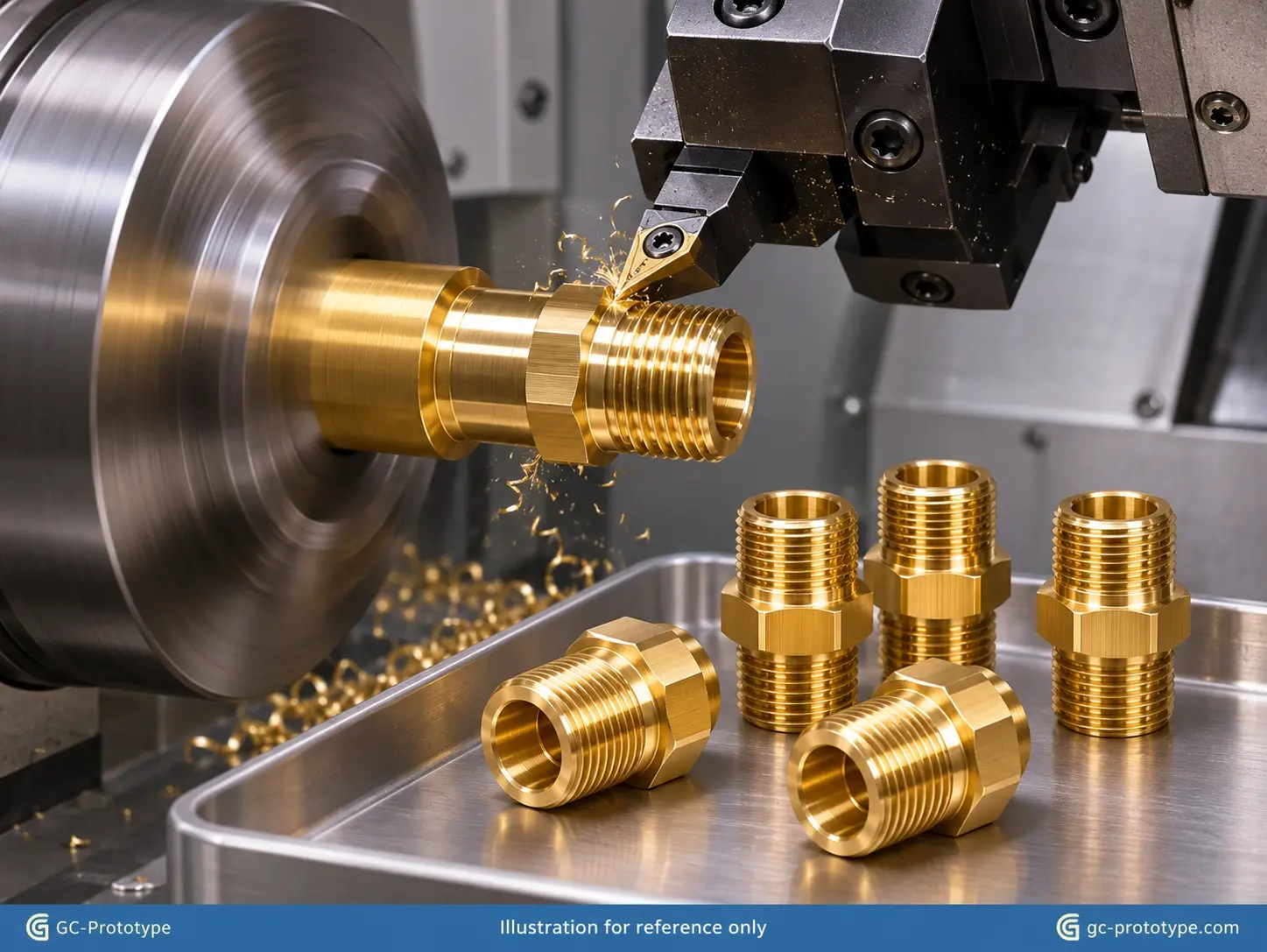
CNC turning is particularly suitable for rotational components such as connectors, bushings, pins, and threaded fittings.
CNC milling is more appropriate for parts requiring flat surfaces, cross-holes, slots, and non-cylindrical features.
For complex components, combining multiple machining operations can reduce unnecessary setups and improve manufacturing efficiency.
Custom brass components are frequently needed during product development, engineering validation, and early production.
A prototype-first approach allows OEM teams to evaluate dimensions, thread engagement, sealing interfaces, and assembly performance before committing to larger production quantities.
Brass is widely used in applications where machinability, electrical conductivity, corrosion resistance, and dimensional consistency are important.
The final material and manufacturing process should always reflect the component’s operating environment and functional requirements.
Brass electrical connectors are used in electronic equipment, control systems, electrical assemblies, and industrial devices.
Typical components include:
Electrical terminals.
Connector pins.
Contact blocks.
Cable connectors.
Threaded electrical fittings.
These components may require controlled contact geometry, accurate mounting dimensions, and suitable surface conditions.
Brass fittings are common in fluid-handling systems and mechanical equipment.
Examples include threaded adapters, pipe connectors, valve components, and precision fluid fittings.
Important manufacturing considerations include thread accuracy, internal bore dimensions, sealing surfaces, and dimensional compatibility with mating components.
Brass bushings and spacers are used in mechanical assemblies to maintain positioning, provide spacing, and support moving components.
Their performance depends on internal and external diameters, surface quality, and the specified assembly fit.
Threaded inserts and fasteners may require accurate thread profiles, consistent diameters, and controlled engagement lengths.
For applications involving repeated assembly, thread quality and material selection should be evaluated together.
Custom brass components are also used in measuring instruments, industrial control equipment, pneumatic systems, and specialized machinery.
| Brass Component | Typical CNC Process | Main Functional Requirement |
| Electrical Connectors | Turning / Milling | Conductivity and contact geometry |
| Brass Terminals | Milling / Turning | Hole position and contact surface |
| Threaded Fittings | CNC Turning | Thread accuracy and sealing |
| Valve Components | Turning / Milling | Bore geometry and sealing interface |
| Precision Bushings | CNC Turning | ID/OD fit and surface finish |
| Threaded Inserts | Turning / Knurling | Thread quality and retention |
| Instrument Components | Milling / Turning | Dimensional accuracy |
Material selection directly affects machinability, component performance, corrosion resistance, and manufacturing cost.
Different brass alloys have different chemical compositions and mechanical properties. Selecting a material based only on its appearance or general description can create problems during manufacturing or product validation.
The following grades are useful starting points for engineering evaluation.
C36000 is widely recognized as free-cutting brass and is particularly suitable for machining operations requiring efficient chip formation.
Its excellent machinability makes it a common candidate for:
Threaded connectors.
Precision fittings.
Turned pins and bushings.
Fasteners.
Small mechanical components.
However, C360 contains lead. Its suitability must therefore be evaluated against the component’s intended application and applicable material restrictions.
For applications involving drinking water or other regulated contact environments, a suitable compliant alloy may be necessary.
C26000 is a brass alloy containing approximately 70% copper.
Compared with C360, it offers different mechanical and forming characteristics, including good ductility and cold-working capability.
Potential applications include:
Electrical connector components.
Formed brass parts.
Instrument components.
Mechanical and electrical assemblies.
C260 may be suitable when forming characteristics and material performance are important, although its machinability is lower than that of free-cutting C360.
C46400 is commonly known as naval brass. It contains copper, zinc, and tin.
Its corrosion resistance makes it a candidate for selected marine and industrial applications, particularly where exposure to water and corrosive environments must be considered.
Potential applications include:
Marine fittings.
Valve components.
Fasteners.
Industrial connectors.
Mechanical components exposed to demanding environments.
Its machining behavior differs from C360, so the cutting strategy and production cost should be evaluated accordingly.
C69300 is a silicon-containing brass alloy commonly marketed as a lead-free brass option.
It is particularly relevant to applications where reduced lead content is an important material-selection requirement.
Potential applications include:
Water-system components.
Fluid connectors.
Plumbing fittings.
Automotive fluid-related components.
However, the term lead-free does not automatically establish compliance with every regional regulation or product certification. Buyers should confirm the exact material specification, applicable standards, and required documentation.
| Brass Grade | Main Characteristics | Potential Applications | Main Consideration |
| C360 | Excellent machinability | Turned connectors and fittings | Contains lead |
| C260 | Good ductility and forming capability | Electrical and formed components | Lower machinability than C360 |
| C464 | Tin-containing alloy with marine corrosion resistance | Marine fittings and fasteners | More demanding machining |
| C693 | Low-lead silicon brass option | Water and fluid-related components | Verify applicable compliance requirements |
The best brass grade depends on the actual operating conditions, mechanical requirements, manufacturing process, and regulatory environment.
When preparing an RFQ, provide the exact alloy designation whenever possible. If the material has not yet been selected, explain the intended application so the manufacturing team can review suitable alternatives.
The choice between CNC turning and milling depends primarily on part geometry and the location of critical features.
Selecting the appropriate process can reduce machining time, unnecessary setups, and manufacturing costs.
CNC turning is suitable for brass components with rotational geometry.
Typical examples include:
Threaded connectors.
Cylindrical adapters.
Precision bushings.
Brass pins.
Valve stems.
Round fittings.
Turning is particularly effective for manufacturing concentric external and internal features.
For small-diameter and slender components, Swiss-type turning may also be considered when the geometry and production requirements are suitable.
CNC milling is suitable for brass components requiring non-rotational features.
Examples include:
Flat contact blocks.
Mounting brackets.
Slotted components.
Multi-face connectors.
Components with cross-holes and pockets.
Milling allows manufacturers to produce different geometric features according to the engineering drawing.
Some custom components require both rotational and non-rotational features.
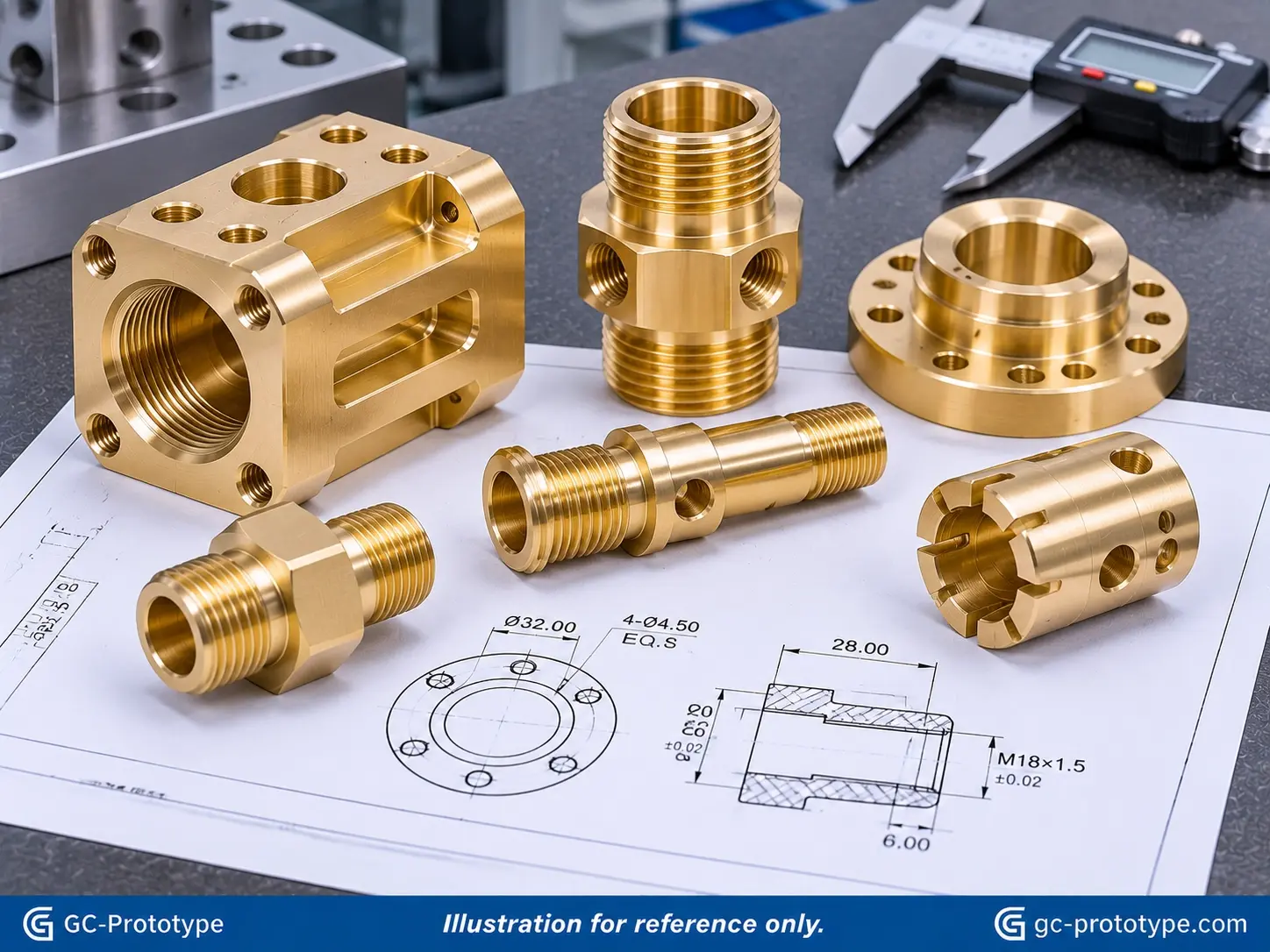
For example, a brass connector may have a cylindrical body, external threads, cross-holes, and milled flats.
Combining turning and milling operations can help reduce unnecessary repositioning and improve feature alignment.
| Manufacturing Process | Suitable Geometry | Typical Brass Components |
| CNC Turning | Cylindrical and rotational features | Connectors, fittings, bushings |
| CNC Milling | Flat faces, pockets and slots | Brackets, contact blocks |
| Multi-Axis Machining | Complex features across multiple faces | Specialized connectors and housings |
| Swiss Turning | Complex features across multiple faces | Precision pins and miniature fittings |
The final process should be selected after reviewing the CAD model, material form, critical dimensions, and production quantity.
A well-designed component can reduce machining complexity, improve dimensional consistency, and simplify inspection.
Before production, engineering teams should review several important design features.
Threads are critical features in brass connectors, adapters, and mechanical assemblies.
When specifying threads, provide:
Thread standard and designation.
Nominal diameter.
Pitch.
Thread depth or engagement length.
Internal or external thread requirements.
Applicable fit or tolerance class.
Avoid using general thread descriptions when a specific standard is required.
For sealing applications, the thread type and sealing method should be clearly identified. A threaded connection does not automatically provide a reliable seal without the correct interface design.
Small holes and deep internal passages can increase machining complexity.
Long, narrow holes may create challenges involving tool access, chip removal, and dimensional inspection.
Cross-drilled holes can also create burrs where two passages intersect.
If the component requires clean internal passages, specify deburring and cleanliness expectations in the drawing or RFQ.
Thin walls, narrow slots, and deep pockets can increase the risk of deformation or difficult machining conditions.
Where possible:
Avoid unnecessary thin sections.
Use practical corner radii.
Simplify nonfunctional details.
Provide sufficient tool access.
Avoid unnecessarily deep narrow features.
These adjustments can make the component easier to manufacture without affecting its intended function.
Not every surface requires the same finish.
For example, a sealing surface may need a controlled surface condition, while a nonfunctional external surface may only require a standard machined finish.
Clearly identify:
Critical mating surfaces.
Sealing interfaces.
Contact areas.
Visible cosmetic surfaces.
Required roughness values, where applicable.
Surface treatments such as nickel plating, tin plating, or polishing should be specified according to the actual application.
Dimensional inspection is essential when brass components must fit accurately into larger assemblies.
A reliable inspection plan should focus on the features that affect functionality, assembly, and product performance.
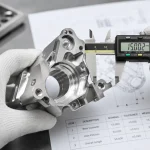
External diameters, internal bores, lengths, and mounting dimensions can be checked using suitable measuring equipment.
Common tools include:
Digital calipers.
Outside micrometers.
Bore gauges.
Pin gauges.
Coordinate Measuring Machines (CMM).
The inspection method should match the dimension and required accuracy.
Threaded components may require dedicated thread plug gauges or thread ring gauges.
These tools help verify whether the manufactured thread conforms to the specified requirements.
For internal passages, bore gauges and other suitable measuring methods can be used depending on the geometry.
Surface roughness may be measured using a profilometer when a numerical roughness requirement is specified.
Visual inspection is also useful for identifying:
Burrs.
Scratches.
Tool marks.
Surface damage.
Incomplete deburring.
The acceptance criteria should be agreed upon before production.
Material identification is important when the project specifies a particular brass alloy.
Buyers may request material certificates and supporting batch documentation.
For applications with restricted material composition, additional verification may be necessary.
| Inspection Item | Suitable Method | Purpose |
| External Diameter | Micrometer | Verify dimensional fit |
| Internal Bore | Bore Gauge / CMM | Check internal dimensions |
| Thread | Thread Gauge | Verify thread conformity |
| Hole Position | CMM | Check positional accuracy |
| Surface Roughness | Profilometer | Verify specified finish |
| Material Grade | Material Certificate / Appropriate Analysis | Verify specified alloy |
A brass component should be inspected against its engineering drawing and material specification, rather than simply judged by its appearance.
The cost of custom brass machining depends on material selection, component geometry, machining time, inspection requirements, and production quantity.
Understanding these factors helps OEM buyers optimize their designs before requesting quotations.
Different brass grades have different material prices and availability.
C360 may offer efficient machining for suitable turned components, while other alloys may be necessary for specific forming, corrosion, or material-compliance requirements.
Choosing the cheapest raw material is not always the most economical decision if it creates additional manufacturing or validation requirements.
Complex geometries generally require more machining operations.
Deep holes, narrow slots, multiple setups, and difficult-to-access features may increase cycle time.
Simplifying noncritical features can reduce unnecessary machining work.
Tighter dimensional requirements may require additional machining passes, specialized tooling, and more inspection time.
Secondary operations such as deburring, polishing, nickel plating, and tin plating can also affect the total project cost.
Prototype orders and production batches have different cost structures.
Initial setup, programming, and inspection activities may represent a larger proportion of the total cost for very small quantities.
As order quantities increase, these fixed activities can be distributed across more components.
| Cost Factor | Potential Impact | Cost Optimization |
| Brass Grade | Material and sourcing cost | Select according to function |
| Raw Stock Size | Material waste | Optimize stock dimensions |
| Complex Geometry | Longer machining time | Simplify noncritical features |
| Tight Tolerances | Additional inspection | Prioritize critical dimensions |
| Deburring | Additional labor | Improve edge design |
| Plating | Additional processing | Specify only when required |
| Quantity | Setup cost per part | Plan batch quantities |
For OEM projects, it is often useful to begin with prototype samples, validate the component, and then determine a suitable low-volume production arrangement.
A successful custom machining project requires coordination between engineering, manufacturing, inspection, and procurement.
GC-Prototype supports a product development workflow that connects initial design review with prototype manufacturing and subsequent production planning.
Customers provide 3D CAD files and engineering drawings.
The engineering team reviews part geometry, material requirements, critical dimensions, machining accessibility, and potential manufacturing challenges.
After the manufacturing requirements are confirmed, prototype components can be produced for initial evaluation.
These samples allow customers to review dimensions, surface quality, and assembly interfaces.
The prototype is evaluated against its intended application.
Typical checks may include thread engagement, connector fit, sealing interfaces, mounting dimensions, and mechanical assembly.
After the prototype has been approved, suitable projects can move into low-volume production.
For projects requiring approximately 10–200 pieces, the manufacturing arrangement should be evaluated according to component geometry, machining requirements, and order conditions.
For projects with increasing demand, manufacturing requirements can be reviewed again to determine whether process adjustments, improved production planning, or alternative manufacturing arrangements are appropriate.
This development-oriented approach helps OEM customers reduce design uncertainty before committing to larger production programs.
Our manufacturing workflow:
CAD Review → Prototype Samples → Functional Validation → Low-Volume Pilot Production → Mass Production Support
A complete Request for Quotation helps manufacturers understand the component and prepare a more accurate proposal.
For international OEM buyers, providing sufficient technical information at the beginning can reduce quotation delays and unnecessary clarification.
Provide a 3D model in STEP, STP, or IGES format whenever possible.
Include a 2D PDF drawing showing dimensions, tolerances, thread specifications, and drawing revision.
Identify the required alloy, such as C360, C260, C464, or C693.
If the material is not finalized, explain the component’s application and operating environment.
Highlight critical dimensions, mating interfaces, sealing surfaces, thread requirements, and surface roughness specifications.
Provide the initial order quantity, estimated annual demand, destination country, and target delivery date.
Also identify any required inspection reports or material documentation.
| RFQ Information | Recommended Details |
| 3D CAD | STEP / STP / IGES |
| 2D Drawing | PDF with revision |
| Brass Grade | C360, C260, C464 or specified grade |
| Quantity | Prototype and batch quantity |
| Critical Dimensions | Bore, thread, diameter, position |
| Surface Finish | As-machined or specified finish |
| Secondary Process | Plating, polishing, deburring |
| Inspection | Dimensional report and material documents |
| Application | Electrical, fluid, mechanical, etc. |
| Delivery | Destination and required schedule |
Providing these details allows the supplier to evaluate material availability, machining methods, inspection requirements, and production feasibility.
C36000 is a common choice for applications requiring excellent machinability, especially precision turned components. However, C260, C464, and C693 may be more appropriate when ductility, marine corrosion resistance, or reduced lead content is required. The correct choice depends on the component’s function and material restrictions.
C360 is a free-cutting brass designed for excellent machining performance. C260 is cartridge brass known for its ductility and forming characteristics. C360 is generally more suitable for complex turned parts, while C260 may be preferred for applications involving forming requirements.
Yes. Brass is suitable for both CNC turning and milling. Turning is commonly used for cylindrical connectors, bushings, and threaded fittings, while milling is suitable for flat surfaces, slots, pockets, and complex mounting features.
Common applications include electrical and electronics, automotive systems, industrial automation, fluid-handling equipment, plumbing, instrumentation, and marine hardware. Material selection should reflect the operating environment and applicable specifications.
Yes. CNC machining can be suitable for prototype development and low-volume production because it does not require dedicated injection molds. Production economics depend on setup time, material availability, component complexity, and order quantity.
A 3D CAD file and 2D engineering drawing are recommended. Buyers should also provide the brass grade, required quantity, critical tolerances, surface finish, secondary processing requirements, and delivery destination.
Finding the right supplier for custom brass machining requires more than competitive pricing. Material selection, machining strategy, dimensional accuracy, and production planning all influence the success of an OEM component.
GC-Prototype supports custom CNC machining projects for international B2B customers, from engineering review and prototype development to functional validation, low-volume production, and ongoing manufacturing support.
Whether you need precision brass connectors, threaded fittings, electrical terminals, bushings, or other custom components, our team can review your drawings and discuss suitable manufacturing solutions.
Send us your 3D CAD files and engineering drawings, together with:
Required brass alloy or material specification.
Initial production quantity.
Critical dimensions and tolerances.
Surface finish requirements.
Secondary processing requirements.
Target delivery schedule.
Our engineering team can review your project requirements and provide feedback on manufacturing feasibility and quotation details.
Ready to manufacture your custom brass components?