Address:
Shenzhen Bao'an District Xinqiao Subdistrict Huangpu Community Huangpu East Ring Road No. 504 Shenzhen Yuan Industrial City Building C
Work Hours:
Monday to Friday: 9AM - 21PM
Weekend: 9AM - 21PM

Address:
Shenzhen Bao'an District Xinqiao Subdistrict Huangpu Community Huangpu East Ring Road No. 504 Shenzhen Yuan Industrial City Building C
Work Hours:
Monday to Friday: 9AM - 21PM
Weekend: 9AM - 21PM

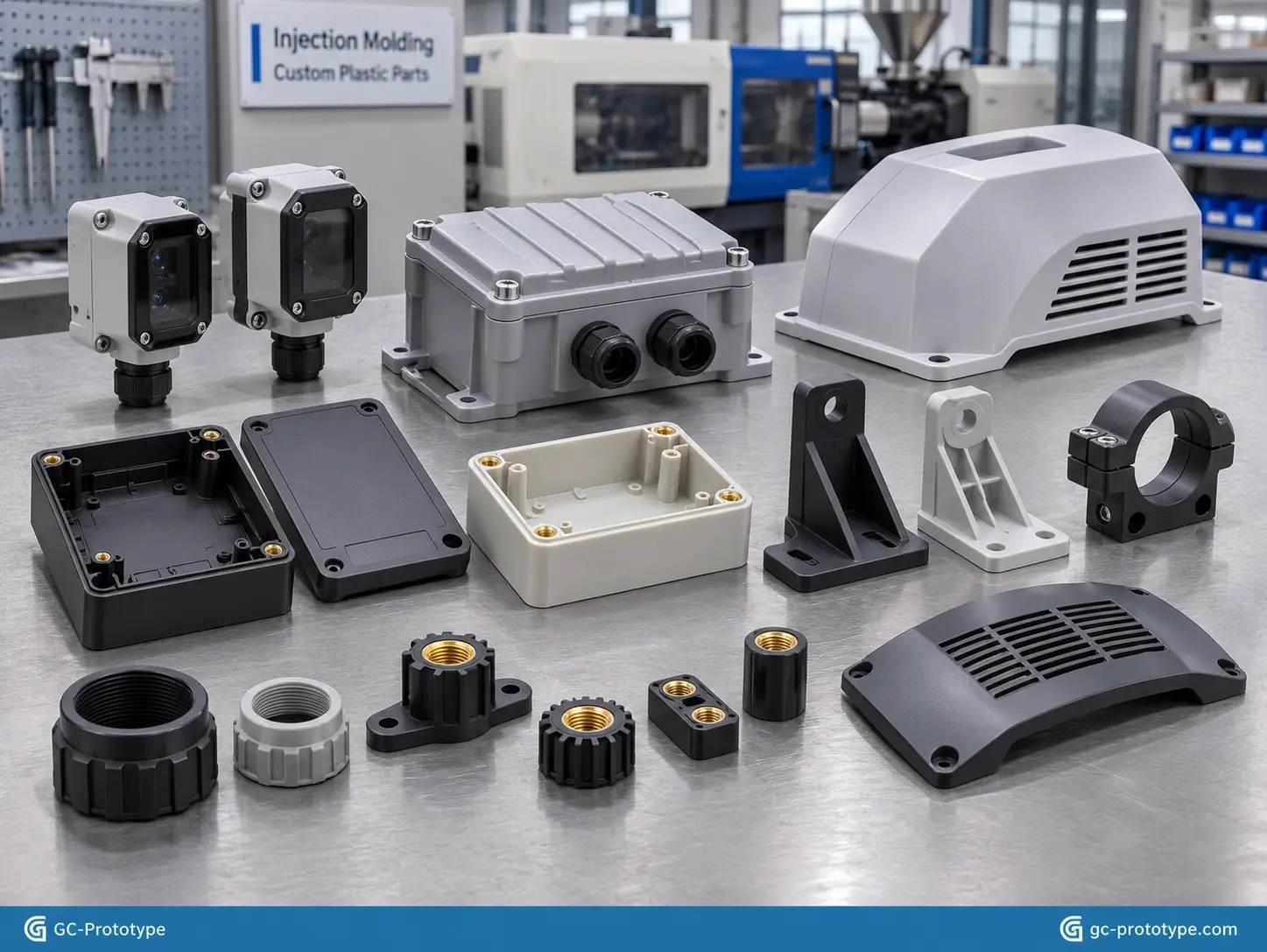
Choosing reliable injection moulding manufacturers is an important decision for OEM companies developing custom plastic components. Beyond part price, buyers must consider tooling ownership, mold sampling, material specifications, quality control, and long-term production requirements. A suitable custom molder should support engineering review, communicate manufacturing risks, and provide a clear route from approved samples to repeat production.
When evaluating a custom molding company, understanding its actual manufacturing capabilities and commercial responsibilities is essential to reducing sourcing risks.
For engineering and procurement teams, a successful project involves more than producing an acceptable plastic part. It requires coordinated mold development, sample approval, manufacturing consistency, and clear communication throughout the product lifecycle.
At GC-Prototype, we support custom plastic manufacturing projects through engineering review, rapid tooling, prototype validation, low-volume injection molding, and production planning. This guide explains how to evaluate suppliers, manage tooling investment, compare quotations, and prepare your project for manufacturing.
Not all injection moulding manufacturers serve the same production requirements.
Some specialize in rapid tooling and prototype development, while others focus on automated, high-volume manufacturing. Selecting a supplier that matches your project stage can improve communication, manufacturing efficiency, and cost control.
Rapid tooling manufacturers are suitable for projects requiring functional samples, design verification, or initial market testing.
They may use aluminum or suitable steel tooling depending on the component geometry, material, quantity, and expected mold life.
This approach can help OEM teams evaluate injection-molded components before committing to more extensive production tooling.
Low-volume injection molding is useful when customers require recurring batches without the demand needed to justify large-scale production systems.
Typical applications include industrial equipment housings, specialized electronic components, robotic parts, and replacement components.
These projects benefit from flexible scheduling, clear tooling arrangements, and consistent quality requirements.
High-volume manufacturers focus on stable designs and larger production quantities.
Their operations may involve multi-cavity tooling, automated part handling, and production systems designed to reduce unit cost.
However, higher tooling investment and minimum order requirements may make some high-volume arrangements less attractive during early product development.
Certain components require metal inserts or multiple materials.
Insert molding can integrate threaded inserts or other compatible components into a molded plastic part.
Overmolding combines materials to create features such as grips, seals, or protective surfaces.
Both processes require appropriate tooling design and material compatibility evaluation.
| Manufacturer Type | Best Fit | Main Buyer Consideration |
| Rapid Tooling Manufacturer | Design validation and pilot orders | Tool cost and engineering flexibility |
| Low-Volume Custom Molder | Repeat small-batch production | Setup cost and batch consistency |
| High-Volume Molder | Stable large-volume demand | Mold life, automation, unit cost |
| Insert Molding Supplier | Components with embedded inserts | Insert retention and process control |
| Overmolding Supplier | Multi-material components | Material compatibility and tooling complexity |
The best supplier is not necessarily the largest manufacturer. It is the company whose processes and production capabilities match your actual requirements.
Injection molding supports a wide range of plastic components used in industrial, electronic, automotive, and medical equipment.
When sourcing custom molding parts, buyers should evaluate part function, material requirements, assembly interfaces, and expected production quantities.
Custom industrial housings protect internal components and provide structural mounting features.
Examples include robotic actuator covers, sensor housings, control equipment enclosures, and machinery components.
Critical requirements may include mounting-hole positions, dimensional stability, surface appearance, and impact resistance.
Electronics manufacturers use molded plastic parts for protective housings, connectors, cable management components, and insulating structures.
Material selection may depend on electrical properties, temperature exposure, and applicable flammability requirements.
Plastic brackets, retaining clips, and mounting components can reduce assembly complexity and component weight.
These parts often require careful attention to snap-fit geometry, flexibility, and long-term mechanical loading.
Insert molding is useful for products requiring embedded threaded inserts or compatible metal components.
Overmolding may be considered for components requiring soft-touch surfaces, improved grip, or additional functional layers.
The appropriate process depends on part geometry and material behavior.
Medical equipment and automotive applications may use molded housings, connectors, mechanical supports, and protective components.
However, material specifications, validation procedures, and regulatory requirements must be confirmed for each application.
Choosing a manufacturing partner requires evaluating more than price and advertised machine capacity.
For OEM projects, buyers should understand how the supplier manages tooling development, engineering communication, material sourcing, and quality verification.
Confirm whether the supplier can support your component size, material, geometry, and required production quantity.
A manufacturer specializing in large automated production runs may have different project priorities from one focused on prototypes and low-volume production.
Ask who designs the mold, manufactures the tooling, and approves technical modifications.
A supplier should be able to explain the tooling development process and identify any activities performed by outside partners.
Clear responsibilities reduce misunderstandings during manufacturing.
Confirm whether the supplier can source the specified resin grade, color, and any required additives.
If the product requires printing, painting, ultrasonic welding, or other secondary operations, clarify how these processes will be managed.
Effective communication is especially important when tooling changes are required.
Buyers should understand how technical questions, drawing revisions, mold modifications, and project milestones will be documented.
Instead of relying only on claims of high quality, request evidence relevant to the project.
This may include sample inspection reports, material documentation, dimensional measurements, or other agreed verification records.
For regulated applications, confirm the supplier’s applicable certifications and qualifications independently.
| Evaluation Item | Questions to Ask the Supplier |
| Order Volume | What quantities are economical? |
| Mold Development | Who designs and manufactures the mold? |
| Tooling Ownership | Who owns the mold after payment? |
| Sampling | What is included in sample approval? |
| Material | Can you source the specified resin grade? |
| Quality | What inspection evidence is available? |
| Engineering Changes | How are changes approved and priced? |
| Export Delivery | Who manages packaging and shipping? |
A capable custom molding company should communicate these requirements clearly before tooling begins.
Tooling is one of the most significant investments in custom injection molding.
For OEM buyers, mold ownership and transfer arrangements deserve the same attention as tooling price and part quality.
Paying a tooling charge does not automatically establish every ownership or transfer right.
Ownership depends on the contractual arrangement.
Before purchasing a mold, buyers should confirm:
Who legally owns the completed tooling.
Where the mold will be stored.
Who may authorize modifications.
Who pays for maintenance and repairs.
Whether the mold can be transferred.
Which technical documents are included.
These terms should be recorded in the purchase agreement or a separate tooling agreement.
Mold life depends on tooling materials, resin selection, filler content, part geometry, maintenance, and operating conditions.
A steel production mold may offer different durability characteristics from an aluminum rapid tool.
However, mold material alone does not determine a guaranteed service life.
Buyers should ask suppliers to define the expected tooling life, underlying assumptions, and maintenance responsibilities.
If an OEM plans to transfer a mold, it should confirm whether the tooling is compatible with another manufacturer’s equipment.
Important considerations include mold dimensions, machine interfaces, ejection arrangements, cooling connections, technical documentation, and tooling condition.
Physical ownership does not necessarily mean a mold can operate immediately at another factory.
Design changes after mold manufacturing can require additional machining, replacement inserts, or substantial tooling modifications.
Before approving changes, customers should request an assessment of cost, schedule, and expected impact on mold performance.
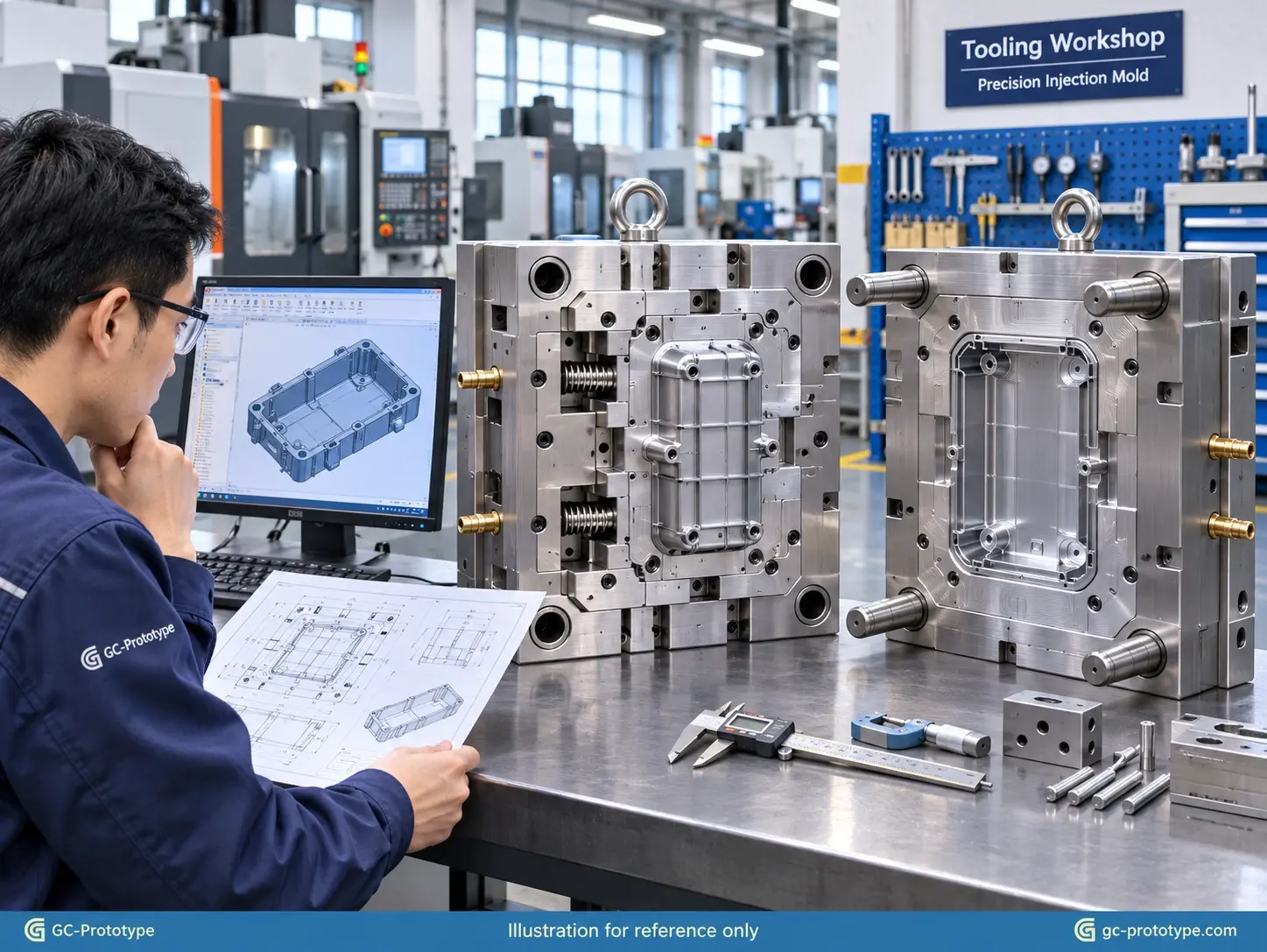
A structured tooling and sampling process helps reduce risk before full production begins.
Although individual manufacturers may use different terminology, the project typically progresses through engineering review, mold development, trials, sample inspection, and customer approval.
The customer submits 3D CAD models and engineering drawings.
The manufacturing team evaluates wall thickness, draft, undercuts, gate locations, material requirements, and other factors affecting moldability.
Potential design changes should be communicated before tooling begins.
The supplier prepares the tooling concept and relevant manufacturing details.
Depending on the project, the review may cover parting lines, gate positions, ejector arrangements, cavity layout, and critical surfaces.
Customer approval should be obtained according to the agreed project process.
After approval, the mold is manufactured using suitable machining and tooling processes.
The schedule depends on mold complexity, selected materials, available capacity, and required manufacturing operations.
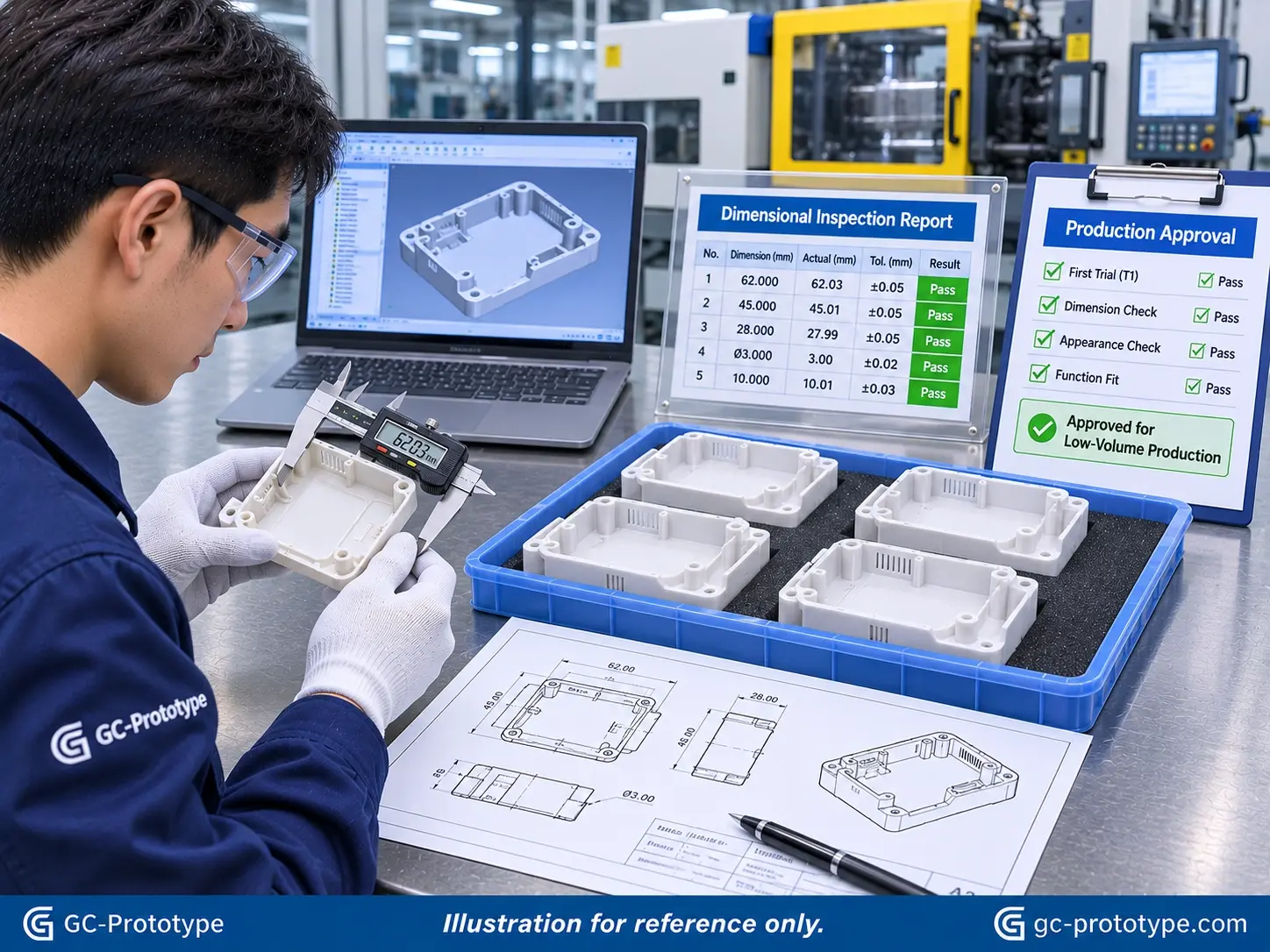
Initial mold trials are used to evaluate molded parts and manufacturing behavior.
T0 and T1 are commonly used terms for tooling trials or sample stages, but their exact definitions vary between suppliers.
Initial samples may reveal dimensional variation, cosmetic defects, filling problems, or other issues requiring investigation.
Samples should be evaluated according to the approved drawings and agreed acceptance criteria.
If a sample fails inspection, the manufacturer and customer should determine the cause and agree on suitable corrective actions.
Production approval should occur only after the required acceptance conditions are satisfied.
| Project Stage | Supplier Responsibility | Customer Decision |
| CAD Review | Identify manufacturing risks | Confirm requirements |
| Mold Design | Prepare tooling proposal | Approve design |
| Mold Manufacturing | Manufacture agreed tooling | Review changes |
| Initial Sampling | Produce trial parts | Evaluate samples |
| Correction Loop | Investigate and address issues | Approve revisions |
| Production Release | Confirm manufacturing readiness | Authorize production |
This structured process helps align engineering expectations and commercial responsibilities.
Reliable injection molding requires more than producing acceptable initial samples.
For repeat production, manufacturers should establish quality requirements that reflect the component’s intended function.
Material specifications should identify the required resin grade, color, and relevant performance requirements.
For demanding applications, buyers may request material documentation or batch traceability.
Any material substitutions should be approved according to the project’s requirements.
Not every feature requires the same inspection priority.
Critical dimensions may include mounting interfaces, snap-fit features, sealing surfaces, and assembly datums.
Cosmetic standards should also define acceptable appearance, texture, color, and visible surface conditions.
Initial sample inspection can help verify whether molded components meet approved specifications.
For repeat production, an agreed inspection plan should address relevant dimensional and visual requirements.
The inspection method and sampling frequency depend on project risk, quantity, and customer requirements.
Injection-molded parts can experience defects such as flash, sink marks, warpage, and weld lines.
When defects affect agreed requirements, the supplier should investigate the cause and discuss corrective actions with the customer.
The focus should be on documented acceptance and corrective-action decisions rather than assuming every cosmetic variation requires rejection.
Depending on the project, buyers may request:
Approved engineering drawings.
Material documentation.
Sample inspection reports.
Dimensional measurement results.
Approved engineering changes.
Agreed batch quality records.
Requirements such as PPAP, specialized validation, or industry-specific certifications should be confirmed before the project begins.
For companies in Europe and North America, selecting a local or overseas manufacturer involves evaluating the total project requirements.
Both options can be appropriate depending on production volume, engineering complexity, logistics, and cost.
Tooling and production costs vary by supplier, mold complexity, material, order volume, and production arrangements.
China-based manufacturers may offer competitive quotations for suitable projects, but lower quoted prices do not always mean lower total costs.
Local suppliers may offer easier on-site meetings for nearby customers.
Overseas suppliers can support technical coordination through CAD reviews, digital communication, documented approvals, and scheduled project updates.
The quality of engineering communication is more important than geographical location alone.
International orders require consideration of shipping methods, customs clearance, import duties, and delivery terms.
Buyers should confirm the agreed Incoterms and clarify responsibility for freight, insurance, and import procedures.
| Consideration | Local Manufacturer | China-Based Manufacturer |
| Freight Distance | Often shorter for local buyers | Longer for Western destinations |
| On-Site Visits | Generally easier | Requires international coordination |
| Tooling Price | Project-dependent | May be cost-competitive |
| Engineering Changes | Potential for local meetings | Requires clear remote approval |
| Customs Requirements | Depends on trade route | Export/import procedures apply |
| Total Cost | Depends on project conditions | Depends on tooling, production, logistics |
OEM buyers should compare the full project cost rather than tooling price alone.
This includes the mold, molded components, inspection, engineering changes, freight, duties, and long-term maintenance.
A low initial quotation may not include every expense associated with a custom injection molding project.
Understanding the quotation structure helps buyers identify differences between manufacturers.
Tooling and molded-part prices should be clearly identified.
This allows customers to understand the initial investment and recurring manufacturing cost.
Mold cavity count affects production capacity and may influence unit cost.
Buyers should confirm whether quotations assume a single-cavity or multi-cavity mold and what expected tooling life is included.
Inspection reports, assembly, printing, surface finishing, and packaging may carry additional charges.
These requirements should be communicated during quotation rather than after tooling is complete.
Quotations should be compared using equivalent production quantities, resin specifications, quality requirements, and delivery conditions.
| Quotation Item | What Buyers Should Confirm |
| Mold Cost | Tooling material and included operations |
| Mold Life | Expected cycles and assumptions |
| Cavity Count | Number of cavities |
| Unit Price | Quantity and material assumptions |
| Initial Sampling | Included samples and correction terms |
| Inspection | Documentation and measurement requirements |
| Finishing | Printing, coating, assembly, etc. |
| Delivery | Freight and agreed Incoterms |
| Mold Transfer | Conditions and additional charges |
A transparent quotation helps customers assess manufacturing risks and budget requirements before placing an order.
Custom injection molding is used across industries requiring repeatable plastic components.
Robotic systems may require actuator covers, sensor housings, insulating components, and plastic structures incorporating metal inserts.
Common applications include electronic enclosures, connectors, mounting features, and protective components.
Medical equipment may use instrument housings, non-implant components, and selected functional plastic parts.
Material, cleanliness, quality-system, and regulatory requirements depend on the intended use.
Automotive and EV-related applications may include connectors, interior components, equipment housings, and mechanical supports.
Material and supplier qualifications should be confirmed against the applicable project specifications.
A complete Request for Quotation helps manufacturers understand the component, tooling requirements, and expected production demand.
For OEM sourcing, the quotation should address both the finished plastic part and the mold used to manufacture it.
Provide a STEP or STP model together with a 2D engineering drawing identifying dimensions, critical tolerances, and the approved revision.
Specify the required material grade, color, texture, surface finish, and any applicable performance requirements.
Provide the initial order quantity and estimated annual demand where available.
Identify whether a new mold is required and any expectations regarding mold ownership, maintenance, and future transfer.
Communicate sample approval requirements, inspection documentation, packaging, and delivery expectations.
| RFQ Information | Recommended Details |
| 3D CAD | STEP / STP |
| 2D Drawing | PDF with revision |
| Resin | Exact material grade |
| Colour and Texture | Colour standard and finish |
| Initial Quantity | First production order |
| Annual Forecast | Estimated demand |
| Tooling | Expected life and ownership |
| Critical Features | Dimensions, fits, appearance |
| Samples | Trial sample evaluation requirements |
| Inspection | Reports and acceptance criteria |
| Delivery | Destination and schedule |
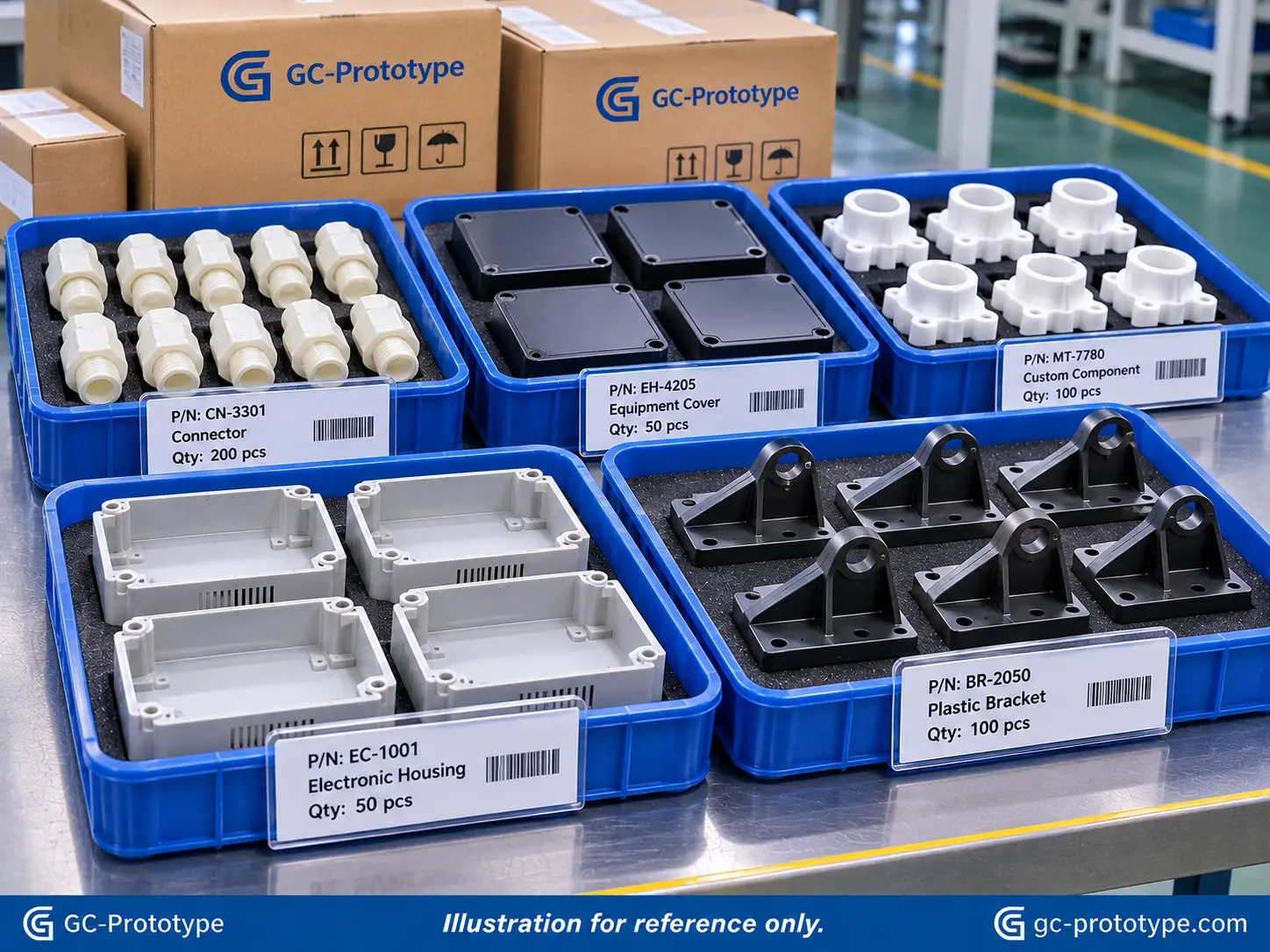
Evaluate the manufacturer’s tooling capabilities, suitable production quantities, engineering support, material sourcing, quality inspection methods, and ability to manage design changes. Tooling ownership and commercial responsibilities should also be clarified before placing an order.
A mold maker primarily designs or manufactures injection molds. A custom molder produces plastic components using injection molding equipment. Some companies provide both services, while others coordinate tooling with external specialists.
Mold ownership depends on the contract. Buyers should confirm ownership rights, storage location, maintenance responsibilities, transfer conditions, and access to tooling documentation before purchasing the mold.
Yes. Suitable rapid tooling and low-volume injection molding arrangements can support prototype validation, pilot production, and repeat small-batch orders. The economic feasibility depends on tooling investment, part complexity, material, and quantity.
The supplier and customer should review the nonconforming features, identify likely causes, and agree on corrective actions. Tooling modifications or process adjustments may be necessary before subsequent sample evaluation and production approval.
A 3D CAD model, 2D engineering drawing, resin specification, initial quantity, expected annual demand, surface requirements, and critical dimensions are recommended. Tooling ownership and inspection requirements should also be communicated where applicable.
Choosing suitable injection moulding manufacturers is essential for OEM companies developing custom plastic parts and planning future production.
GC-Prototype provides injection molding and rapid tooling support for international B2B customers, including engineering review, prototype development, suitable low-volume production, and manufacturing planning.
Whether your project involves industrial equipment housings, electronic enclosures, plastic brackets, insert-molded components, or other custom plastic parts, our team can review your CAD models and discuss suitable manufacturing solutions.
Send us your 3D CAD/STEP files and approved engineering drawings, including:
Material grade and color requirements.
Critical dimensions and surface specifications.
Initial production quantity.
Estimated annual demand, if available.
Tooling and sample approval expectations.
Inspection and delivery requirements.
Our engineering team can review moldability, tooling options, component requirements, and project feasibility.
From CAD review and rapid tooling to prototype validation, low-volume pilot production, and mass production support, GC-Prototype helps OEM engineering and procurement teams move their projects forward.