Address:
Shenzhen Bao'an District Xinqiao Subdistrict Huangpu Community Huangpu East Ring Road No. 504 Shenzhen Yuan Industrial City Building C
Work Hours:
Monday to Friday: 9AM - 21PM
Weekend: 9AM - 21PM

Address:
Shenzhen Bao'an District Xinqiao Subdistrict Huangpu Community Huangpu East Ring Road No. 504 Shenzhen Yuan Industrial City Building C
Work Hours:
Monday to Friday: 9AM - 21PM
Weekend: 9AM - 21PM

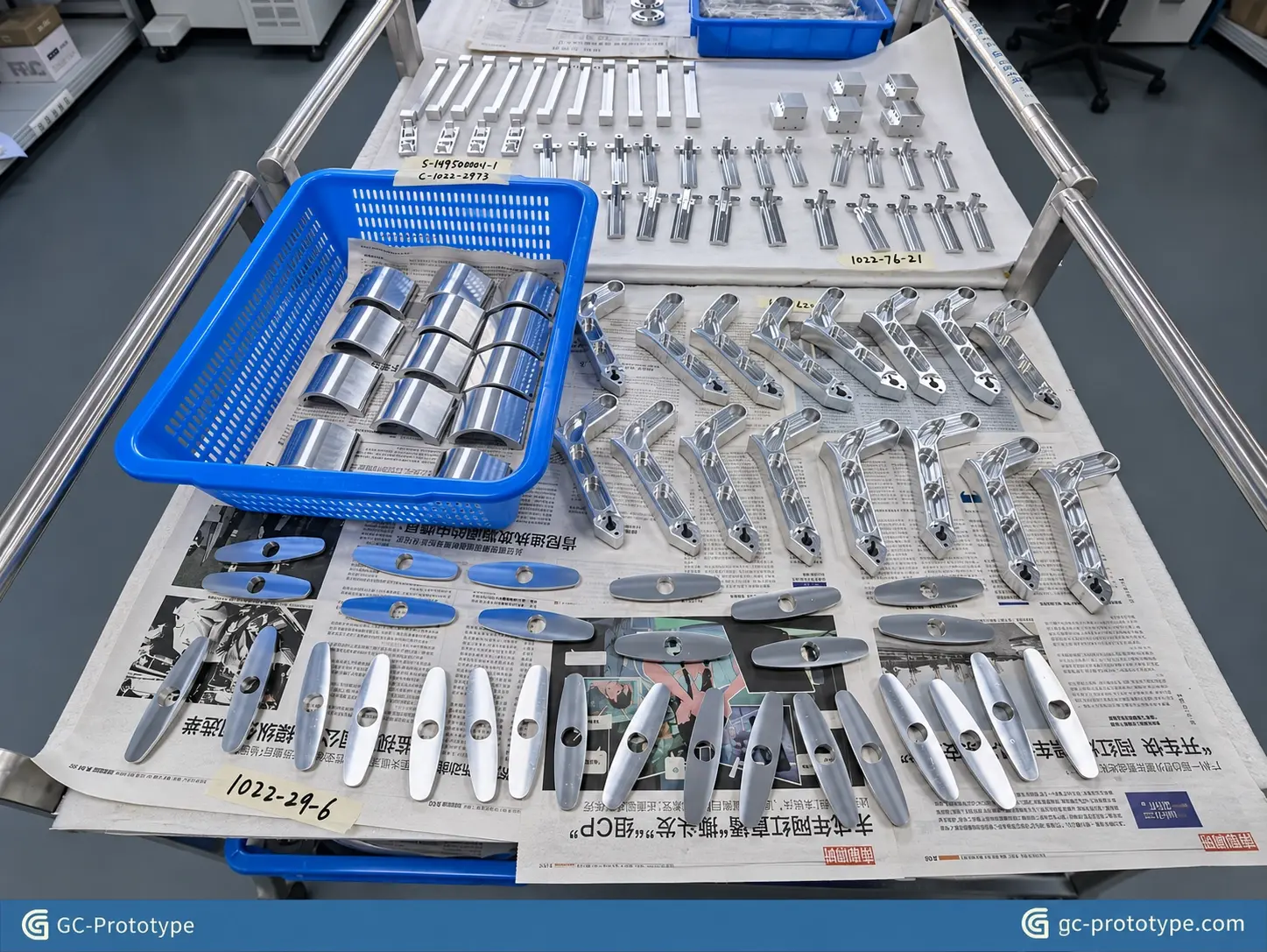
Choosing a reliable cnc contract manufacturer is essential for OEM companies that need consistent precision parts beyond initial prototypes. Unlike one-time machining orders, contract manufacturing involves ongoing production planning, approved engineering revisions, quality verification, and repeat deliveries. When comparing cnc manufacturing companies, buyers should evaluate not only machining capabilities but also how suppliers manage batch consistency, technical communication, and changing production requirements.
For engineering and procurement teams, finding a dependable manufacturing partner can reduce supplier coordination, avoid costly production interruptions, and improve long-term sourcing efficiency.
At GC-Prototype, we support custom CNC machining projects from CAD review and prototype development to functional validation, low-volume pilot production, and mass production support. Our manufacturing capabilities include CNC milling, CNC turning, multi-axis machining, and related manufacturing processes.
This guide explains how CNC contract manufacturing works, what OEM buyers should evaluate, and how to manage quality, costs, engineering changes, and repeat production orders.
CNC contract manufacturing is a business arrangement in which a company outsources the manufacturing of custom CNC machined components to an external supplier.
The customer typically provides engineering drawings, material specifications, quality requirements, and production quantities. The contract manufacturer then produces components according to the agreed manufacturing requirements.
A one-time CNC machining project usually focuses on producing a specific quantity of components for immediate delivery.
Contract manufacturing may involve repeated orders, ongoing technical coordination, approved production documentation, and longer-term supply arrangements.
For example, a robotics company may initially order 20 machined aluminum housings for validation, followed by additional batches after design approval.
The manufacturer must understand the approved design, maintain relevant production information, and confirm that subsequent orders follow the correct specifications.
Depending on the agreement, contract manufacturing may involve:
CNC milling and turning.
Material sourcing.
Manufacturing planning.
Secondary processing.
Dimensional inspection.
Packaging and shipment preparation.
Repeat-order production coordination.
The exact scope should always be documented before production begins.
In most custom manufacturing arrangements, the OEM customer controls the product design and approves technical changes.
The manufacturer is responsible for producing parts according to the approved specifications and agreed quality requirements.
Clear responsibility for drawings, revisions, and inspection criteria helps prevent manufacturing misunderstandings.
Not every machining project requires a long-term manufacturing arrangement.
However, contract manufacturing becomes particularly valuable when companies need repeated deliveries, multiple custom part numbers, or flexible production quantities.
Industrial equipment manufacturers often need replacement components or recurring production parts.
Working with the same manufacturing partner can reduce repeated supplier qualification and technical communication.
High-mix, low-volume production involves manufacturing different component designs in relatively small quantities.
For example, a robotic assembly may require aluminum housings, stainless steel connectors, precision brackets, and custom shafts.
Each component has different geometry, materials, and inspection requirements.
A suitable machine parts manufacturer should be able to evaluate these differences and coordinate the applicable machining processes.
Some OEM companies have strong product development teams but limited internal manufacturing resources.
Outsourcing suitable machining work allows their engineers to focus on product design, testing, and assembly.
Bridge production supports demand between prototype validation and established high-volume manufacturing.
CNC machining can be useful during this stage because many parts can be manufactured without dedicated production molds.
| Manufacturing Situation | Typical Requirement | Contract Manufacturing Benefit |
| NPI Pilot Production | 10–50 validation parts | Coordinated engineering changes |
| Low-Volume OEM Production | 50–200 custom parts | Repeatable manufacturing workflow |
| Multiple Part Numbers | Housings, brackets, connectors | Simplified project coordination |
| Repeat Orders | Recurring component demand | Consistent approved documentation |
| Bridge Production | Parts before high-volume tooling | Flexible manufacturing planning |
These quantities are illustrative examples. Actual production requirements depend on component complexity and manufacturing feasibility.
A reliable contract manufacturer should offer machining processes that match the actual geometry and requirements of customer components.
CNC milling is commonly used for aluminum housings, mounting plates, robotic components, mechanical brackets, and precision fixtures.
The manufacturing process should account for critical mounting interfaces, hole positions, internal features, and dimensional relationships.
CNC turning is suitable for shafts, bushings, sleeves, threaded connectors, and other cylindrical parts.
For these components, diameter accuracy, runout, thread specifications, and surface finish may be important functional requirements.
Four-axis and five-axis CNC machining can support components with complex surfaces or features requiring multiple machining orientations.
For suitable geometries, multi-axis machining may reduce repeated setups and improve manufacturing efficiency.
Some projects require anodizing, polishing, plating, heat treatment, or other finishing operations.
Before placing an order, buyers should confirm which operations the manufacturer performs directly and which are coordinated through external specialists.
Clear responsibilities are especially important when multiple processes affect final component quality.
Producing a successful prototype is an important milestone, but it does not automatically guarantee consistent results across future manufacturing batches.
A structured production workflow helps OEM customers move from engineering validation toward repeatable manufacturing.
The process begins with customer-provided 3D CAD models, 2D engineering drawings, and manufacturing specifications.
The engineering team reviews component geometry, materials, critical dimensions, and machining feasibility.
Potential issues involving tool access, thin walls, complex features, or unnecessary tolerances can be discussed before manufacturing.
Initial samples are manufactured and evaluated against the project requirements.
The customer may conduct dimensional checks, assembly testing, or functional validation.
Once the design is approved, the parties should identify the authorized drawing revision.
A drawing freeze establishes the version intended for a particular production release. It does not prevent future design changes, but those changes should be reviewed and approved before implementation.
For projects requiring additional quality verification, First Article Inspection (FAI) can help confirm that the initial manufacturing setup produces parts conforming to the approved drawing.
The inspection plan may include critical dimensions, geometric tolerances, material specifications, and surface requirements.
FAI documentation should be agreed upon during quotation and production planning.
Low-volume pilot production allows customers to evaluate manufacturing consistency beyond the first prototype.
The manufacturing team may review workholding methods, machining sequences, inspection results, and any issues identified during production.
For example, if a robot actuator housing requires multiple machining operations, pilot production can help confirm whether the agreed process consistently produces the required mounting interfaces.
When additional orders are placed, the supplier should verify the applicable drawing revision, material specification, quantity, and inspection requirements.
If the customer changes the design, the impact on machining, cost, delivery, and quality should be reviewed.
This approach helps reduce the risk of manufacturing parts from outdated drawings.
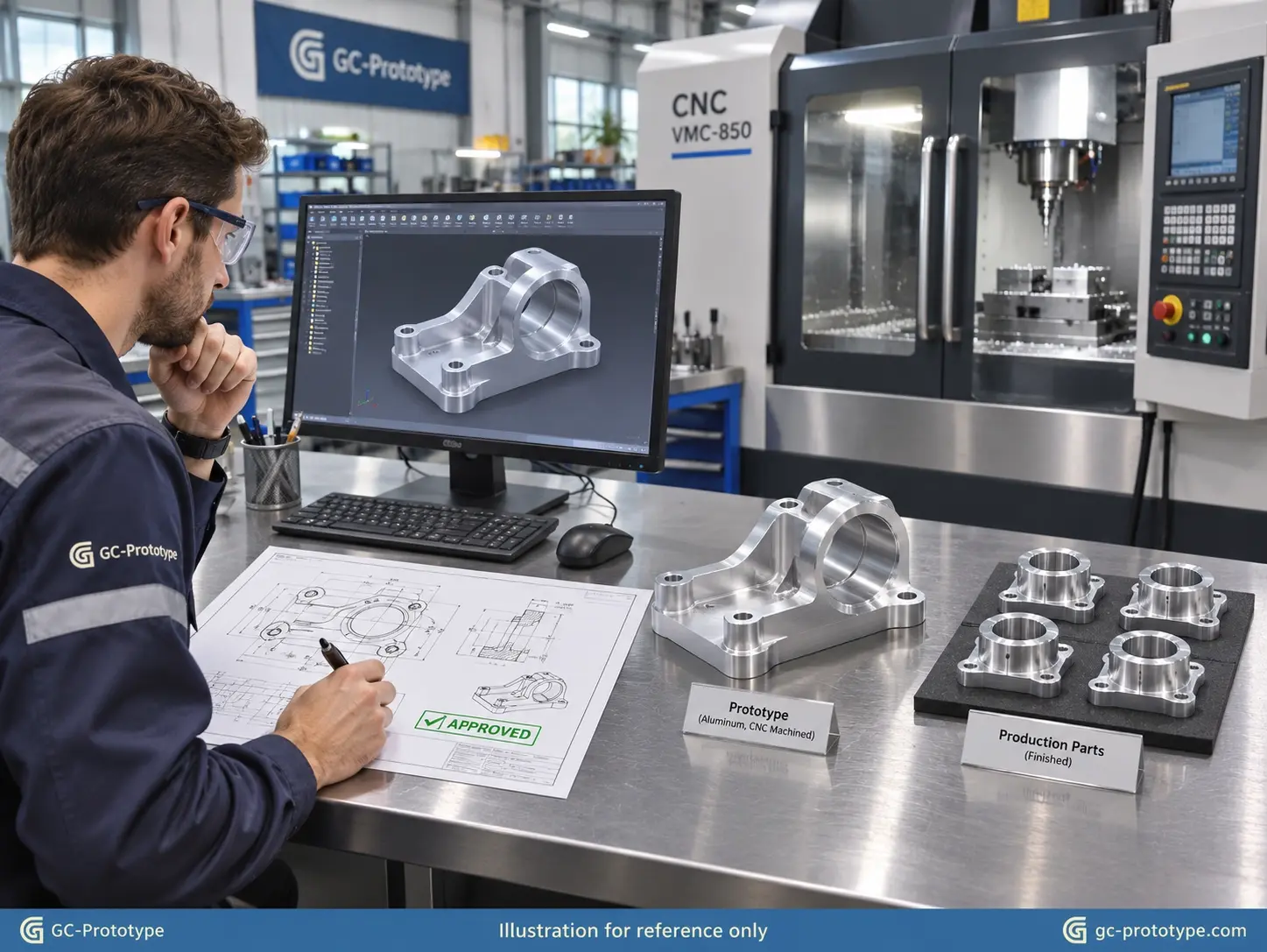
Quality consistency is one of the most important considerations in contract manufacturing.
For OEM buyers, the objective is not only to receive an accurate first sample but also to maintain acceptable quality across subsequent orders.
Not every dimension has the same effect on component performance.
Critical dimensions may include bearing interfaces, mounting holes, sealing surfaces, threaded features, and assembly datums.
Inspection requirements should prioritize features that directly influence fit, function, and reliability.
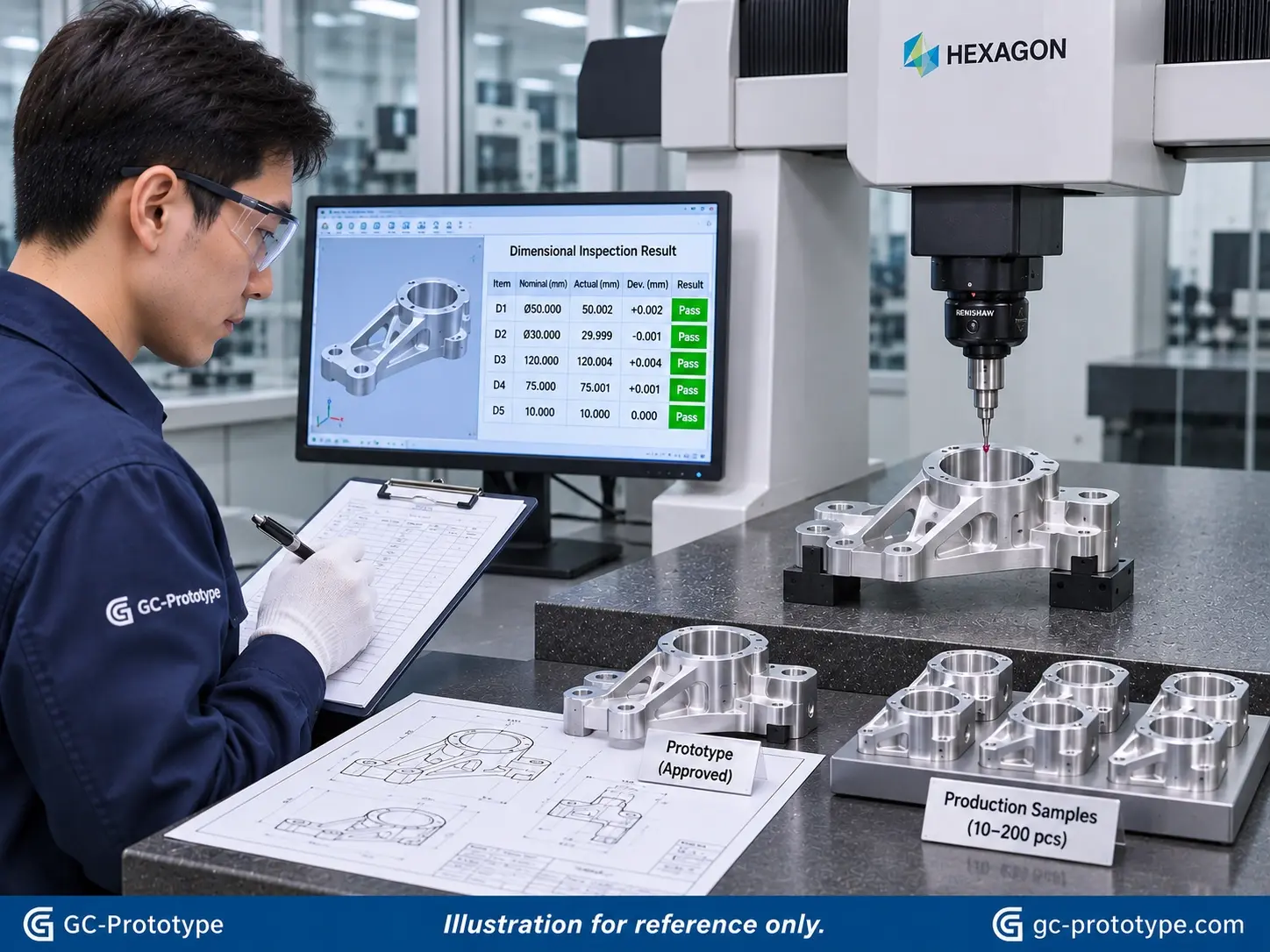
GC-Prototype uses Hexagon CMM equipment to support precision dimensional inspection.
The appropriate measurement method and inspection documentation should be agreed upon for each project.
First Article Inspection may be used to verify initial manufacturing results.
For repeated production, an agreed sampling plan can help monitor dimensional consistency.
Sampling requirements depend on project risk, production quantity, customer specifications, and applicable quality requirements.
For especially critical components, additional inspection or testing may be appropriate.
Material grade verification and traceability may be required for demanding engineering applications.
Depending on the project, customers may request material certificates, batch identification, or additional documentation.
Approved drawings and revision information should also be maintained so that each production release is associated with the correct specifications.
If a component fails to meet the agreed requirements, the supplier and customer should follow an established nonconformance process.
This may involve identifying affected parts, reviewing inspection results, determining an appropriate disposition, and taking corrective action.
Components should not be delivered under an unapproved deviation when customer approval is required.
| Production Control | Main Purpose | Evidence Buyers May Request |
| Drawing Revision | Prevent outdated production | Approved drawing revision |
| First Article Inspection | Verify initial setup | FAI dimensional report |
| Material Identification | Confirm specified grade | Material certificate |
| Batch Inspection | Monitor dimensional consistency | Agreed inspection report |
| Change Approval | Control modifications | Approved engineering change |
| Nonconformance Control | Address unacceptable parts | Disposition and corrective-action record |
A reliable quality plan should be proportional to the part’s intended function and contractual requirements.
Many OEM projects involve more than a single CNC component.
A robotics or industrial automation assembly may contain multiple parts requiring different materials and machining operations.
Each component should have a clearly defined part number, drawing revision, material specification, and required quantity.
Maintaining this information helps avoid confusion when different components are ordered together.
A project may require aluminum CNC milling, stainless steel turning, and anodizing or other finishing operations.
Manufacturing planning should account for the sequence of these processes and any inspection required after finishing.
For example, a surface coating may affect dimensions on tightly controlled mating features.
When external finishing or specialized processes are involved, responsibilities should be clearly agreed upon.
Buyers should understand who coordinates external processing, verifies completed work, and resolves issues.
Packaging is also important for contract production.
Precision machined components may require protective separators, individual wrapping, or clearly labeled trays.
Part numbers, quantities, and revision information should be communicated accurately to reduce receiving and assembly errors.
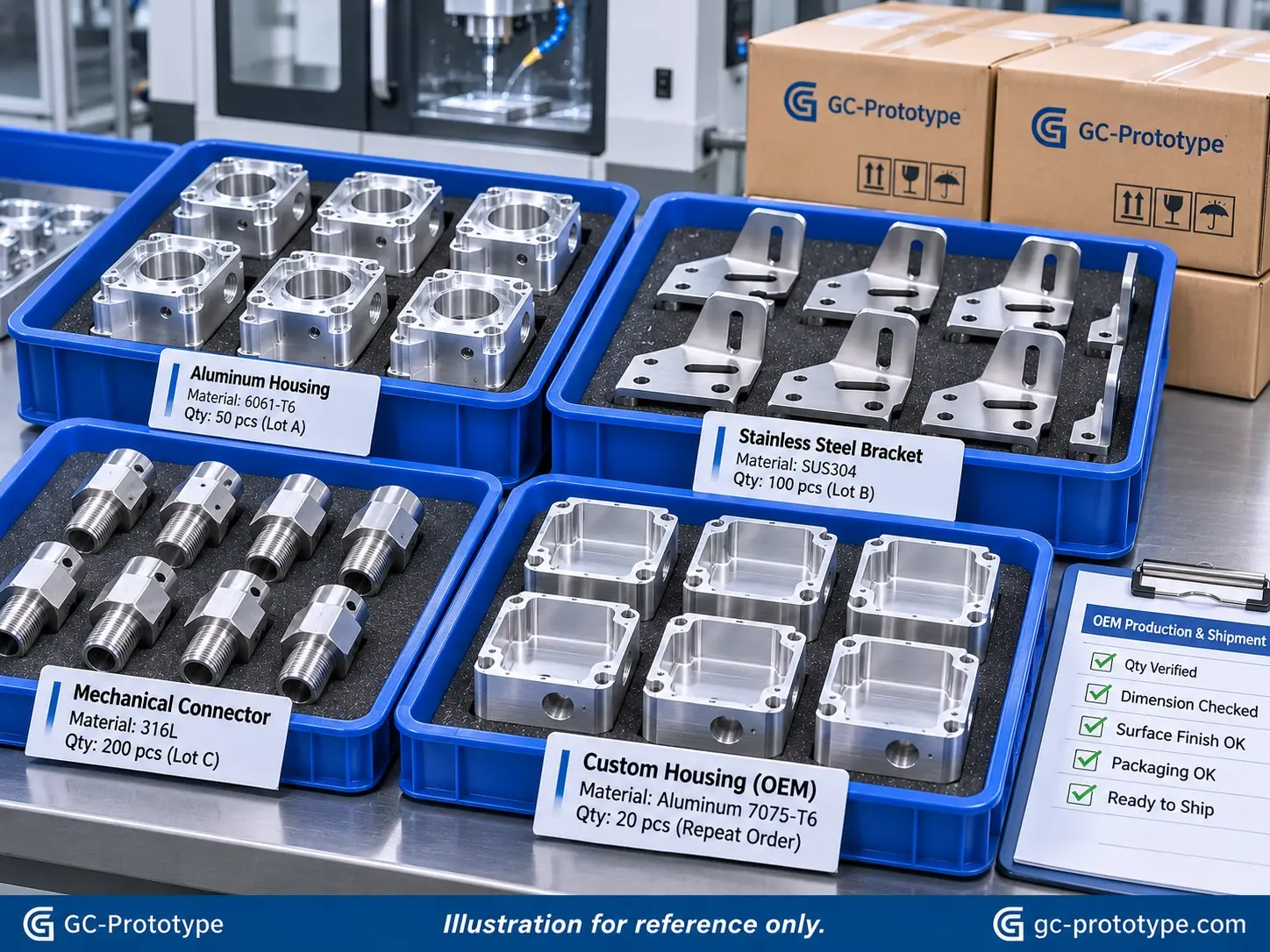
Long-term manufacturing costs depend on more than the unit price shown on the first quotation.
Manufacturing setup, material procurement, inspection, design revisions, and delivery planning can all affect the total cost of ownership.
Prototype orders generally have higher unit costs because programming and setup expenses are distributed across fewer parts.
For repeated production, manufacturers may improve efficiency through established machining processes, repeatable fixtures, and production planning.
However, cost reductions depend on the actual component and order arrangement.
Providing an estimated annual demand helps suppliers evaluate purchasing and manufacturing options.
For example, an OEM customer may initially require 20 aluminum housings, followed by quarterly orders of 100 pieces.
This hypothetical scenario illustrates why expected order frequency can influence manufacturing planning.
Material availability can affect production lead time, particularly for specialized alloys or nonstandard stock dimensions.
Suppliers and customers should discuss whether the production schedule depends on long-lead materials or external finishing operations.
Changing suppliers may require new engineering reviews, sample approvals, inspection setup, and production validation.
These activities can create additional costs beyond the quoted machining price.
Maintaining a capable manufacturing partner can reduce repeated onboarding work, although supplier performance should still be reviewed periodically.
International customers should evaluate how a contract manufacturer manages technical communication, production responsibilities, and delivery.
Ask whether the manufacturer can support your part geometry, required quantities, materials, and production schedule.
Do not assume that a supplier offering CNC machining automatically supports high-volume production or every secondary operation.
Confirm how technical questions and engineering changes will be communicated.
It should be clear who can approve drawing revisions, material substitutions, manufacturing deviations, and other changes.
For projects involving external surface finishing or other specialized processes, clarify responsibility for scheduling, inspection, and nonconforming parts.
Overseas procurement teams should confirm the delivery destination, packaging requirements, shipping arrangements, and applicable Incoterms.
Clear delivery terms reduce misunderstandings about transportation responsibilities and shipment costs.
When comparing machining manufacturing companies, buyers should consider these operating requirements alongside machining quality and price.
CNC contract manufacturing supports industries requiring customized precision components and recurring supply.
Robotics projects may require actuator housings, precision shafts, sensor brackets, and mechanical connectors.
Multiple part numbers and engineering revisions can make coordinated manufacturing particularly valuable.
Automotive-related equipment may require aluminum housings, mechanical brackets, fixtures, and precision connectors.
Contract manufacturing can support suitable prototype, validation, and recurring production requirements.
Medical equipment manufacturers may require precision housings, mechanical components, and instrument parts.
Material documentation, inspection, cleanliness, and regulatory requirements depend on the intended application.
Aerospace-related equipment and industrial machinery may use precision brackets, mounting components, and customized mechanical parts.
For regulated or safety-critical applications, buyers should confirm the required quality systems, material specifications, and supplier qualifications.
A complete Request for Quotation (RFQ) helps a manufacturing partner evaluate both immediate production requirements and potential repeat orders.
Provide 3D CAD models and the corresponding approved 2D engineering drawings.
STEP and STP files are commonly used for geometry, while PDF drawings communicate dimensions, tolerances, and technical specifications.
Clearly identify the current revision.
Specify the initial order quantity and estimated repeat-order requirements.
If future demand is uncertain, provide an approximate forecast rather than an unsupported commitment.
Identify critical dimensions, material certificates, inspection reports, and any project-specific quality requirements.
Communicate the requested delivery date, destination, packaging requirements, and expected annual demand.
| RFQ Requirement | Details to Provide |
| 3D CAD | STEP / STP files |
| 2D Drawing | Approved PDF with revision |
| Material | Exact grade and specification |
| Initial Quantity | Prototype or pilot batch |
| Repeat Quantity | Expected order release size |
| Annual Demand | Forecast where available |
| Critical Features | GD&T, tolerances, threads |
| Quality Documents | Inspection and material records |
| Finishing | Anodizing, polishing, plating, etc. |
| Delivery | Destination, schedule and packaging |
A CNC contract manufacturer produces custom machined components for another company according to agreed engineering specifications, quantities, and quality requirements. Projects may involve repeated orders and ongoing manufacturing coordination.
A machine shop primarily provides machining services, while contract manufacturing may include broader responsibilities such as repeat-order planning, material sourcing, inspection coordination, and ongoing production support. The distinction depends on the supplier’s actual service scope.
Yes. Many CNC suppliers support low-volume production, including customized components for engineering validation and repeat OEM orders. Feasibility depends on part complexity, material, quantity, and production requirements.
The customer and supplier should identify the approved drawing revision for each production release. Changes should be reviewed and authorized before manufacturing according to the updated specifications.
Depending on the application, buyers may request material certificates, dimensional inspection reports, First Article Inspection records, or other agreed documentation.
Provide 3D CAD files, approved 2D drawings, material specifications, initial quantities, expected repeat-order demand, critical tolerances, finishing requirements, inspection expectations, and delivery information.
Finding a dependable cnc contract manufacturer can help OEM companies manage precision machining requirements from initial product development through recurring manufacturing orders.
GC-Prototype provides custom CNC milling, CNC turning, multi-axis machining, and prototype manufacturing support for international B2B customers.
Whether your project involves aluminum housings, stainless steel connectors, precision mechanical brackets, robotic components, or customized industrial parts, our engineering team can review your drawings and discuss suitable manufacturing solutions.
Looking for a CNC manufacturing partner for prototype and repeat-order production?
Send us your 3D CAD/STEP files and approved engineering drawings, together with your material specifications, initial order quantities, and expected production requirements.
Our team can review manufacturing feasibility, critical dimensions, inspection requirements, and suitable production approaches.
From CAD review and prototype samples to functional validation, low-volume pilot production, and mass production support, GC-Prototype helps engineering and procurement teams coordinate their manufacturing projects.