Address:
Shenzhen Bao'an District Xinqiao Subdistrict Huangpu Community Huangpu East Ring Road No. 504 Shenzhen Yuan Industrial City Building C
Work Hours:
Monday to Friday: 9AM - 21PM
Weekend: 9AM - 21PM

Address:
Shenzhen Bao'an District Xinqiao Subdistrict Huangpu Community Huangpu East Ring Road No. 504 Shenzhen Yuan Industrial City Building C
Work Hours:
Monday to Friday: 9AM - 21PM
Weekend: 9AM - 21PM

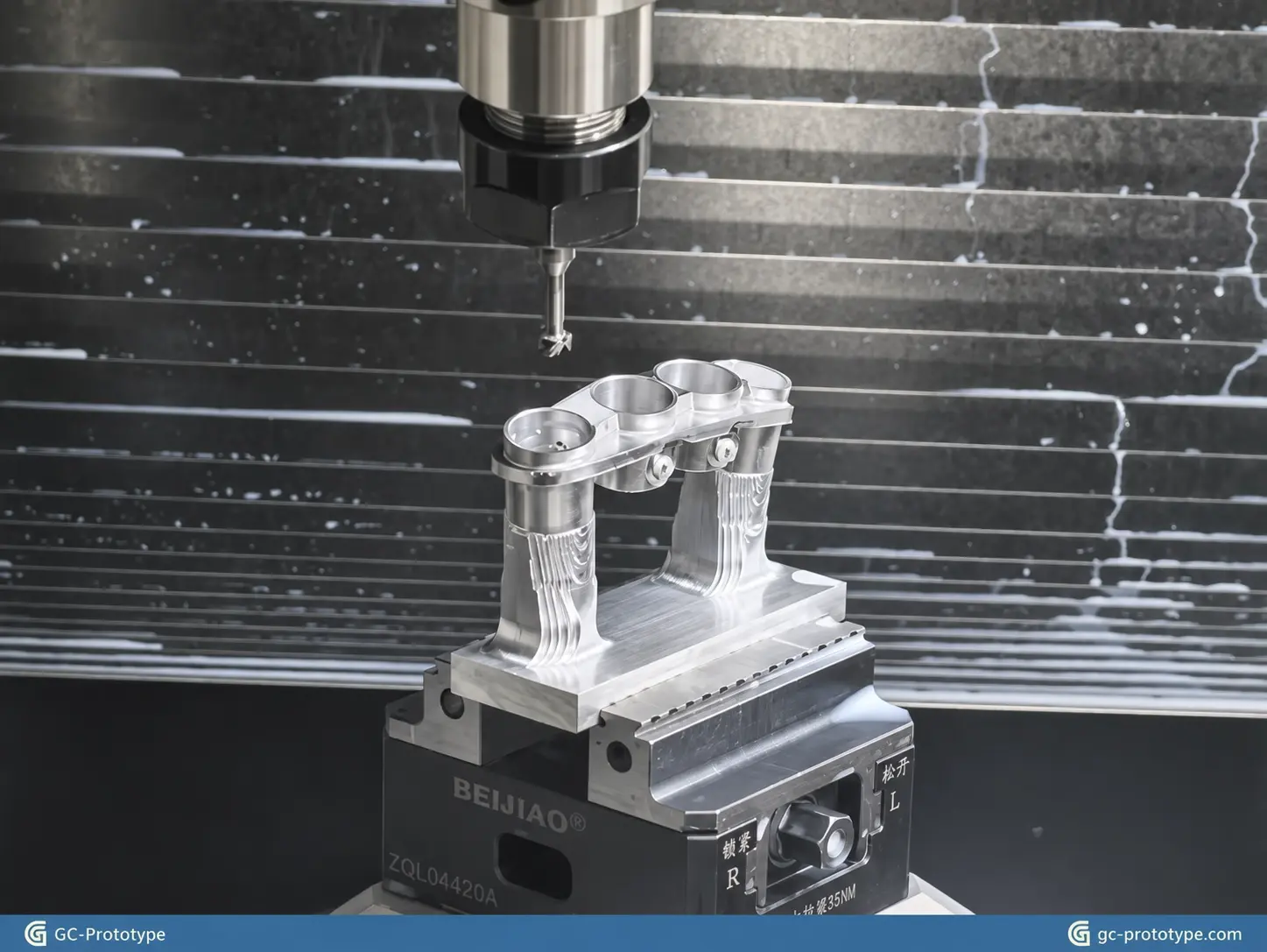
Small parts CNC machining requires more than simply scaling down conventional machining processes. Miniature shafts, precision connectors, sensor housings, and thin-wall brackets create unique challenges involving workholding, tool access, dimensional accuracy, and inspection. For slender cylindrical components, cnc swiss turned parts can offer advantages in machining stability, while complex miniature housings often require precision CNC milling.
For engineers and OEM procurement teams, successful small parts cnc manufacturing depends on selecting the right process, controlling critical features, and verifying the finished components against engineering drawings.
At GC-Prototype, we support custom CNC machining projects from CAD review and prototype development to functional validation, low-volume pilot production, and mass production support. This guide explains the manufacturing challenges, process selection, tolerance requirements, quality inspection, and cost factors involved in sourcing miniature precision components.
Small parts CNC machining involves producing compact precision components using computer-controlled milling, turning, and related machining processes.
These components often contain features such as miniature holes, narrow slots, fine threads, thin walls, and small mounting interfaces.
Although small components require less raw material, they are not necessarily easier or cheaper to manufacture.
Small CNC machined parts may range from components measuring only a few millimeters to parts measuring several centimeters, depending on the application.
True micromachining generally involves extremely small features that may require specialized tools, equipment, and inspection methods.
There is no universal size boundary separating small-part machining from micromachining.
Manufacturing feasibility should be determined by the smallest critical feature, part geometry, material, and required tolerances—not overall part size alone.
Small parts present several manufacturing challenges:
Limited surfaces for secure workholding.
Small cutting tools with reduced rigidity.
Thin walls that may deform during machining.
Difficult access to miniature internal features.
Burrs that can interfere with assembly.
Increased difficulty measuring critical dimensions.
These factors make engineering review and process planning particularly important.
Different industries require miniature components with specific dimensional and functional requirements.
Miniature shafts and pins are commonly used in robotic actuators, electronic mechanisms, mechanical assemblies, and precision instruments.
Important requirements may include diameter accuracy, straightness, runout, and surface finish.
Slender components may benefit from Swiss-type CNC turning, depending on their geometry.
Sensor housings protect electronic components and maintain accurate alignment with surrounding assemblies.
They may require miniature mounting holes, internal pockets, thin walls, and precise mating surfaces.
CNC milling is often suitable for these geometries.
Small connectors may contain fine threads, stepped diameters, internal bores, or complex contact features.
Brass, stainless steel, aluminum, and selected engineering plastics may be used depending on the application.
Miniature brackets are used in robotics, medical equipment, electronics, and industrial automation.
Hole positioning, flatness, wall thickness, and edge quality can directly affect assembly.
Bushings and sleeves are commonly used to guide shafts, maintain spacing, or support mechanical movement.
Their critical features often include internal diameter, external diameter, wall thickness, and alignment.
Selecting the correct machining process is essential for controlling manufacturing quality and cost.
The most suitable method depends on part geometry, feature accessibility, material, and production quantity.
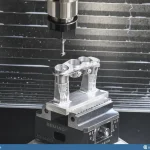
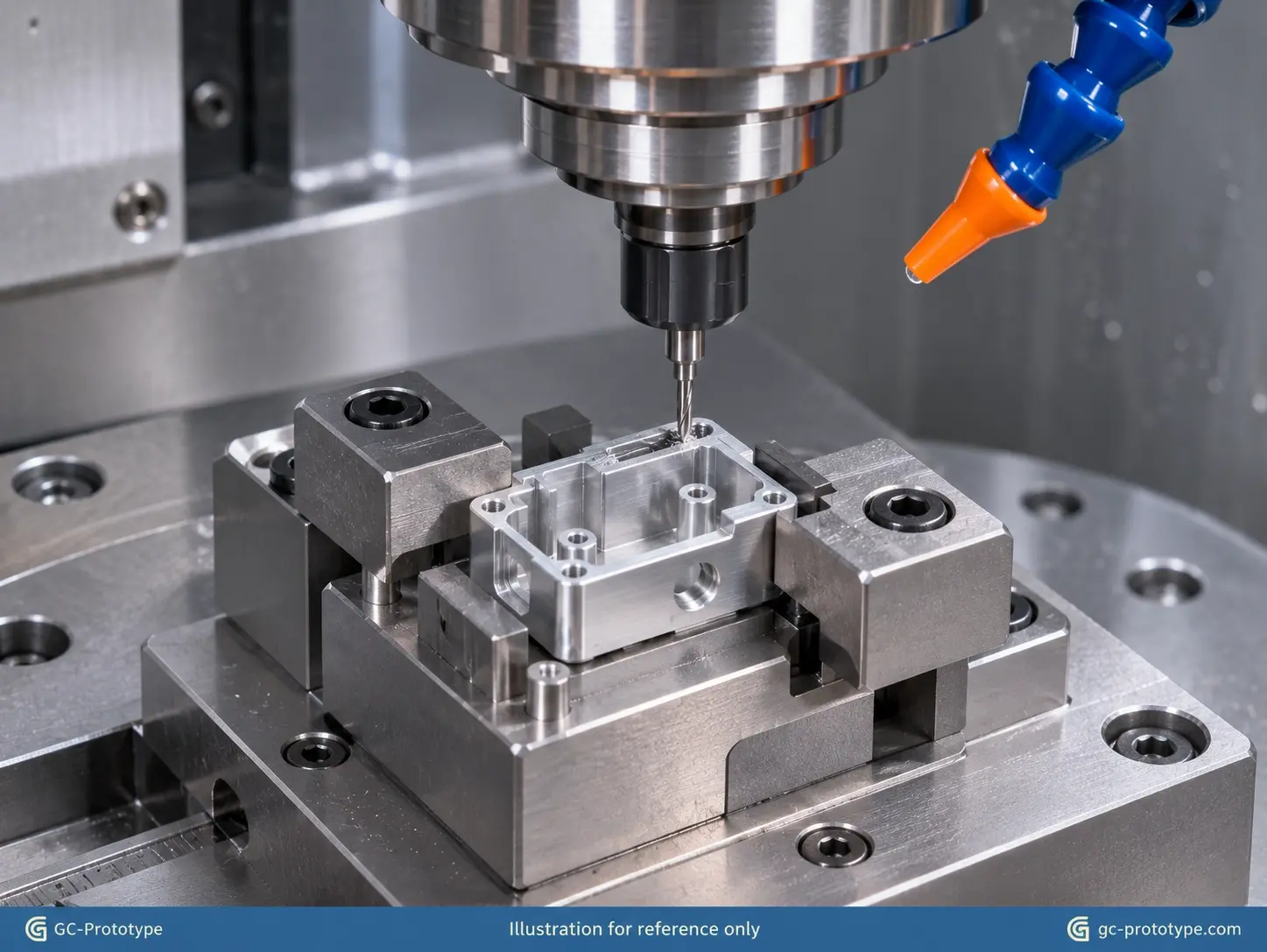
Precision CNC milling is suitable for small components containing pockets, slots, mounting holes, and complex external geometries.
Miniature cutting tools can produce detailed features, but tool diameter, cutting depth, and accessibility must be evaluated carefully.
For example, a small aluminum sensor housing with internal pockets and mounting holes may require several machining operations to achieve the specified geometry.
Swiss-type CNC turning is particularly suitable for certain small-diameter and slender cylindrical components.
The process uses a sliding headstock and guide bushing to support the workpiece near the cutting area, depending on the machine configuration.
Typical cnc swiss turned parts include:
Miniature precision shafts.
Small pins and connectors.
Threaded cylindrical components.
Slender mechanical components.
Selected medical instrument parts.
This arrangement can improve machining stability for suitable long, slender workpieces.
However, Swiss turning is not automatically the best choice for every miniature component.
Conventional CNC turning can be efficient for short cylindrical components such as bushings, spacers, sleeves, and fittings.
The appropriate setup depends on workpiece diameter, length, clamping requirements, and tolerances.
Multi-axis CNC machining may be useful for miniature components with angled holes, multiple machined faces, or difficult-to-access features.
Reducing repeated setups can improve manufacturing efficiency and help maintain relationships between critical features.
| Machining Process | Suitable Components | Key Consideration |
| Precision CNC Milling | Miniature housings, brackets | Tool access and feature size |
| Swiss CNC Turning | Slender shafts, precision pins | Workpiece support and rigidity |
| Conventional CNC Turning | Short cylindrical components | Clamping and diameter accuracy |
| Multi-Axis CNC Milling | Complex multi-face parts | Setup reduction and accessibility |
| Turn-Mill Machining | Parts with turned and milled features | Combined operations and alignment |
The correct process should be selected through a review of the actual CAD model and manufacturing requirements.
Manufacturing miniature components requires careful control of workholding, cutting tools, dimensional stability, and finishing operations.
These challenges can directly affect production yield and component performance.
Workholding is one of the most important considerations in small-part machining.
A miniature component may have very little surface area available for clamping. Excessive clamping force can deform thin walls or damage delicate features.
Common workholding approaches include:
Soft jaws: Custom-machined jaws that support the workpiece geometry.
Collet fixtures: Useful for suitable cylindrical components.
Miniature vises: Appropriate for certain small prismatic parts.
Vacuum fixtures: Potentially useful for suitable thin, flat components with sufficient sealing area.
Temporary support tabs: Keep small components attached to stock during machining.
The best approach depends on component geometry and functional requirements.
For example, a thin-wall aluminum housing may require carefully designed support surfaces, while a precision pin may be better suited to collet-based workholding.
Small components frequently contain miniature holes and narrow slots that limit cutting tool selection.
Smaller tools generally have less rigidity and may be more vulnerable to deflection or breakage.
Deep, narrow features can create additional challenges involving chip evacuation and tool accessibility.
Thin-wall sections may also deflect under cutting forces.
During DFM review, engineers should evaluate whether these features are functionally necessary or can be modified without affecting product performance.
Burrs may seem insignificant on large components, but they can create serious problems on miniature parts.
A small burr can interfere with:
Precision assembly.
Electrical contact.
Sliding movement.
Thread engagement.
Sealing or mating surfaces.
Deburring methods should be selected according to material, geometry, and the sensitivity of critical features.
Aggressive edge finishing may remove too much material from miniature components.
Tool deflection is another important manufacturing challenge.
Small-diameter cutting tools can bend under excessive cutting forces, potentially affecting feature dimensions and surface finish.
Manufacturers should consider:
Tool diameter and length.
Toolholder runout.
Cutting speed and feed.
Tool engagement.
Workpiece rigidity.
Chip evacuation.
Machining sequence.
Stable cutting conditions and appropriate inspection help reduce dimensional variation.
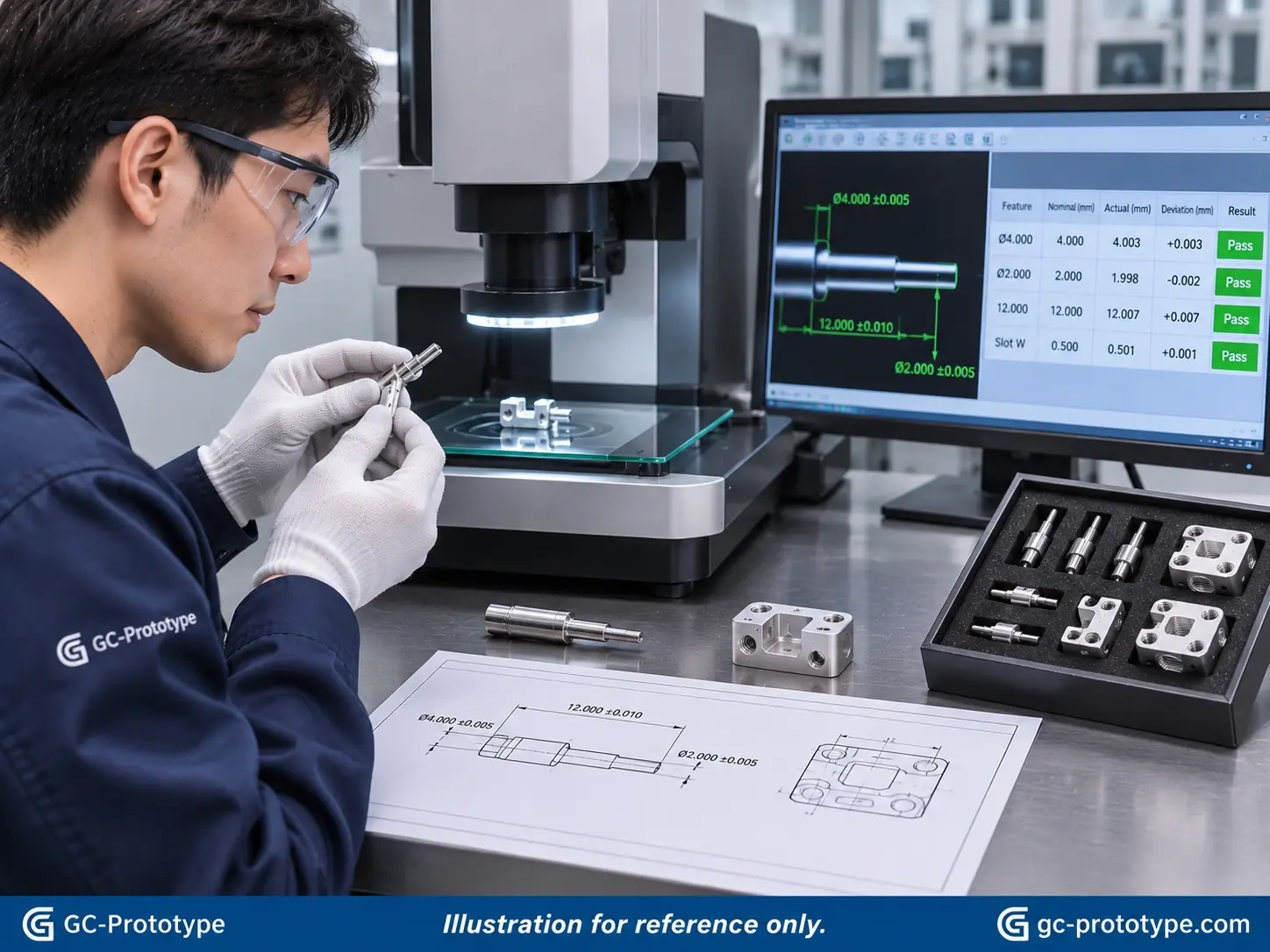
Dimensional inspection is essential when miniature components must fit into complex assemblies.
However, smaller parts do not automatically require tighter tolerances on every dimension.
Critical dimensions should be selected according to component function.
For example, a miniature shaft’s bearing diameter may require tighter control than its overall nonfunctional length.
Similarly, a sensor housing may require accurate mounting-hole positions while allowing more flexibility on external cosmetic surfaces.
Applying unnecessarily tight tolerances to every feature can increase machining time and inspection costs.
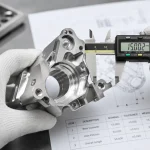
Small features may require specialized measuring instruments.
Depending on feature size and accessibility, suitable methods can include:
Precision micrometers.
Pin gauges.
Small bore gauges.
Thread gauges.
Optical measurement systems.
Toolmaker’s microscopes.
Inspection methods should be selected according to the required measurement uncertainty and feature geometry.
Coordinate Measuring Machines can verify many dimensional and geometric relationships.
GC-Prototype uses Hexagon CMM equipment to support precision dimensional inspection.
However, extremely small or delicate features may be better suited to optical inspection or other specialized measurement systems.
The appropriate method should be determined during manufacturing planning.
For OEM customers, repeatability is often as important as the accuracy of an individual sample.
A supplier should establish suitable controls for critical dimensions, drawing revisions, inspection procedures, and workholding setups.
This helps reduce inconsistencies between prototype samples and subsequent production batches.
Material selection affects machinability, strength, corrosion resistance, dimensional stability, and overall component performance.
Aluminum 6061 and 7075 are commonly considered for small structural parts, housings, brackets, and connectors.
Their favorable strength-to-weight characteristics can be useful in electronics and robotics.
Stainless steel grades such as 303, 304, and 316 may be selected for precision pins, miniature shafts, fittings, and mechanical components.
Machinability and corrosion resistance differ by grade.
Brass is frequently used for miniature threaded fittings, electrical connectors, and precision inserts.
Copper may be selected when electrical or thermal conductivity is a key requirement.
Engineering plastics are useful for miniature bushings, insulating supports, spacers, and specialized mechanical components.
Material selection should consider mechanical loading, operating temperature, and environmental exposure.
Although miniature components use less material, manufacturing costs are not determined by material weight alone.
Small components may require additional engineering preparation, specialized fixtures, delicate cutting tools, and detailed inspection.
Small parts often require custom fixtures to maintain stable positioning during machining.
Fixture design, programming, and machine setup create costs regardless of the final component size.
Miniature cutting tools may require controlled cutting parameters and careful toolpath planning.
Small features can increase machining time even when the overall part volume is limited.
Miniature parts can be difficult to handle and inspect.
Additional time may be required for:
Dimensional measurement.
Burr removal.
Surface examination.
Sorting and counting.
Protective packaging.
These operations can represent a meaningful portion of the total manufacturing cost.
Prototype orders generally have higher unit costs because setup expenses are distributed across fewer parts.
For suitable repeat orders, manufacturing processes may be optimized through improved workholding, batch planning, and consistent inspection procedures.
| Cost Factor | Why It Increases Cost | Optimization Approach |
| Miniature Fixtures | Specialized setup requirements | Design repeatable workholding |
| Small Cutting Tools | Tool wear and deflection | Avoid unnecessary micro-features |
| Tight Tolerances | Additional machining and inspection | Prioritize critical dimensions |
| Tiny Threads | Specialized tooling | Use standard sizes where possible |
| Deburring | Delicate finishing operations | Specify functional edge requirements |
| Small Quantities | Setup cost per component | Compare prototype and batch pricing |
A manufacturing quotation should account for the complete process, including programming, machining, finishing, inspection, and packaging.
Small precision components are used across industries where compact designs and accurate mechanical interfaces are important.
Robotic systems may require miniature shafts, actuator components, sensor mounts, and precision mechanical connectors.
Assembly accuracy is particularly important when components interact with bearings, motors, or moving mechanisms.
Electronic products often use small aluminum housings, brass connectors, miniature brackets, and protective components.
Critical features may include mounting-hole alignment, electrical interfaces, and dimensional fit.
Medical instruments and equipment may require miniature mechanical components and precision housings.
Material specifications, traceability, cleanliness, and quality requirements depend on the intended application.
Selected automotive and aerospace assemblies use small precision fittings, connectors, structural supports, and other mechanical components.
Manufacturing requirements should be evaluated according to the relevant material and quality specifications.
For OEM customers, selecting a supplier capable of supporting multiple development stages can reduce manufacturing coordination challenges.
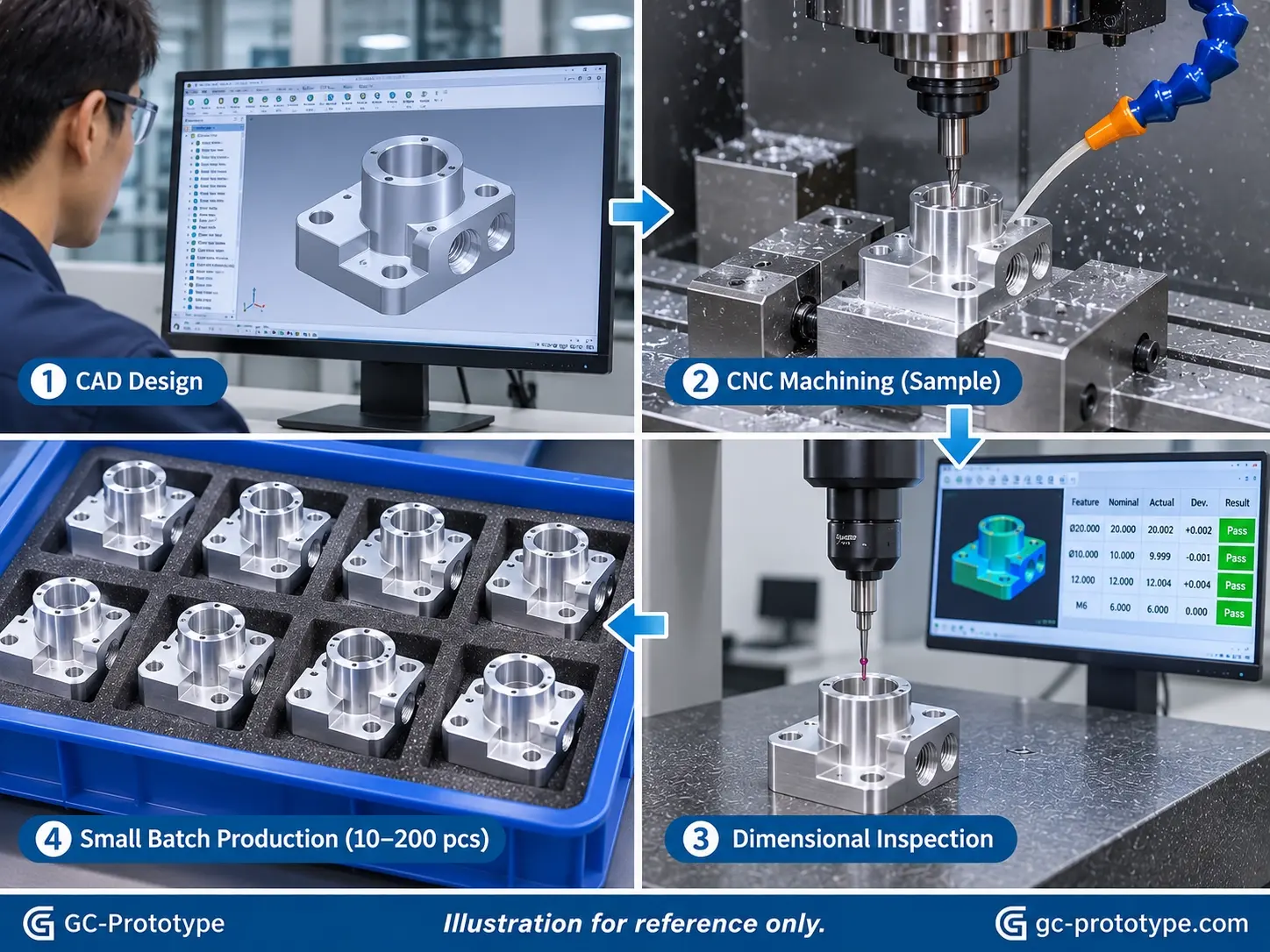
At GC-Prototype, our workflow supports projects through five main stages.
Customers submit 3D CAD files and 2D engineering drawings.
The engineering team reviews the component geometry, material requirements, small features, critical dimensions, and manufacturing feasibility.
Initial samples are manufactured using an appropriate CNC machining process.
The objective is to evaluate dimensional accuracy, assembly fit, and component functionality.
Engineering teams evaluate the samples and identify any necessary design revisions.
Updated drawings can then be reviewed before subsequent manufacturing.
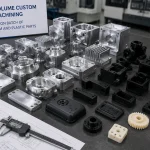
After prototype approval, low-volume production can support additional evaluation and production planning.
For suitable projects, quantities such as 10–200 pieces may be considered depending on component complexity and manufacturing feasibility.
Once the design is established, manufacturing strategies can be reviewed for repeatability, production efficiency, and cost optimization.
Depending on the part design and quantities, suitable CNC machining or alternative manufacturing methods may be considered.
A complete Request for Quotation (RFQ) helps manufacturers evaluate small-part machining feasibility and provide accurate pricing.
For miniature components, drawings should clearly identify the smallest and most critical features.
Recommended files include:
STEP / STP 3D CAD models.
2D PDF engineering drawings.
Relevant assembly drawings where necessary.
Include dimensions, GD&T requirements, miniature holes, threads, and critical mating features.
Specify the material grade, required quantity, and any future production demand.
If the material is not yet finalized, provide the component’s intended operating conditions.
Identify which features require detailed inspection and whether dimensional reports or material certificates are needed.
For delicate miniature components, specify protective packaging, part identification, and handling requirements.
This information helps reduce quotation uncertainty and manufacturing misunderstandings.
There is no universal size definition. Small CNC parts are generally compact components whose dimensions or features require careful workholding, tooling, and inspection. Manufacturing feasibility depends on geometry and tolerances.
No. Swiss turning is particularly suitable for many slender, cylindrical precision parts. Miniature housings, brackets, and components with complex non-rotational geometries may be better suited to CNC milling.
Achievable tolerances depend on material, feature size, component geometry, workholding, machining process, and inspection method. Critical tolerances should be reviewed individually before production.
Yes, suitable equipment and tooling can manufacture sub-millimeter holes in certain materials and geometries. Feasibility depends on hole depth, tool accessibility, material, required accuracy, and available equipment.
Miniature parts may require specialized fixtures, small cutting tools, delicate deburring, and detailed inspection. These costs can outweigh the savings from using less raw material.
Yes. Many CNC manufacturers support prototype samples and low-volume production. The appropriate manufacturing process should be evaluated according to part geometry, quantity, quality requirements, and production objectives.
Looking for a manufacturing partner for miniature precision components?
GC-Prototype provides custom CNC milling, CNC turning, Swiss turning, multi-axis machining, and prototype manufacturing support for international B2B customers.
Whether your project involves precision shafts, miniature connectors, sensor housings, small brackets, or custom mechanical components, our team can review your drawings and discuss suitable manufacturing solutions.
Send us your 3D CAD/STEP files and 2D engineering drawings, including critical dimensions, material specifications, and required quantities.
From engineering review and prototype samples to functional validation, low-volume pilot production, and mass production support, GC-Prototype helps engineering and procurement teams move their projects forward.