Address:
Shenzhen Bao'an District Xinqiao Subdistrict Huangpu Community Huangpu East Ring Road No. 504 Shenzhen Yuan Industrial City Building C
Work Hours:
Monday to Friday: 9AM - 21PM
Weekend: 9AM - 21PM

Address:
Shenzhen Bao'an District Xinqiao Subdistrict Huangpu Community Huangpu East Ring Road No. 504 Shenzhen Yuan Industrial City Building C
Work Hours:
Monday to Friday: 9AM - 21PM
Weekend: 9AM - 21PM

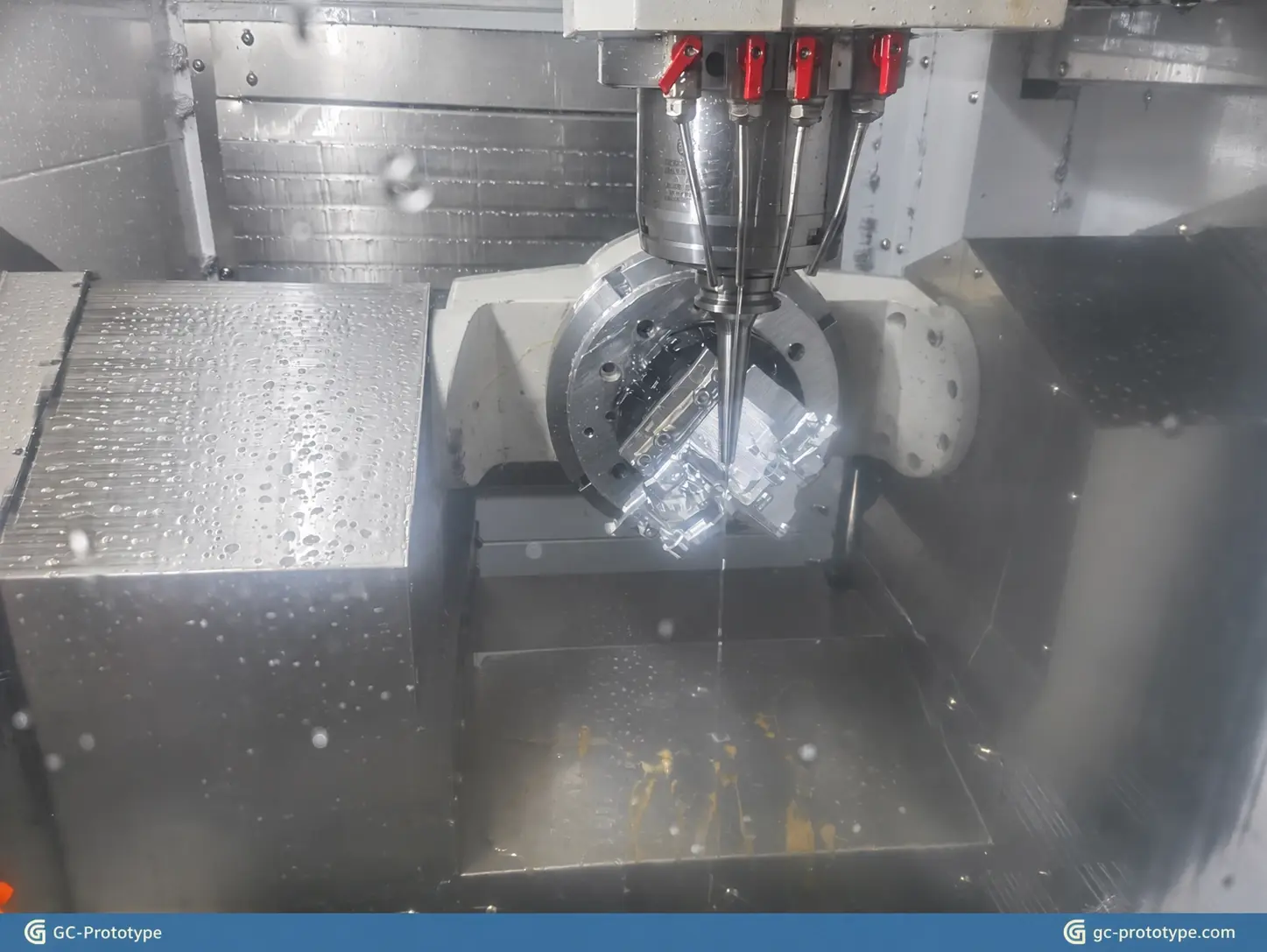
Finding a reliable supplier for custom titanium machining is essential for companies developing high-performance mechanical components, aerospace structures, medical equipment, and industrial products. Titanium offers an excellent strength-to-weight ratio, corrosion resistance, and outstanding performance in demanding environments. However, its machining characteristics require appropriate equipment, tooling strategies, and engineering experience.
For OEM manufacturers and product development teams, sourcing CNC titanium parts involves more than selecting a material and uploading a CAD file. Buyers need a manufacturing partner capable of evaluating component geometry, controlling machining challenges, verifying critical dimensions, and supporting production requirements.
At GC-Prototype, we provide custom CNC machining and prototype manufacturing services for international B2B customers. Our manufacturing workflow supports projects from CAD review and prototype samples to functional validation, low-volume pilot production, and mass production support. This guide explains titanium grades, machining capabilities, common manufacturing challenges, quality inspection, and how to source reliable custom titanium parts.
Custom titanium machining involves manufacturing precision components from titanium alloys or commercially pure titanium according to customer-provided CAD models and engineering drawings.
Unlike standard catalog components, custom titanium parts are designed around specific product requirements, including mechanical strength, component weight, corrosion resistance, assembly interfaces, and operating conditions.
Most titanium machining projects begin with a 3D CAD model and a 2D engineering drawing.
The CAD model defines the component geometry, while the engineering drawing specifies:
Overall dimensions and critical tolerances.
Hole positions and mounting interfaces.
Wall thickness and structural features.
Surface finish requirements.
Material grade and specifications.
Geometric Dimensioning and Tolerancing (GD&T).
A manufacturing engineer should review these details before production to identify potential machining difficulties and recommend suitable manufacturing methods.
CNC machining is suitable for producing titanium components with complex geometries, precision interfaces, and demanding mechanical requirements.
Depending on component design, manufacturers may use CNC milling, multi-axis machining, or CNC turning.
Typical applications include structural brackets, mechanical connectors, lightweight housings, mounting plates, and precision industrial components.
Titanium is worth considering when an application requires a combination of:
High strength relative to component weight.
Corrosion resistance.
Good performance in demanding environments.
Long-term mechanical durability.
Compatibility with specialized engineering applications.
However, titanium is not automatically the best choice for every component. Its material and machining costs are generally higher than those of common aluminum alloys. Engineers should evaluate whether its performance benefits justify the additional investment.
Selecting the correct titanium grade is one of the first decisions in titanium part manufacturing.
Different grades have different mechanical properties, corrosion resistance, and manufacturing characteristics. The appropriate material depends on the component’s intended application.
Grade 2 is a commercially pure titanium grade known for its corrosion resistance and relatively good formability.
It is commonly considered for applications involving:
Chemical processing equipment.
Marine components.
Corrosion-resistant fittings.
Industrial equipment.
Specialized fluid-handling components.
Compared with Grade 5, Grade 2 generally offers lower mechanical strength but can be suitable for applications where corrosion resistance is a primary requirement.
Grade 5, also known as Ti-6Al-4V, is one of the most widely used titanium alloys in demanding engineering applications.
It combines high strength, relatively low density, and good fatigue performance.
Typical applications include:
Aerospace structural components.
Precision mechanical brackets.
Robotics components.
High-performance industrial parts.
Lightweight mounting structures.
Its higher strength also makes machining more demanding, requiring appropriate cutting conditions and tooling strategies.
Grade 23 is an extra-low-interstitial version of Ti-6Al-4V.
It is commonly associated with medical implant applications where material specifications and mechanical performance are particularly important.
Potential applications include selected orthopedic components, implant-related parts, and specialized medical products.
For regulated medical applications, material certification, traceability, processing controls, and applicable regulatory requirements must be verified separately.
| Titanium Grade | Main Characteristics | Typical Applications |
| Grade 2 | Commercially pure, excellent corrosion resistance | Chemical and marine equipment |
| Grade 5 | High strength-to-weight ratio | Aerospace, robotics, industrial structures |
| Grade 23 | Extra-low-interstitial Ti-6Al-4V | Selected medical and implant-related applications |
Material availability and suitability should be confirmed according to the actual project requirements and supplier documentation.
Titanium machining supports a wide range of customized components across industrial and engineering applications.
For OEM buyers, selecting a manufacturer with experience in different component geometries is important because each part may require a different machining strategy.
Titanium brackets are used in applications requiring lightweight structures and reliable mechanical connections.
Common examples include:
Aerospace mounting brackets.
Robotic structural supports.
Industrial equipment brackets.
Precision mounting plates.
Lightweight mechanical connectors.
These parts may require accurate hole positioning, controlled flatness, and precise mating surfaces.
Custom titanium housings protect internal components and provide structural support in demanding environments.
Potential applications include specialized industrial equipment, aerospace assemblies, and precision mechanical systems.
Depending on the design, housings may contain internal cavities, threaded holes, mounting bosses, and multiple machined surfaces.
Titanium connectors and fittings are used in selected fluid systems, industrial equipment, and specialized mechanical assemblies.
Their manufacturing requirements may include accurate threads, sealing surfaces, bore dimensions, and controlled surface finishes.
Mounting plates are commonly used to connect mechanical assemblies and maintain component positioning.
Titanium can be considered when weight reduction, corrosion resistance, or specific mechanical properties are important.
Robotics and industrial automation projects may require customized titanium components for lightweight structural assemblies and specialized mechanical interfaces.
Examples include:
Robotic mounting components.
Lightweight actuator brackets.
Precision mechanical supports.
Custom equipment connectors.
Specialized structural components.
| Custom Titanium Parts | Typical Applications | Important Requirements |
| Structural Brackets | Aerospace, robotics | Strength, mounting accuracy |
| Precision Housings | Industrial equipment | Dimensional accuracy |
| Mounting Plates | Aerospace, automation | Flatness, hole positioning |
| Mechanical Fittings | Industrial systems | Thread accuracy, corrosion resistance |
| Lightweight Components | Robotics, automotive | Weight, mechanical strength |
| Complex Components | Aerospace, energy | Multi-face machining accuracy |
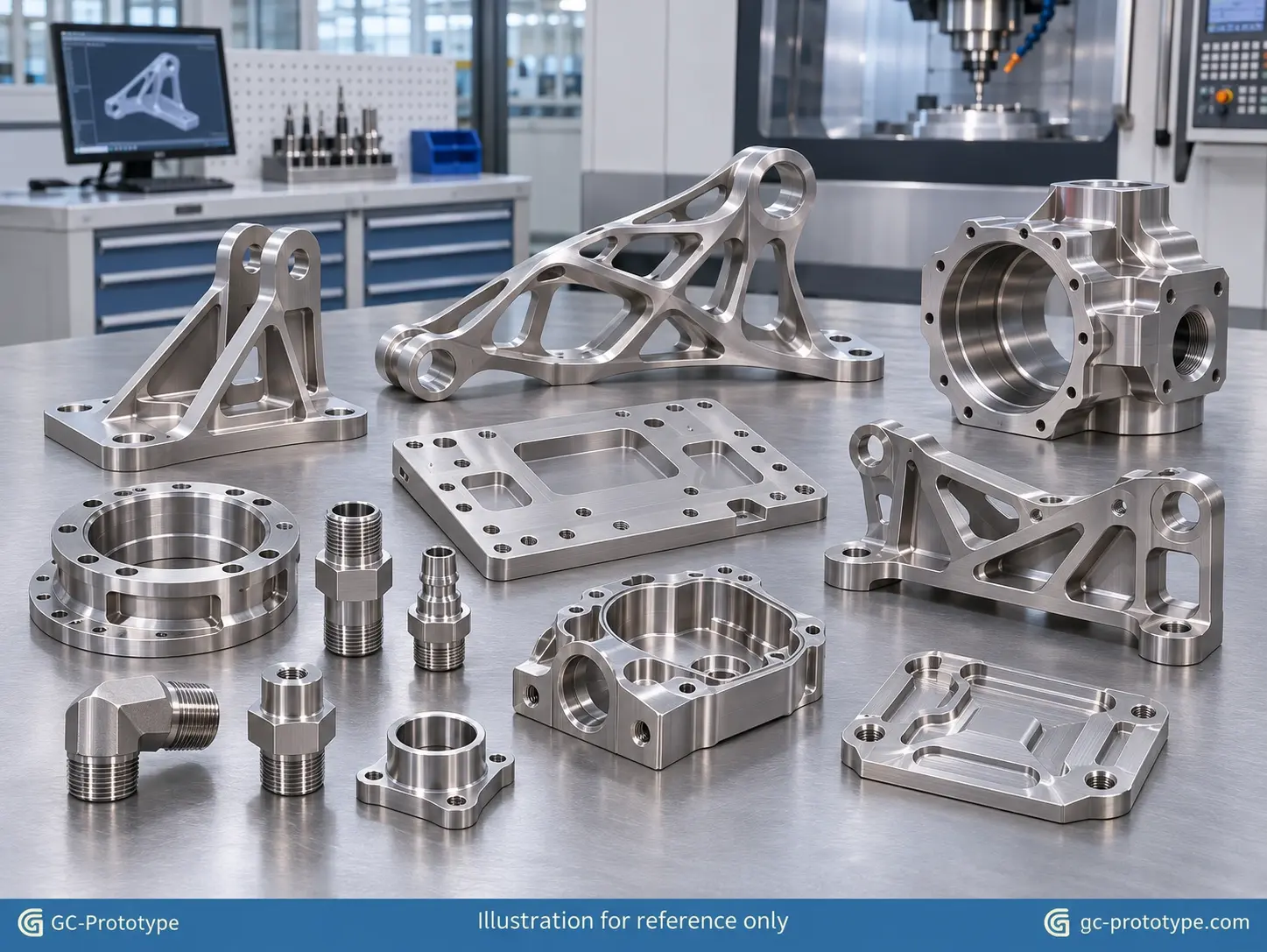
Titanium components can be manufactured using different CNC machining configurations depending on their geometry, size, and functional requirements.
The manufacturing strategy should be selected according to the part design rather than simply choosing the most advanced machine available.
3-axis CNC milling is suitable for many titanium components with accessible machining surfaces.
Typical examples include:
Mounting plates.
Flat brackets.
Simple structural components.
Machined blocks.
Components with pockets and drilled holes.
It can be an economical solution when the component geometry does not require multiple machining orientations.
4-axis machining introduces an additional rotational axis, allowing the workpiece to be repositioned during machining.
This can be useful for components requiring features on multiple sides, cylindrical surfaces, and angled geometries.
For suitable parts, reducing repeated setups can improve machining efficiency and dimensional consistency.
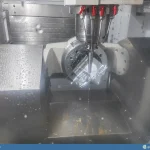
5-axis CNC machining is particularly useful for complex components with angled surfaces, curved profiles, and multiple intersecting features.
Potential applications include:
Aerospace structural components.
Complex mounting brackets.
Specialized mechanical housings.
Lightweight components with compound surfaces.
For appropriate designs, 5-axis machining can reduce repeated setups and improve the relationship between multiple machined features.
However, the actual achievable accuracy depends on machine capability, workholding, tooling, machining strategy, and inspection methods.
CNC turning is suitable for titanium parts with rotational geometry.
Examples include:
Precision connectors.
Cylindrical fittings.
Mechanical sleeves.
Threaded components.
Specialized shafts.
When selecting a turning process, the supplier should consider component length, diameter, rigidity, and the required dimensional relationships.
Some titanium components require additional processing after CNC machining.
Depending on the application, requirements may include:
Deburring.
Polishing.
Surface cleaning.
Passivation or other specified surface treatments.
Thread finishing.
Additional drilling or milling operations.
Titanium surface treatments should be selected according to the intended application and material specification.
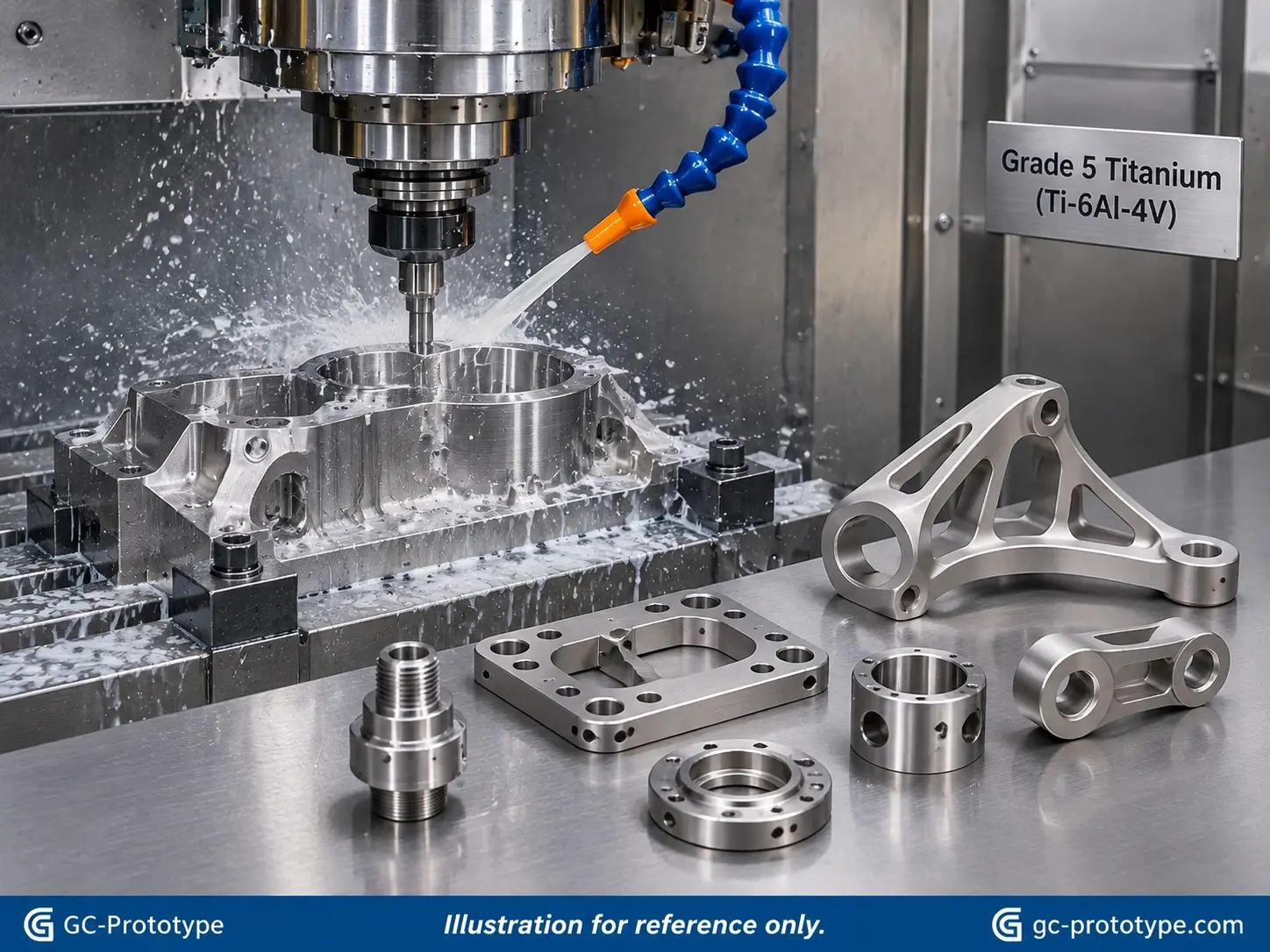
Titanium offers valuable engineering properties, but its machining characteristics create several challenges that manufacturers must manage carefully.
For customers sourcing custom titanium machining, understanding these challenges helps identify suppliers with suitable technical capabilities.
Titanium has relatively low thermal conductivity compared with many common machining metals.
As a result, heat generated during cutting tends to concentrate near the cutting zone instead of dissipating efficiently through the workpiece.
This can increase cutting tool temperatures and accelerate tool wear.
Manufacturers can address this challenge through:
Appropriate cutting tool selection.
Optimized cutting speeds and feeds.
Suitable coolant delivery.
Stable tool engagement.
Effective chip removal.
The specific machining parameters should be determined according to the titanium grade, tool geometry, machine configuration, and component design.
Titanium’s machining behavior can be sensitive to unstable cutting conditions.
Rubbing, excessive tool deflection, or inconsistent tool engagement may contribute to surface damage and localized work hardening.
Maintaining stable cutting conditions is therefore important.
Toolpath planning, tool condition monitoring, and appropriate machining allowances can help improve process consistency.
Titanium components with thin walls or slender structural features can be difficult to machine because of their relatively low elastic modulus.
Cutting forces may cause temporary deflection, resulting in dimensional variation after the workpiece is released from its fixture.
Possible engineering solutions include:
Improving fixture support.
Optimizing clamping positions.
Using suitable machining sequences.
Separating roughing and finishing operations.
Reviewing thin-wall geometry during DFM.
These considerations are particularly important for lightweight aerospace and robotics components.
Titanium machining can generate challenging chips, particularly when cutting conditions and chip evacuation are not properly controlled.
Chip accumulation may affect cutting stability, surface quality, and tool life.
A suitable machining strategy should consider tool engagement, chip evacuation, coolant access, and workpiece stability.
The goal is to maintain consistent cutting conditions while protecting the dimensional and surface requirements of the finished component.
Quality verification is essential when manufacturing titanium components for demanding engineering applications.
A reliable supplier should understand the relationship between material specifications, machining processes, and critical dimensional requirements.
Material identification is important because different titanium grades have different chemical compositions and mechanical properties.
Depending on the project, customers may require:
Material certificates.
Grade confirmation.
Batch identification.
Chemical composition documentation.
Material traceability records.
GC-Prototype uses Olympus XRF equipment for material analysis on suitable alloys.
However, XRF has limitations for measuring certain light elements and cannot replace complete material certification or mechanical property testing. The verification method should match the project’s documentation requirements.
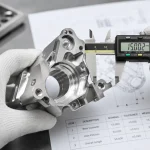
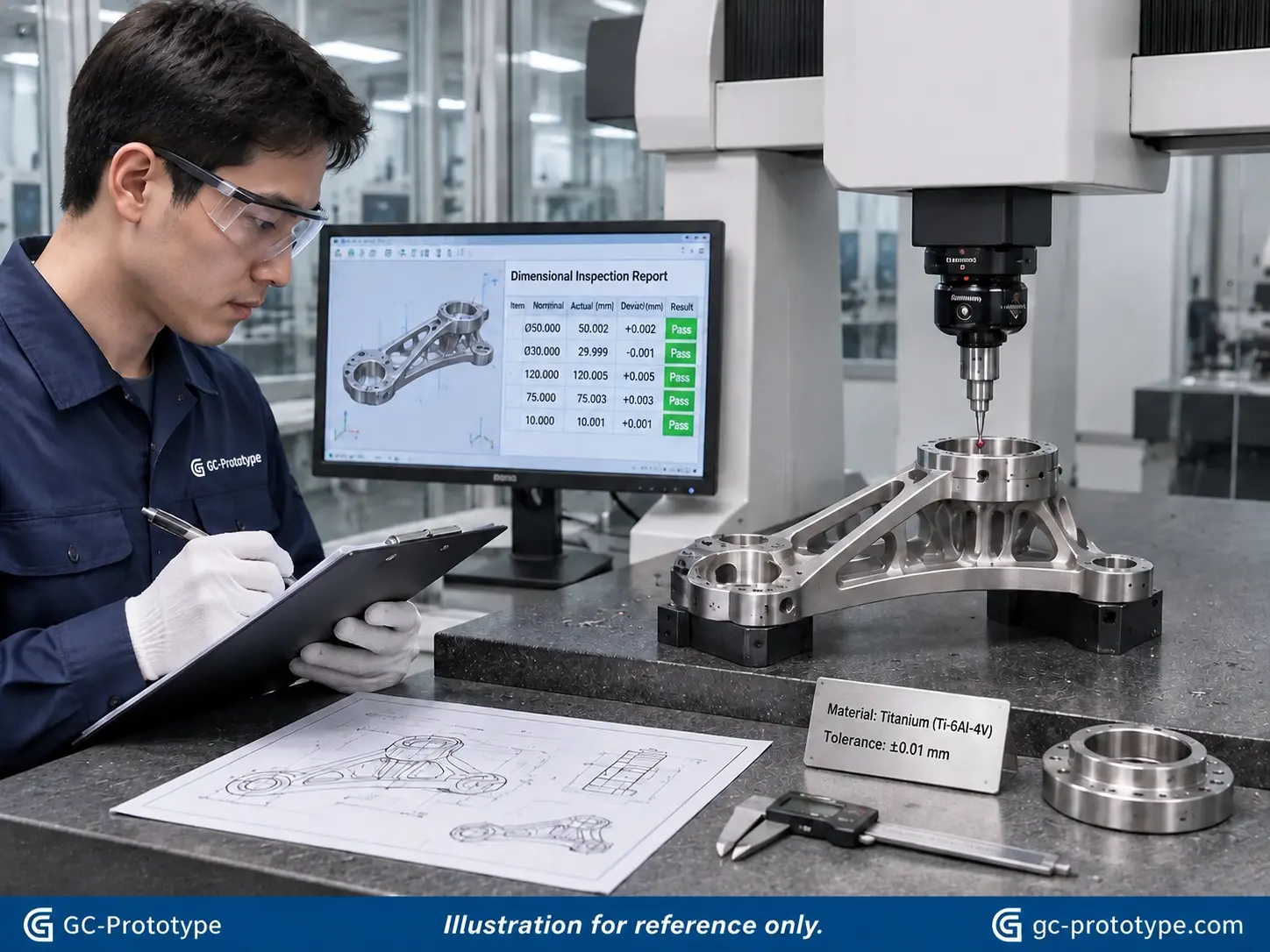
Coordinate Measuring Machines (CMM) can inspect complex dimensions and geometric relationships.
For titanium components, inspection may include:
Hole positions.
Bore diameters.
Flatness.
Perpendicularity.
Parallelism.
Profile requirements.
Critical assembly interfaces.
GC-Prototype uses Hexagon CMM equipment to support dimensional inspection requirements.
Inspection plans should focus on the features that directly affect component function and assembly.
Depending on the engineering drawing, additional inspection may be necessary for:
Thread dimensions.
Surface roughness.
Burrs and edge conditions.
Critical mating surfaces.
Geometric tolerances.
Visual defects.
A documented inspection process helps customers evaluate whether manufactured components conform to approved specifications.
For demanding applications, buyers may request material certificates and batch traceability.
These documents help establish the identity and specification of the supplied raw material.
Before production, communicate whether your project requires specific material standards, certificates, inspection reports, or additional quality documentation.
Titanium’s combination of strength, weight, and corrosion resistance makes it suitable for a range of specialized engineering applications.
Aerospace applications may include structural brackets, mounting components, mechanical fittings, and lightweight structural parts.
For these projects, component weight, mechanical performance, material specifications, and dimensional consistency are important considerations.
Robotic systems increasingly require compact and lightweight mechanical components.
Custom titanium parts may be considered for specialized mounting structures, actuator supports, and components operating in demanding environments.
The decision should account for the component’s actual loading conditions and whether titanium provides a meaningful advantage over aluminum or steel.
Titanium can be used in selected high-performance automotive applications where weight reduction and mechanical properties justify its material cost.
Potential components include specialized brackets, mechanical connectors, and lightweight performance parts.
Titanium is used in selected medical devices, surgical instruments, and implant-related applications.
Grade selection, material traceability, manufacturing controls, and regulatory requirements must be evaluated according to the intended medical application.
For more detailed information, see our guide to medical grade titanium CNC machining.
Titanium’s corrosion resistance makes it suitable for selected marine and energy applications.
Potential components include specialized fittings, connectors, and mechanical parts exposed to demanding environments.
The cost of titanium machining depends on material selection, component geometry, machining time, tooling requirements, inspection, and order quantity.
Compared with common aluminum alloys, titanium generally involves higher material and processing costs.
Understanding the main cost factors helps buyers optimize component designs without compromising functional requirements.
Different titanium grades have different material costs and mechanical characteristics.
Raw stock size also affects material consumption.
Selecting an appropriate material grade and optimizing component dimensions can help reduce unnecessary material expenses.
Deep pockets, narrow slots, thin walls, and complex curved surfaces can increase machining time.
Parts requiring significant material removal may also generate more waste, especially when starting with expensive titanium stock.
DFM review can identify opportunities to simplify geometry where functional requirements allow.
Complex components may require multiple machining orientations, specialized fixtures, and additional tooling.
Efficient workholding and machining strategies can help reduce repeated setups and improve production efficiency.
Tight tolerances may require additional finishing operations and more detailed inspection.
Special surface treatments and documentation requirements can also affect the total project cost.
| Cost Factor | Why It Affects Cost | Cost Optimization |
| Material Grade | Different grades have different material costs | Select according to functional requirements |
| Raw Stock Size | Oversized stock increases material waste | Optimize part dimensions |
| Deep Pockets | Increase machining time | Improve tool accessibility |
| Thin Walls | Increase deflection and scrap risks | Optimize structural design |
| Tight Tolerances | Require more machining and inspection | Apply tight tolerances selectively |
| Tooling and Fixtures | Complex parts may need special setups | Optimize workholding |
| Surface Finishing | Adds secondary processing | Specify functional finishing areas |
| Quantity | Affects setup cost per part | Plan prototype and batch quantities |
For accurate pricing, manufacturers should review the actual CAD model, engineering drawing, material grade, and required quantity rather than relying on a generic price per kilogram.
For OEM customers, selecting a manufacturer that supports multiple product development stages can simplify project coordination.
GC-Prototype supports a connected manufacturing workflow designed to help customers move from initial designs toward production-ready components.
Customers provide 3D CAD files and 2D engineering drawings.
Our engineering team reviews the component geometry, titanium grade, critical dimensions, and manufacturing feasibility.
Potential issues involving thin walls, deep cavities, workholding, and machining accessibility can be discussed before production.
After the manufacturing requirements are confirmed, initial titanium samples are produced using a suitable CNC machining strategy.
The objective is to manufacture physical components for dimensional inspection, assembly evaluation, and engineering review.
Customers evaluate prototype components according to their product requirements.
Depending on the application, validation may include:
Dimensional verification.
Assembly compatibility.
Mechanical performance evaluation.
Fit and interface checks.
Functional testing under intended operating conditions.
If modifications are necessary, revised CAD files can be reviewed for subsequent prototype iterations.
After design validation, low-volume pilot production helps customers evaluate manufacturing consistency and prepare for repeat orders.
For suitable projects, GC-Prototype supports low-volume manufacturing requirements, with quantities such as 10–200 pieces considered according to part geometry, process selection, and production feasibility.
Once the product design and manufacturing requirements are established, the production strategy can be reviewed for repeatability, process efficiency, and cost optimization.
Depending on component geometry and order volume, CNC machining or other suitable manufacturing processes may be considered.
This integrated approach helps OEM customers coordinate product development and manufacturing requirements with fewer supplier transitions.
A complete Request for Quotation (RFQ) helps manufacturers understand your requirements and prepare a more accurate quotation.
Before contacting a custom titanium machining supplier, prepare the following information.
Recommended file formats include:
STEP / STP.
IGES.
2D PDF engineering drawings.
The 3D model communicates component geometry, while the 2D drawing defines critical dimensions, tolerances, and technical requirements.
Specify the required titanium grade, material standard, and any documentation requirements.
If you are unsure which grade is suitable, provide the component’s operating conditions and functional requirements for engineering review.
Indicate the required prototype quantity, expected batch quantity, and critical dimensional requirements.
Identify which dimensions directly affect assembly or component performance.
Specify surface treatment, surface roughness, inspection requirements, and whether dimensional reports or material certificates are needed.
| RFQ Information | Recommended Details |
| CAD Files | STEP / STP / IGES |
| 2D Drawing | PDF with dimensions and GD&T |
| Material | Titanium Grade 2 / Grade 5 / Grade 23, as applicable |
| Quantity | Prototype and batch quantity |
| Tolerance | Critical dimensions |
| Surface Finish | Required finishing specification |
| Inspection | CMM and dimensional reports |
| Material Documentation | Certificates and traceability requirements |
| Delivery | Required delivery schedule |
Providing complete information allows the manufacturer to evaluate material sourcing, machining feasibility, inspection requirements, and production scheduling.
The best grade depends on the application. Grade 2 is commonly selected for corrosion resistance, while Grade 5 offers higher strength and is widely used in aerospace and industrial components. Grade 23 is an extra-low-interstitial Ti-6Al-4V grade used in selected medical applications.
Titanium has relatively low thermal conductivity, high strength, and machining characteristics that can accelerate tool wear. It also requires careful control of cutting conditions, workholding, and chip evacuation.
Yes. Suitable CNC milling, multi-axis machining, and turning processes can produce complex titanium components. The appropriate equipment and machining strategy depend on part geometry, material grade, and dimensional requirements.
Common applications include aerospace, automotive, robotics, industrial automation, marine equipment, energy systems, and selected medical applications.
Costs can be reduced by selecting an appropriate titanium grade, optimizing raw material dimensions, avoiding unnecessary tight tolerances, simplifying difficult geometries, and planning suitable machining setups.
Yes. Depending on the supplier’s material sourcing and machining capabilities, titanium components can be produced for prototype development, functional validation, and low-volume manufacturing. The project should be reviewed according to its geometry, quantity, and quality requirements.
Looking for a reliable manufacturing partner for your next titanium component project?
GC-Prototype provides custom CNC machining and prototype manufacturing support for international B2B customers. Whether you need precision titanium brackets, lightweight structural components, mechanical fittings, or complex CNC titanium parts, our team can review your engineering requirements and discuss suitable manufacturing solutions.
Send us your 3D CAD/STEP files and 2D engineering drawings. Our team can review your titanium grade, component geometry, critical dimensions, and production requirements.
From CAD review and prototype samples to functional validation, low-volume pilot production, and mass production support, GC-Prototype helps engineering and procurement teams move their projects forward.