Address:
Shenzhen Bao'an District Xinqiao Subdistrict Huangpu Community Huangpu East Ring Road No. 504 Shenzhen Yuan Industrial City Building C
Work Hours:
Monday to Friday: 9AM - 21PM
Weekend: 9AM - 21PM

Address:
Shenzhen Bao'an District Xinqiao Subdistrict Huangpu Community Huangpu East Ring Road No. 504 Shenzhen Yuan Industrial City Building C
Work Hours:
Monday to Friday: 9AM - 21PM
Weekend: 9AM - 21PM

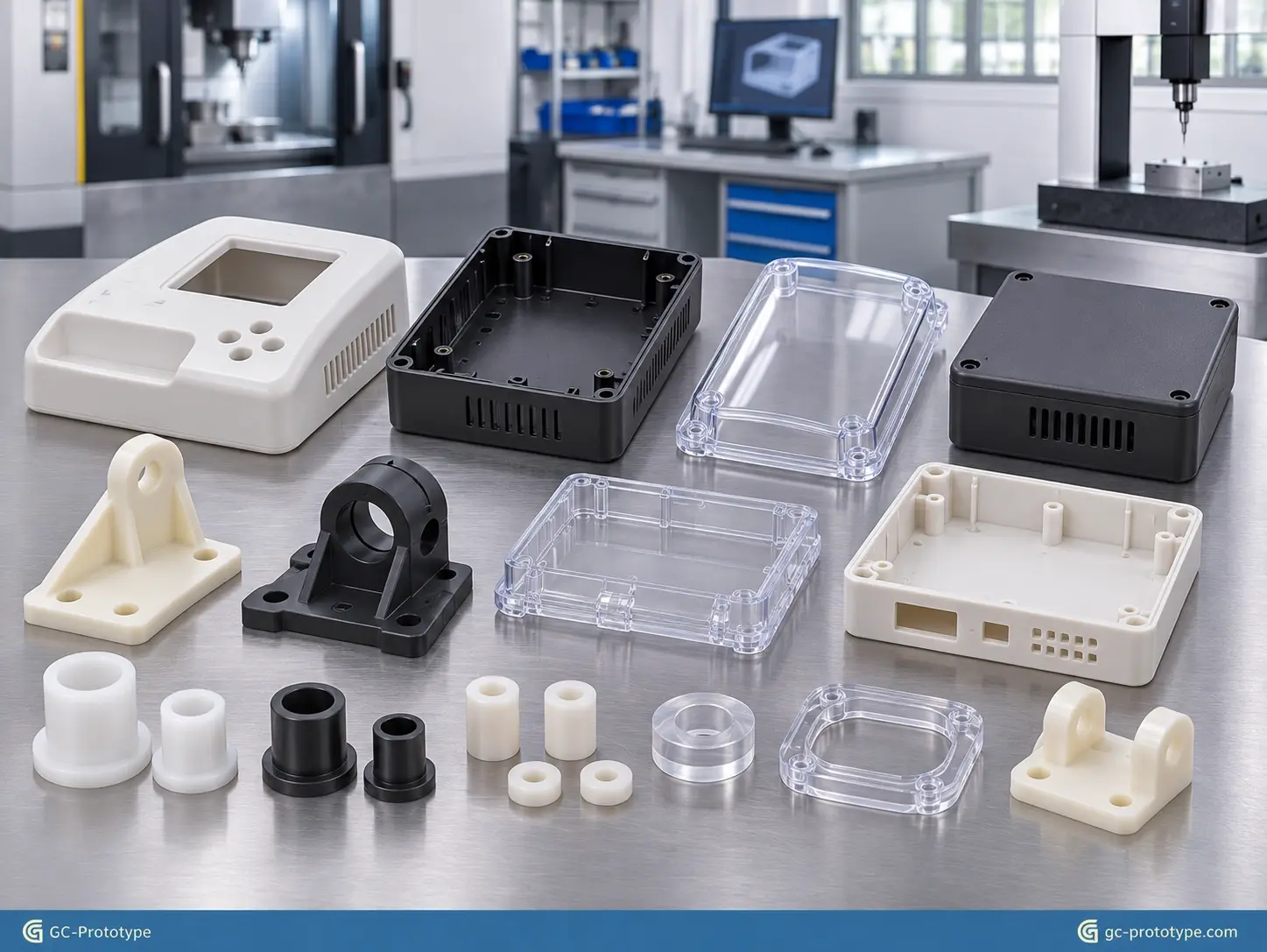
Finding a reliable plastic prototype manufacturer is an important step for companies developing new products, testing engineering designs, and preparing for production. Whether you need precision plastic housings, mechanical components, electronic enclosures, or functional prototypes, choosing the right manufacturing partner can directly affect product quality, development time, and project costs.
Professional plastic prototype manufacturing involves more than simply turning a CAD model into a physical part. It requires selecting suitable materials, evaluating part geometry, choosing the right manufacturing process, and verifying that prototypes meet functional and dimensional requirements.
At GC-Prototype, we support businesses looking for custom made plastic parts through CNC machining, 3D printing, vacuum casting, silicone molding, and rapid injection tooling. From initial CAD review and prototype samples to functional validation, low-volume pilot production, and mass production support, our goal is to help engineering and procurement teams move product development forward with a coordinated manufacturing solution.
In this guide, we explain the types of plastic parts manufacturers can produce, available manufacturing methods, material considerations, and how to evaluate a supplier for your next project.
A plastic prototype manufacturer transforms digital product designs into physical plastic components for engineering evaluation, functional testing, assembly verification, and product development.
Manufacturers typically work with customer-provided 3D CAD models and 2D engineering drawings to determine suitable materials, manufacturing processes, and production requirements.
Unlike suppliers that focus exclusively on one manufacturing method, a multi-process prototype manufacturer can recommend different solutions depending on part geometry, quantity, material requirements, and intended application.
The manufacturing process usually begins with a CAD model created using engineering software such as SolidWorks, AutoCAD, or other compatible design tools.
The supplier reviews the model to understand:
Overall component geometry and dimensions.
Wall thickness and structural features.
Internal cavities, holes, and mounting points.
Material and mechanical requirements.
Surface finish and appearance expectations.
Critical dimensions and assembly interfaces.
Based on these requirements, the manufacturer recommends a suitable production method and prepares the project for prototype manufacturing.
Not every plastic prototype has the same purpose.
Appearance prototypes are primarily used to evaluate product shape, dimensions, surface quality, and visual design. They are commonly used for presentations, industrial design reviews, and early product development.
Functional prototypes are designed to evaluate how a component performs under actual or simulated operating conditions.
Depending on the application, they may need to withstand mechanical loads, repeated movement, temperature changes, or contact with other components.
For B2B engineering projects, selecting a prototype process according to the intended testing requirements is essential.
OEM companies often need customized components that cannot be purchased as standard products.
A capable manufacturer should be able to interpret engineering drawings, discuss manufacturing limitations, recommend suitable materials, and support design revisions.
This engineering collaboration is particularly important when a prototype will eventually become part of a larger mechanical or electronic assembly.
Different industries require different plastic components, each with its own structural and functional requirements.
GC-Prototype supports customized plastic component projects for industrial equipment, automotive systems, medical equipment, robotics, electronics, and other engineering applications.
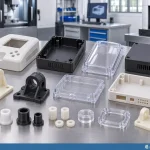
Plastic housings and enclosures protect internal components while providing the required external shape and assembly interfaces.
Typical applications include:
Electronic equipment housings.
Medical device enclosures.
Industrial control boxes.
Sensor housings.
Smart hardware covers.
Automotive electronic housings.
These components may require accurate mounting holes, internal ribs, bosses, snap-fit features, and consistent wall thickness.
For appearance-sensitive products, surface texture and finishing requirements should also be considered during manufacturing.
Plastic mechanical components are widely used in equipment requiring lightweight structures, low friction, electrical insulation, or specialized material properties.
Common examples include:
Plastic bushings.
Precision spacers.
Mechanical gears.
Sliding components.
Insulating supports.
Custom bearings and guides.
Depending on their application, these components may require controlled internal diameters, external dimensions, flatness, and assembly clearances.
Brackets and connectors help secure components and maintain their position within larger assemblies.
They are frequently used in automotive equipment, robotics, industrial automation, and electronic products.
Typical requirements include mounting-hole accuracy, dimensional consistency, sufficient mechanical strength, and compatibility with mating components.
Custom plastic covers are used to protect sensitive components from dust, physical contact, and environmental exposure.
Depending on the design, they may require transparency, specific colors, smooth surfaces, or customized openings.
Polycarbonate and acrylic are commonly considered for transparent applications, while ABS and other engineering plastics may be suitable for general-purpose housings.
Robotics and industrial automation projects frequently require customized plastic parts for moving assemblies, sensors, actuators, and protective structures.
Examples include:
Robotic sensor housings.
Cable management components.
Actuator covers.
Lightweight mechanical brackets.
Insulating spacers.
Custom mounting components.
For these applications, the manufacturer should understand the relationship between component geometry, mechanical loading, assembly conditions, and material performance.
| Custom Plastic Part Type | Typical Applications | Key Requirements |
| Plastic Housings | Electronics, medical equipment | Dimensional accuracy, appearance |
| Enclosures | Industrial equipment, smart devices | Assembly fit, wall thickness |
| Plastic Bushings | Robotics, machinery | Wear resistance, dimensional stability |
| Plastic Brackets | Automotive, automation | Strength, mounting accuracy |
| Connectors | Electronics, fluid systems | Fit, geometry, functionality |
| Plastic Covers | Consumer products, equipment | Surface finish, appearance |
| Functional Components | Robotics, mechanical assemblies | Mechanical properties, testing |
Selecting the right manufacturing method is one of the most important decisions in a plastic prototyping project.
The best process depends on part complexity, required material, prototype quantity, dimensional requirements, and the purpose of the prototype.
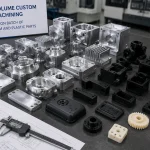
CNC machining removes material from solid engineering plastic stock to produce customized components.
It is particularly suitable for parts requiring controlled dimensions, functional interfaces, and materials available in engineering-grade sheets, plates, or rods.
Common materials include:
ABS
POM
Nylon
PC
PEEK
Typical applications include precision bushings, mechanical spacers, housings, connectors, and structural components.
CNC machining is especially useful when engineers want to evaluate components made from actual stock materials rather than printed approximations.
3D printing builds components layer by layer from digital CAD models.
It is useful for complex geometries, internal structures, design iterations, and prototypes that would be difficult or expensive to manufacture using conventional machining.
GC-Prototype supports different additive manufacturing technologies, including SLA, SLS, and MJF, as well as metal 3D printing for projects requiring other material solutions.
For plastic prototype applications:
SLA is suitable for detailed models and appearance evaluation.
SLS is useful for complex functional geometries.
MJF can support functional plastic components and multiple-part builds.
Material and performance options depend on the selected technology.
Vacuum casting uses a silicone mold and suitable polyurethane casting resins to produce multiple copies of a master pattern.
It is particularly useful when customers need several plastic-like prototypes without investing in conventional injection tooling.
Typical applications include:
Product appearance models.
Enclosure prototypes.
Design evaluation samples.
Small batches of plastic components.
Parts requiring customized colors or surface finishes.
The final material properties depend on the selected casting resin and should be evaluated against the intended application.
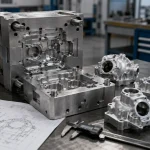
When a project moves beyond initial prototypes, rapid injection tooling may provide a practical way to manufacture plastic components using injection molding.
It allows engineering teams to evaluate parts made from suitable production-intent thermoplastics and assess their behavior in actual assemblies.
This approach is useful when the project requires more representative molded parts before committing to larger-scale tooling.
| Manufacturing Process | Best Application | Main Advantage |
| CNC Machining | Precision functional parts | Engineering-grade stock materials |
| SLA 3D Printing | Detailed appearance models | Fine details and smooth surfaces |
| SLS 3D Printing | Complex functional prototypes | Complex geometries |
| MJF 3D Printing | Functional plastic components | Efficient multi-part production |
| Vacuum Casting | Small batches of plastic-like parts | Lower tooling investment |
| Rapid Injection Molding | Production-intent plastic parts | Actual molded thermoplastics |
The most suitable process should be selected according to the component’s intended function rather than choosing a manufacturing method based only on its initial quotation price.
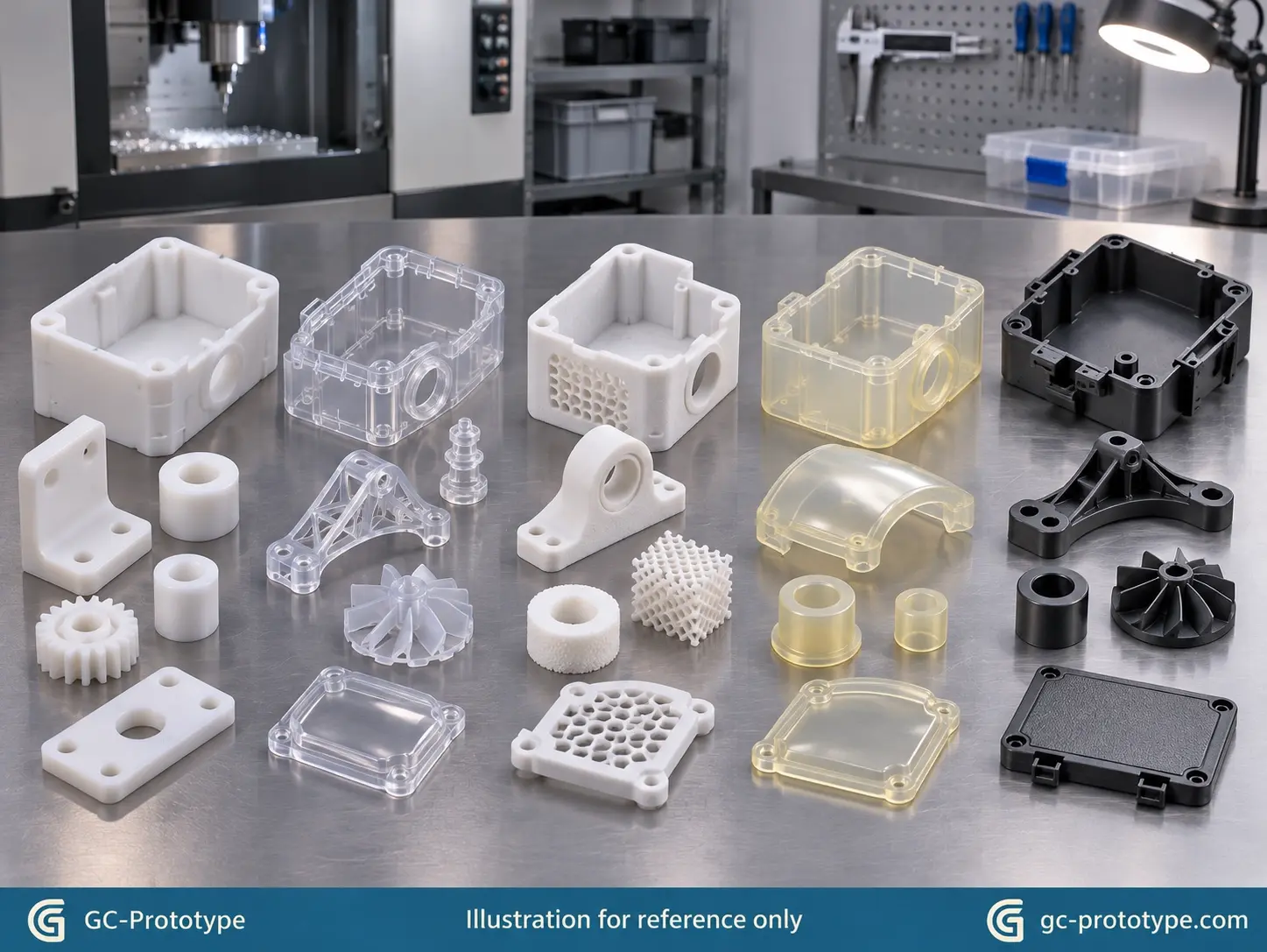
Plastic material selection affects component strength, dimensional stability, chemical resistance, surface appearance, and manufacturing performance.
The material should be selected according to the component’s operating environment and functional requirements.
ABS is commonly used for general-purpose housings, equipment covers, and product prototypes.
It offers a practical combination of machinability, impact performance, and cost.
Polycarbonate (PC) is often considered when impact resistance or transparency is important.
Typical applications include protective covers, electronic enclosures, and transparent product components.
POM is frequently used for precision mechanical parts requiring dimensional stability, low friction, and good machinability.
Common applications include bushings, spacers, gears, and sliding components.
Nylon is valued for its toughness and wear resistance. It is commonly used for mechanical supports, guides, and functional components.
However, moisture absorption can affect the dimensions of certain nylon grades, so environmental conditions should be considered.
PEEK is a high-performance engineering thermoplastic used in applications requiring demanding mechanical, thermal, or chemical properties.
Potential applications include specialized industrial components, precision mechanical parts, and selected medical or aerospace-related components.
Its relatively high material cost means it should be selected when its performance characteristics justify the investment.
| Material | Main Characteristics | Typical Applications |
| ABS | Good machinability, impact performance | Housings, enclosures |
| PC | Impact resistance, transparency options | Protective covers |
| POM | Low friction, dimensional stability | Bushings, gears |
| Nylon | Toughness, wear resistance | Mechanical components |
| PEEK | High-temperature and chemical resistance | High-performance parts |
Material availability and suitability should always be confirmed according to the manufacturing process and actual project requirements.
Choosing a supplier involves more than comparing prices and delivery estimates.
For overseas B2B buyers, a reliable plastic prototype manufacturer should demonstrate manufacturing capability, engineering communication, quality control, and the ability to support different project stages.
First, determine whether the supplier offers the manufacturing methods required for your project.
A supplier with CNC machining, 3D printing, vacuum casting, and injection tooling capabilities can evaluate multiple production approaches instead of forcing every design into one process.
This flexibility is useful when product requirements change during development.
Design for Manufacturing (DFM) is an important part of prototype development.
A manufacturing engineer should review the CAD model and identify potential issues involving:
Wall thickness.
Deep cavities and narrow features.
Internal corners and tool access.
Assembly clearances.
Material selection.
Manufacturing limitations.
For example, a housing with unnecessarily thin walls may be difficult to machine or may require design modifications depending on the selected process.
Early engineering discussions can help reduce avoidable design revisions.
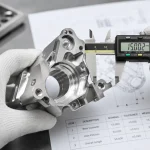
A supplier should have suitable inspection methods for the dimensions and features that matter to the component’s function.
Depending on the project, inspection may involve:
Calipers and micrometers.
Bore gauges.
Height gauges.
Coordinate Measuring Machines (CMM).
Surface inspection equipment.
Customers should communicate critical dimensions and documentation requirements before production begins.
For projects involving demanding engineering applications, buyers may need material identification, material certificates, or other documentation.
Ask the supplier what documentation is available for the selected material and manufacturing process.
Requirements may differ significantly between consumer electronics, industrial automation, medical equipment, and aerospace-related projects.
A reliable supplier should understand drawing revisions and maintain clear communication when project specifications change.
Before approving production, confirm:
Which CAD model revision is being manufactured.
Whether the 2D drawing matches the 3D model.
Which dimensions are critical.
Whether material substitutions are permitted.
How design changes will be reviewed and approved.
These practices help reduce misunderstandings, especially when customers and manufacturers are located in different countries.
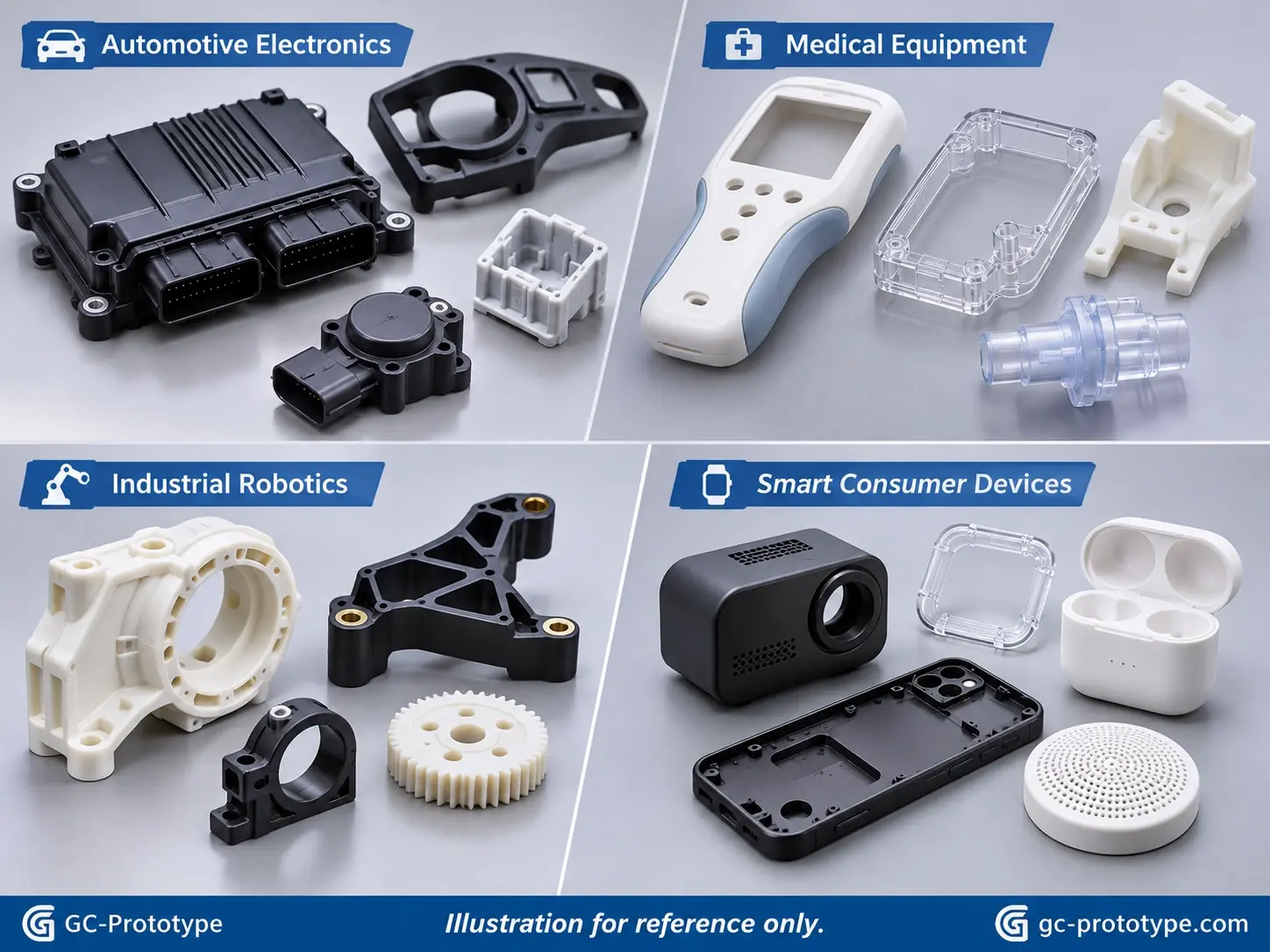
Custom plastic components are used across many industries because they offer flexibility in product design, material selection, weight reduction, and functional integration.
Automotive and electric vehicle projects use plastic housings, sensor covers, connectors, brackets, and insulating components.
Prototype manufacturing helps engineering teams evaluate packaging, assembly compatibility, and component functionality before production decisions are finalized.
Medical equipment may require customized enclosures, protective covers, instrument components, and precision mechanical parts.
Material selection and manufacturing requirements should reflect the intended application, cleaning conditions, and relevant regulatory requirements.
For regulated applications, customers should confirm the necessary material documentation and quality controls before selecting a supplier.
Robotic systems use custom plastic housings, sensor brackets, cable guides, insulating supports, and lightweight mechanical components.
Prototype samples help engineers check assembly fit, movement clearance, and integration with metal components.
Electronic product developers often need customized enclosures, mounting brackets, button components, and protective covers.
Plastic prototyping allows designers to evaluate appearance, ergonomics, and internal component packaging before committing to production tooling.
A successful product development project requires more than producing one prototype.
The manufacturing partner should understand how initial samples will be evaluated and how the design may progress toward repeatable production.
At GC-Prototype, our manufacturing support follows five main stages.
Customers provide 3D CAD files and 2D engineering drawings.
The engineering team reviews the design, material requirements, critical dimensions, and manufacturing feasibility.
Potential design or process concerns can be discussed before production.
After the manufacturing method and specifications are confirmed, prototype samples are produced using the selected process.
Depending on the project, this may involve CNC machining, 3D printing, vacuum casting, or other suitable manufacturing methods.
The prototype is evaluated according to the project’s testing requirements.
This may include dimensional inspection, assembly checks, mechanical testing, or other functional evaluations arranged by the customer.
If modifications are necessary, updated CAD files can be reviewed for the next iteration.
Once the design has been validated, low-volume pilot production helps evaluate manufacturing consistency and prepare for repeat orders.
This stage can be useful for market testing, pre-production evaluation, and product launch preparation.
When the design and production requirements are established, the manufacturing strategy can be reviewed for larger quantities.
Depending on part geometry, material, and order volume, CNC machining, injection molding, or another suitable process may be selected.
This development pathway helps customers coordinate prototype manufacturing and subsequent production requirements with fewer supplier transitions.
A complete Request for Quotation (RFQ) helps manufacturers understand your project and provide a more accurate quotation.
Before contacting a supplier, prepare the following information.
Recommended file formats include:
STEP / STP.
IGES.
2D PDF engineering drawings.
The 3D model communicates component geometry, while the 2D drawing defines dimensions, tolerances, and manufacturing notes.
Specify the preferred plastic material or explain the required component performance if you need material recommendations.
Also indicate the required quantities, including prototype samples and potential future production volumes.
Identify appearance requirements, surface finishes, critical dimensions, and inspection documentation.
If the component will be assembled with other parts, provide relevant interface dimensions where possible.
Explain how the prototype will be evaluated and whether specific testing or inspection documentation is required.
A target delivery date also helps the manufacturer evaluate suitable production methods and scheduling options.
A plastic prototype manufacturer produces customized plastic components from customer CAD models and engineering drawings. Services may include CNC machining, 3D printing, vacuum casting, and injection tooling for product development and testing.
The best process depends on part geometry, material requirements, quantity, and intended use. CNC machining is suitable for many precision functional parts, while 3D printing is useful for complex designs. Vacuum casting and rapid injection tooling can support different small-batch and production-intent requirements.
Yes. CNC machining can produce prototypes from suitable engineering plastic stock materials. Injection molding can also produce parts using selected production-intent thermoplastics. The appropriate material depends on the manufacturing method and project specifications.
CNC plastic machining removes material from solid stock, while 3D printing builds parts layer by layer. CNC machining is useful for many precision components, whereas 3D printing offers greater flexibility for complex geometries and rapid design iterations.
Many prototype manufacturers support low-volume production using CNC machining, vacuum casting, 3D printing, or rapid injection tooling. The suitable approach depends on part geometry, material, quantity, and quality requirements.
A 3D STEP or STP file and a 2D PDF engineering drawing are recommended. You should also provide material specifications, quantities, critical tolerances, surface finish requirements, and delivery expectations.
Looking for a reliable plastic prototype manufacturer for your next product development project?
GC-Prototype provides customized plastic manufacturing solutions through CNC machining, 3D printing, vacuum casting, silicone molding, and rapid injection tooling.
Whether you need a single functional prototype, customized plastic housings, precision mechanical components, or low-volume production parts, our team can review your engineering requirements and discuss suitable manufacturing options.
Send us your 3D CAD files and engineering drawings to start your project.
From CAD review and prototype samples to functional validation, low-volume pilot production, and mass production support, GC-Prototype helps overseas B2B customers turn product designs into manufacturable components.