Address:
Shenzhen Bao'an District Xinqiao Subdistrict Huangpu Community Huangpu East Ring Road No. 504 Shenzhen Yuan Industrial City Building C
Work Hours:
Monday to Friday: 9AM - 21PM
Weekend: 9AM - 21PM

Address:
Shenzhen Bao'an District Xinqiao Subdistrict Huangpu Community Huangpu East Ring Road No. 504 Shenzhen Yuan Industrial City Building C
Work Hours:
Monday to Friday: 9AM - 21PM
Weekend: 9AM - 21PM

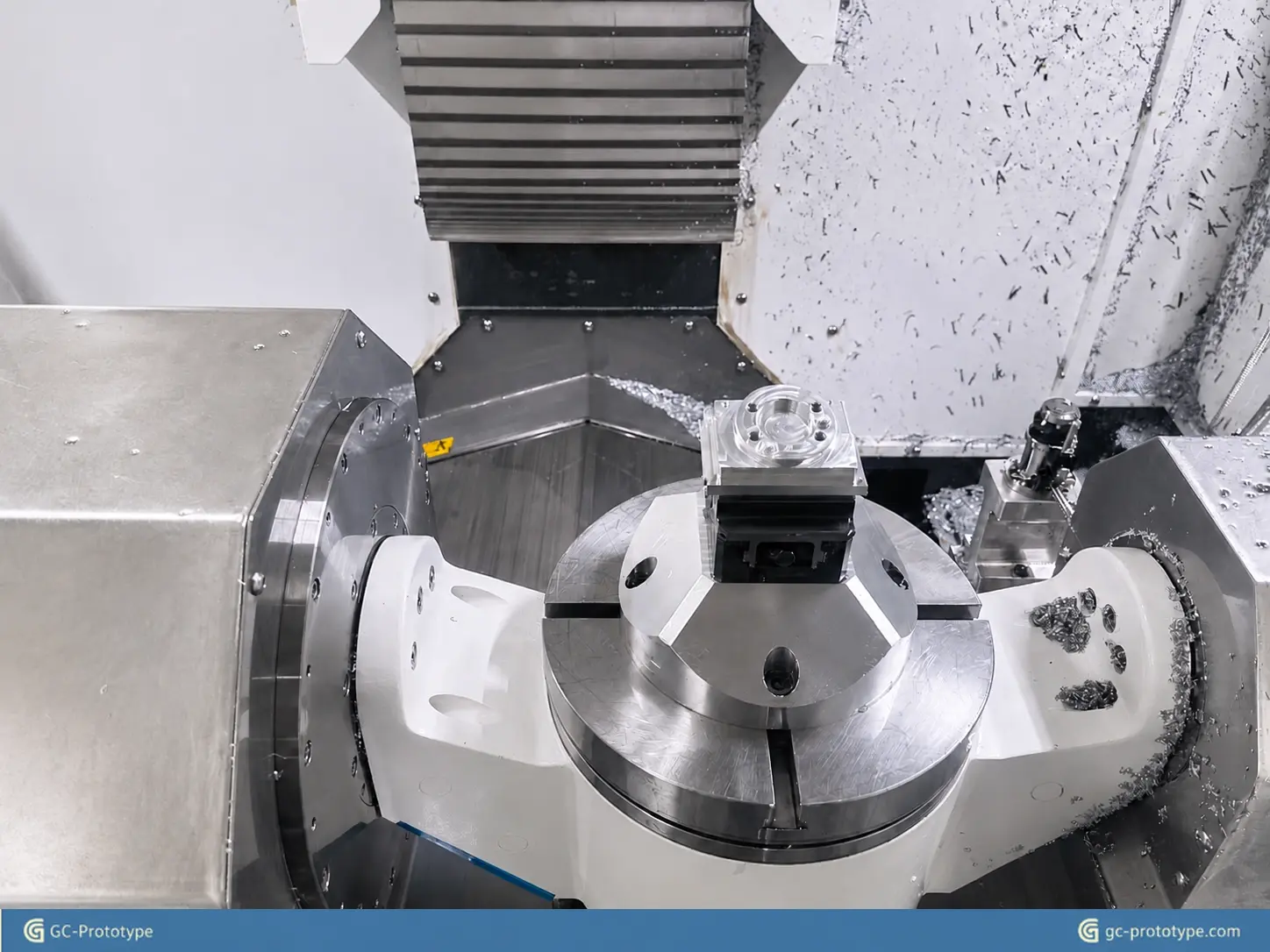
CNC turning parts are widely used in automotive, robotics, medical equipment, aerospace, electronics, and industrial automation. From precision shafts and bushings to threaded connectors and custom cylindrical housings, these components require accurate dimensions, consistent surface quality, and reliable manufacturing processes. For overseas B2B buyers, finding a supplier capable of producing cnc machine turning parts according to engineering drawings is essential for maintaining product quality and controlling manufacturing costs.
Whether you need a small batch of precision components or customized oem cnc turning parts for an ongoing product development project, understanding part types, material options, machining requirements, and inspection standards can help you make better sourcing decisions.
At GC-Prototype, we support custom manufacturing projects from CAD review and prototype samples to functional validation, low-volume pilot production, and mass production support. This guide explains common CNC turned components, their manufacturing requirements, and what engineering teams should consider when sourcing custom turning parts.
CNC turning parts are components manufactured using computer-controlled lathes. During machining, the workpiece rotates while cutting tools remove material to create cylindrical shapes, grooves, threads, shoulders, and other features.
Unlike components produced through conventional milling, turning operations are particularly suitable for parts with rotational symmetry.
Common examples include shafts, pins, bushings, sleeves, spacers, threaded fittings, and precision connectors.
Depending on the component design, CNC turning can produce several important features:
External diameters: Used for shafts, pins, rollers, and cylindrical housings.
Internal bores: Required for bushings, sleeves, and bearing-related components.
Threads: Used for mechanical connections and fastening assemblies.
Grooves and shoulders: Help locate components and support mechanical assembly.
Chamfers and radii: Improve assembly, remove sharp edges, and support functional requirements.
Precision cylindrical surfaces: Important for rotating, sliding, and bearing interfaces.
These features must be defined clearly in engineering drawings to ensure consistent manufacturing results.
OEM manufacturers frequently require components that match their own product designs rather than standard catalog dimensions.
Custom CNC turning offers several advantages:
Components can be manufactured according to customer-supplied CAD models and drawings.
Different materials can be selected according to mechanical and environmental requirements.
Critical dimensions can be controlled according to specified tolerances.
Prototype quantities and low-volume batches can be manufactured without committing to large production runs.
Design revisions can be incorporated during product development.
For engineering teams, a reliable supplier should understand both the component geometry and its intended function.
Different industries require different types of turned components. Understanding their structural features helps engineers select appropriate machining processes and define critical inspection requirements.
Shafts are among the most common cnc lathe turning parts.
They are used in motors, robotic joints, industrial equipment, automotive assemblies, and mechanical transmission systems.
Typical shaft features include:
Multiple stepped diameters
Bearing seats
Threaded ends
Retaining grooves
Keyways and cross-holes
Precision cylindrical surfaces
For rotating components, diameter accuracy, concentricity, straightness, and runout may directly affect assembly performance.
For example, a robotic actuator shaft may require accurately machined bearing seats to ensure proper alignment with adjacent mechanical components.
Pins are commonly used to locate, align, and connect mechanical components.
Typical applications include:
Assembly fixtures
Automotive mechanisms
Industrial machinery
Robotic assemblies
Precision equipment
Important manufacturing requirements may include pin diameter, length, straightness, surface finish, and dimensional consistency.
When pins are used for precision positioning, their fit with mating holes should be clearly specified.
Bushings and sleeves are frequently used in mechanical assemblies to support shafts, reduce friction, maintain alignment, or provide spacing.
Typical applications include:
Bearing assemblies
Automotive components
Robotic joints
Industrial actuators
Mechanical transmission systems
For these parts, the relationship between the internal diameter (ID) and external diameter (OD) is particularly important.
Depending on the application, manufacturers may also need to control wall thickness, concentricity, and surface roughness.
Threaded CNC turning parts are used in fluid systems, mechanical assemblies, industrial equipment, and customized connection systems.
Common features include:
External threads
Internal threads
Threaded ports
Sealing faces
Hexagonal or other drive features
Precision mating surfaces
Thread specifications should identify the applicable standard, thread size, pitch, and tolerance requirements.
For sealing applications, the mating surfaces and sealing geometry may require additional attention.
CNC turning can also produce rollers, collars, cylindrical housings, and other custom mechanical components.
These parts may require accurate diameters, controlled surface finishes, internal bores, and consistent wall thickness.
They are commonly found in industrial automation, conveying equipment, mechanical assemblies, and specialized machinery.
Some components combine rotational features with milled flats, slots, cross-holes, or other non-cylindrical details.
Turn-mill machining can combine turning and milling operations to manufacture these features.
This can reduce repeated setups and help maintain relationships between different machined surfaces.
| CNC Turning Part Type | Critical Features | Typical Applications |
| Shafts | Diameter, runout, concentricity | Motors, robotics |
| Pins | Diameter, length, straightness | Fixtures, assemblies |
| Bushings | ID, OD, wall thickness | Bearings, machinery |
| Sleeves | Bore accuracy, concentricity | Automotive, industrial |
| Spacers | Length, parallelism, bore | Mechanical assemblies |
| Threaded Fittings | Thread accuracy, sealing faces | Fluid systems |
| Rollers | Roundness, surface finish | Automation equipment |
| Turn-Mill Parts | Flats, cross-holes, slots | Complex mechanical assemblies |
Material selection affects machining performance, component strength, corrosion resistance, and final manufacturing costs.
The right material should be selected according to the component’s operating environment and functional requirements.
Aluminum alloys such as 6061 and 7075 are frequently used for lightweight mechanical components.
Typical applications include:
Precision shafts
Spacers
Equipment connectors
Robotic components
Lightweight housings
Aluminum is generally easy to machine and offers a favorable strength-to-weight ratio.
Stainless steel grades such as 303, 304, and 316 are used when corrosion resistance and durability are important.
Typical components include threaded fittings, precision shafts, bushings, and fluid-handling parts.
Grade selection depends on machinability, corrosion exposure, mechanical requirements, and cost.
Brass is commonly used for fittings, connectors, threaded inserts, and electrical components.
Certain brass alloys offer excellent machinability and can produce consistent turned features.
Copper may be selected for components requiring electrical or thermal conductivity, although its machining characteristics differ from those of brass.
Engineering plastics such as POM, nylon, and PEEK can be used for nonmetallic turned components.
Typical applications include:
Bushings
Insulating components
Low-friction spacers
Precision sleeves
Specialized industrial components
Plastic selection should consider operating temperature, mechanical loading, moisture absorption, and dimensional stability.
| Material | Main Characteristics | Typical Turned Parts |
| Aluminum 6061 | Lightweight, machinable | Shafts, sleeves |
| Aluminum 7075 | High strength-to-weight ratio | Structural components |
| Stainless Steel 303 | Improved machinability | Fittings, pins |
| Stainless Steel 304/316 | Corrosion resistance | Connectors, shafts |
| Brass C360 | Excellent machinability | Fittings, inserts |
| POM | Low friction, dimensional stability | Bushings, spacers |
| PEEK | High-performance engineering polymer | Precision industrial components |
Accurate engineering information is essential when ordering custom cnc lathe turning parts.
Incomplete drawings can lead to incorrect dimensions, unnecessary manufacturing costs, or problems during assembly.
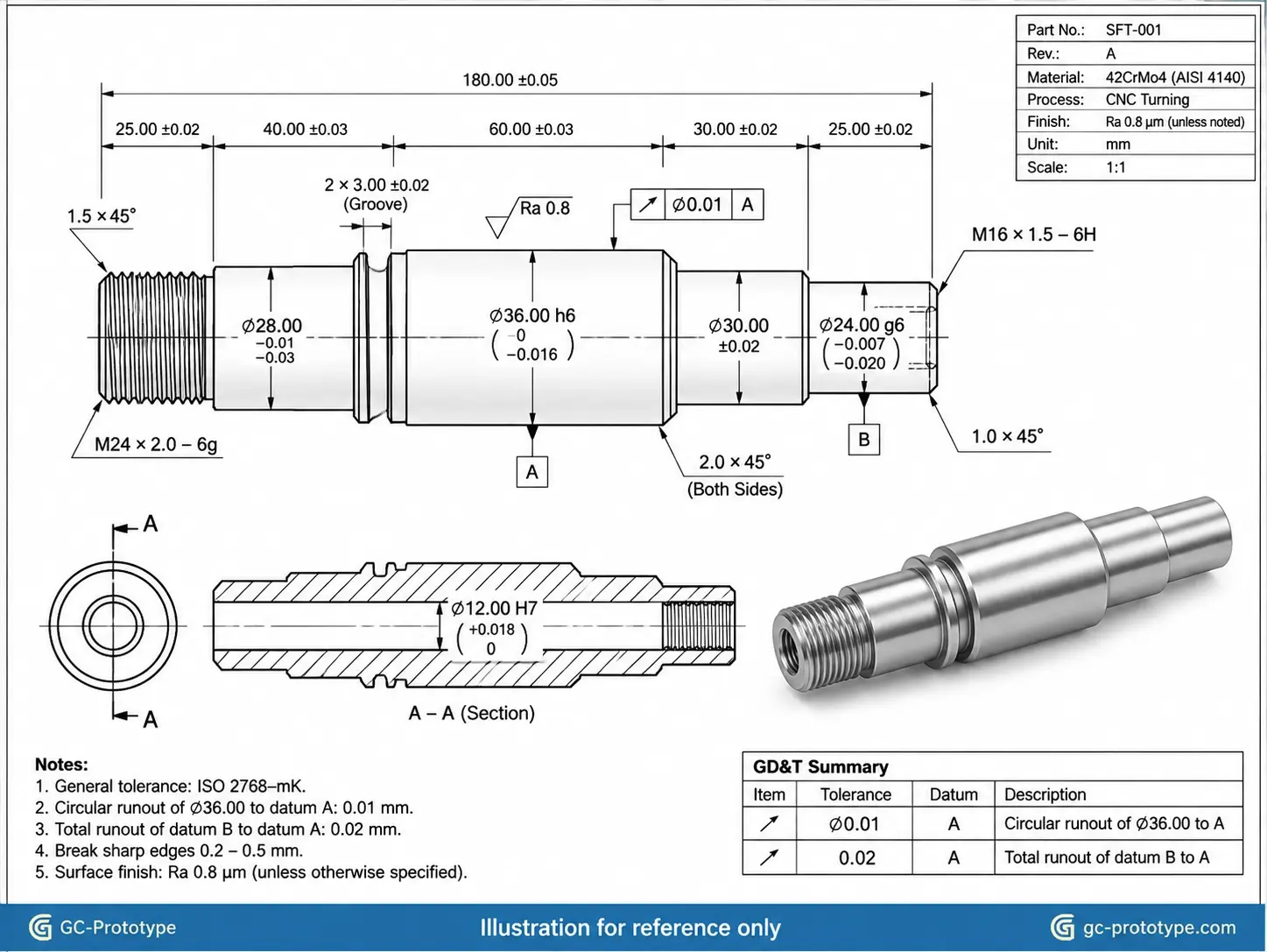
For cylindrical components, outside diameter (OD) and inside diameter (ID) are among the most important dimensions.
For example, a precision bushing may require a controlled internal diameter to achieve the correct fit with a shaft.
A drawing should clearly identify critical diameters, dimensional tolerances, and relevant measurement locations.
These geometric characteristics are particularly important for rotating and cylindrical components.
Concentricity: Describes the relationship between relevant cylindrical center features.
Runout: Evaluates surface variation relative to a specified rotational datum.
Roundness: Measures how closely a circular cross-section matches a perfect circle.
Where applicable, specify the relevant GD&T requirements and inspection datums on the engineering drawing.
Threaded components should include the required thread standard, nominal diameter, pitch, and tolerance class.
Groove dimensions should also be defined according to their intended function, particularly when they accommodate retaining rings, seals, or other assembly features.
Surface roughness may affect friction, sealing performance, appearance, and component fit.
Specify the required Ra value where it is functionally important.
Also identify edge conditions, chamfers, deburring requirements, and any special finishing instructions.
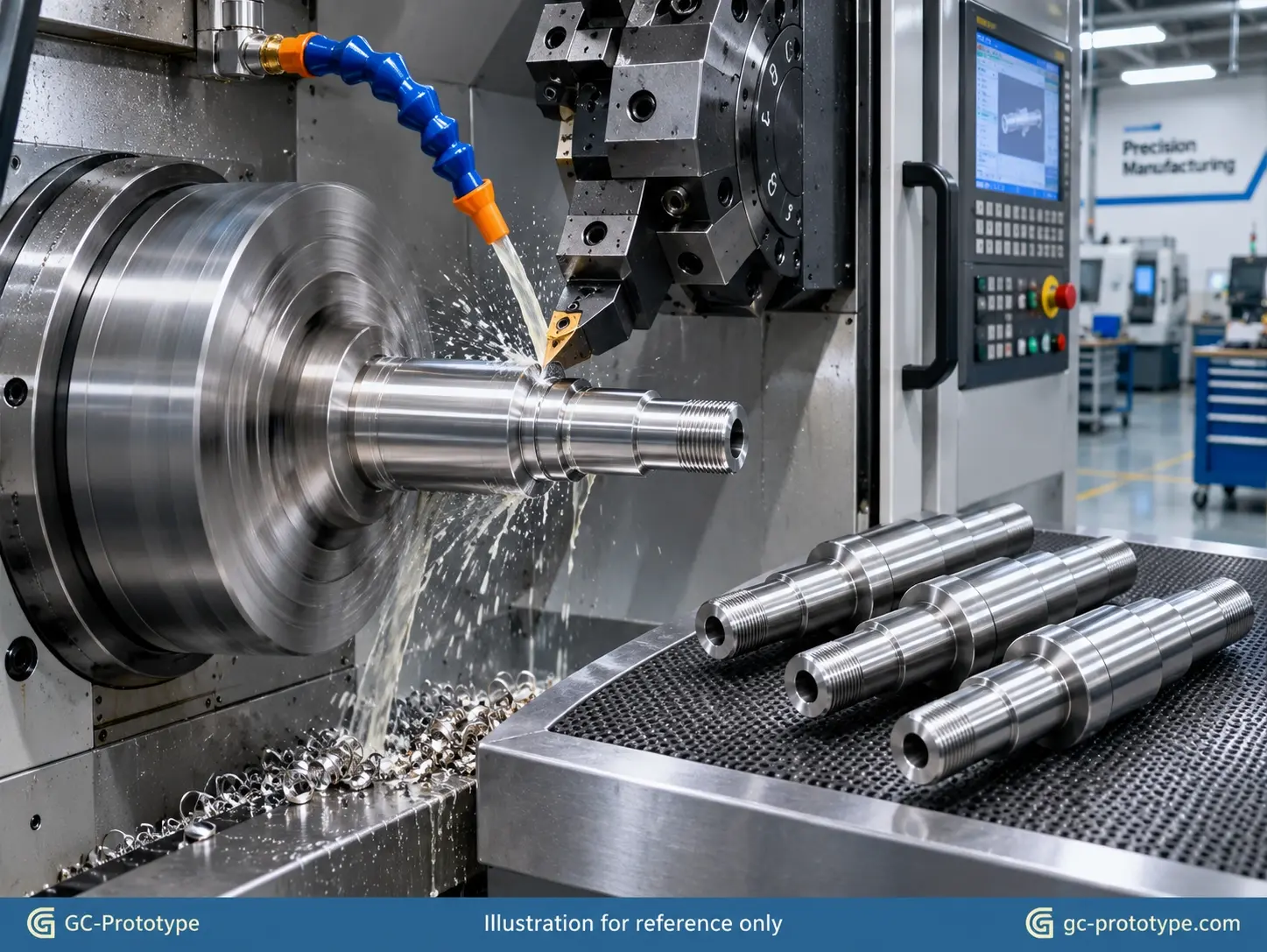
Different components require different machining strategies.
The appropriate process depends on part geometry, material, quantity, and dimensional requirements.
Conventional CNC turning is suitable for many cylindrical components, including shafts, bushings, sleeves, pins, and threaded fittings.
It provides a practical solution for a wide range of prototype and low-volume manufacturing requirements.
Swiss-type turning is particularly useful for small-diameter, slender, and complex precision components.
Typical applications include:
Medical instrument components
Miniature shafts
Precision pins
Small threaded parts
Electronic connectors
The sliding-headstock configuration supports machining of slender components by maintaining close support near the cutting area.
Live tooling allows certain milling and drilling operations to be performed on a turning machine.
This is useful for components requiring cross-holes, flats, slots, and other secondary features.
Combining operations can reduce handling and repeated setups when the component geometry and production requirements justify it.
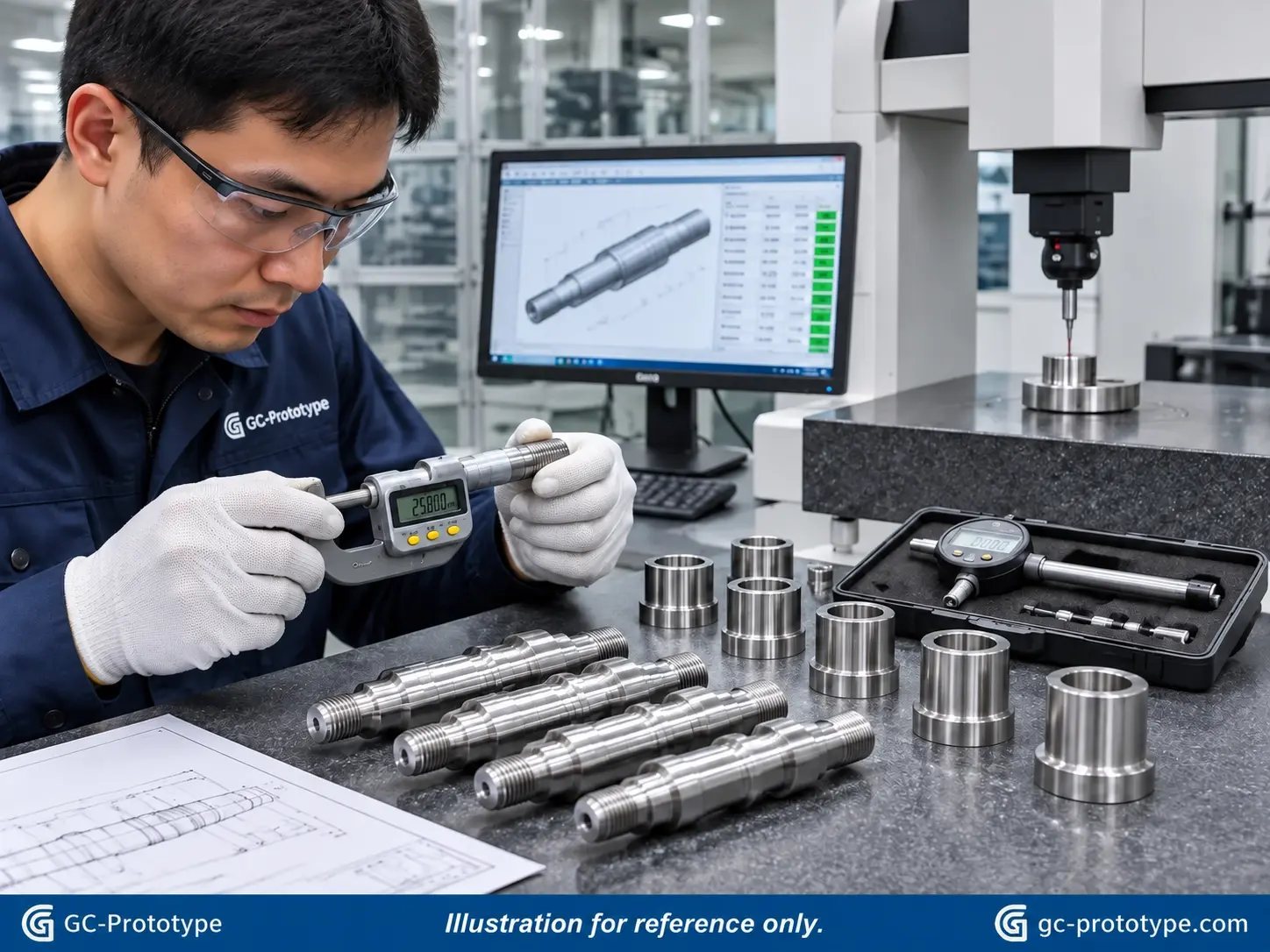
Quality inspection helps ensure that manufactured components conform to engineering drawings and perform as expected during assembly.
For precision turned components, inspection should focus on the dimensions and geometric characteristics that directly affect functionality.
Micrometers, bore gauges, and other precision measuring instruments can be used to inspect external and internal diameters.
Measurement methods should be appropriate for the specified tolerances and component geometry.
Thread gauges and other suitable inspection tools help verify thread specifications.
Groove width, depth, and positioning should also be checked when these features affect assembly or retention.
Coordinate Measuring Machines (CMM) can be used to inspect complex dimensions and geometric relationships.
For components with multiple critical features, a CMM inspection report can provide useful dimensional evidence.
GC-Prototype uses dimensional inspection equipment to support precision machining projects. Inspection requirements can be discussed during the quotation and engineering review stages.
Surface roughness testers can help verify specified surface finish requirements.
Visual inspection is also important for identifying burrs, scratches, tool marks, and other visible defects.
| Part Type | Important Inspection Items |
| Shafts | Diameter, runout, concentricity |
| Bushings | ID, OD, wall thickness |
| Pins | Diameter, length, straightness |
| Threaded Parts | Thread size, pitch, gauge inspection |
| Sleeves | Bore diameter, roundness, surface finish |
| Spacers | Length, parallelism, bore dimensions |
For OEM customers, selecting a supplier that can support different stages of product development helps simplify manufacturing coordination.
GC-Prototype supports projects through a connected manufacturing workflow.
Customers provide 3D CAD models and 2D engineering drawings.
The engineering team reviews material requirements, part geometry, tolerances, and manufacturing feasibility.
Potential manufacturing concerns can be discussed before production begins.
Initial samples are manufactured according to the approved drawings and specifications.
Customers can then evaluate dimensional accuracy, assembly compatibility, and functional performance.
If modifications are required, revised CAD files can be reviewed for subsequent prototype iterations.
After design validation, low-volume pilot production supports further product evaluation and manufacturing planning.
This stage helps engineering teams assess component consistency before moving toward larger orders.
Once the design is established, the manufacturing process can be reviewed for repeatability, production efficiency, and cost optimization.
Depending on part geometry and order volume, CNC turning or other suitable manufacturing processes can be considered.
For overseas OEM buyers, this integrated approach reduces the need to coordinate every development stage with a different supplier.
A complete Request for Quotation (RFQ) helps manufacturers understand your requirements and prepare an accurate quotation.
Before contacting a supplier, prepare the following information:
Commonly accepted file formats include:
STEP / STP
IGES
2D PDF engineering drawings
The 3D model communicates the component geometry, while the 2D drawing defines critical dimensions, tolerances, and manufacturing notes.
Your RFQ should clearly specify:
Required material and grade
Prototype or production quantity
Critical dimensions and tolerances
Thread specifications
Surface finish requirements
Inspection documentation
Expected delivery schedule
If the component will be used in a particular assembly or operating environment, providing that information can also help the supplier recommend suitable manufacturing solutions.
CNC turning machines can manufacture shafts, pins, bushings, sleeves, spacers, rollers, threaded connectors, and other components with cylindrical or rotational features.
Common materials include aluminum 6061 and 7075, stainless steel 303, 304 and 316, brass, copper, POM, nylon, and PEEK. The right material depends on strength, corrosion resistance, operating conditions, and cost.
CNC turned parts are generally produced by rotating the workpiece against a cutting tool, making turning suitable for cylindrical features. CNC milling uses rotating cutting tools to remove material from a workpiece and is suitable for flats, pockets, slots, and complex contours.
Yes. OEM suppliers can manufacture customized components according to customer CAD models, engineering drawings, material specifications, and quality requirements. Available quantities and manufacturing capabilities depend on the supplier.
Achievable tolerances depend on material, part geometry, dimensions, machining strategy, and inspection requirements. Critical tolerances should be reviewed during the quotation process rather than assuming one tolerance applies to every feature.
A 3D STEP or STP file and a 2D PDF engineering drawing are recommended. Material, quantity, tolerances, surface finish, and delivery requirements should also be provided.
Finding the right CNC turning supplier is important for achieving consistent component quality, reliable delivery, and cost-effective manufacturing.
GC-Prototype provides custom CNC turning, precision machining, CNC milling, Swiss turning, and multiple prototype manufacturing services for international B2B customers.
Whether you need precision shafts, stainless steel bushings, threaded connectors, miniature pins, or customized mechanical components, our team can review your engineering drawings and discuss suitable manufacturing solutions.
Looking for a reliable manufacturer of custom CNC turning parts?
Send us your 3D CAD/STEP files and engineering drawings. Our team can review your material selection, component geometry, critical dimensions, and production requirements.
From CAD review and prototype samples to functional validation, low-volume pilot production, and mass production support, GC-Prototype helps engineering and procurement teams move their projects forward.