Address:
Shenzhen Bao'an District Xinqiao Subdistrict Huangpu Community Huangpu East Ring Road No. 504 Shenzhen Yuan Industrial City Building C
Work Hours:
Monday to Friday: 9AM - 21PM
Weekend: 9AM - 21PM

Address:
Shenzhen Bao'an District Xinqiao Subdistrict Huangpu Community Huangpu East Ring Road No. 504 Shenzhen Yuan Industrial City Building C
Work Hours:
Monday to Friday: 9AM - 21PM
Weekend: 9AM - 21PM

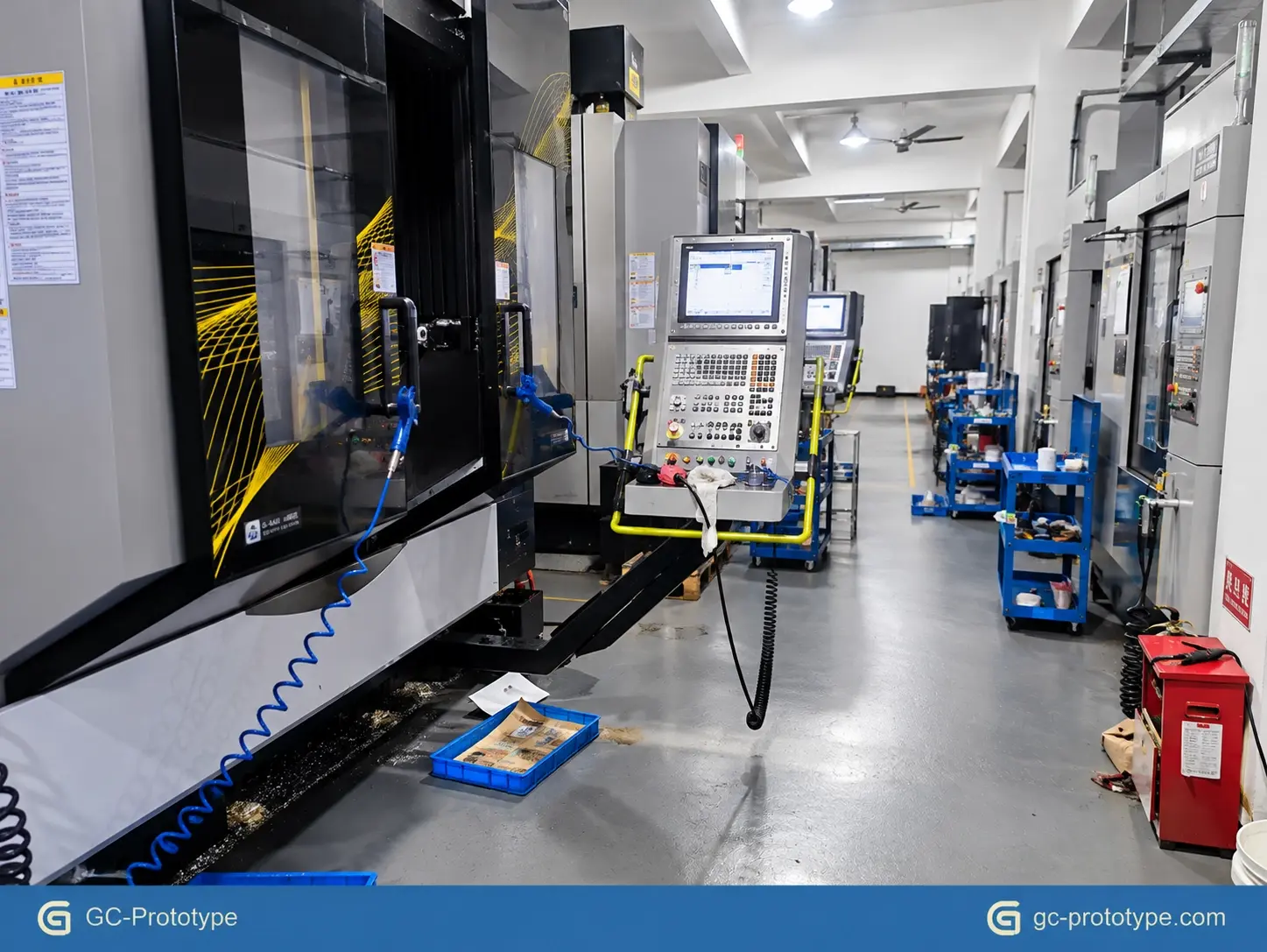
Choosing the right prototyping machine shop is essential for engineers who need accurate CNC prototypes, reliable material performance, and fast design iterations before production. Whether sourcing a prototype machine shop for aluminum housings, precision shafts, or complex mechanical assemblies, buyers must evaluate machining capabilities, tolerances, quality inspection, lead times, and total manufacturing costs. Unlike general prototyping suppliers that offer broad manufacturing solutions, a precision-focused machining partner may provide additional advantages for demanding mechanical components.
During new product introduction (NPI), selecting an unsuitable supplier can lead to dimensional errors, assembly problems, delayed testing, and unnecessary redesign costs.
For Mechanical Engineers, Product Development Engineers, NPI Managers, and Procurement Managers, the objective is not simply finding the lowest quotation. It is identifying a manufacturing partner capable of delivering functional prototypes that meet engineering requirements.
This guide explains how to evaluate prototype machining suppliers, compare manufacturing capabilities, control costs, manage delivery schedules, and transition successfully from CAD development to production.
A prototyping machine shop manufactures custom components from CAD models using CNC machining and related manufacturing technologies.
Unlike high-volume production facilities focused primarily on repeatability and throughput, prototype machining operations often handle small quantities, complex geometries, and frequent engineering changes.
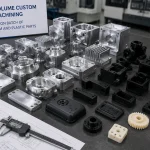
Typical components include:
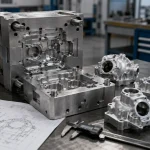
Precision aluminum housings
Stainless steel brackets
CNC-machined shafts and bushings
Robotic actuator components
Automotive prototype parts
Engineering plastic components
Prototype machining emphasizes flexibility, engineering feedback, and rapid design changes.
Production machining prioritizes consistent quality, efficient cycle times, and repeatable manufacturing.
For example, an engineering team developing a robotic joint housing may initially require three prototypes to evaluate bearing alignment.
After testing, the team might revise mounting locations or wall thickness.
A suitable machining supplier can manufacture updated parts without investing in dedicated casting or molding tools.
Visual prototypes primarily validate appearance, overall dimensions, and ergonomics.
Functional prototypes must demonstrate relevant mechanical performance.
A CNC-machined aluminum housing, for instance, can be evaluated for structural stiffness, dimensional fit, and assembly accuracy.
The manufacturing process and material should therefore reflect the intended testing requirements.
A reliable supplier should offer manufacturing capabilities suited to the geometry and functional requirements of the components being developed.
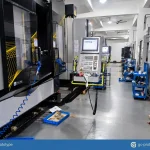
Three-axis CNC milling is suitable for many housings, brackets, plates, and mechanical components.
Five-axis machining provides additional flexibility for parts containing:
Compound angles
Complex curved surfaces
Multiple precision mounting faces
Difficult-to-access features
By reducing repositioning operations, five-axis machining can help maintain geometric relationships between critical features.
However, machine capability must be supported by suitable programming, workholding, and inspection.
CNC turning is particularly suitable for cylindrical components such as:
Precision shafts
Bushings
Threaded connectors
Pins
Sleeves
For small, slender parts, Swiss-type CNC turning may provide additional stability by supporting the material close to the cutting zone.
A capable supplier should understand the differences between machining metals and engineering plastics.
Common materials include aluminum, stainless steel, titanium, POM, PEEK, ABS, and nylon.
For example, aluminum provides good stiffness and thermal conductivity, while POM offers low friction for certain sliding applications.
Material selection should follow the component’s actual operating requirements.
Prototype manufacturing may also require:
Bead blasting
Anodizing
Passivation
Deburring
Thread inspection
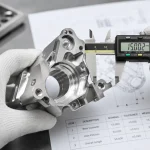
CMM dimensional measurement
These operations should be considered during quotation because they affect cost, delivery, and final component performance.
Choosing between a specialist prototype machine shop and general prototyping suppliers depends on the project’s manufacturing requirements.
A specialized machining supplier may focus primarily on CNC milling, turning, and high-precision components.
A broader prototyping supplier may offer CNC machining alongside 3D printing, sheet metal fabrication, casting, and molding.
Neither supplier type is automatically better.
For a complex precision shaft, a machining specialist with suitable equipment may be the most efficient choice.
For an assembly containing aluminum housings, sheet metal brackets, and plastic covers, a multi-process supplier may simplify purchasing and coordination.
| Evaluation Factor | Precision Prototype Machine Shop | General Prototyping Suppliers |
| CNC Machining Focus | Often specialized | Depends on supplier |
| Multi-Process Options | May be limited | Often broader |
| Tight-Tolerance Machining | Equipment and expertise dependent | Manufacturing partner dependent |
| DFM Support | Often machining-focused | May cover several processes |
| Prototype to Production | Supplier-dependent | Supplier-dependent |
| Best Application | Precision machined parts | Multi-process assemblies |
A good supplier should identify potential manufacturing problems before machining begins.
Examples include:
Unnecessarily tight tolerances
Difficult tool access
Thin-wall deformation risks
Unsuitable material selection
Excessive machining setups
For international B2B buyers, clear English communication, drawing-revision control, and timely engineering feedback are also important.
The right supplier should explain technical concerns rather than silently modifying the design.
Selecting appropriate materials and inspection methods is essential for functional prototype reliability.
Different materials provide different engineering advantages.
| Material | Main Advantage | Typical Applications |
| Aluminum 6061 | Lightweight, good machinability | Housings, brackets |
| Aluminum 7075 | High strength | Structural prototypes |
| Stainless Steel | Strength and corrosion resistance | Shafts, mechanical components |
| Titanium | High strength-to-weight ratio | Medical, aerospace parts |
| POM / Delrin | Low friction, dimensional stability | Gears, bushings |
| PEEK | Heat and chemical resistance | High-performance plastic components |
The exact grade and material condition should be specified on the engineering drawing.
Dimensional tolerances depend on geometry, material, and manufacturing capability.
Some functional features may require tight control of:
Bearing bores
Locating holes
Sealing surfaces
Sliding interfaces
Mounting datums
Selected CNC features may achieve tolerances around ±0.01 mm under appropriate conditions.
However, this should not be considered a universal tolerance for every component.
Applying unnecessarily tight tolerances increases machining and inspection costs.
Coordinate Measuring Machines can verify complex geometric relationships, including position, flatness, and profile.
Depending on project requirements, suppliers may provide:
Dimensional inspection reports
First Article Inspection
Material certificates
Surface finish records
Before placing an order, buyers should confirm which inspection documents are included in the quotation.
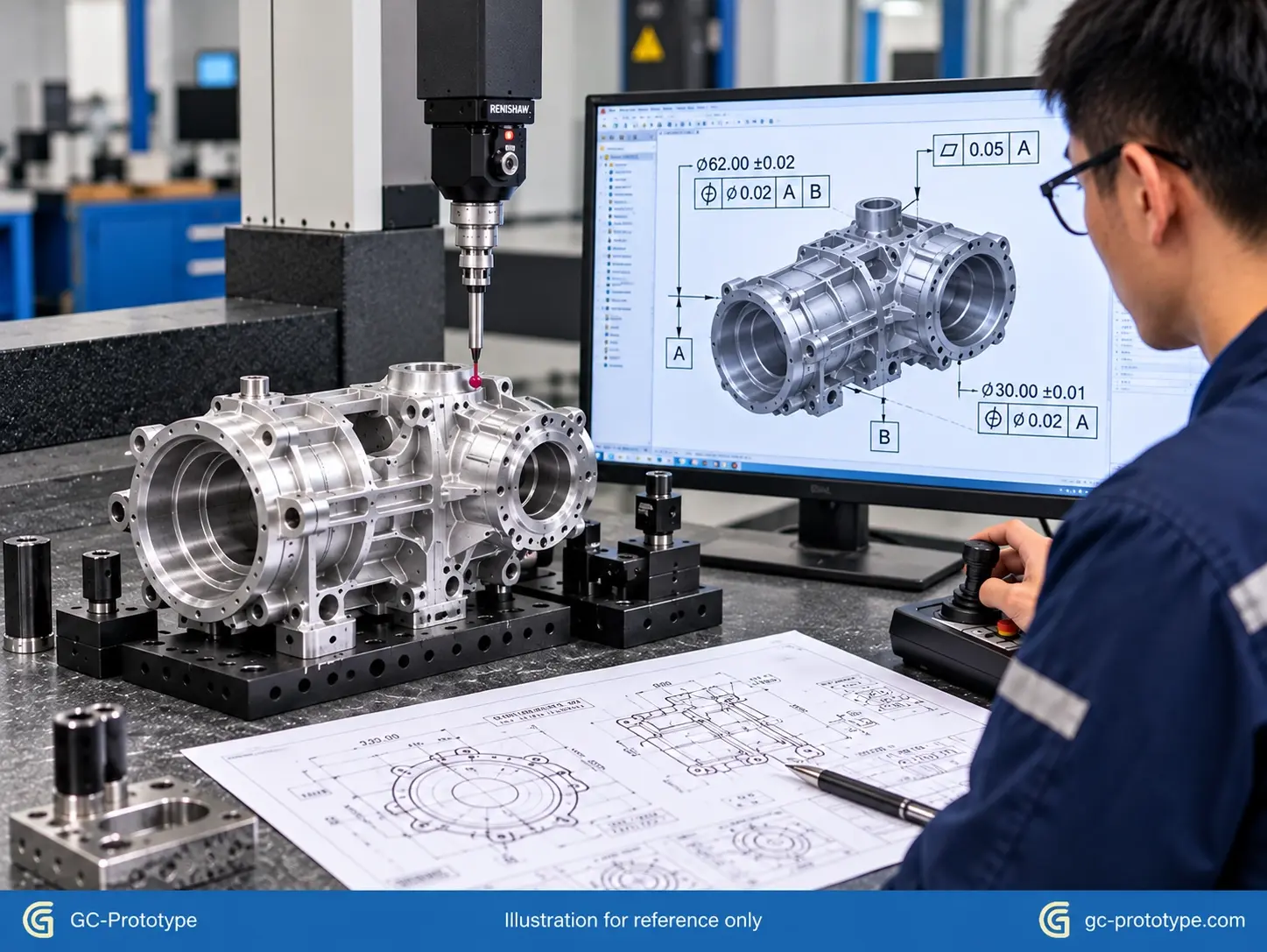
Prototype machining costs depend on material selection, geometry, quantity, machining time, tolerances, and inspection requirements.
For procurement teams, comparing the total manufacturing cost is more useful than evaluating unit price alone.
CNC machining commonly involves fixed costs for programming and machine setup.
Additional costs may include:
Raw materials
Cutting tools
Machine time
Surface finishing
Quality inspection
Packaging
Complex components often require longer machining cycles because of deep cavities, difficult tool access, or demanding surface requirements.
Consider a hypothetical CNC prototype project with:
Programming and setup: $250
Variable manufacturing cost: $70 per part
| Quantity | Total Manufacturing Cost | Average Unit Cost |
| 1 | $320 | $320.00 |
| 10 | $950 | $95.00 |
| 50 | $3,750 | $75.00 |
| 100 | $7,250 | $72.50 |
As quantity increases, fixed setup costs are distributed across more components.
However, machining complexity, tool wear, material waste, and inspection requirements can affect the final quotation.
When comparing two machining suppliers, buyers should confirm that both quotations include the same requirements.
Important factors include:
Material grade
Dimensional tolerances
Surface treatment
Inspection documentation
Delivery terms
Shipping arrangements
A lower quotation may not represent better value if it excludes critical inspection or finishing requirements.
For overseas procurement teams, international logistics and delivery conditions should also be included in the comparison.
Manufacturing lead time depends on several factors:
Material availability
Geometry complexity
Machine scheduling
Fixture preparation
Surface treatment
Inspection requirements
Simple components using standard materials may be manufactured within several working days.
Complex components or projects requiring specialized materials may take longer.
International buyers should distinguish between quotation response time, manufacturing lead time, and shipping transit time.
Engineering changes are common during prototype development.
A reliable supplier should use clearly identified CAD and drawing revisions.
For example, a revised robotic housing may require a new bearing bore position or modified wall thickness.
Confirming the drawing version before machining helps prevent incorrect parts, wasted materials, and delivery delays.
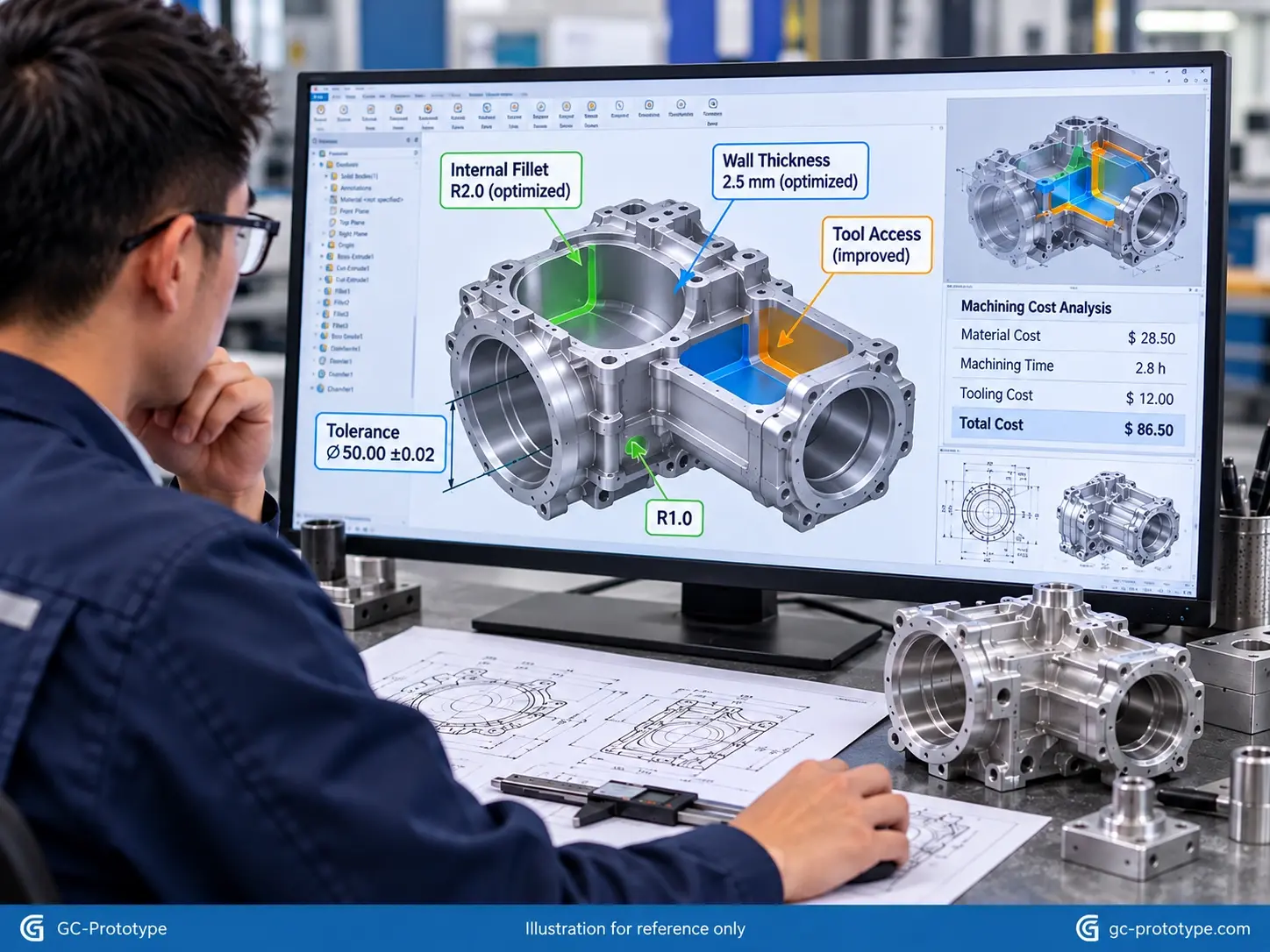
Design for Manufacturability helps engineers reduce unnecessary machining complexity while maintaining functional performance.
Small internal corner radii require smaller cutting tools.
Where functional requirements permit, larger radii improve tool access and may reduce cycle time.
Critical bearing and sealing interfaces may require demanding dimensional control.
Nonfunctional exterior surfaces often do not.
Applying tight tolerances selectively reduces inspection and finishing requirements.
Complex parts may require multiple workholding operations.
Improving tool accessibility or using suitable multi-axis machining can reduce repositioning and related manufacturing variation.
Prototype designs should also consider future manufacturing requirements.
If an aluminum housing will eventually be die cast, engineers may need to consider draft angles, wall thickness, and machining allowances.
Early DFM collaboration reduces the likelihood of expensive redesign during production transfer.
Automotive engineering teams use CNC prototypes for electric motor housings, structural brackets, and precision powertrain interfaces.
Functional testing may include vibration, thermal cycling, and assembly verification.
Robotics manufacturers require accurate mechanical components such as actuator housings, precision linkages, and mounting structures.
CNC machining supports stiffness evaluation, bearing alignment, and assembly testing.
Medical-device development may require precision machined instruments, equipment housings, and mechanical interfaces.
Material and documentation requirements depend on the intended application.
Aerospace applications may include lightweight structural brackets and precision aluminum components.
Electronics manufacturers frequently require machined enclosures, heat-management structures, and sensor mounting components.
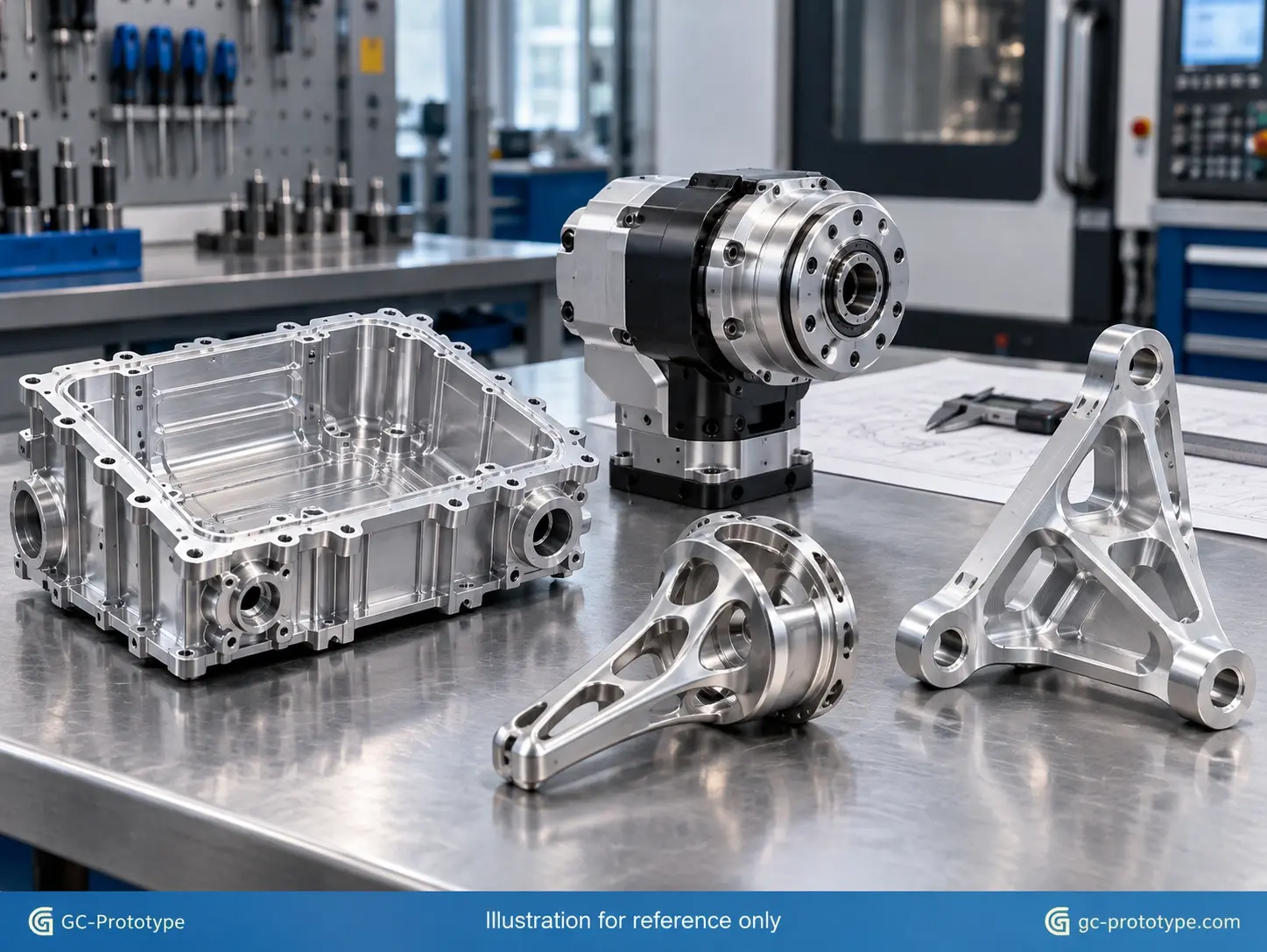
GC Prototype supports customers throughout the complete product-development process.
Engineering teams define materials, geometry, tolerances, and functional requirements.
Manufacturability is evaluated before machining begins.
CNC milling, turning, or other suitable processes produce functional prototype components.
The manufactured parts are evaluated for dimensional fit, assembly reliability, and relevant performance requirements.
Pilot quantities help assess manufacturing repeatability, inspection methods, and production economics.
Once the design is stable, manufacturing processes can be optimized for higher volumes.
Depending on geometry and quantity, production may continue with CNC machining or transition to other manufacturing technologies.
A complete Request for Quotation helps suppliers evaluate project requirements accurately.
Buyers should provide:
3D CAD/STEP files
2D engineering drawings
Material specifications
Critical tolerances and GD&T
Surface finish requirements
Additional information should include:
Prototype quantity
Required inspection reports
Expected delivery date
Functional testing requirements
Potential future production volumes
This information helps the supplier recommend appropriate machining strategies and identify potential DFM improvements.
A prototyping machine shop manufactures custom mechanical components from CAD models using CNC machining and related manufacturing technologies.
It typically supports design validation, functional testing, and low-volume production.
Evaluate machining capabilities, material experience, dimensional inspection methods, engineering support, quotation clarity, and delivery communication.
A suitable supplier should understand the functional requirements of your component.
Tolerance capability depends on material, geometry, equipment, fixturing, and inspection.
Selected critical features can achieve tight tolerances under appropriate conditions, but requirements should be evaluated individually.
Cost depends on material, quantity, geometry, machining time, tolerances, and finishing requirements.
Providing complete CAD files and drawings helps suppliers prepare accurate quotations.
Simple prototypes may be manufactured within several working days, while complex components may require longer.
Actual lead times depend on material availability, machining requirements, finishing, and inspection.
Yes. Many CNC suppliers manufacture both individual prototypes and low-volume production batches.
As quantities increase, manufacturing processes may be optimized to improve repeatability and unit cost.
Selecting the right prototyping machine shop involves more than comparing equipment lists or machining prices.
Engineering teams should evaluate material capabilities, precision tolerances, quality inspection, DFM support, delivery reliability, and future production requirements.
A professional prototype machine shop can help manufacturers identify design problems early, reduce unnecessary machining costs, and improve functional prototype reliability.
Compared with coordinating multiple general prototyping suppliers, working with a manufacturing partner that supports several relevant processes may simplify project management and production transitions.
GC Prototype supports customers throughout the complete development journey:
CAD → Prototype Samples → Functional Validation → Low-Volume Pilot Production → Mass Production Support
Looking for a reliable prototyping machine shop for your next engineering project?
GC Prototype provides custom CNC milling, precision turning, DFM support, dimensional inspection, and prototype-to-production manufacturing solutions.
Whether you need a single functional prototype or a low-volume production batch, our manufacturing services help you evaluate designs, optimize manufacturability, and prepare for scalable production.