Address:
Shenzhen Bao'an District Xinqiao Subdistrict Huangpu Community Huangpu East Ring Road No. 504 Shenzhen Yuan Industrial City Building C
Work Hours:
Monday to Friday: 9AM - 21PM
Weekend: 9AM - 21PM

Address:
Shenzhen Bao'an District Xinqiao Subdistrict Huangpu Community Huangpu East Ring Road No. 504 Shenzhen Yuan Industrial City Building C
Work Hours:
Monday to Friday: 9AM - 21PM
Weekend: 9AM - 21PM

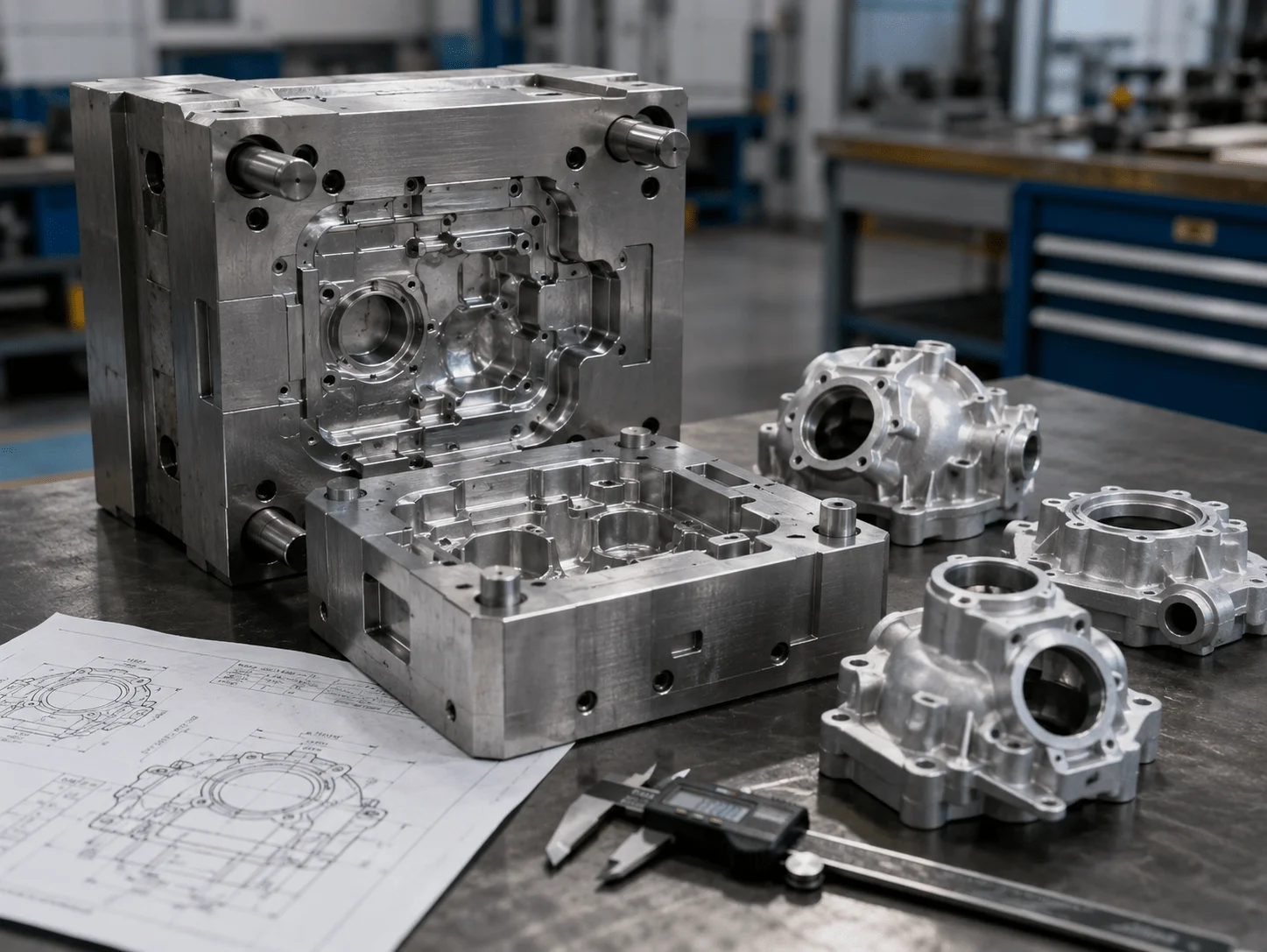
Turning a CAD model into a reliable physical product is never just about speed. For engineers, product developers, and procurement teams, successful low volume manufacturing process selection depends on choosing a process that matches the part’s geometry, material requirements, tolerances, surface finish, budget, and testing purpose. A prototype used for visual review does not need the same manufacturing method as a load-bearing functional component. Likewise, a small batch of 30 plastic housings should not be treated the same way as one CNC-machined aluminum bracket.
This guide explains how to choose the right rapid prototyping process for real B2B manufacturing projects. We will compare CNC machining, turning, milling, 3D printing, silicone molding, rapid tooling, die casting, sheet metal fabrication, and EDM finishing so you can make better engineering and sourcing decisions before moving into production.
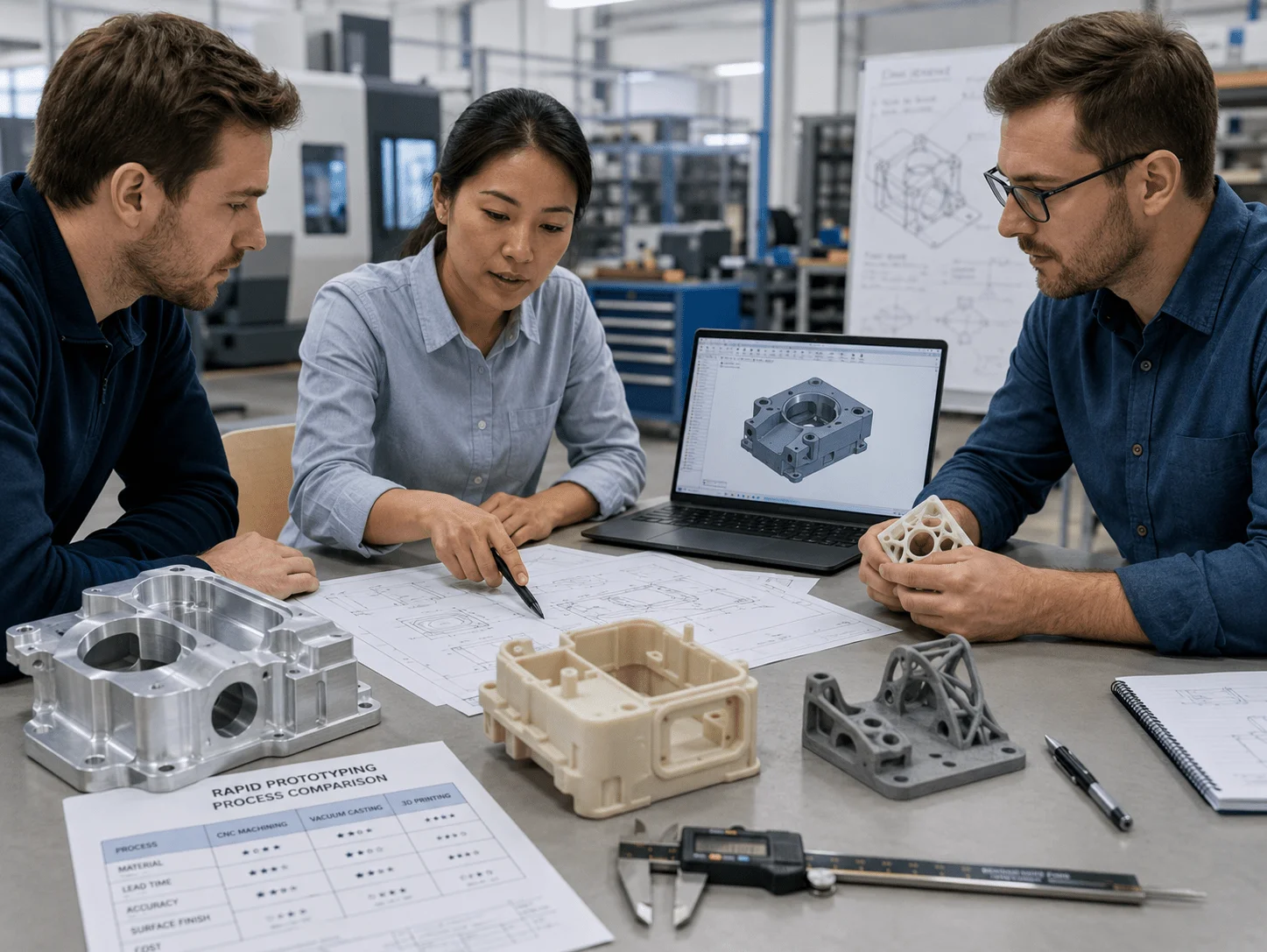
Subtractive Manufacturing: CNC Machining for Functional Prototypes
Subtractive manufacturing removes material from a solid block to create a precise final part. Among all rapid prototyping methods, CNC machining remains one of the most trusted options for functional prototypes because it uses real engineering materials and produces accurate, repeatable parts.
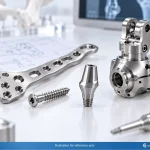
CNC machining is widely used for aluminum housings, stainless steel brackets, PEEK components, ABS enclosures, PC covers, and precision mechanical parts. Unlike many additive processes, CNC machining can deliver production-like material performance from the first prototype. That makes it especially valuable when engineers need to test load-bearing strength, assembly fit, thermal behavior, vibration resistance, or long-term durability.
When to Use CNC?
A common question during early product development is cnc machining vs 3d printing for functional prototypes. Both processes can create physical parts quickly, but they are not equal when the prototype must perform like the final product.
3D printing is excellent for early concept models, design visualization, and complex internal geometries. It is fast, flexible, and usually cost-effective for simple one-off parts. However, printed materials often have layer lines, anisotropic strength, and mechanical properties that may not fully match production materials.
CNC machining is the better choice when the part needs:
High mechanical strength
Tight dimensional accuracy
Smooth machined surfaces
Real production-grade materials
Threaded holes or precision interfaces
Functional testing under load
Assembly validation with other components
For example, if an engineering team is developing a robotic arm joint, a medical device bracket, or an aerospace sensor housing, the prototype must withstand mechanical stress. In this case, CNC machining is usually more reliable than 3D printing because the part is cut from solid aluminum, stainless steel, or engineering plastic rather than built layer by layer.
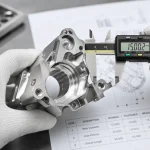
CNC machining also supports tighter tolerances. For many prototype projects, tolerances such as ±0.05 mm are achievable depending on geometry and material. This is important for parts with sealing surfaces, bearing fits, connector slots, mounting holes, or alignment features.
From a cost perspective, CNC machining may cost more than 3D printing for very simple visual models. But when the prototype must answer real engineering questions, CNC machining often saves money by preventing misleading test results and reducing design risk.
CNC Machining vs 3D Printing: Quick Comparison
| Factor | CNC Machining | 3D Printing |
| Best For | Functional prototypes, precision parts, production-like testing | Concept models, visual prototypes, complex geometry |
| Material Strength | High, uses real metals and plastics | Varies by technology and material |
| Accuracy | High | Medium to high depending on process |
| Surface Finish | Smooth, machinable, polishable | May show layer lines |
| Cost for 1 Part | Medium to high | Low to medium |
| Cost for Functional Testing | Often better value | May require rework or retesting |
| Typical Materials | Aluminum, steel, brass, PEEK, ABS, PC, POM | Resin, nylon, PLA, ABS-like resin, metal powder |
| Best Quantity | 1–100 pcs | 1–20 pcs |
The key point is simple: choose 3D printing when you need to see the shape quickly. Choose CNC machining when you need to test performance with confidence.
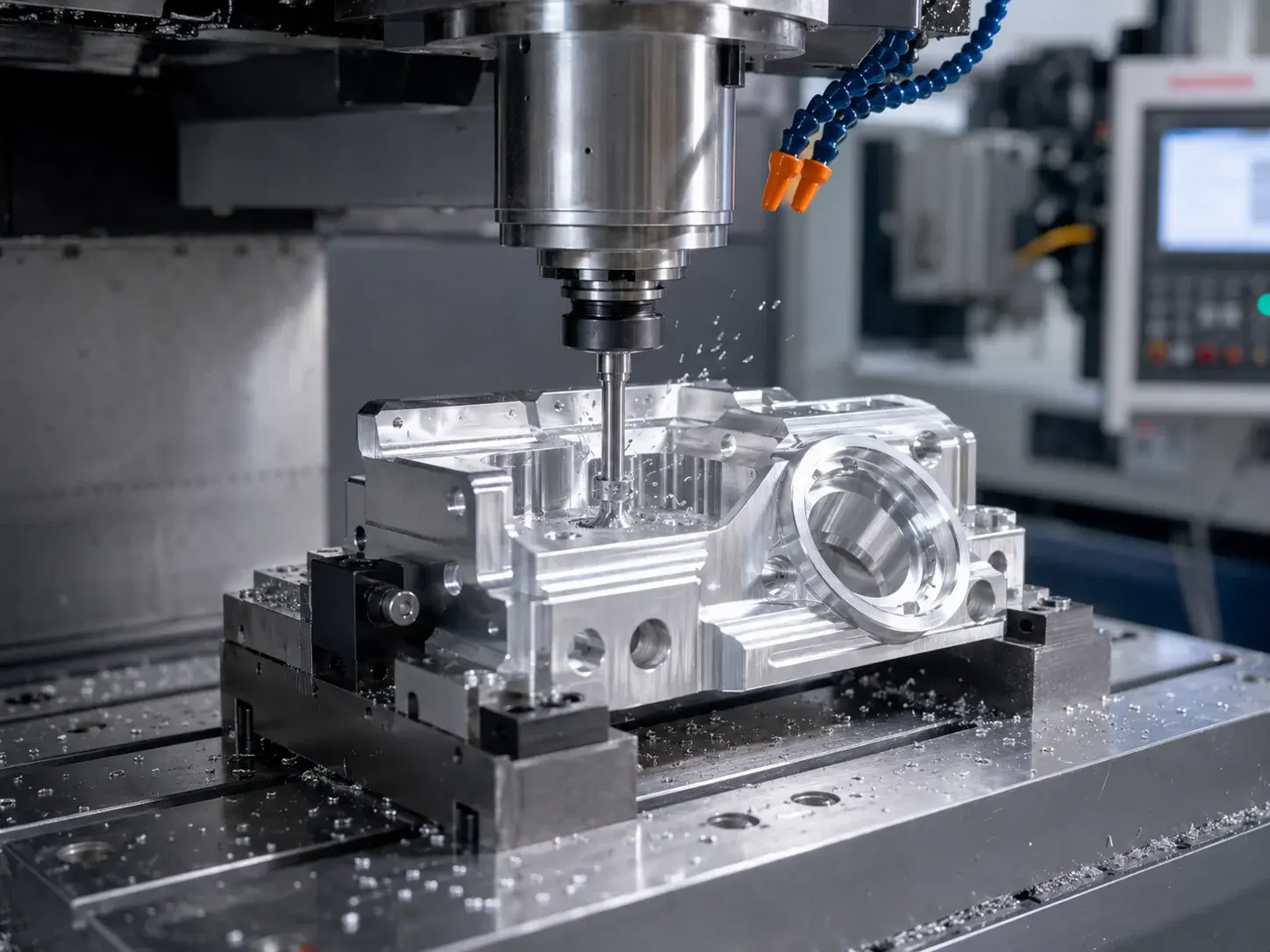
Machining Round Components: CNC Turning vs Milling
Not every CNC part should be milled. For round, cylindrical, or shaft-like components, turning is often faster, more accurate, and more economical. This is why many engineers search for cnc turning vs milling for cylindrical parts when they are deciding how to manufacture pins, bushings, rollers, shafts, spacers, threaded parts, and round housings.
CNC milling uses rotating cutting tools to remove material from a stationary workpiece. It is ideal for flat surfaces, slots, pockets, holes, complex contours, and prismatic parts. CNC turning, by contrast, rotates the workpiece while a cutting tool shapes the material. This makes turning highly efficient for round geometries.
If your part is mainly cylindrical, turning is usually the better process. It can produce excellent concentricity, smooth round surfaces, and tight diameter control. It is also often more cost-effective because the setup and tool paths are simpler for axisymmetric parts.
When CNC Turning Is Better
CNC turning is ideal for:
Shafts
Pins
Bushings
Rollers
Sleeves
Nozzles
Threaded rods
Cylindrical housings
Round connectors
Medical and industrial fittings
Turning is especially useful when a part requires precise outer diameters, inner bores, grooves, threads, or stepped cylindrical profiles. In many cases, a turned component can be completed faster than a milled part because the geometry naturally matches the turning process.
When CNC Milling Is Better
CNC milling is better for:
Rectangular housings
Brackets
Complex pockets
Flat mounting surfaces
Multi-face machining
Non-round geometries
Slots, keyways, and complex contours
Some parts require both turning and milling. For example, a cylindrical housing may require turning for the outer diameter and milling for side holes, flat surfaces, or connector features. In these cases, a CNC manufacturer may use mill-turn machining or multiple setups to achieve the final geometry.
CNC Turning vs Milling: Cost and Design Impact
| Factor | CNC Turning | CNC Milling |
| Best Geometry | Round and cylindrical parts | Flat, complex, multi-face parts |
| Speed | Faster for round parts | Faster for complex prismatic parts |
| Cost | Lower for cylindrical components | Higher if round parts need complex setup |
| Accuracy | Excellent for diameters and concentricity | Excellent for pockets, holes, and surfaces |
| Surface Finish | Very smooth on round surfaces | Good, depends on tool path |
| Typical Parts | Shafts, pins, sleeves, rollers | Housings, brackets, plates, fixtures |
For B2B buyers, the main takeaway is this: process choice affects price. If a cylindrical part is quoted as a milled part instead of a turned part, the cost may be unnecessarily high. Sharing complete CAD files and clearly explaining functional requirements helps the supplier recommend the most efficient manufacturing route.
Additive and Casting Processes: Bridging Design and Production
Not every prototype needs to be CNC machined. When the goal is to evaluate appearance, ergonomics, customer feedback, or low-volume plastic production, additive manufacturing and casting processes can be more efficient.
3D printing is often used during the earliest design stages. It helps teams quickly test shape, size, and basic assembly. However, once a design becomes more mature, many companies need multiple plastic parts that look closer to injection-molded products. This is where silicone molding and vacuum casting become highly valuable.
Bridging the Gap to Production
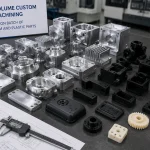
For many B2B hardware projects, silicone molding for low volume plastic parts is one of the most cost-effective ways to produce 10–50 plastic prototypes without investing in expensive injection molding tools.
The process usually starts with a master model, often made by CNC machining or high-resolution 3D printing. A silicone mold is then created around the master. Polyurethane resin is poured into the mold under vacuum conditions to reduce bubbles and improve surface quality. After curing, the part is removed, finished, painted, or assembled as needed.
Silicone molding is widely used for:
Plastic housings
Consumer electronics enclosures
Medical device shells
Automotive interior parts
Transparent covers
Rubber-like grips
Product presentation samples
Low-volume functional parts
The biggest advantage is cost efficiency at low volume. If you only need 20 plastic housings for testing, injection molding may be too expensive because steel tooling can cost thousands of dollars and take several weeks. Silicone molding provides a faster and more flexible alternative.
Why Silicone Molding Works Well for 10–50 Parts
Silicone molds are much cheaper and faster to produce than steel molds. A single silicone mold can often produce around 15–30 parts, depending on geometry, resin, and surface requirements. For a batch of 50 parts, several silicone molds may be used.
This process provides:
Lower tooling cost
Faster turnaround than injection molding
Smooth surface finish
Good detail reproduction
Multiple resin options
Color matching and painting options
Flexible or rigid material simulation
Silicone molding is not a replacement for full-scale injection molding, but it is an excellent bridge between prototype and production. It allows product teams to test market response, assembly fit, packaging, user handling, and appearance before committing to expensive hard tooling.
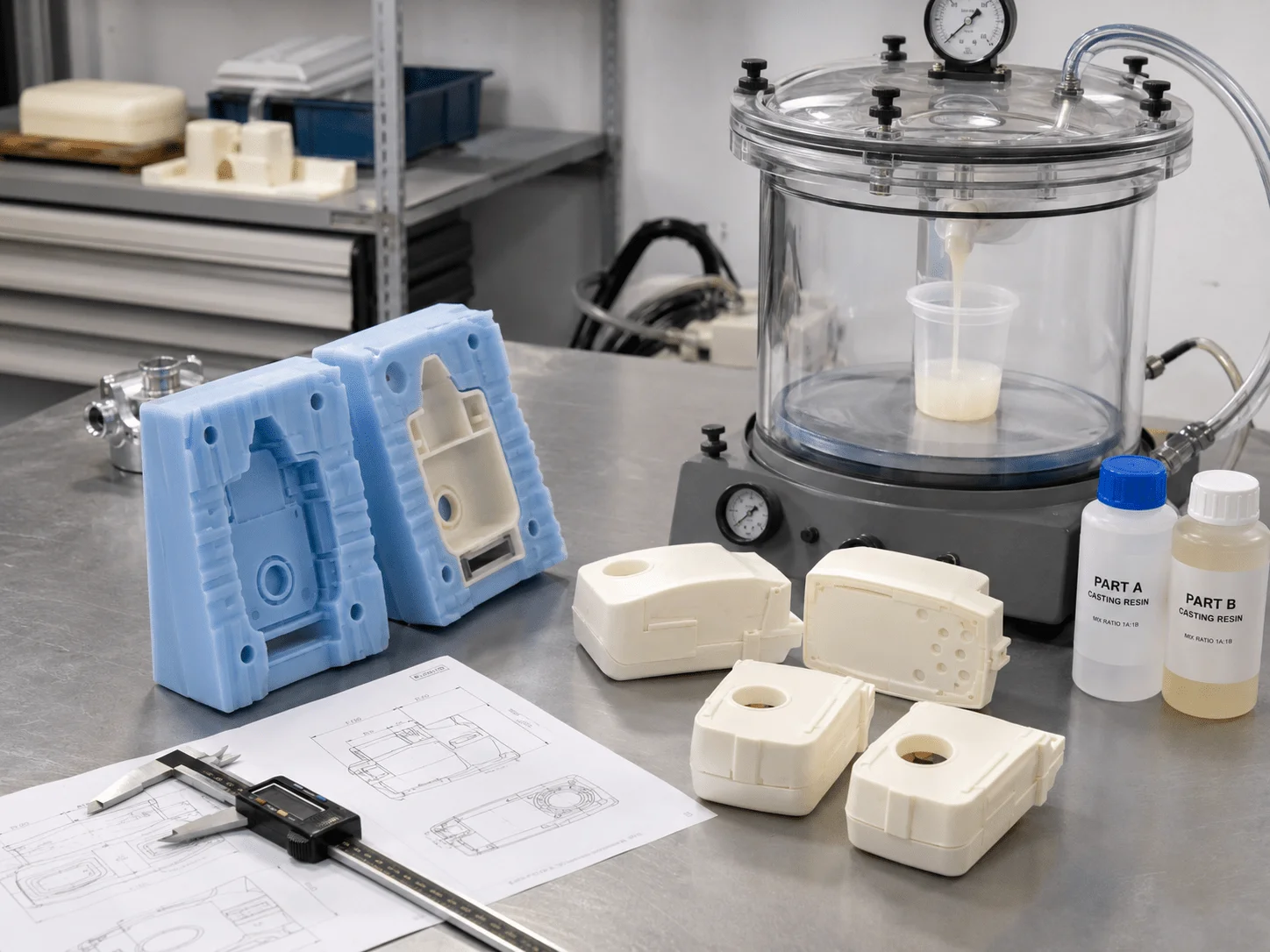
Production-Grade Prototyping: Injection Molding and Die Casting
As a product moves closer to mass production, prototype requirements change. Early prototypes help validate shape and function. Production-grade prototypes must validate manufacturability, materials, shrinkage, assembly, surface quality, and cost.
This stage often requires rapid tooling, injection molding prototypes, and metal casting validation.
Testing with True Plastics
When engineers need to test parts made from real injection molding materials, rapid tooling for injection molding prototypes becomes the right solution. Rapid tooling usually refers to faster, lower-cost mold tooling made from aluminum, soft steel, or simplified mold structures.
Traditional steel molds are durable and suitable for large-scale production, but they are expensive and time-consuming. Rapid tooling is designed to shorten development time while still producing real molded parts from production-grade thermoplastics.
Rapid tooling is commonly used when teams need to test:
Final plastic material behavior
Shrinkage and warpage
Snap-fit strength
Living hinges
Assembly performance
Surface texture
Mold flow
Production-like tolerances
This is especially important when the final product will be injection molded. A CNC-machined or 3D-printed part may not behave the same way as a molded part. Injection molding introduces pressure, temperature, cooling rates, flow direction, gate location, and shrinkage. Rapid tooling allows engineers to study these factors earlier.
Rapid Tooling Cost Analysis
Rapid tooling costs more than silicone molding but less than full production tooling. It is often suitable for quantities from 50 to several thousand parts, depending on the tool design and material.
| Quantity | Recommended Process | Reason |
| 1–10 pcs | CNC machining or 3D printing | Fastest for early validation |
| 10–50 pcs | Silicone molding | Lower cost for small plastic batches |
| 50–1,000 pcs | Rapid tooling | Real molded materials and production-like quality |
| 1,000+ pcs | Production injection molding | Lowest long-term unit cost |
For B2B buyers, rapid tooling reduces risk before mass production. It can identify design problems before expensive steel tooling is built. This helps avoid costly mold modifications later.
Metal Mass Production Validation
For metal parts intended for high-volume production, aluminum pressure die casting prototyping
helps validate design before committing to die casting tooling. Die casting is widely used for aluminum housings, automotive components, industrial hardware, heat sinks, electronic enclosures, and structural parts.
Pressure die casting can produce complex metal parts with good surface finish and high production efficiency. However, die casting tooling is expensive, and design mistakes can be costly. That is why prototype validation is essential.
Before die casting, engineers often use CNC machining, soft tooling, gravity casting, or prototype die casting methods to evaluate:
Wall thickness
Draft angles
Rib design
Boss structure
Parting lines
Machining allowance
Porosity risk
Assembly interfaces
Surface finish requirements
How to Validate Aluminum Die Cast Parts Before Tooling
A practical validation workflow may include:
1.CNC machine a prototype from aluminum billet.
2.Test assembly fit and mechanical performance.
3.Review die casting feasibility with DFM engineers.
4.Adjust wall thickness, ribs, and draft angles.
5.Produce a small casting trial if needed.
6.Finalize production die casting tooling.
CNC prototypes cannot fully replicate die casting properties such as porosity, flow behavior, or casting grain structure. However, they are very useful for testing geometry, fit, and assembly before tooling begins.
For projects involving large future volumes, early validation can prevent expensive mistakes. A small design change before tooling may cost very little. The same change after die casting tooling is complete may cost thousands of dollars and delay production.
Sheet Metal and Specialized Finishing
Some products are not best suited for CNC machining, molding, or casting. Industrial electronics, power systems, control units, communication equipment, robotics, and test instruments often require sheet metal parts. These parts are usually made by cutting, bending, forming, welding, riveting, and finishing metal sheets.
Housings and Brackets
For electronics and industrial hardware, custom sheet metal prototype enclosures are often the fastest and most practical way to test product packaging, internal layout, thermal performance, and mounting structures.
Sheet metal prototyping is commonly used for:
Electrical enclosures
Control boxes
Power supply housings
Server and communication chassis
Mounting brackets
Battery boxes
Instrument panels
Industrial covers
Robotic frames
The process usually includes laser cutting, punching, CNC bending, welding, tapping, inserting fasteners, surface finishing, and assembly.
Compared with CNC machining a housing from a solid block, sheet metal fabrication can be much more cost-effective for box-like enclosures. It also better reflects the final manufacturing method if the product will be mass-produced as sheet metal.
Design Tips for Sheet Metal Prototypes
To reduce cost and improve quality, engineers should consider:
Bend radius
Material thickness
Hole-to-bend distance
Fastener location
Weld access
Assembly sequence
Powder coating thickness
Ventilation and heat dissipation
Tolerance stack-up
Aluminum, stainless steel, galvanized steel, and cold-rolled steel are common sheet metal materials. Surface finishes may include powder coating, anodizing, brushing, plating, polishing, or painting.
For B2B projects, sheet metal prototypes are valuable because they can be tested in real environments. Engineers can check whether cables fit, whether heat escapes properly, whether mounting points align, and whether the enclosure protects internal components.
Achieving Complex Details with EDM
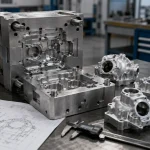
Some part features cannot be produced efficiently by standard CNC cutting tools. Sharp internal corners, narrow slots, deep cavities, fine mold details, and hard metals may require EDM.
Electrical discharge machining edm surface finish refers to the surface texture created by EDM spark erosion. EDM uses electrical discharges to remove material from conductive workpieces. It does not cut with mechanical force, which makes it ideal for hard metals and complex details.
EDM is commonly used for:
Mold cavities
Sharp internal corners
Narrow slots
Fine details
Hardened steel parts
Tooling inserts
Complex metal features
Textured surfaces
There are two common types: wire EDM and sinker EDM. Wire EDM uses a thin wire electrode to cut precise profiles. Sinker EDM uses a shaped electrode to form cavities or details in the workpiece.
EDM is especially useful when CNC tools cannot reach a feature due to tool diameter limitations. For example, a CNC end mill cannot create a perfectly sharp internal 90-degree corner because the tool is round. EDM can help achieve sharper internal features and controlled surface texture.
Surface finish from EDM can range from rough spark texture to fine finishing, depending on process settings. In mold making, EDM texture may be intentionally used to create specific surface appearances.
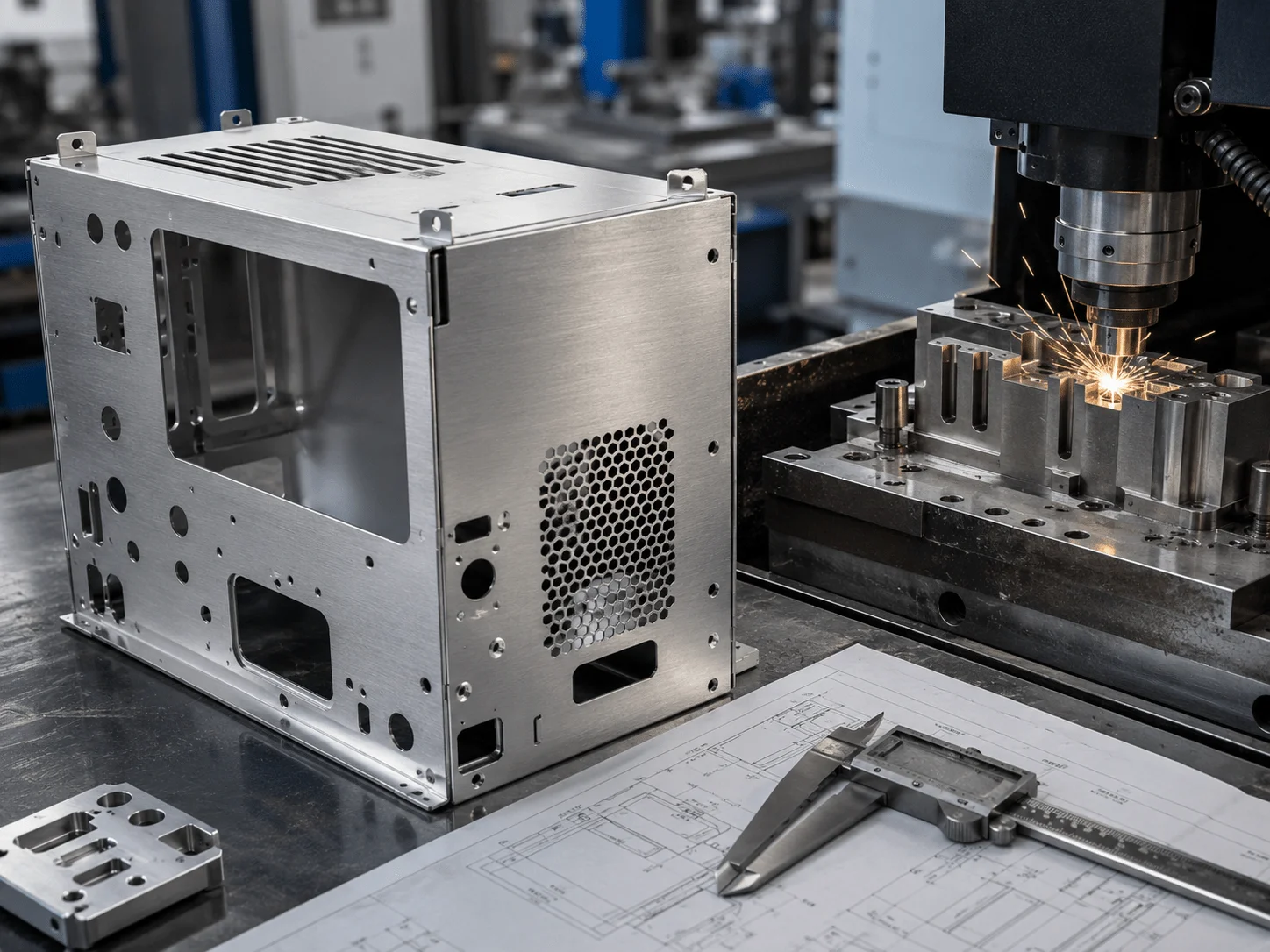
Low Volume Manufacturing Process Selection: How to Choose the Right Method
A strong low volume manufacturing process selection strategy begins with defining the purpose of the prototype. Before choosing a process, ask what the prototype must prove.
Key Questions to Ask
1.Is the part for visual review or functional testing?
2.How many parts are needed?
3.What material properties are required?
4.What tolerances are critical?
5.Does the surface finish need to match production?
6.Will the part be tested under load, heat, or vibration?
7.Is the final production process already known?
8.Is speed or accuracy more important?
9.Is the design stable or still changing?
10.What budget is available for tooling?
The answers will usually point toward the right process.
Process Selection Table
| Project Need | Best Process | Why |
| Early visual concept | 3D printing | Fast and low cost |
| Functional metal prototype | CNC machining | Strong, accurate, real material |
| Round shaft or pin | CNC turning | Faster and cheaper for cylindrical parts |
| Plastic batch of 10–50 parts | Silicone molding | Low tooling cost and good appearance |
| Real injection molded material testing | Rapid tooling | Production-like plastic parts |
| Future aluminum die cast part | CNC + die casting validation | Reduces tooling risk |
| Electronics enclosure | Sheet metal fabrication | Cost-effective for box-like structures |
| Sharp internal corners or mold details | EDM | Solves features CNC tools cannot reach |
Cost Analysis by Development Stage
| Development Stage | Typical Goal | Recommended Process | Cost Logic |
| Concept Validation | Check shape and size | 3D printing | Lowest cost for early ideas |
| Engineering Validation | Test fit and function | CNC machining | Higher cost but better accuracy |
| User Testing | Produce multiple samples | Silicone molding | Lower unit cost for small batches |
| Pre-Production | Test real materials | Rapid tooling | Validates molded performance |
| Production Planning | Prepare for mass manufacturing | Die casting or injection tooling | Optimized for volume |
| Industrial Enclosure Testing | Validate packaging and assembly | Sheet metal | Efficient for metal boxes and brackets |
The best manufacturers do not push one process for every project. They help customers match the method to the real engineering goal.
Practical Application Scenarios
Scenario 1: Functional Robot Joint Prototype
A robotics company needs a strong aluminum joint for load testing. The part has bearing seats, threaded holes, and tight alignment features. CNC machining is the best option because it delivers strength, accuracy, and real material behavior.
Scenario 2: 30 Plastic Medical Housings
A medical device startup needs 30 plastic housings for usability testing and investor demos. Injection tooling is too expensive. Silicone molding is the right choice because it provides high-quality appearance and lower unit cost.
Scenario 3: Cylindrical Stainless Steel Sensor Sleeve
An industrial sensor company needs 100 stainless steel sleeves. The parts are round with grooves and threads. CNC turning is faster and more cost-effective than milling.
Scenario 4: Aluminum Casting Design Validation
An automotive supplier plans to mass-produce an aluminum housing by die casting. Before tooling, CNC prototypes are used to test assembly and geometry. Then DFM adjustments are made for die casting.
Scenario 5: Electronics Control Box
An electronics manufacturer needs a custom enclosure with vents, mounting holes, and powder coating. Sheet metal fabrication is the most practical and scalable solution.
Frequently Asked Questions
What is the best rapid prototyping process for functional parts?
For functional parts requiring strength, tight tolerances, and real material performance, CNC machining is usually the best choice. It is especially useful when comparing cnc machining vs 3d printing for functional prototypes because CNC parts better represent final mechanical behavior.
Is 3D printing cheaper than CNC machining?
3D printing is often cheaper for simple visual models and early concepts. However, CNC machining may provide better value for functional testing because it uses stronger production-grade materials and tighter tolerances.
When should I choose CNC turning instead of milling?
Choose turning when the part is mainly round or cylindrical. For shafts, pins, sleeves, bushings, and threaded round components, cnc turning vs milling for cylindrical parts usually favors turning because it is faster and more cost-effective.
What is the best process for 10–50 plastic parts?
For 10–50 plastic parts, silicone molding for low volume plastic parts is often the best balance of cost, speed, and appearance. It avoids expensive injection tooling while still producing high-quality plastic-like parts.
What is rapid tooling for injection molding prototypes?
Rapid tooling for injection molding prototypes uses faster, lower-cost molds to produce real injection molded parts. It is ideal when engineers need to test final plastic materials before mass production tooling.
Can aluminum die casting be prototyped before production tooling?
Yes. Aluminum pressure die casting prototyping can involve CNC machining, casting trials, DFM review, and soft tooling strategies to validate design before expensive die casting tools are made.
What are custom sheet metal prototype enclosures used for?
Custom sheet metal prototype enclosures are used for electronics, industrial equipment, control boxes, power systems, communication devices, and hardware products that require durable metal housings.
What is EDM surface finish?
Electrical discharge machining edm surface finish is the texture left by spark erosion during EDM machining. It is useful for mold details, sharp internal corners, narrow slots, and hard metals that are difficult to machine conventionally.
How do I reduce prototype manufacturing cost?
To reduce cost, choose the right process for the quantity and purpose of the prototype. Avoid over-specifying tolerances, simplify geometry, reduce unnecessary finishing, and ask your supplier for DFM feedback early.
Which process is best for low-volume manufacturing?
There is no single best process. Strong low volume manufacturing process selection depends on material, quantity, tolerance, surface finish, and final production plan. CNC machining, silicone molding, sheet metal fabrication, rapid tooling, and casting all serve different needs.
Rapid prototyping is not only about making parts quickly. It is about making the right parts at the right stage of development. A visual prototype, a functional prototype, a user testing sample, and a production-grade prototype each require different manufacturing decisions.
CNC machining is ideal for strong, precise, functional prototypes. CNC turning is the smarter choice for cylindrical components. Silicone molding is highly cost-effective for low-volume plastic parts. Rapid tooling helps validate injection molded materials. Aluminum die casting prototyping reduces risk before mass production. Sheet metal fabrication supports durable enclosures and brackets. EDM solves complex details that standard CNC tools cannot reach.
By choosing the right manufacturing process early, engineering teams can reduce cost, improve product quality, shorten development cycles, and avoid expensive mistakes before production begins.
Ready to Start Your Rapid Prototyping Project?
GC-Prototype provides professional rapid prototyping and low-volume manufacturing solutions for global B2B customers, including CNC machining, CNC turning, CNC milling, silicone molding, rapid tooling, sheet metal fabrication, die casting prototyping, and EDM finishing.