Address:
Shenzhen Bao'an District Xinqiao Subdistrict Huangpu Community Huangpu East Ring Road No. 504 Shenzhen Yuan Industrial City Building C
Work Hours:
Monday to Friday: 9AM - 21PM
Weekend: 9AM - 21PM

Address:
Shenzhen Bao'an District Xinqiao Subdistrict Huangpu Community Huangpu East Ring Road No. 504 Shenzhen Yuan Industrial City Building C
Work Hours:
Monday to Friday: 9AM - 21PM
Weekend: 9AM - 21PM

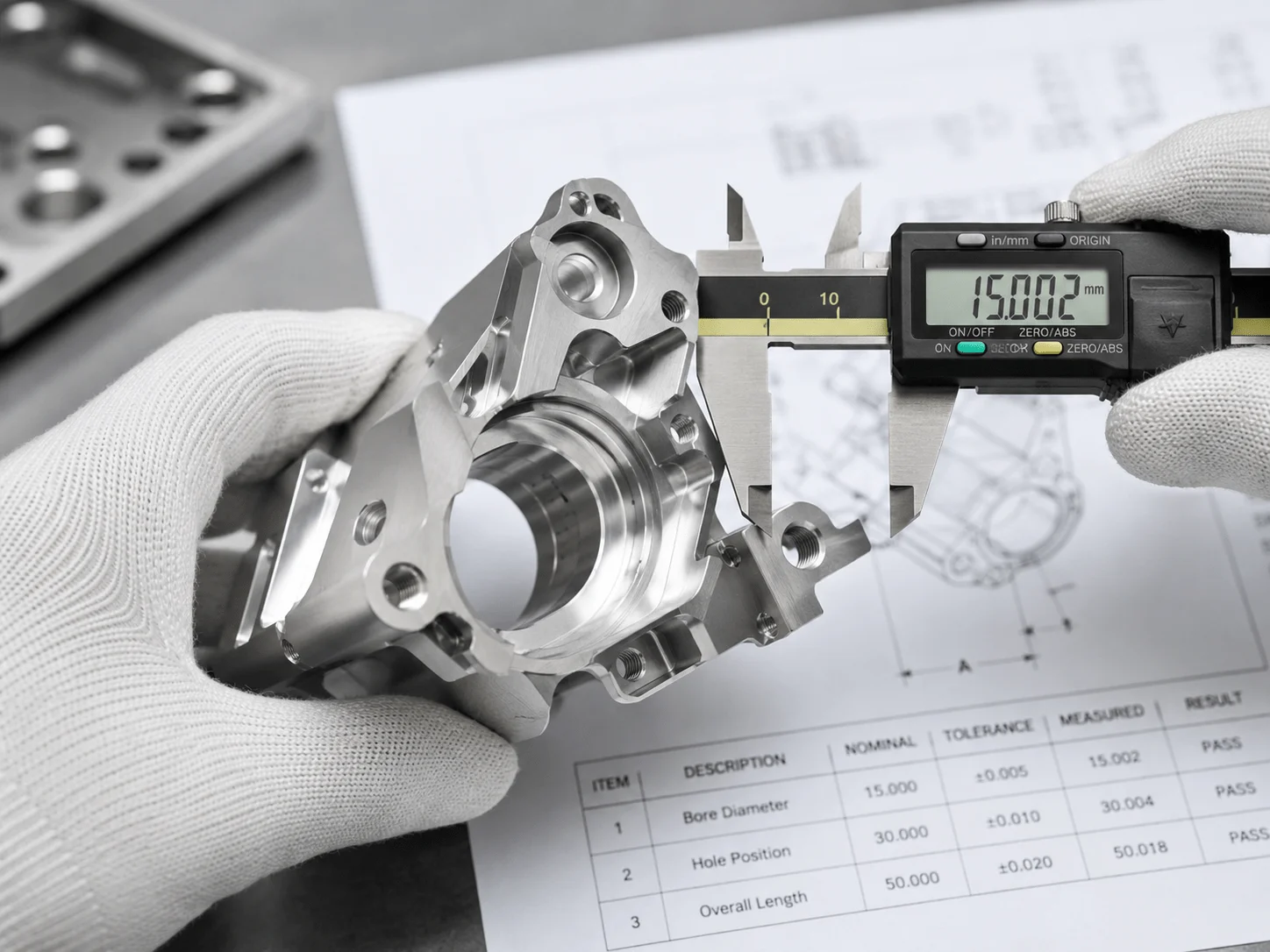
Choosing between CNC Machining vs Vacuum Casting for Medical Device Prototypes is one of the most important early decisions in medical product development. The right process can reduce engineering risk, shorten validation cycles, control cost, and help product teams move from concept to functional testing faster. The wrong process, however, may lead to inaccurate prototypes, poor material performance, unrealistic user feedback, and unnecessary delays.
For engineers, procurement managers, and product development teams, both CNC machining and vacuum casting offer clear advantages. CNC machining delivers tight tolerances, excellent mechanical strength, and production-grade material options. Vacuum casting, also known as silicone molding, provides smooth surface finish, flexible material simulation, and strong cost efficiency for low-volume batches.
This guide compares both processes from a practical B2B manufacturing perspective, including materials, tolerances, lead time, cost structure, medical applications, and decision-making criteria.
What Is CNC Machining for Medical Device Prototypes?
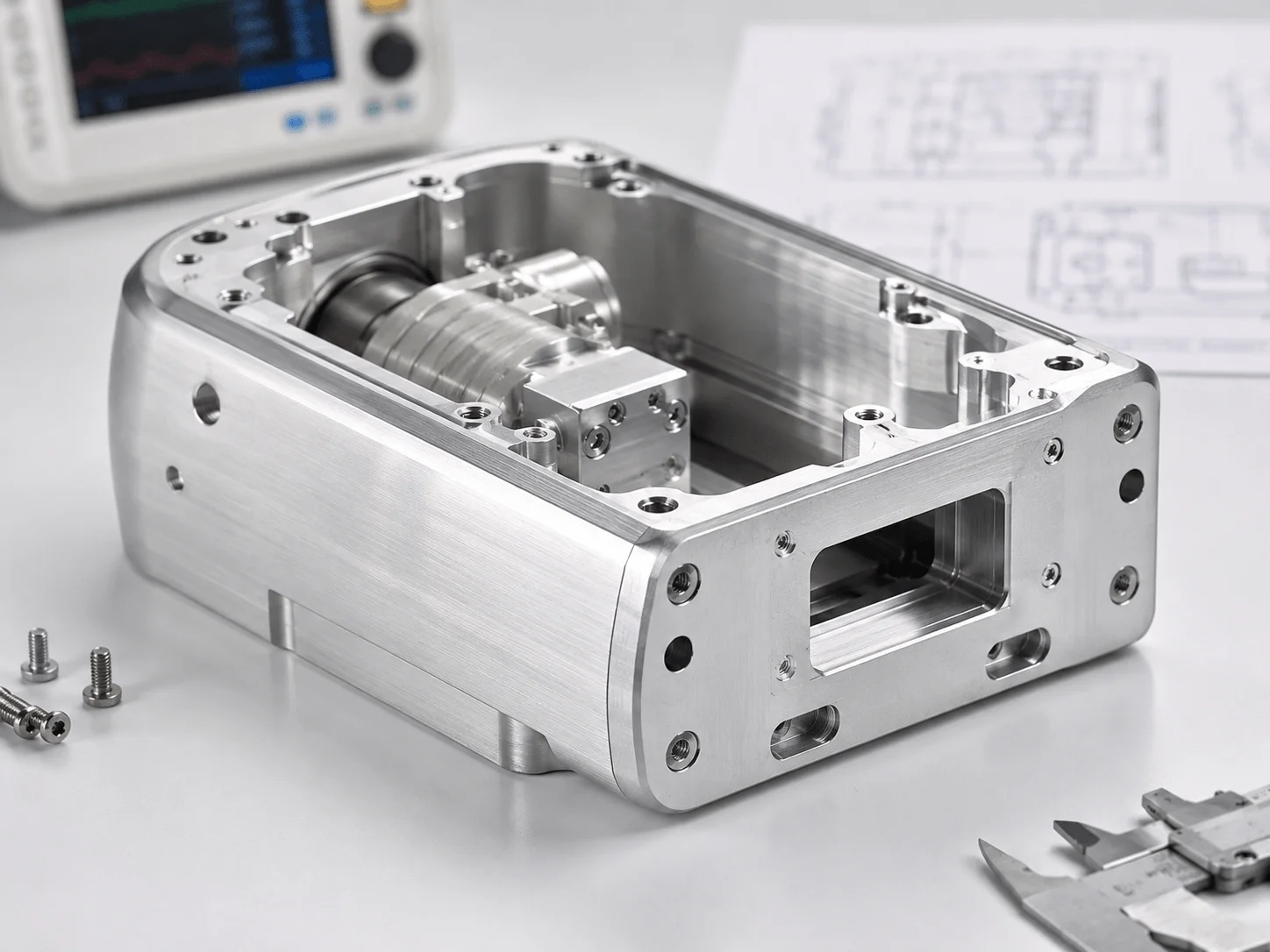
CNC machining is a subtractive manufacturing process that removes material from a solid block using computer-controlled cutting tools. For medical device development, it is often used to produce high-precision prototypes from aluminum, stainless steel, titanium, PEEK, PC, ABS, and other engineering materials.
Unlike molded or printed parts, CNC-machined prototypes are made from real production-grade materials. This makes the process highly valuable when a prototype must perform under mechanical stress, withstand assembly testing, or simulate end-use conditions.
CNC machining is commonly used for:
Medical device housings
Surgical tool prototypes
Diagnostic equipment components
Wearable medical device enclosures
Fluidic blocks and manifolds
Precision brackets and fixtures
Metal prototypes for functional testing
Engineering plastic prototypes for validation
One of the biggest reasons medical product teams choose CNC machining is precision. Well-controlled cnc machining tolerances for medical components can support tight-fit assemblies, threaded features, sealing surfaces, and parts that must interact with sensors, electronics, connectors, or moving mechanisms.
For early-stage medical development, CNC machining is especially useful when the prototype needs to answer engineering questions such as:
“Will this part hold up under load?”
“Will these holes align during assembly?”
“Will this housing fit internal electronics?”
“Can this component be manufactured from the final intended material?”
When the answer depends on mechanical accuracy, CNC machining is often the safer choice.
What Is Vacuum Casting for Medical Device Prototypes?
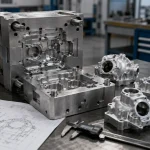
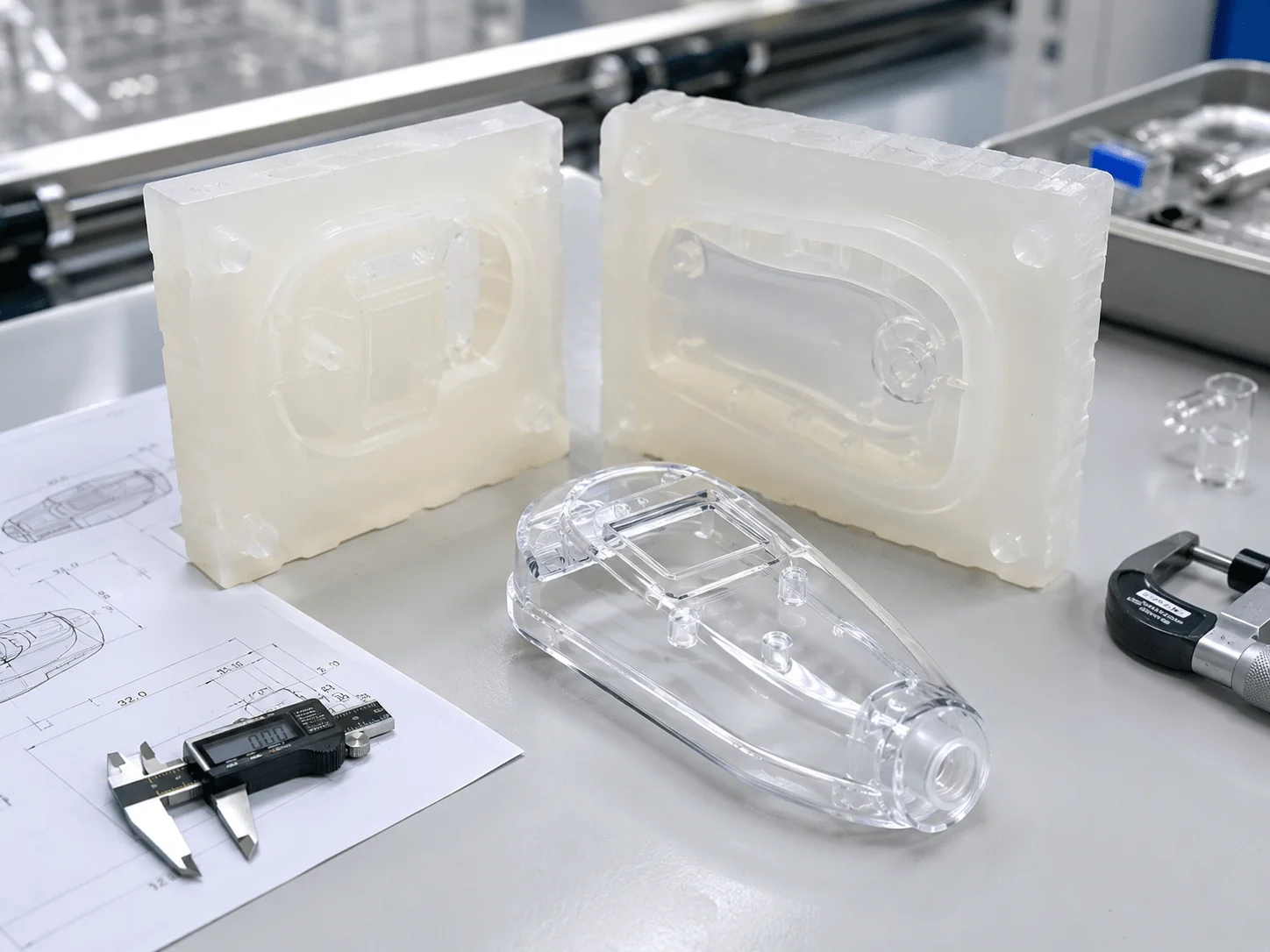
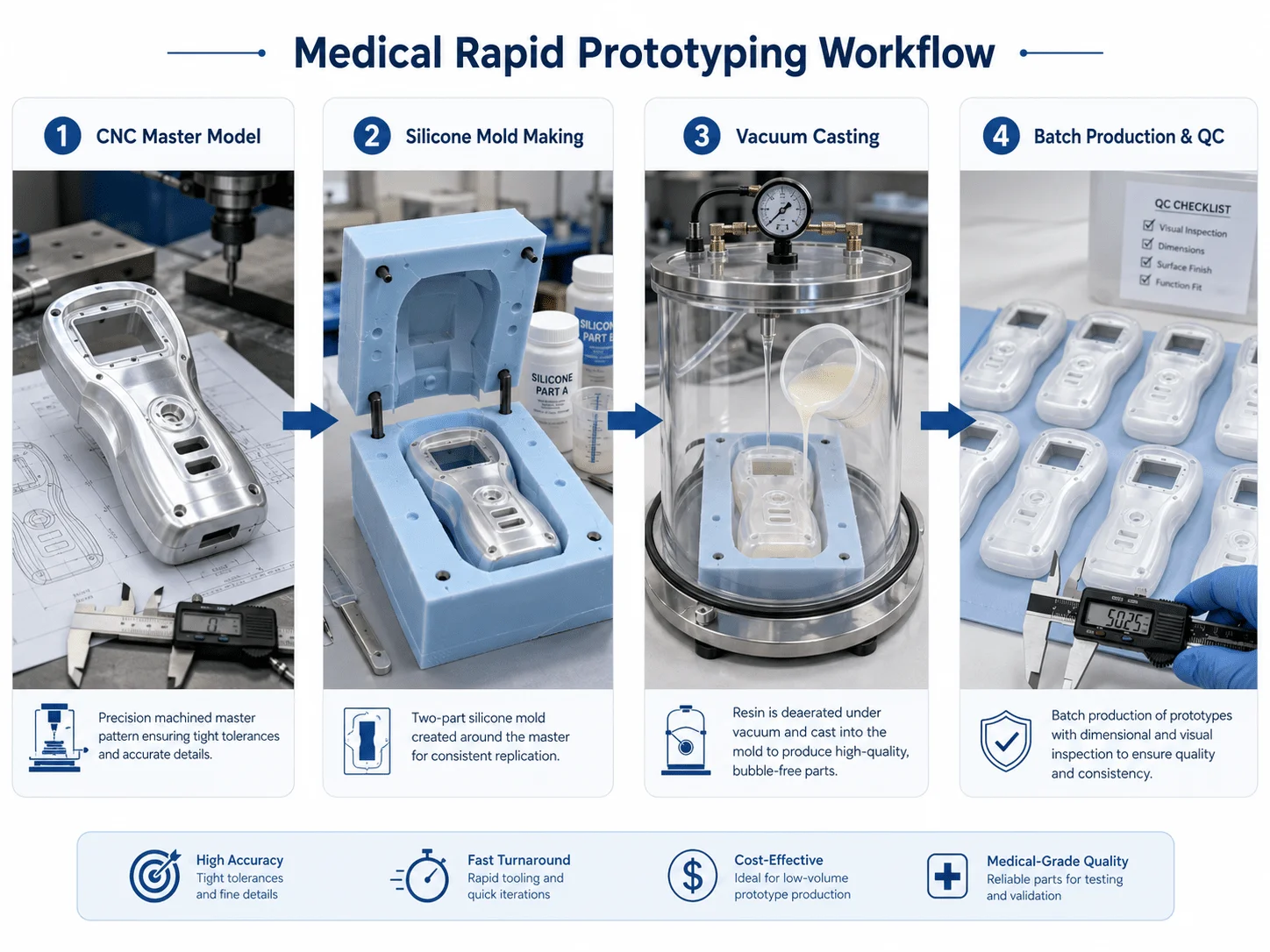
Vacuum casting is a low-volume manufacturing process that uses silicone molds to replicate parts from a master model. A master pattern is usually produced by CNC machining or 3D printing. Then, a silicone mold is created around the master. Polyurethane resin is poured into the mold under vacuum conditions to reduce bubbles and improve part quality.
For medical device prototypes, vacuum casting is widely used when teams need multiple high-quality parts with consistent appearance, smooth surfaces, and lower unit cost than one-by-one machining.
Vacuum casting is often used for:
Medical device housing prototypes
Transparent diagnostic covers
Handheld medical device shells
Wearable device enclosures
Soft-touch grip prototypes
User testing samples
Exhibition and investor presentation models
Pre-production samples before injection molding
A major advantage of vacuum casting is material simulation. Modern polyurethane systems can imitate ABS, PP, PC, rubber-like elastomers, and transparent plastics. In some cases, manufacturers can offer biocompatible polyurethane resins for vacuum casting, which may be suitable for selected medical prototype applications depending on testing requirements.
Vacuum casting is also highly valuable for clear plastic prototyping for medical devices. Transparent housings, fluid observation covers, optical windows, and diagnostic device shells can often be produced with excellent visual clarity after polishing or finishing.
However, vacuum casting is not the same as injection molding, and vacuum-cast polyurethane is not always equivalent to final production plastic. For regulatory or clinical-use parts, engineering teams must verify material documentation, biocompatibility requirements, sterilization compatibility, and intended use before selecting the process.
CNC Machining vs Vacuum Casting: Core Comparison
Both processes are useful, but they solve different problems. CNC machining is precision-driven. Vacuum casting is batch-efficiency-driven.
| Comparison Factor | CNC Machining | Vacuum Casting |
| Best Use | Functional prototypes, precision parts, mechanical testing | Appearance models, low-volume samples, user testing |
| Tooling Requirement | No mold required | Silicone mold required |
| Typical Quantity | 1–20 parts | 10–100 parts |
| Dimensional Accuracy | Very high | Medium to good |
| Surface Finish | Machined surface, polishable | Smooth, injection-mold-like |
| Material Options | Metals and engineering plastics | Polyurethane resins |
| Mechanical Strength | Excellent | Moderate to good |
| Transparent Parts | Possible with PC or acrylic machining | Strong option with clear PU resin |
| Cost Efficiency | Better for very low quantity | Better for repeated low-volume parts |
| Lead Time | Fast for simple parts | Fast after mold completion |
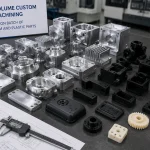
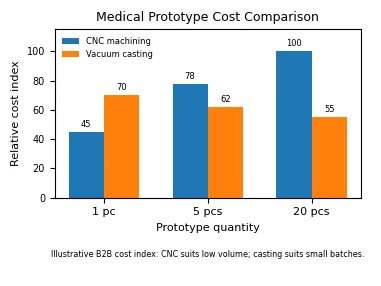
For one or a few highly precise parts, CNC machining usually provides better value. For 20 to 100 appearance or functional validation samples, vacuum casting often becomes more cost-effective.
This is why many product teams do not treat the choice as “CNC machining or vacuum casting.” Instead, they use both processes at different stages of development.
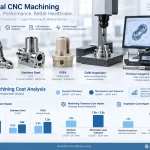
Cost Curve Analysis: Which Process Is More Cost-Effective?
The cost to prototype medical device low volume depends on part geometry, material, quantity, tolerance, finishing, and testing requirements. However, there is a common cost pattern.
1–5 Parts
For one to five prototypes, CNC machining is often the more cost-effective option, especially when the part must be made from real engineering material. There is no mold cost, and production can begin directly from the CAD file.
This is ideal for:
First functional prototypes
Engineering proof-of-concept parts
High-precision test components
Metal prototypes
PEEK or PC material validation
At this stage, vacuum casting may not be economical because the mold cost is spread across too few parts.
10–20 Parts
This is the transition zone. Both CNC machining and vacuum casting may be viable.
CNC machining is better if each part requires tight tolerances, threaded holes, load-bearing features, or production-grade material performance. Vacuum casting is better if the parts are mainly used for ergonomic testing, customer review, appearance validation, or early market feedback.
20–100 Parts
Vacuum casting often becomes more cost-effective. Although silicone mold production adds an upfront cost, that cost is distributed across multiple parts. Once the mold is ready, each additional cast part is usually cheaper than machining every part individually.
This is where vacuum casting becomes especially valuable for:
Pilot batches
Usability studies
Clinical training models
Investor samples
Internal validation builds
Pre-production bridge manufacturing
100+ Parts
For higher quantities, injection molding may become more competitive, especially when the design is stable and the material is finalized. However, vacuum casting may still be useful before committing to expensive steel tooling.
| Quantity | Recommended Process | Reason |
| 1–5 parts | CNC machining | No tooling, high precision, real material |
| 10–20 parts | Depends on requirements | CNC for accuracy, vacuum casting for appearance |
| 20–100 parts | Vacuum casting | Lower unit cost for repeated prototypes |
| 100+ parts | Injection molding or bridge tooling | Better long-term unit cost |
Material Selection for Medical Device Prototypes
Material choice is especially important in medical product development. Even for non-clinical prototypes, the material affects strength, surface finish, cleaning behavior, appearance, and user testing results.
CNC Machining Materials
CNC machining supports a wide range of production-grade metals and plastics.
Common options include:
Aluminum 6061 and 7075
Stainless steel 304 and 316L
Titanium alloys
PEEK
PC
ABS
POM
Nylon
PMMA / acrylic
For high-performance medical prototypes, medical grade PEEK prototyping is a major advantage of CNC machining. PEEK is known for high strength, chemical resistance, temperature resistance, and potential suitability in demanding medical applications. It is often selected when engineering teams need a prototype that closely reflects the performance of the final material.
CNC machining is also suitable for stainless steel and titanium prototypes where mechanical strength, corrosion resistance, or sterilization-related testing may be required.
Vacuum Casting Materials
Vacuum casting uses polyurethane resin systems that can simulate different plastic properties.
Common resin types include:
ABS-like rigid PU
PP-like flexible PU
PC-like transparent PU
Rubber-like elastomeric PU
High-temperature-resistant PU
Flame-retardant PU
Clear optical-style PU
For medical device development, transparent PU is commonly used for clear plastic prototyping for medical devices, especially for covers, diagnostic housings, fluid observation parts, and visual display prototypes.
Some suppliers may also provide biocompatible polyurethane resins for vacuum casting. However, medical teams should always verify whether the resin meets the required test standard, intended contact duration, skin contact classification, and application environment.
Tolerances and Dimensional Accuracy
Medical prototypes often require more than a good appearance. They must fit, seal, align, and assemble correctly. This is where process selection becomes critical.
CNC Machining Tolerances
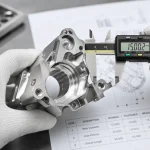
CNC machining can achieve very tight tolerances depending on the material, geometry, machine capability, and inspection process. For many prototype projects, tolerances of ±0.05 mm are achievable, and tighter tolerances may be possible on selected features.
This makes CNC machining suitable for:
Connector interfaces
Threaded features
Sealing surfaces
Bearing surfaces
Sensor mounts
Mechanical assemblies
Precision metal brackets
Test fixtures
Strong cnc machining tolerances for medical components are especially important when the prototype must support engineering validation or be assembled with electronics, tubing, screws, seals, or moving parts.
Vacuum Casting Tolerances
Vacuum casting can produce good dimensional quality, but tolerances are generally looser than CNC machining. Factors such as resin shrinkage, mold aging, wall thickness, part geometry, and post-curing can influence final dimensions.
Vacuum casting is excellent for visual and functional testing, but it may not be ideal when a part requires extremely tight fits or critical sealing performance without secondary machining.
In some projects, a hybrid strategy works best: use CNC machining for critical inserts or functional components, and vacuum casting for outer housings or ergonomic shells.
Surface Finish and Appearance
For medical device prototypes, appearance matters because prototypes are often used for stakeholder review, customer demonstrations, usability testing, and investor presentations.
CNC Machining Surface Finish
CNC-machined parts usually show tool marks unless further finishing is applied. However, CNC parts can be post-processed with:
Bead blasting
Brushing
Polishing
Anodizing
Passivation
Painting
Powder coating
Laser marking
For aluminum housings, anodizing can provide a premium appearance. For stainless steel parts, polishing or passivation may improve cleanliness and corrosion resistance.
Vacuum Casting Surface Finish
Vacuum casting offers smooth, molded surfaces that can closely resemble injection-molded parts. Because the silicone mold captures the surface of the master model, the final part can reproduce texture, gloss, details, logos, and ergonomic features.
This makes vacuum casting ideal for medical device housing prototyping methods where appearance and user perception are important. If a handheld device needs to feel comfortable, look professional, and convince stakeholders, vacuum casting is often the stronger option.
Lead Time and Turnaround Time
Medical rapid prototyping services turnaround time is a major factor for product teams working under tight development schedules.
CNC Machining Turnaround
CNC machining can be fast because no mold is required. Simple parts may be completed in a few days, while complex parts with tight tolerances and finishing may require longer.
Typical CNC machining lead time:
Simple plastic parts: 3–5 working days
Aluminum prototypes: 5–7 working days
Complex stainless steel or PEEK parts: 7–12 working days
Parts requiring special finishing: additional time
Vacuum Casting Turnaround
Vacuum casting requires extra steps: master model production, silicone mold making, casting, curing, and finishing.
Typical vacuum casting lead time:
Master model: 2–5 working days
Silicone mold: 2–4 working days
Casting batch: 3–7 working days
Finishing and inspection: additional time
Although initial setup takes longer than CNC machining, vacuum casting can be faster for producing multiple identical prototypes once the mold is ready.
For example, producing 40 housings by CNC machining may require significant machine time. Producing one master model and casting the rest may reduce total schedule time.
Medical Compliance and Regulatory Considerations
Prototype manufacturing is not the same as final medical device production. However, medical product teams still need to consider documentation, traceability, material selection, and risk control during prototyping.
Important considerations include:
Material data sheets
Biocompatibility test reports
Supplier quality management
Dimensional inspection reports
Surface finish requirements
Cleaning and handling procedures
Intended use of the prototype
Whether the part is for visual, functional, bench, animal, or clinical testing
For early visual models, regulatory requirements may be limited. For functional prototypes used in testing, teams may need stronger documentation.
When using biocompatible polyurethane resins for vacuum casting, engineers should confirm whether the material is appropriate for the intended type of contact, such as skin contact, short-term contact, or non-contact housing applications.
For CNC parts, material traceability may be easier when using certified metals or engineering plastics. For example, stainless steel 316L or PEEK may come with more detailed supplier documentation than many prototype resins.
The safest approach is to define the prototype’s purpose before choosing the process. A prototype for a trade show does not need the same material controls as a part intended for functional testing near patient-contact surfaces.
Application Scenarios: Which Process Fits Best?
Medical Device Housings
For early housing concepts, vacuum casting is often ideal because it provides excellent appearance and lower cost for multiple samples. For snap-fit testing, internal alignment, or threaded inserts, CNC machining may be needed for critical areas.
Best choice: vacuum casting for appearance, CNC machining for precision validation.
Diagnostic Equipment Components
Diagnostic devices often include transparent covers, internal flow paths, display windows, and electronic housings. Vacuum casting works well for transparent prototypes, while CNC machining is better for precise blocks, fixtures, and mechanical interfaces.
Best choice: both processes depending on part function.
Surgical Tool Prototypes
Surgical instruments and tool components often require metal strength and precise geometry. CNC machining is usually the preferred method.
Best choice: CNC machining.
Wearable Medical Devices
Wearables require comfort, appearance, and ergonomic testing. Vacuum casting is excellent for outer shells and soft-touch components. CNC machining may be used for internal brackets or test fixtures.
Best choice: vacuum casting for housing, CNC for structural inserts.
Low-Volume Overmolding Medical Prototypes
For low volume overmolding medical prototypes, vacuum casting can simulate soft-touch grips, seals, or multi-material interfaces. Although it may not fully replicate production overmolding, it is useful for ergonomic and usability testing.
Best choice: vacuum casting.
Case Study: Handheld Diagnostic Device Housing
A medical device startup needs 50 prototype housings for a handheld diagnostic device. The product includes a plastic outer shell, internal electronic mounts, transparent display cover, and ergonomic grip area.
The team needs:
5 functional internal prototypes
20 units for user handling tests
25 units for investor and customer demonstrations
Smooth surface finish
Transparent display window
Reasonable cost
Fast delivery
If all 50 housings are CNC machined, the unit cost may be high because each part requires individual machining, setup, finishing, and inspection.
If the team uses vacuum casting for all parts, the appearance will be strong, but some internal mounting features may not achieve the desired tolerance.
A better strategy would be:
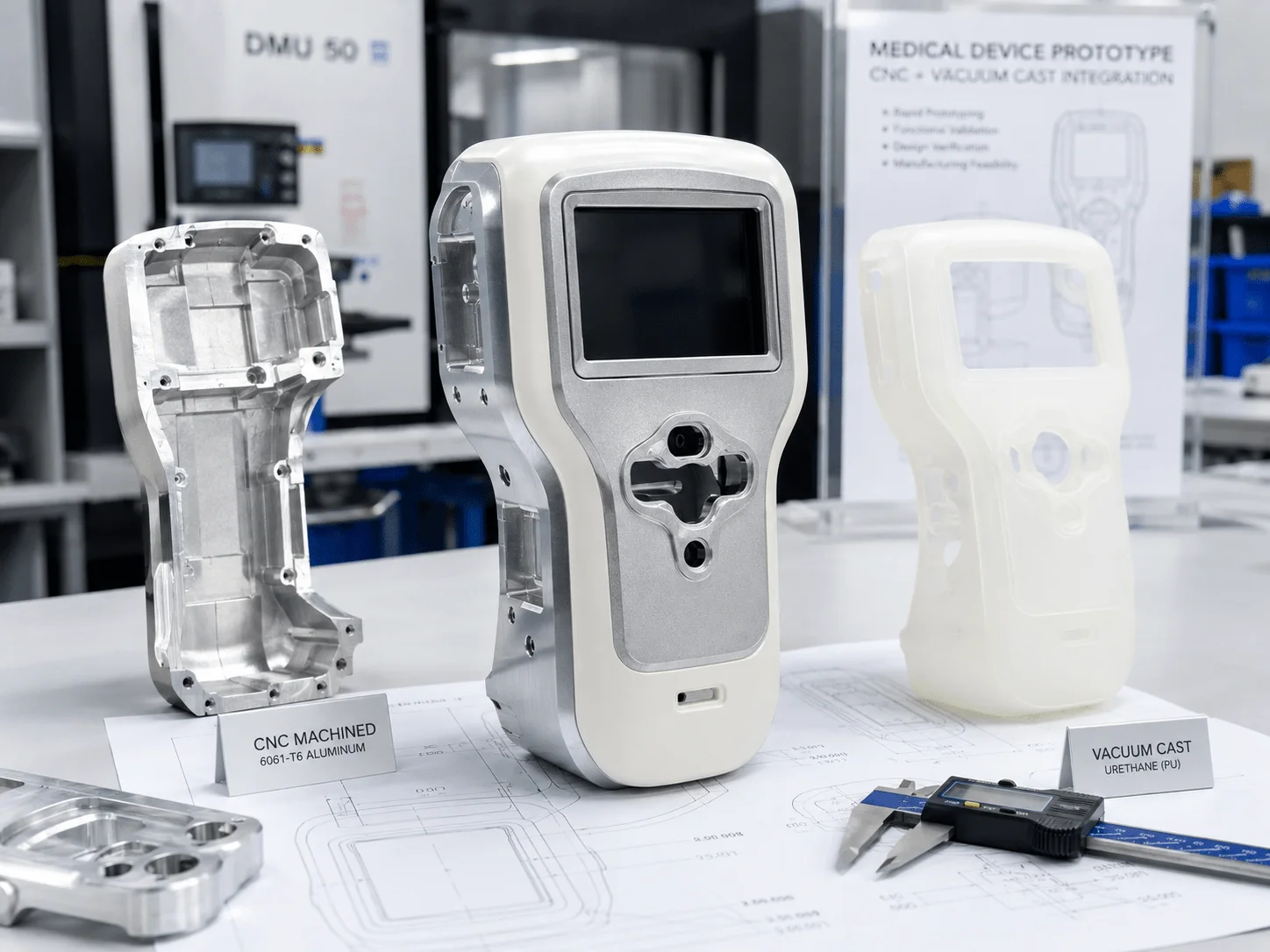
1.CNC machine the first master housing for accuracy.
2.CNC machine internal brackets or critical inserts.
3.Use vacuum casting to produce 50 outer housings.
4.Use clear PU resin for display covers.
5.Apply paint, texture, or polishing for final presentation quality.
This hybrid workflow improves speed, controls cost, and provides realistic prototypes for different validation needs.
Decision Framework: How to Choose the Right Process
Use the following decision logic:
Choose CNC Machining If:
The prototype must be made from real metal or engineering plastic.
Tight tolerance is critical.
The part will be used for mechanical testing.
The design includes threads, sealing surfaces, or precision holes.
Material performance is more important than unit cost.
You need medical grade PEEK prototyping.
You only need 1–10 parts.
Choose Vacuum Casting If:
You need 20–100 similar parts.
Appearance is important.
You need smooth, injection-mold-like surfaces.
You need transparent or colored housings.
You are conducting user testing.
You need clear plastic prototyping for medical devices.
You want to reduce the cost to prototype medical device low volume.
Choose a Hybrid Approach If:
Some features require high precision, but the full batch must be cost-effective.
You need a CNC master model and multiple cast copies.
You need both engineering validation and marketing-quality prototypes.
You are preparing for injection molding but still need design changes.
For most medical device development teams, the hybrid approach is often the most practical and cost-effective.
Common Mistakes to Avoid
Choosing Vacuum Casting for Critical Tolerance Parts
Vacuum casting is excellent for appearance and low-volume production, but it may not be the right choice for tight sealing interfaces or precision mechanical assemblies.
Choosing CNC Machining for Large Appearance-Only Batches
If the prototypes are mostly used for customer review or usability testing, machining every unit may be unnecessarily expensive.
Ignoring Material Documentation
Medical projects often require material data. Always request resin data sheets, metal certificates, or plastic material documentation when relevant.
Waiting Too Long to Involve the Manufacturer
Early DFM feedback can reduce cost and prevent design issues. A prototype manufacturer can help adjust wall thickness, simplify machining, improve moldability, and avoid unnecessary finishing costs.
Treating Prototypes Like Final Production Parts
Prototype processes are extremely useful, but they do not always replicate final injection molding, sterilization behavior, or long-term use performance. Always align the prototype process with the testing goal.
Frequently Asked Questions
1. Which is better for medical device prototypes, CNC machining or vacuum casting?
CNC machining is better for high-precision functional testing, while vacuum casting is better for low-volume appearance models, user testing samples, and smooth medical device housings.
2. Is vacuum casting suitable for medical prototypes?
Yes. Vacuum casting is suitable for many medical prototypes, especially non-clinical housings, transparent covers, ergonomic models, and user testing samples. For patient-contact or compliance-related prototypes, material suitability must be verified.
3. Can vacuum casting use biocompatible materials?
Some suppliers offer biocompatible polyurethane resins for vacuum casting, but engineers should confirm test reports, intended contact type, and regulatory requirements before use.
4. What is the typical cost to prototype a medical device in low volume?
The cost to prototype medical device low volume depends on part size, complexity, material, quantity, tolerance, and finishing. CNC machining is usually better for 1–10 parts, while vacuum casting may reduce cost for 20–100 parts.
5. What are the best medical device housing prototyping methods?
Common medical device housing prototyping methods include CNC machining, vacuum casting, 3D printing, and injection molding. CNC is best for precision validation, while vacuum casting is strong for appearance and low-volume housing samples.
6. What tolerances can CNC machining achieve for medical components?
Typical cnc machining tolerances for medical components may range from ±0.05 mm to tighter values depending on material, geometry, and inspection requirements.
7. Is PEEK suitable for medical prototype machining?
Yes. Medical grade PEEK prototyping is commonly used when teams need high-performance plastic prototypes with strength, chemical resistance, and excellent thermal properties.
8. Can vacuum casting produce clear medical device prototypes?
Yes. Vacuum casting is widely used for clear plastic prototyping for medical devices, including transparent housings, covers, display windows, and diagnostic device shells.
9. How fast can medical prototypes be produced?
Medical rapid prototyping services turnaround time usually ranges from 3 to 12 working days depending on process, material, complexity, quantity, and finishing requirements.
10. Can vacuum casting simulate overmolding?
Yes. Low volume overmolding medical prototypes can often be simulated with vacuum casting using rigid and flexible polyurethane materials, making it useful for grip, seal, and ergonomic testing.
There is no single winner in CNC Machining vs Vacuum Casting for Medical Device Prototypes. CNC machining delivers precision, strength, and real engineering materials. Vacuum casting delivers smooth surfaces, lower unit cost for small batches, and excellent appearance for user testing and validation.
For early functional validation, CNC machining is often the right choice. For multiple medical device housing samples, transparent parts, and pre-production review, vacuum casting can be more cost-effective. For many real-world projects, combining both processes provides the best balance of precision, cost, speed, and quality.
Ready to Start Your Medical Device Prototype Project?
GC-Prototype provides professional rapid prototyping services for medical device companies, OEMs, engineering teams, and product developers.
Our capabilities include CNC machining, vacuum casting, medical grade PEEK prototyping, clear plastic prototyping for medical devices, and low volume overmolding medical prototypes.